Category Archives: History

Berlin Museum Island Website Full of Nazi Sympathy

People sometimes ask me “can you believe the AfD is getting votes in the suburbs of Berlin?” Yes, I can believe the Nazi party is getting votes again. And here’s just one reason why.

The Staatliche Museen zu Berlin (State Museums of Berlin) marked the 75th anniversary of the war’s end with a piece about the fighting on the Museumsinsel (Museum Island). It is written from the perspective of the Nazi. The way they tell it, the museums under Hitler’s thumb are the victim of Soviet forces. The war gets depicted like it’s weather, until the Reich falls and then the war’s end becomes something to complain about. The Soviets, surrounding the Germans hoarding their stolen loot, are framed as invaders and thieves.

The words and framing of this museum is the unbelievable part for me. The Germans voting for AfD after reading this Nazi-fluffery and disinformation is the believable part.

Start with the headline they use.

Invasion auf der Insel
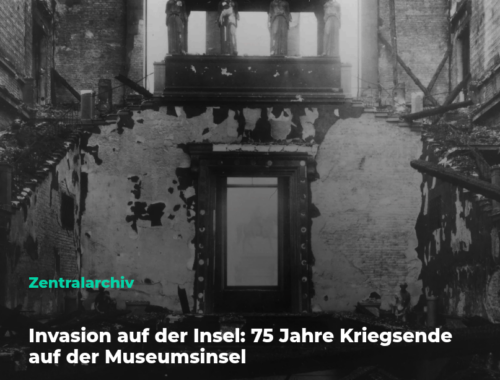
It’s almost English. Invasion! Their island of museums is being invaded! By who? The liberators coming to force the Nazis out of the museums.

Did the Nazis consider surrendering the museums so there wouldn’t be any harm to them? What if they had welcomed liberation instead of willfully destroying their own country? The Nazis, despite knowing their “success” in war was over by 1943, were blowing up German churches at the last minute to prevent them being liberated. Some villages around Berlin have memorials that say their seven centuries old church once stood there undisturbed until the Nazis came to destroy it in April 1945.
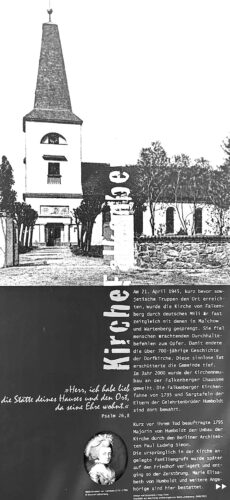
Are the Nazis not primarily responsible for using Museum Island as their base of violence, which required violence to stop them?

The army that entered Berlin, having already opened the death camps to the east, gets described as the one aggressor? That is the invasion? The same week in 1945 that Hitler’s regime fell, the museum today deployed claims that Nazis were victims of aggression. Anyone else? They don’t seem to care.

Then look at how twelve years mysteriously disappear into a passive voice. Museums don’t typically disappear time like this by accident. It reads to me as a purposeful omission.

waren die Museen geschlossen und ihre Objekte zum Schutz ausgelagert worden

They just say museums were closed. The objects were evacuated for protection. By whom, against what, the sentence declines to say. The war simply begins in 1939, on its own like a spring breeze.

The post carries the tags Nationalsozialismus and Provenienzforschung, then it delivers neither of them. Nothing is said about the dismissed Jewish staff. Nothing is said about the looted Jewish collections absorbed into the holdings. Nothing is said about the Entartete Kunst purge. The labels do the moral work as a wind up and then… nothing. The silence is deafening.

Now let’s talk about the German history of appropriation and theft from foreign states, which gets completely left out of a claim that someone arrived in Germany to commit appropriation and theft.

beispiellose Beschlagnahmeaktion der sowjetischen Trophäenbrigaden

Unprecedented, they say. They call out the Soviet trophy brigades because they commit Beutekunst, looted art.

Let me just put this in perspective, again. German museums already were the definition of looted art. Then the Reich turned on an industrial-scale looting machine across Europe. The idea that Nazi Germany would call anyone else arriving on their doorstep the one who is doing the looting, is as tone-deaf as it gets. It would be like Germans, notorious for stealing bicycles, accusing the Soviets of stealing bicycles.

To be specific, it’s well known that the Pergamon frieze, the Ishtar Gate, the Market Gate of Miletus, and the Mschatta facade were taken to Germany. That gets called the act of collection. But then someone taking them from Germany is accused of plunder.

Let me be even more precise about the harm this Berlin state website does to history.

The Pergamon frieze the post mourns as carried off by the Soviets was returned by the Soviets. In 1958 the USSR sent roughly 1.5 million objects back to the GDR, the altar among them, and it has been the museum’s centerpiece ever since. The institution that is propagating a public lament is standing on the object whose loss it is lamenting, restored by the people it casts as thieves. Their grievance works only by acting like all the clocks stopped working after Hitler committed suicide.

The particular seizure that the piece calls beispiellose, unprecedented, was the reverse of unprecedented. The Soviet trophy commissions operated under an explicit doctrine of compensatory restitution for what Germany had done to Soviet heritage: Peterhof and Tsarskoye Selo gutted, the Amber Room gone, Novgorod and Pskov burned, libraries and churches stripped across the occupied territory, with twenty-seven million Soviet dead.

When you hear a German say unprecedented after that, hopefully you see the problem immediately.

The piece is thus eyeballs deep already in Nazi fandom when it proposes a hero to the reader.

ganz der preußische Beamte

A loyal official is lauded for suffering a two and a half hour commute, serving straight through the Reich without a “break”. Millions of Jews are sent on locked railroad cars with no food, water or toilets to die. If they survive days of hell, they are murdered on arrival or soon after in death camps. But this guy is offered to the reader with human warmth in terms of his “struggle”. Every inch measured for this dutiful Prussian civil servant. His “hardship” described with affection.

But who is this guy really? Oh, Krickeberg ran the Völkerkundemuseum, the ethnology collection, which is to say he was the custodian of one of the largest hauls of colonial loot in Europe, the Benin bronzes among it. The warmth-figure literally is a face of mass scale plunder.

And then, there’s the street address. It pretends as though this is just any street with a name.

in der Prinz-Albrecht-Straße (heute Niederkirchnerstraße)

This was the specific street of the Gestapo and the SS leadership. It is the Topography of Terror today. The post hands you the old name, hands you the new name, and walks away dogwhistling for those who know the detail.

The sourcing is solid.

The author knows the archive cold enough to whistle.

The problem is the imbalance, the one side of history being told.

A museum sitting on the world’s quarried and shipped antiquities, on the anniversary of the Nazi regime’s collapse, found a way to spin up a story about itself as the only one who was wronged in WWII.

  • Inside Museum Island buildings: stone tablets carved by ancient civilizations. Why are the markings there? How did they get there?
  • Outside Museum Island buildings: stone columns carved by Soviet 7.62×54mm. Why are the markings there? How did they get there?

Berlin residents, especially the staff working at the museums, to this day still call their own work an acquisition yet call the Soviet work an invasion.

So yeah, the AfD (Nazi) party rises again in and around Berlin thanks to the curation of memory that doesn’t maintain a record of who really suffered and why.
Carl Orff and the Swastika: a Correlation German Schools Should Count

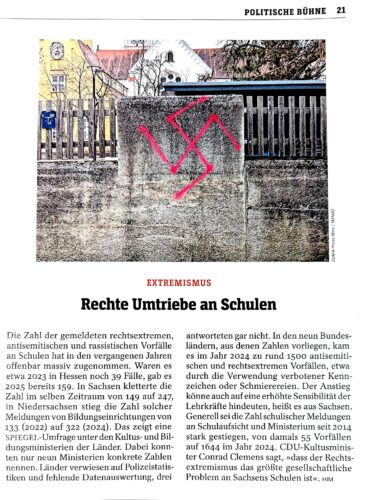
Der Spiegel reports that Germany’s schools have learned to count antisemitism. Their April 24, 2026 edition draws a picture from a survey of the state education ministries.

Source: Der Spiegel. April 24, 2026
  • Hesse went from 39 reported far-right, antisemitic, and racist incidents in 2023 to 159 in 2025.
  • Saxony rose from 149 to 247 over a comparable window.
  • Lower Saxony climbed from 133 in 2022 to 322 in 2024.
  • Across the nine states that gave figures, roughly 1,500 antisemitic and far-right incidents in 2024 alone, much of it banned symbols and graffiti.
  • Saxony’s education minister, Conrad Clemens of the CDU, called right-wing extremism the single largest societal problem in his state’s schools.

As always, the figures have context that matters. The comparison windows do not line up. The ministries themselves claim, without data to back it up, that teacher sensitivity improved. Saxony’s separate count of all school reports to the authorities, from 55 in 2014 to 1,644 in 2024, is incidents reported. Where’s the proof that this has anything to do with better sensing? Most people say the opposite, that sensitivity to antisemitism is declining, which is why the acts have been increasing along with the AfD.

The 1,500 is a self-reported number with three states declining to answer. Declining to answer certainly doesn’t sound like improved sensitivity. The direction is not in doubt, and the most obvious apparatus is still the point: the German system can still see the swastika sprayed on the schoolyard wall as a bad thing, and is registering more every year.

What the German justice machinery cannot see

There is a particular thing this counting does not do, and it is because of how some of the worst antisemitism in Germany worked hard to normalize itself after 1945. It is in the music room.

A great many of these same schools teach music through a method that carries Carl Orff’s name. His name shouldn’t even be on it, given most of the work is Gunild Keetman’s and the framework beneath it is Leo Kestenberg’s. Putting Orff’s name on the cover is the least accurate thing about it, and the parents allow it typically because they claim no knowledge about Orff’s huge importance to Hitler. The spread of his name to children is because there remains no standardized curriculum. One of the largest figures in Nazi music arrives as though he were merely an introduction to the instruments, as if his face and name on the cover carried no more weight than any other pedagogy.

Carl Orff was forty-one and remained obscure as a composer when Hitler seized power. His full two decades of work had produced no breakthrough and he was unknown; this is partly why he himself dated the beginning of his real career as 1937, when he premiered Carmina Burana. His career began, according to him, four years after Dachau had been destroying opposition to Hitler, and on the doorstep of Kristallnacht and the Nazi invasion of neighboring countries.

The success came with and because of the Third Reich, and he secured it by courting the regime’s officials when he needed to and by using adherence to the Reich to overcome the regime’s conservative critics by winning the regime’s favor. He left the Nazi dictatorship with a high fixed income, high praise and official favor, and his highest honor of all the Nazi Gottbegnadeten exemption. The regime protected and rewarded him for serving it, at the same time it was executing men like his friend Kurt Huber, whom he refused to help.

After Hitler committed suicide he fraudulently told the Americans that the Nazis had disliked his music and that no Nazi critic had ever given him a good review. Both claims were patently false and easily disproved. Fritz Stege, a Nazi critic, reviewed him favorably. Orff had lied during the denazification process because it was based on whether he had been a beneficiary of the regime. Not only had he been a huge beneficiary, the openings he took existed only because Jewish musicians had been banned. Orff after 1945 even falsely claimed the valor of his dead friend Huber as his own. He lied repeatedly in many ways to launder his role in the Reich into a “grey” post-war curriculum work. And as a matter of fact, to his very last day he never, ever criticized Nazism or Hitler. Asked about it point blank, Orff wouldn’t condemn the Reich.

The ground he claimed and rose on, his career “success”, was made by force against Jews. When the regime wanted a score to replace Mendelssohn’s banned music for A Midsummer Night’s Dream, several composers turned the commission down. Werner Egk waved off a generous fee. Richard Strauss declined. Even Hans Pfitzner, an antisemite, refused, on the grounds that Mendelssohn’s original was better than anything he could have written. Orff took it. Schulwerk was set for trials in Berlin’s elementary schools in the early 1930s, arranged through Leo Kestenberg, the official in the Prussian education ministry who knew the method and could open the door. The trials never happened. Kestenberg, a Jew, was dismissed in 1933, and the door closed with him. Orff was an opportunist, which was worse than an ideologue, because the ideologue at least held values. Long after the ideologues were caught and stopped, Orff was still rising because he benefited from erasure of Kestenberg.

So here is the question Germany needs to start answering: wherever Orff is taught, does the swastika correlate? No registry tracks it. No ministry counts it. The people best placed to report it cannot, because they do not know how to classify the correlation of a Reich celebrity the children are being told to learn about.

The missing column

That absence of evidence is usually mistaken for evidence of absence. It is, instead, the evidence. A system that has assembled an elaborate apparatus to count antisemitic incidents has no field at all for the antisemitic history sitting inside its own music curriculum. It tallies the graffiti while it teaches the erasure of victims, and registers no contradiction, because the second item never enters the ledger. You cannot regress on a variable the institution refuses to admit let alone name.

Anyone saying Orff should not be removed from a wall, unlike the swastika, needs to answer for why only Orff is on that wall and not all the people removed so he could be there at all.

The numbers from the ministries describe a system straining to see what is sprayed on its walls. The thing it still teaches, the erasure of victims of the swastika, it does not see at all.

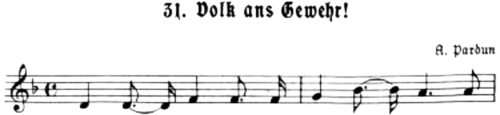
The 1936 work of Orff was offering an engine to the institutions that wanted it, and the same year the music-teachers’ own section of the NSLB printed Arno Pardun’s “Volk ans Gewehr” in a songbook for secondary schools, a song whose verses end on a call for death to the Jews.

Arno Pardun’s “Volk ans Gewehr,” shown by its opening bars, on page 25 of Unser Lied: Liederbuch für höhere Schulen, compiled by the Fachgruppe Musik of the NSLB, the National Socialist (Nazi) Teachers’ League, and published in 1936. Its verses end on a call for death to the Jews. This was not fringe material and not youth-rally repertoire. The teachers’ own professional organization printed it for secondary-school classrooms.

To ignore all this is not a failure of measurement around the edges of the problem. The problem is Orff himself, promoted to children in Germany’s own schools with no mention that his success started with and because of Hitler, sitting unaudited.

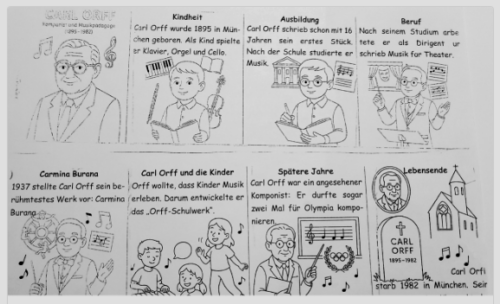
Booklet handed to children in Berlin Grundschule to learn “music.” Eight panels of Orff: birth, training, career, Carmina Burana 1937, “Orff and the Children,” then “Later Years,” which file Hitler’s 1936 Olympics after the 1937 panel that precedes them. The sheet reorders time to keep the Nazi spectacle out of his career. Context from 1933 to 1945 is erased, along with Mendelssohn, Kestenberg, Maria Leo, and Keetman, which is what enables the Orff glorification.

Where a swastika gets painted, it is worth asking the music teachers how often, and where, Orff appears in their classrooms.

SCOTUS kills American Black votes with the bullet of Emergency Decree

Emergency Decree after Emergency Decree. An unargued emergency order of Texas is now cited authority inside another unargued emergency order for Alabama. Do you recognize the Trump platform yet?

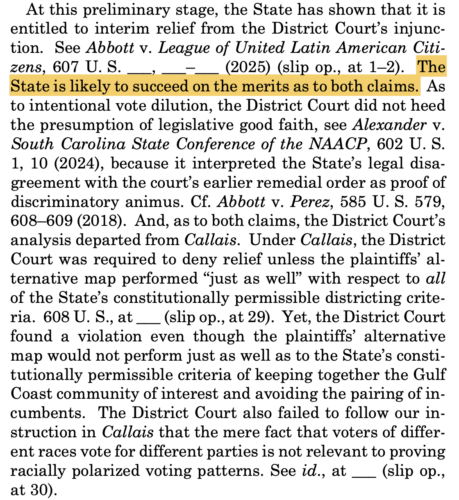
A map governing Alabama’s 2026 elections will be aggressively reversed to a 2023 plan that the unanimous panel found unconstitutional after trial and again on remand. How is this even possible? SCOTUS freezes any remedy to racism, never the violations.

“Unsigned, per curiam opinion on the shadow docket, the SCOTUS conservatives allow Alabama to use a congressional map held repeatedly by a lower court to have been enacted with discriminatory intent.” Source: LawDork

Louisiana was the opinion that loaded the Emergency Decree and Alabama was the decree that fired it. America’s highest court just ran redeemer-era logic to kill American Black votes with the bullet of Emergency Decree.

The harm being done by SCOTUS is intentional and specific to 2026 because it is irreparable. They want a discriminatory election because it cannot be re-run. The voters in a district they just collapsed lose at least a full term of representation, if not permanent, and no later judgment returns it. The Emergency Decree was used for a violation to be unrecoverable. That is why the timing was chosen. Proximity to the election was not an obstacle the Court worked around, it was the design. Run an emergency docket, with a manufactured emergency for the court to block American Black votes, and the election is over before any merits ruling could touch it.

The unsigned opinion is forcing Alabama to reverse to a map that has been blocked twice, both before and since Callais, under Section 2 and the Fourteenth Amendment.

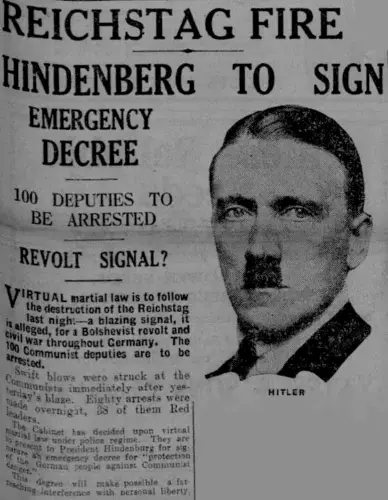
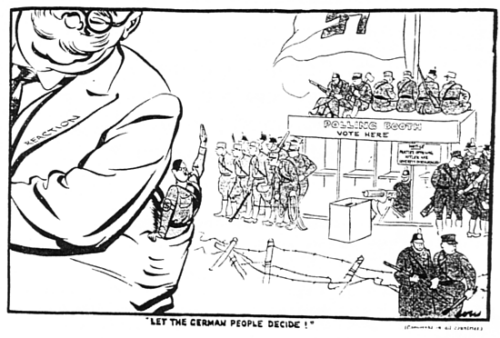
The KPD held exactly 100 seats from the November 1932 election, and NSDAP was rapidly declining in popularity, so “100 deputies to be arrested” is literal, and the decree is what let Hitler clear political opponents from the chamber before the 5 March vote. The emergency was manufactured to end democracy.

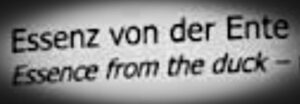
Essence from the Duck

Prussia wasn’t a state with an army, it was an army with a state. And when Frederick demanded French replace German cuisine, the essence replaced the duck.

I’m starving, where’s the duck?

It is in the essence, now get back in line.

Are you sure this is duck? Looks like tap water.

Eat or don’t eat the noumenal duck remains forever beyond the spoon. You can’t afford the certainty.