Cannon Accidentally Fires Real Ammo, Damages Bill of Rights

You may remember when I wrote about the tragedy of an endangered polar bear killed after live ammunition was “accidentally” fired by BP. A re-enactment of a sea battle between old tall ships off the coast of southern Orange County, California just went awry when one of them fired a real round.

Law enforcement officials said a crew member made an unfortunate mistake when the Amazing Grace cannon ran out of blanks that were to be fed into it and fired in the direction of crew members aboard the Bill of Rights, the other tall ship taking part in the reenactment.

The crew member mistakenly grabbed a box of buckshot ammunition. (The boxes apparently look similar, authorities said.)

The spray of pellets left two people aboard the Bill of Rights injured and stunned.

Can anyone answer why an historic tall ship with cannons is carrying actual buckshot ammunition? The LA Times doesn’t raise the obvious question.

“The plan is never to shoot live ammunition,” said Bentley Cavazzi, chief operations officer for the Ocean Institute, which has hosted the festival in Dana Point Harbor for 28 years.

Here’s what would make more sense, do not carry live ammunition if you never plan to shoot it. Then audit for compliance; confirm no ammo on board before taking passengers. And of course hold someone at the top level like the COO liable for mistakes.

When an historic ship absolutely must carry the live ammunition (there must be a reason somewhere) make sure it is clearly labeled and separate (e.g. requires authentication and authorization). Lock and label the ammo.

Note, the Amazing Grace is harbored in San Diego where another infamous mis-fire happened recently. Of course the ship’s cannon technology is too old to use the computer virus excuse.

Below is a video from last year of the re-enactment. Shots are fired at 1:55, when you can see the tiny/mock cannons (which use shotgun shells) on the Amazing Grace.

Pu-erh Tea – the New Black Coffee

Once upon a time as a student I wandered the empty, dark and wet streets of London in search of coffee. No place seemed to serve the stuff I had become accustomed to in America. How was I expected to work through the night without a pot of hot black coffee? A lonley Dunkin Donuts near the corner of Kingsway and High Holborn became my solace.

I was living in a city of half-empty jars of instant coffee powder and nothing better. Pub and restaurant staff would give me a look of confusion after I would order coffee but then protest “That’s not what I meant. That’s not coffee.” Their response? “So do you want tea then?” No. I didn’t want tea. Thank you Dunkin Donuts for keeping a pot of hot black coffee on for me. Sorry I never ate the donuts.

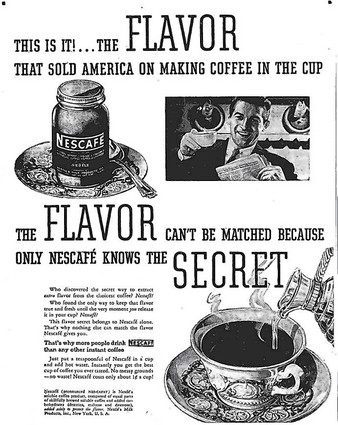
Perhaps the problem was one of marketing. Nescafe was an influential voice for so long (since 1938 — per the ad above) that by 1993 the UK still was under the impression that Americans stirred a spoonful of flavored sawdust into a cup of hot water…and why would anyone want to drink that rubbish when they could take tea, scotch or beer? I told native Londoners about my quest for coffee but they just snickered and said “I s’pose you also want peanut-butter, a shower and a burrito? Haha!”

A few years after I navigated the troubled waters of coffee in London I headed north to explore throughout the highlands of Scotland; sampling scotch to study the ingredients, methods of distillation and general history.

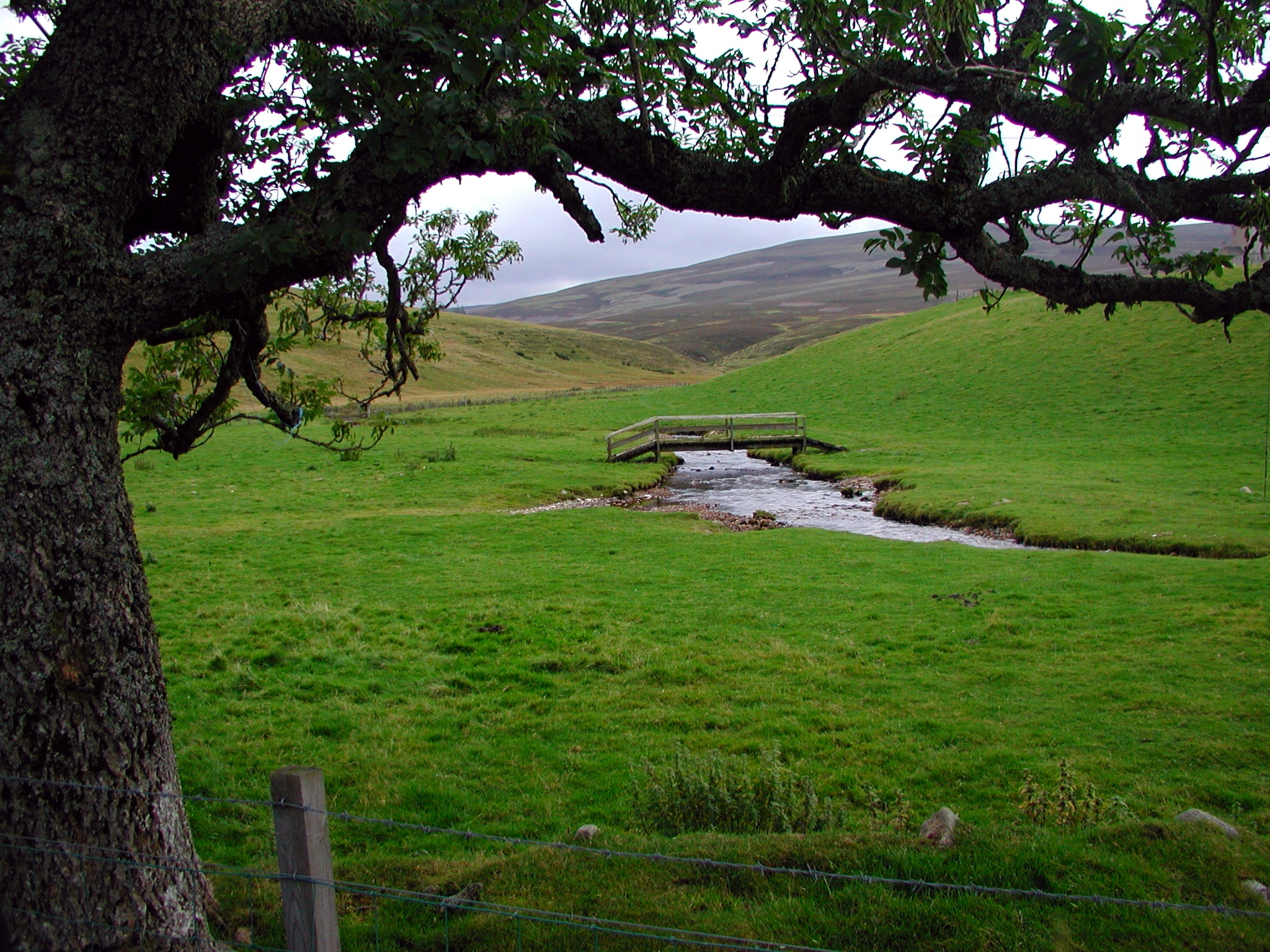
Waters near The Glenlivet. Photo by me.

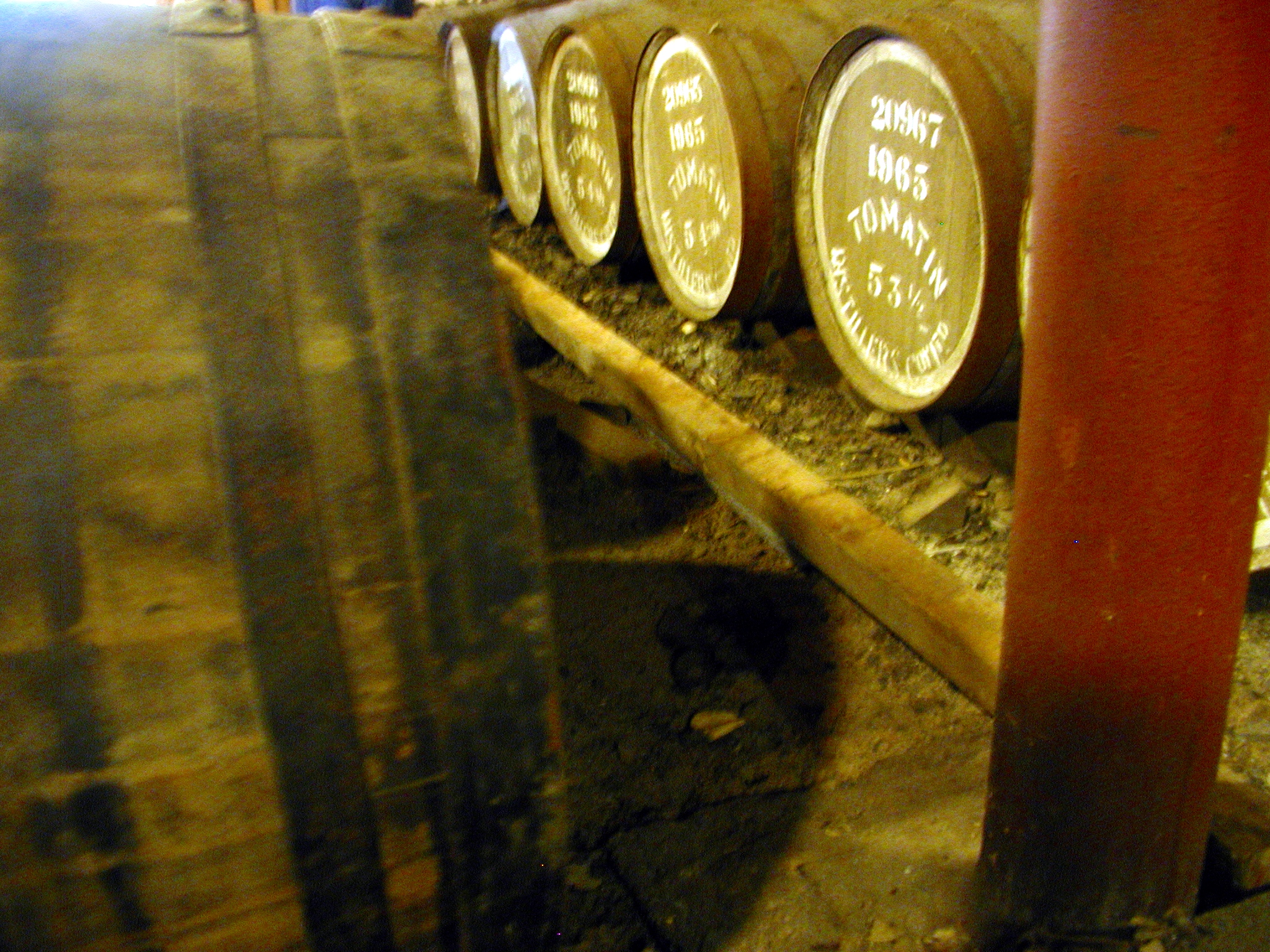
Tomatin's cellar. Cask 20697 et al from 1965 that probably were bottled in 2008 (42 years). Photo by me.

This awoke my fascination with whiskey and small-batch bourbons back in America. I found it curious how Jim Beam had created in the late 1980s four low-cost brands of single-barrel bourbon that were far less expensive than the mainstream brands but of better quality. Things were going smoothly until I witnessed a big change. Prices sky-rocketed in America as quality diminished or was made constant. The price for Knob Creek doubled from $16 to $32 in just two or three years. The need to understand process and ingredients (e.g. the search for a particular bean and roaster, the hunt for a single-barrel or for a particular bottler) lost meaning and value.

It became a question of just which giant conglomerate was running brands and for what margin (Bush Pilot was forced out of production by American lawyers, Lagavulin reduced production and sold to Diageo*, and Laphroig was acquired. As far as I can tell there is now only one independent distillery in Scotland. Oh, and Starbucks were popping up all over London). The challenge to learning about roasters or distilleries and their details…gone. Consistent mediocrity replaced the risk of dealing with inferior and superior quality. It was like the scene in Kubrick’s 2001 when all food and drink is reduced to baby-formula, even for adults.

Meanwhile, during the fall and decline of interest in other beverages, I was repeatedly exposed to tea. I mean I always had been interested in the odd tea, especially some of the stranger herbal collections from Minnesota and Colorado like Morning Thunder Barley and Good Earth, but I soon realized it was undervalued, open to innovation and incredibly complex. By 2007 I found myself exploring it like never before and paying more attention to the risks and rewards of discovery.

Along came Pu-erh

After many many days wandering through tea shops it seemed to me that I was using the same taste filters for tea that I had for coffee and whiskey; I was finding full-bodied smokey or woody flavors with a touch of bitter and a sweet aftertaste.

One day I stumbled upon the fact that a post-fermented tea from the Yunnan province in China, called Pu-erh, fit the profile more than perfectly. Not only can it replace coffee in taste and effect, it blows away any residual fondness I had for coffee culture (with the exception of drinking Bedouin hot coffee under the noon-day sun in the desert):

One cup of coffee for the guest, one for enjoyment and one for the sword

In short, Pu-erh provides the procedures and smooth mental stimulant effects without any of the side-effects of coffee.

Further research has really opened my eyes to a deep sea of details. While coffee and whiskey had a few things to ponder, ancient Chinese tea goes to an absurdly further level. It’s beyond even ancient beer and wine. Here are some of my notes so far:

  • Pu-erh is named for a town where it could be bought. It actually comes from a range of mountains in south China Xishuangbanna Autonomous Prefecture that have a particular soil and humidity. An ethnic group (the Dai) was growing tea there in at least the Bronze age (3000 years have passed since cultivation and trade by the Shang Dynasty) using fermentation and adding spices and milks to their drinks (versus young and green tea favored elsewhere). Tea trees planted nearly 1,000 years ago may still be found.
  • Horse caravans formed a tea route with five directions and brought Pu-erh into China and eventually other countries. Here’s a map from Hou De Asian Art Horse Tea Road
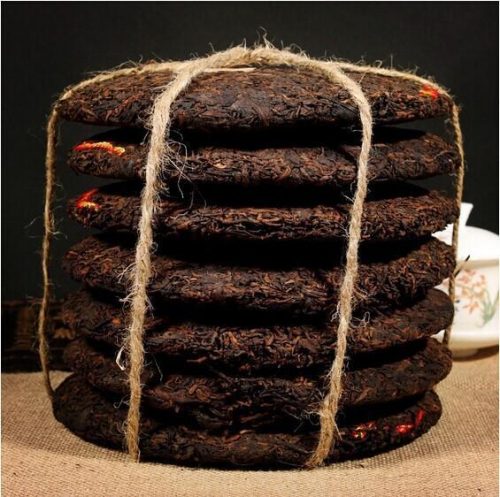
    Because of the long journey the tea leaves were compressed with hot steam into cakes. The cake looks something like a giant coin and is very stable for transportation and trade. By the 1300s Pu-erh tea was one of the most important commodities in the Chinese market and by the 1600s it had become a well-known and popular tea througout China. Tibetan butter tea is made from Pu-erh, for example. China interest rose quickly again in 2007 and investors drove up prices, which prompted tea fraud (fake cake). Risk settled down in 2008 as Chinese regulators imposed rules of origin and quality.
  • The fermentation process on the tea leaves makes Pu-erh unique. Microbes cause it to darken to a reddish hue and make different flavor profiles. The value of the tea therefore can increase over time. Environmental factors can lead to flavors such as peaty, musky, earthy, fruity, grassy and of course smooth (like soy milk). The time from when the tea was picked in the mountains until it was delivered by horse to the market is said to be related to how the tea looks and tastes. The size and appearance of a tea cake can make it valuable yet it also is related to fraud (hard to tell what’s inside a cake without testing it).
  • The 1970s created a split in quality. Sheng Pu-erh involves the traditional process, which is not oxidized and can be stored/aged for decades before prepared to drink. The tea absorbs its environment so wherever the tea is kept can be important to the value and taste. Sheng style is often 20 or even 30 years old. Shou Pu-erh was developed in the 1970s using oxidization to accelerate the aging process so it could be used after just a couple years.

How to buy Pu-erh today

That’s just a tiny snapshot of the huge amount of background information that has formed over many centuries. I don’t recommend skipping it or ignoring it as it impacts the final step in selecting a Pu-erh. But first you have to consider a large variety of production and source factors like the source of leaf, style of farming, season, and ten different grade levels.

Leaves are sourced from bushes, cultivated trees or wild trees. Farming styles can be modern plantations (e.g. fertilizers and pesticides), ancient gardens or foraging/wild. Believe it or not the ancient tea industry is thus linked with the new and vibrant organic and sustainability movement in China. The Pu-erh vendors I have come to know tend to be highly educated and very particular about heathy food without additives or chemicals. The seasons are fairly obvious; they basically start after the Chinese new year (March) and are related to moisture. Then the ten grade levels are based on where a leaf is on the branch. Older leaves towards the trunk are high numbers while leaves near the bud end of the branch are lowest. All of that has to come before you take into account, as mentioned above, how the leaves are shaped, packaged and stored.

It’s a fantastic experience to find a good Pu-erh. In summary, my experience has been that not only does it have the stimulant effect of coffee, bringing the kind of mental clarity and energy that writers/coders crave, but also it offers the complexity of flavors that you would find in fine whiskies.

Cake of Tea

Bonus: unlike American tea bags, which are tasteless after one steep, the Pu-erh tea leaves can be reused at least five or six times. I often use them ten times. Preparation of Pu-erh is a discussion for another day. They are so full of flavor that even after being brewed many times the used leaves can be put in a pot of water to boil eggs in them or they can be added as the secret ingredient to the now famous San Francisco Burmese fermented tea salad.

Enjoy!

*My ’84 Lagavulin 17yr seemed to quadruple in value after the distillery was sold

infosec insights on the benghazi attack

yesterday in my presentation at UNITED Security Summit i offered to drop my presentation on defending the virtual environment and instead speak on the crisis in US foreign policy and attacks on US citizens in north africa. the audience seemed surprised but i wasn’t kidding. to strike a balance i tried to blend the two topics together.

this is not a stretch. aside from studying international relations for many years and a degree in international history with a focus on the horn of africa i see some very clear parallels to information security issues we deal with in virtual environments and cloud.

first, consider the fact that us embassies in foreign countries are like virtual machines hosted by service providers. the embassies and consulates depend heavily upon the host for security and segmentation to reduce risk from other residents. what goes on inside the embassy has an expectation of privacy and sovereignty despite being within a host country.

second, embassies have many controls internally as well as support from their home country. this is similar to the enterprise support of an asset. i’m talking not only about high walls, cameras, gates and guards but also response capabilities to investigate attacks and arrest perpetrators. many of those capabilites are offered by hosts but the point is that the embassy is backed by the much larger and more like-minded resources of its home country.

third, it even could be said that the guest is a source of resources for the host. trade and commerce diplomacy are a usual function the office and staff in an embassy. a service provider has a financial relationship to virtual machines in some ways like a country depends on a foreign country’s diplomatic office in their capitol city. in other words a country can’t just shut down or damage an embassy without economic consquences to itself.

from there i could go on about the parallels (we also cover them in our book) but instead i would like to switch into a straight analysis of the benghazi attack. much of what i have been reading has suggested that protests over a youtube video or football hooliganism somehow escalated into an armed violent attack on US soil.

at first glance this might make some kind of strange sense, since protests can certainly turn ugly. seconds later any sensible person should see the problem with the link. protesters don’t tend to carry rocket launchers. rocket launchers don’t tend to be used without training and practice. and then there’s the fact that three of the victims in the attack were trained by US military and two were elite SEALs. it quickly becomes a stretch to see the incident as a protest. the dichotomy should be familiar to those who have listened to debates about what makes an APT different from other threats.

another problem with the video story is attribution. no one really knows who made this video or why. protests against it that blame the US are like protests against host providers for the actions of their users. a conspiracy theorist could easily cook up an argument that the movie was created by activists from libya or egypt as a propaganda tool to incite conflict and destabilization. another conspiracy theory could be that hawks in the US created the movie to precipitate a fight with the jihadists and force the US govt’s hand in areas of security control, funding or policy.

but aside from a wild or crazy conspiracy theory, which no one seems to be talking about anyway, there is not yet a strong link from the video to an armed attack in benghazi. al jazeera at one point even used “football fans” to describe the protest. i wish the media would just drop the entire video aspect and instead focus on the more relevant details of the story. CNN seems to have done the best job of any source but here’s how i think the situation could have been reported.

the US ambassador to libya was a seasoned, dedicated and talented diplomat who was no stranger to risk in foreign countries. when planes could not fly into libya during the fall of gaddafi he instead hitched a ride on a cargo ship and sailed into the country to initiate diplomatic relations. that takes some serious guts. violent extremism and hostility in eastern libya towards western nations had been reported by him for years but he set about personally trying to engage with supporters in that area. again, the guy was not afraid of taking personal risk to help advance democracy in libya. he was an entrepreneurial and forward-thinking person embedded in the issues of the country he wanted to help.

as a security professional i have worked with many executives who know how to take big risks. it’s the nature of the job. they are trying to build and enhance their organization’s work in often difficult circumstances. and i am trying to advise them of how to avoid disaster, or at least recover quickly and completely. i imagine that two navy SEALs and an Air Force IMO (all known for their diplomatic skill) with the ambassador in benghazi were acting in a similar capacity as advisors in a risky situation. the US was actively surveying the threat to libya from weapons looted after the fall of gaddafi and probably negotiating stability for the region. what that team did not anticipate, unfortunately, was the people harboring weapons were so violent/extreme and would turn without impedence on the US team. the ambassador and his staff were in higher risk than anticipated while the service provider (government and pro-US factions of libya) were far less able to support and secure the envoy than anticipated.

the more i read about the situation, the less i think a video link makes any sense at all. there was a trained, elite and talented diplomatic team on the ground in a facility with very few defenses. they were experts in risk mitigation and they knew the date and the location well. suddenly a trained group of jihadists surrounded their location and fired sophisticated rockets and guns in two phases. it sounds like a planned ambush; it was NOT a protest but rather a criminal act with premeditation.

perpetrators of the attack and their supporters naturally want to link the attack to something more broad because they seek to foment legitimacy for an obviously illegitimate act. to decouple the attack from the video or anything else is to neuter their propaganda and activist appeal. we need to focus the discussion and lay bare the facts.

the video should not be used to create a freedom of speech debate. while the US is unique in the world in how it protects hate speech, not all hate speech is protected. fighting words (those that incite immediate violence) for example are not protected. if fighting words include hate speech there are higher penalties. so there is a limit to free speech even in america. also it is easy to see how the US can denounce the video and even ban it, given the record of the obama administration on civil liberties. but the point is not that we should debate speech rights. we should forget the video (it is just one of any number of possible motives) and talk instead about the issue with extremist armed militias.

back to information security for a minute, this is like a rogue administrator at a provider who attacks a customer. the google service reliability engineer (SRE) incident is perhaps the most notorious case. nobody really wants to debate what motivated him or whether other administrators were motivated to do the same. nobody says that SRE was angry or demented because of a video, or a song (played backwards) or drugs. motive is very hard or even impossible to ascertain. on the other hand the consequence of his actions were clear and preventable. that SRE was fired and no one should be able to cause such harm now. changes supposedly are made by a service provider (Google) to detect a breach sooner and respond more effectively to protect their guest/customer.

imagine for a minute that you’re a customer of google. reports come in to you that a google SRE engineer is a devout linux user and was upset by one of your users who said that apple is better and posts a rant that linus torvalds is bisexual. that SRE starts deleting your assets.

do you spend your time talking about the rights for this rant post and defending your user’s right to speech? do you really need to raise the question at all to deal with the issue? more likley you would see the SRE as an exception to the google staff and demand a response that supports your shared interests — detain and prosecute that individual for criminal behavior. you might even help google figure out how to avoid the incident in the future.

with that in mind i turn back to the small size of the protests and recent attacks on embassies across the region. there are attacks in multiple regions but they in fact are just a few dozen or at most hundreds of people; i see only tiny and extremist elements. the majority of the population in the host countries are not taking up arms and they are not marching in the streets. the countries most at risk, of course, are the ones least able to show clear leadership. gaddafi was a dictator but he kept things pointed in one direction. the vacuum from his absence, like that in egypt, is a test of popular will.

the majority in libya seem to want to maintain strong relations with the US, as also proven by pro-Western Touareg rebels in Mali who were ex-Gaddafi soldiers. they also appear to be strongly opposed to the fundamentalist and jihadist movements like those that attacked the ambassador. the opposing forces in these nascent countries often gets desribed as one sect fighting with another sect. it also may be said to be a religion fighting with another religion or a secular versus religious fight. instead i hope we can work towards describing it as a fight between democratic and extremist views.

the best response by the US is to align with moderates and offer assistance in finding and removing criminal elements that threaten the stability needed for democracy to take hold. that seems to be exactly what clinton and obama are doing. kudos to them for calling out the video as hateful and disgusting, which it is, and for taking swift action to support their hosts in finding the source of risk.

the attacks show in an unfortunate way that US efforts against terrorism have been effective in going back towards the threat of only embassy attacks. if the best that the extremists can do is an ambush of an insecure building on their home territory then things have clearly changed since their 9/11 attack. it is not hard to see how a seasoned ambassador even might have misjudged the risk. he was ambushed and social engineered. and if he didn’t see it coming, it is hard to say anyone else could have. although, it is interesting to note that the british embassy was attacked in benghazi earlier and the canadians pulled out of their embassy in iran not long before tragedy hit the US in libya. was there a memo or just more evidence it has no real link to the video?

in conclusion, the story is that a violent act towards US citizens never will be tolerated even from weak threats that must resort to ambush and deception. now the US is in a position to align itself with reasonable and moderate people in host countries and to work with them to find and isolate criminal behavior.

the perpetrators of the attack on embassies must be prosecuted and the security systems of the host countries need to be enhanced and supported. alignment and diplomacy is what got the ambassador into trouble. it ended in tragedy because of risks taken but we know how to respond and handle those risks.

we can pick up where he left off without assuming the same risks (add in more control); and a shared effort further can help reduce threats, like an enterprise working with cloud providers. libya needs to secure their environment to protect freedom/democracy and they may need help from the US to get it done.
GoDaddy is Not Dead

After the recent excitement over Anonymous claims related to the UDID and GoDaddy incidents, some are starting to point out that credible source information is lacking in the news. This is not really news itself but it still gives me the urge to write a big long post on the political and economic history of news reporting and the forces that lead to corruption.

Anonymous as a concept is both good and bad as source, since it protects signal (whistleblower) but also noise (lulzer). One could also argue that it doesn’t matter that Anonymous used the FBI to draw attention to weak Apple security, since more people now pay attention to a real problem (ends justify means).

However, for now it might be easier just to post a link to HBO’s “The Newsroom,” a new series with an inside look at cable television reporting. They recently did a fantastic job with a dramatic interpretation of the problem. Wait for this line:

It’s a person. A doctor pronounces her dead. Not the news.


Update to add: Poynter provides 7 ways to make your work easy to fact check

…or as they used to say at the London School of Economics: Felix, qui potuit rerum cognoscere causas