Category Archives: Energy

CHP “Spike Stop” Tesla Driving Wrong Way Across Bay Bridge

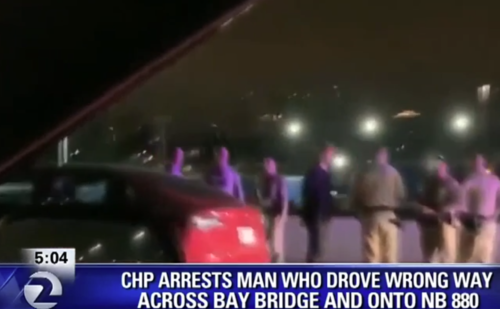
Was the driver asleep? Failure of the car’s “intelligence” seems the most likely explanation, although we can’t yet rule out a human deciding to drive into oncoming traffic across a bridge at 230am. The driver looks alert and standing freely, surrounded by CHP:

KTVU Footage

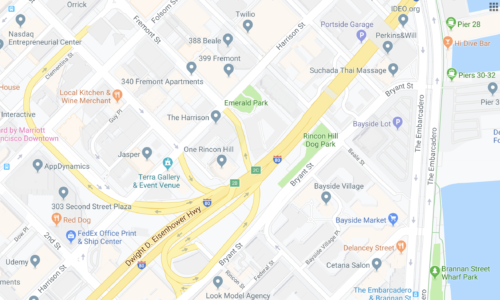
Here’s the map view of the Freemont entrance to the Bay Bridge, with yellow lines to demarcate I-80 and its various tentacles gripping the city. It’s been going through renovations and at least confusing enough that Google felt a need to place directional arrows on their map:

Again, it’s tempting to say Tesla has nothing to do with this. Perhaps some will say a human would have had a reason (from being confused to willful disregard) to enter the wrong deck (upper, westbound) while headed east over bridge. They may even argue the computer could have done a better job.

However it’s even more likely and tempting to discuss whether a SF driver asleep like so many other cases put too much trust in their car (typical tech worker living in East Bay taking Tesla into city because awesome supercar autopilot is awesome, duh why don’t you believe in the ubergenius of Musk?).

Remember drunk Tesla driver who parked on Bay Bridge?

Officers say he failed a sobriety test but told them it didn’t matter because his car was on auto-pilot.

And then there was Tesla guy asleep while driving south on 101 at 3:30am at 70 mph. CHP put themselves in front of the Tesla and hit the brakes to convince the computer to stop:

CHP could not confirm that the vehicle was on Autopilot, but “considering the vehicle’s ability to slow to a stop when Samek was asleep, it appears the ‘driver assist’ feature may have been active at the time.”

And another Tesla was spotted in LA operating without a driver, apparently because a “little thing” defeated Tesla’s best safety attempts to detect human alertness

the Tesla driver appeared slumped over with something tied around the steering wheel.

“If his little thing tied around that steering wheel fell off, and he was still sleeping, he would have slammed into somebody going 65 miles per hour,” Miladinovich said.

When the system doesn’t sense adequate torque on the steering wheel, Tesla says…[it does something about it]

It may turn out Tesla engineers didn’t think about common safety issues for upper and lower deck bridges. That’s what we’re waiting now to have CHP confirm, based on the story so far and that screen grab of the driver.

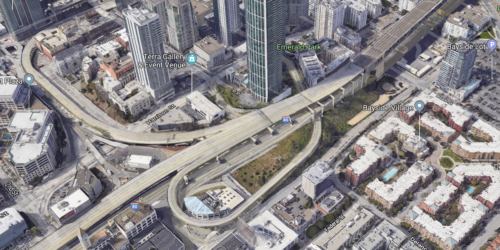
In birds-eye view you can see the reports of Tesla going the wrong-way at Freemont Street and I-80 puts the car right at the start of the upper/lower deck split:

Entering upper deck means a primitive navigation tool still would register right path on map and be unable to react until it was far too late (separated past Treasure Island) and restricted by barriers…continuing about 10 miles into the 880 northbound on the wrong side.

All that above begs the question whether a 2019 computer would allow such navigation variances that it wouldn’t prevent a car from driving directly into oncoming traffic on the wrong deck of one of the longest bridges in America, close to Tesla HQ.

Tesla engineering has been known to misread road lines, misread road-signs, slam into barriers and even spontaneously explode into fireball…at this point I’ll wager a stacked double-decker bridge entrance was all it took for Tesla AI to willingly start driving wrong way.

Take Your Bike Helmet Off and Hold Cars Accountable

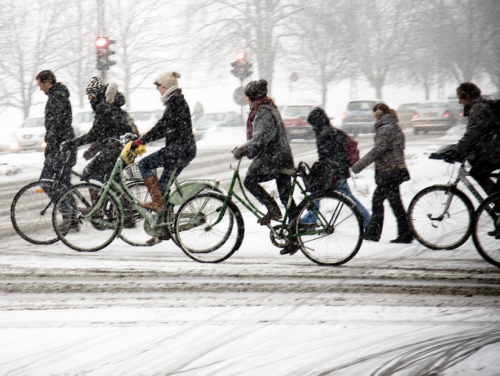
There’s a new first-person account in the New Yorker of some cultural differences between cycling in Holland and America:

Angela van der Kloof, a cycling expert and project leader with the Delft mobility consultancy Mobycon, told me, “From a young age in the Netherlands, we’re trained to take note of others. Not by a teacher but by the way we do things. I think we are very much used to physical negotiation.” Dutch people live in small houses, ride on crowded trains, and generally jostle against one another—the Netherlands has the sixteenth-highest population density in the world. Navigating complicated traffic situations, calmly and systematically, came naturally to our neighbors.

The key to this story is actually how Dutch women had the power to organize and campaign for protecting children from being murdered by people operating cars:

With cars came carnage. In 1971 alone, thirty-three hundred people—including more than four hundred children—were killed on Dutch roads. A number of organizations, including a group named Stop de Kindermoord, or Stop the Child Murder, began agitating to take the streets back from automobiles.

Contrast this story with America, where cars are treated like guns and operators are allowed to commit indiscriminate murder as an expression of an individual’s power over society, which Next City has explained in qualitative examples:

Morgan stayed in the intensive care unit for another month. For the first two weeks, the doctors weren’t positive she would survive. By the end of it all, medical expenses totaled more than $500,000.

“I was scared to death,” says her husband, David Morgan.

His fear would soon turn to anger when he realized that local police had no interest in pursuing charges against the woman who nearly killed his wife. After the State Highway Patrol’s investigation concluded that there were no grounds for felony charges, the district attorney also demurred from pressing charges.

“As far as the state of Mississippi goes, you could be an armadillo hit on the road, and the state treats you just the same as a… cyclist,” Morgan says.

What the New Yorker article about cycling in Holland misses entirely, ironically, is that the density of crowds cited by those living in Holland is not a sufficient ingredient on its own. Next City explains this using NYC quantitative data. Clearly NYC is an American city where people also are used to physical negotiation:

Consider crash data from New York City, which has installed more than 350 miles of bike lanes. There were 14,327 pedestrian and cyclist injuries in 2012 as a result of vehicle crashes, but police cited only 101 motorists with careless driving, a rate of less than 1 percent.

The actual difference is thus not growing up in density, but rather the levels of political engagement by women.

Cycling historically has been described as an independence movement for women, which should put male-dominated legislative action impeding people cycling in its proper perspective. Also women cyclists in America tend to be more at risk from cars and thus more likely to design safety infrastructure, as drivers put them more at risk:

“What we found was that female cyclists had a significantly different experience riding than the male riders did. … Female riders tend to have more aggressive interactions with drivers than male riders did.” …researchers found — no surprise — that protected bike lanes offered the best protection. Cars stayed an average 7.5 feet from cyclists cruising along a bike lane separated from traffic by bollards. No bike lanes, more close calls.

A campaign like “Stop de Kindermoord, or Stop the Child Murder” emphasizes the rights of children to live free from harm by adults in cars. America is about as likely to see a campaign like that succeed as elect a woman President instead of a man repeatedly accused of harming children for his self-benefit.

Don’t forget, America remains the only country in the world that has failed to sign the Convention on the Rights of the Child.

Holding cars accountable for killing cyclists and pedestrians would be like Epstein going to jail decades ago for harming children, yet instead he was seen free and partying freely with the White House Occupant.

The bottom line is that the safety of roads is about political power. That is why putting on helmets is the wrong answer. When cycling below 12 mph, which is the vast majority of commuter cyclists, the right answer is to place responsibility of safety upon those operating heavily armored machinery.

In a world where others may be harmed by their actions, machine operators must be accountable. If you think this is foreshadowing the problem of holding drone owners responsible for killing people, you are right.

Bay Area Bicycle Law points out that from 2013 to 2017 3,958 Cyclists have died across the U.S. for an average of 792 each year. 98% (777 of the 792) were in accidents with motor vehicles and 83% of cyclists had helmets on when they were murdered.

Let me say that again, 98% were in accidents with motor vehicles and a whopping 83% died with helmets on. Do you see the problem?

California, with far less density than NYC or Holland, repeatedly has opposed helmet laws and for the right reasons (same as in Holland).

Peter Jacobsen, a Sacramento-based public health consultant, believes helmet laws may make streets less safe for cyclists. Australia and New Zealand recently introduced compulsory helmet laws, and bike use fell by 33 percent, he said. Numerous reports have found that cycling conditions improve with more riders on streets. By reducing the number of cyclists through helmet laws, conditions actually get more dangerous.

He also said studies have shown that motorists drive closer to cyclists with helmets on, and that helmets only reduce minor injuries, not fatalities. “Bike helmets are padding; they’re not armor,” he said.

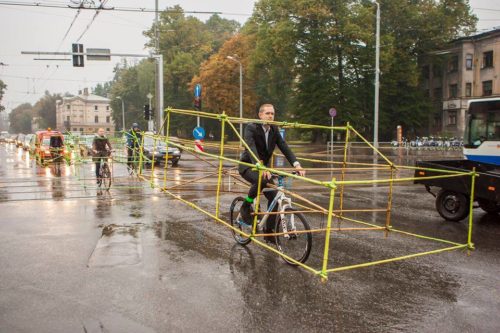
Cars are armor. If cyclists put on armor, they’d be a car.

Not only do helmet laws decrease cycling by a significant amount, they do not show any real decrease in the death rate. In other words, data repeatedly shows how helmets impede cycling and thus make it less safe for the vast majority of cyclists.

Exceptions do exist and are important: habitually unsteady high-risk riders such as children and racers. These exceptions are easily handled, however, such as requiring helmets to compete in a race where contestants will gladly abide for the chance of winning.

The right formula is encourage more cyclists operating at speeds averaging below 12 mph in physically separated lanes, with NO adult requirement for helmets, and strict accountability for those who operate heavy (i.e. dangerous) machinery in the midst. Protecting the vulnerable shouldn’t be that difficult to figure out for our streets.

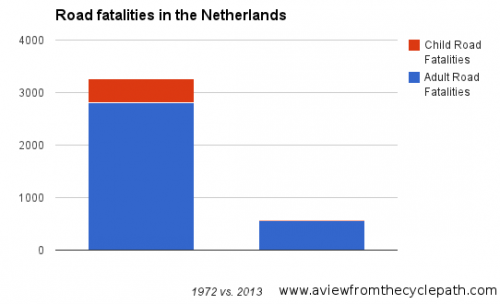
The fact that Holland has effectively already done it (as well as Denmark, Sweden, etc.) means America is running out of excuses to justify murderous drivers, as “A view from the cycle path” has illustrated quite simply:

“The absolute number of child fatalities dropped by 98% over a period of time when the population size and the proportion of trips made by bicycle both rose significantly.”

The answer to the problem of cars killing cyclists is directly related to how the American political system allows care and consideration for vulnerable populations at risk of being harmed due to a weapon authorization for individuals.

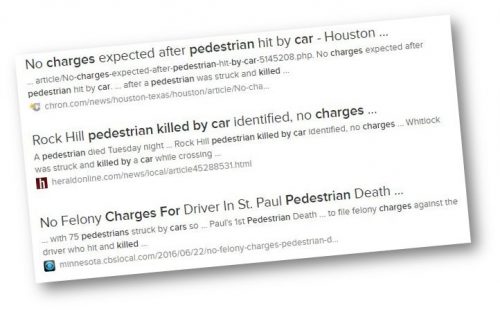
We need to be intelligent enough to start the move away from these American headlines:

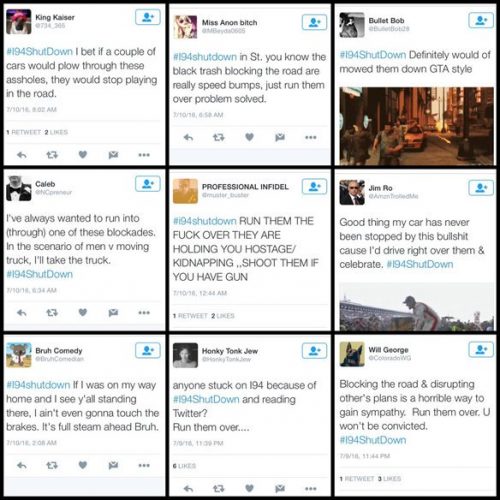
Which means sites like Twitter need to recognize the harm from its role in peddling active calls to use cars to murder non-whites, and how this propaganda relates to “Republicans want to legalize running over pedestrians“:

…state Rep. Keith Kempenich, perversely suggested that shielding drivers who kill protesters was a necessary anti-terrorism measure.

All that being said, there recently have been at least two notable exceptions to the sad state of weaponized roadways in America:

  1. White supremacist use of car as weapon. Found guilty of first-degree murder
  2. Driver charged with intent to kill. 5 cyclists dead

Tesla Threat to Public Safety

WalMart is suing Tesla for negligence, saying Elon Musk’s rush to market is failing industry standards of safety

…as of November 2018, fires broke out at no fewer than seven of the stores, forcing the disconnection of all the solar panel systems for the safety of the public…[because installed] haphazardly and as quickly as possible in order to turn a profit

Has Tesla released a transparency report on the total number of unexplained fires it’s caused? There are so many.

Even more concerning is how very little tangible response has come from the manufacturer, despite being cited as significantly worse than other manufacturers. For example:

Spontaneous combustion without warning:

…around 8:15 pm on Sunday night, the Tesla Model S is seen emitting smoke before suddenly bursting into flames. Further video shows the resulting charred wreckage, including that of two other nearby cars.

Once you realize the likelihood of a fire is unpredictable and could be increasing dramatically without explanation, the severity of these fires is also a major concern.

The fires seem to re-ignite unpredictably, are extremely toxic and, because of those two attributes, require expensive special training and equipment funded by tax-payers:

“With a gasoline fire, they know if they get enough water on it, it’ll go out,” [Peter Sunderland, a professor of fire protection engineering at the University of Maryland] said. “But with a deep-seated fire, it’s hard to spray the water deep enough into the battery to stop the fire.”

Slate reported that the firefighters who attempted to put out the 2013 Model S car fire in Seattle had trouble and “ended up using a circular saw to cut a hole that would allow them to pour water directly on the battery.”

In a fiery Tesla crash into a barrier in Austria, the car kept reigniting, forcing firefighters to battle the flames for hours. The car had to be put into quarantine for 48 hours to remove the chances of reignition, Jalopnik reported.

What’s more, lithium-ion fires can release high levels of “toxic gases” such as carbon monoxide, soot, hydrogen fluoride, and particulates of oxides of nickel; aluminum; lithium; copper; and cobalt, according to a Tesla Model X emergency response guide. As a result, firefighters need to wear a self-contained breathing apparatus and should use hoses that spray fog and special ventilation fans that push air out at a high velocity to protect bystanders downwind of the fire, according to the guide.

There are dozens of stories of Tesla fires not only being far less predictable, more expensive and more toxic than other products, they seem to not have any cohesive story yet of what to expect in the future.

In several cases the fires were extinguished at first encounter. Then had to be extinguished again on the tow truck. Then had to be extinguished again in the junk yard. That’s a multiplier effect for several reasons, not least of all because fires on tow trucks and in junk yards are not supposed to happen.

Initially Tesla’s CEO tried use social media to claim his products “500% less likely” to catch fire. This almost immediately was disproved (not to mention ridiculed by many for using math incorrectly)

Tesla, without a question, has a way higher incidence of fire deaths than other cars.

Then the car manufacturer tried to pivot to an argument that their fire death statistics aren’t being separated from collisions, where occupants would have died anyway. This again ignores the fact that their fires are different in ways that increase the likelihood of fatalities, not only for occupants but also those responding to help.

Tesla’s CEO should not be allowed to misrepresent harm likelihood and severity of his products when clearly there is ample and growing data on sub-standard engineering practices and threat to society. WalMart is picking up a hot topic, to be sure.

The CEO’s “safer than what you can buy from others” false claim even seems to be turned into a joke by him in 2018, as you can see in his attempts at humor when promoting sales of a flamethrower:

A Boring Company spokesperson said its flamethrower is ‘safer than what you can buy right now off-the-shelf on Amazon to destroy weeds’.

If Tesla wanted to extol virtues of battery technology, it would be that the carbon footprint producing them is zeroed out in just a few years and they emit zero harms when operating normally. That would be a viable defense, while they work to improve engineering to reduce fire likelihood and severity.

However, instead we see a company try dismissive fallacies (false equivalence in fires) and make claims their products give better odds of survival than other manufacturers.

The data doesn’t support Tesla in this comparison, since likelihood and severity of their fires already appear to be higher and trending worse with minimal explanation and no recall.

Tesla had at least quadruple (5 observed fire deaths vs. 1.19 expected) the fire-related mortality of the average car from 2016 through 1Q 2019

In fact, arson soon could be added to increasing probability of Tesla fires as owners realize what spontaneous fire in an unexpected location can mean (e.g. parking garage near structural integrity of a building). Imagine investigators trying to ascertain whether a Tesla exploding within a building was predictable with intent or just another “safer that what you can buy from others” incident.

The infamously glib and unapologetic “everything’s better with fire” social media presence of their CEO suggests WalMart’s lawsuit declaring his product line to be a public safety hazard…may document how failures in engineering duty-to-care may even come from the top.

“Parked Teslas Keep Catching on Fire Randomly, And There’s No Recall In Sight” –TheDrive

Why E-Scooters Are Big Polluters

A new scientific paper makes a number of recommendations that are so obviously good, it makes it seem the E-Scooter industry has put little to no thought into environmental harms.

We illustrate the potential to reduce life cycle global warming impacts through improved scooter collection and charging approaches, including the use of fuel-efficient vehicles for collection (yielding 177 g CO2-eq/passenger-mile), limiting scooter collection to those with a low battery state of charge (164 g CO2-eq/passenger-mile)

Turns out burning oil to shuffle empty yet charged scooters around is…wait for it…generating pollution. Science.

The study also points out short lifecycles of the scooters due to lack of resilience (against intentional or accidental harms) is another factor. The conclusion is pretty clear:

Claims of environmental benefits from their use should be met with skepticism…

In other words, ride a bicycle.