Reading an old cookbook in a German library archive brought this soupy gem to light. Berlin Reform-influenced Jewish bourgeoisie were well-integrated into German civic vocabulary. They kept a Hebrew anchor visible when they said happy Easter.
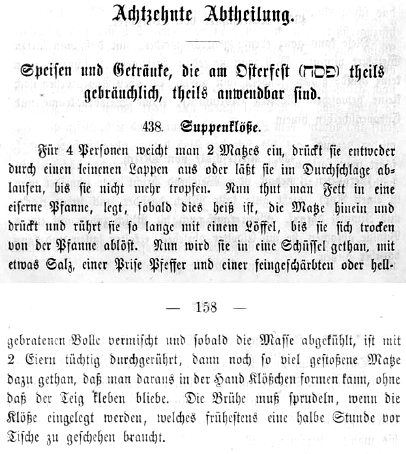
Reading an old cookbook in a German library archive brought this soupy gem to light. Berlin Reform-influenced Jewish bourgeoisie were well-integrated into German civic vocabulary. They kept a Hebrew anchor visible when they said happy Easter.
Monterey locals are buzzing like a hornet nest.
Significant historical research has gone into this question over the years. And all of that research leads to the conclusion that it’s always been called Lovers Point. And it got that name because it was and is a famously popular smooching and hoochie-cooching location for young romantics.
A description of Lovers Point published in the American Guide Series’ Monterey Peninsula said the place was “named by legend and designed by nature as a trysting place for sentimental youth.”
The confusion comes, I guess, because some people mistakenly thought that a lot of religious services were conducted at Lovers Point, back in the day. But researchers say that, while some occasional services were held at Lovers Point, most of the religious stuff actually happened at Jewell Park, just down the road from Lovers Point. In fact, a “preacher’s stand” had been erected at Jewell Park for the convenience of pastors holding services there.
Well, the point seems to be that you could find Jesus at the Jew Park in Monterey. Makes sense when you think about it.
In fact, a true adherent to the teaching of a Jew might say Lovers Jesus Point is redundant. Like saying Point Point or Park Park.
A reliable reference book about Monterey place names, Monterey County Place Names: A Geographical Dictionary, by Donald Thomas Clark, cites several authoritative sources on the matter. As far back as 1885, the rocky outcrop was referred to simply as Lovers Point, according to Clark.
Clark and McCombs also pointed out that the location had a bunch of other names over the years, including Point Aulon, Laboratory Point, Organ Point, Spooney’s Point and simply The Point.
The Point. I like it.
Apparently blame for attempts to inject Jesus where he doesn’t belong goes to Santa Cruz in 1968, which is a notable place and time, let alone their more recent campaign “save the Swastika“.
“You can’t regulate what’s on the inside of somebody else’s house,” said police spokesman…. The man apparently rotates the swastika flags with other, less controversial banners, and Friend said police started receiving complaints of Nazi flags about a month ago. Over the weekend the resident hung America’s Old Glory and Britain’s Union Jack under two Nazi flags. Monday, he hung a modern German government flag between the two flags of the Third Reich.
Notable the Santa Cruz police openly admit they don’t know how laws work. An ideologically permissive zone in the direction that flows all the way to Monterey.
We all know which way the baptismal waves go in the bay.
Nazi surf’s up!
Calvin Duncan spent 28 years in prison for a murder he did not commit. During those years the Orleans Parish Clerk of Criminal Court office repeatedly denied him access to the records he needed to prove his innocence. He taught himself law inside the prison. He earned a paralegal bachelor’s degree after release. He graduated from Lewis & Clark Law School at age 60. In November 2025 he won 68 percent of the vote to become Clerk of Criminal Court in the same office that had helped keep him wrongfully imprisoned. He’s an American hero.
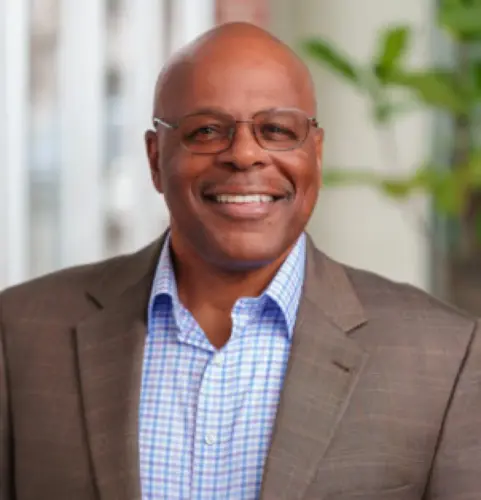
On April 23, 2026, the Louisiana House voted 63 to 28 to dissolve the office.
Senate Bill 256 shutters the entire criminal court clerk system in a week and folds it under the Clerk of Civil Court. No election will be held for the consolidated position. Nobody in New Orleans has ever voted for an Orleans Clerk of Court. Duncan was scheduled to take office May 4.
Governor Jeff Landry is expected to sign the bill before that date. Why?
Senate author Jay Morris of West Monroe has acknowledged that Landry asked him to introduce the bill to remove the seat for Duncan. And I’ll say it again, Landry opposed Duncan’s petition for wrongful-conviction compensation when Landry was Attorney General in 2023. His successor Liz Murrill denied Duncan’s exoneration throughout the campaign, despite more than 160 legal professionals signing a public letter confirming it.
This is a long game of structural, systemic, racism.

You have to see Landry for the piece of racist shit that he is. Look at who is using state power to repeatedly attack an American Black man to hold him down based on his race alone.
Laundering in seersucker
Representative Dixon Wallace McMakin of Baton Rouge carried the bill on the House floor. He described dissolving a municipal court system as continuity through modernization. It isn’t, and that’s a specific phrase with a racist history. Typically “modernization” is the coded language for dismantling Black institutions and political power.
He cited the consolidation of the New Orleans tax assessors’ offices as precedent. It wasn’t. When Democratic Representative Delisha Boyd asked him how long that consolidation took, he said he did not know. Boyd told him the answer. Four years. This bill says it will bomb the office out in six business days, just so no Black man can have it.
Have you been to Baton Rouge?
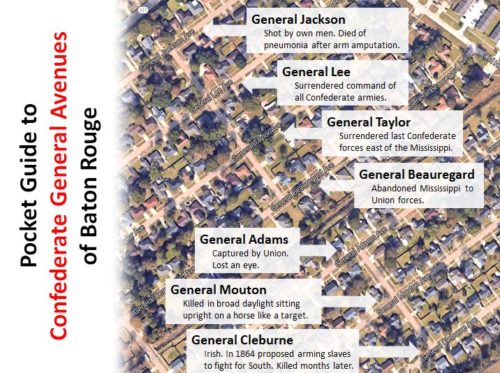
Representative Denise Marcelle of Baton Rouge asked McMakin whether he would accept the governor eliminating Marcelle’s district before she could take office. He said he would be fine with it, presumably as it would keep whites in power and still block any Black from office.
McMakin acknowledged on the floor that there is no precedent for eliminating an elected office before the duly elected person can take their position. He then apologized. Not to Duncan, for being racist. To his fellow Republicans. For being called racist.
Hate holding longer than the state constitution
Louisiana is known for this.
In 1868 Oscar Dunn became Lieutenant Governor. In 1872 P.B.S. Pinchback served as acting governor. By 1898 the state had written a new constitution whose framers openly declared its purpose: eliminate Black political participation. The mechanism evolved across a century. Poll taxes. Literacy tests. Grandfather clauses. White primaries. The Voting Rights Act struck most of them down. The losing white supremacists taught their children to repeat the hate generationally.
Thus the current move is identical. A Black official wins an election by a 36-point margin. The state invents an administrative reason to eliminate the victory by declaring the seat erased. Sixty-three legislators vote for white supremacist power. The governor signs to keep hate alive.
McMakin called it modernization, because that’s a whistle to white supremacists. They are hiding records of their past crimes by committing new ones.
The archaeological detail
Duncan ran for this office because the office had wronged him. The records that would have proved his innocence sat inside the Clerk of Criminal Court’s files. He was denied access to them for years. When the Innocence Project of New Orleans finally pried the documents loose through litigation, the files showed police officers had lied in court. That is what a functioning records office is supposed to prevent and what a captured one enables.
Duncan’s victory threatened to put a man who understood the records system’s failures in charge of fixing them. The people holding racist power, who corrupted records and denied justice, preferred to dissolve the system before it could be fixed.
That is integrity breach as policy. Failure by design, like a ladder thrown down so others can’t climb the wall.
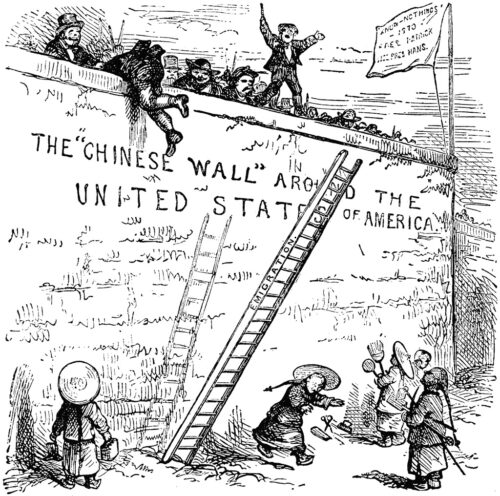
Office, what office?
The accountability mechanism was working. Voters elected a true American reformer by a landslide. The white supremacists responded by removing the mechanism rather than accepting the accountability. Because white supremacists by definition are people who can not accept accountability.
Representative Candace Newell of New Orleans said it plainly before the vote. The rights they eliminate today are a template for the rights they eliminate tomorrow. And that has a specific history in Louisiana, with a specific “modernization” term used to enact state-level white supremacist doctrine.
Polymarket CEO tells insiders to leak. So cool, he said five months ago. Do it, for the market.
…what’s cool about Polymarket is that it creates this financial incentive for people to go and divulge the information to the market and the market to change, and all of a sudden…
Insider leak is the entire product. Harvard researchers estimate more than $143 million in Polymarket profits may be linked to individuals with access to nonpublic information. I’m surprised it’s not 100%, given the CEO statement.
And now, as you might expect, Polymarket says insiders who leak will be selectively reported to law enforcement.

Proof? Arresting the CEO would be the only acceptable proof.
The insider-leak-harvesting system is sacrificing one publicly identifiable service member, without explaining how, to preserve the Polymarket platform as a pipeline of crime. The referral is compliance theatre that protects the CEO, who is in bed with the government and will victimize again.
Inducement to crime is the business model. Selective corrupted enforcement is the margin.
An insider named Van Dyke did exactly what Coplan advertised he made Polymarket for, and was held out as the “not cool” kind of leaker once the political cost of privacy exceeded the marketing value of generating leakers to sacrifice.
The resolution mechanism (who gets prosecuted) is cheaper to corrupt than the underlying event (controlling who leaks). Polymarket positions itself now as above the law, as it chooses which leakers to expose and which to hide for profit. That selection power is worth more than any individual trader’s profit, and it is apparently corrupted.
The “Eddie Murphy Rule” charge is novel and narrow. It punishes Van Dyke’s misuse of classified information. It does nothing to the platform that monetized his misuse, or to the CEO who described the misuse of classified information as a core feature of his business.
The FBI raided the Polymarket CEO’s apartment in November 2024 as part of an investigation into US users trading on the platform. Trump’s DOJ and CFTC abruptly dropped both investigations in July 2025. Then in September 2025 Polymarket bought a CFTC-registered exchange to go onshore. Talk about insiders. Coplan was on a call from Mar-a-Lago the same week as the raid. The acting Attorney General applauding “our men and women in uniform” on the Van Dyke arrest is Todd Blanche, Trump’s former personal defense attorney. The FBI Director praising the indictment is Kash Patel.
The arrest is entirely political.
The system got the wrong guy, on purpose.
Critical OPSEC integrity failure, by design.
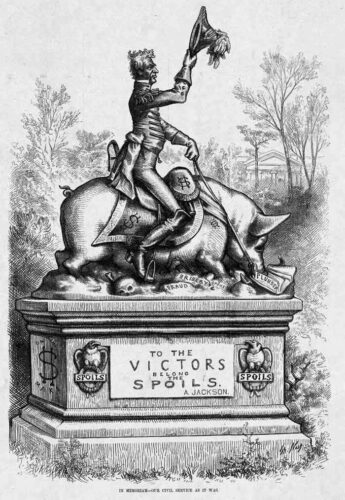
The Van Dyke arrest is the only visible prosecution against a backdrop of total federal withdrawal, on both sides of a rigged competition the First Family is paid to sit atop like President Andrew “genocide” Jackson would have wanted.
Donald Trump Jr. is a paid advisor to both Polymarket and Kalshi, the two largest prediction markets competing for the same regulatory carve-out. At an April House Agriculture Committee hearing, Representative Jim McGovern asked CFTC Chair Mike Selig whether the White House had pressured CFTC to drop its Polymarket probe. Selig refused to answer. Selig also runs a CFTC with one commissioner out of five, a quarter of its staff cut, and a public admission that AI is covering the enforcement gap. On April 2, that same CFTC joined DOJ in suing Arizona, Connecticut, and Illinois to block state enforcement against prediction markets. One of the DOJ attorneys on the case is Yaakov Roth, who represented Kalshi in the 2023 lawsuit that opened the door for these platforms in the first place. Blanche meanwhile issued his “cease cryptocurrency enforcement” memo while still holding between $159,000 and $485,000 in crypto, despite an ethics pledge not to act on matters affecting those holdings. He divested after.
In case you like historical parallels
| Year | Case | Sacrificed | Protected |
|---|---|---|---|
| 1720 | South Sea Bubble | Company directors | Court and ministry (Walpole, “the Screen”) |
| 1872 | Crédit Mobilier | Two censured congressmen | Railroad directors, federal subsidy pipeline |
| 1875 | Whiskey Ring | Treasury clerks | Orville Babcock, Grant |
| 1921–24 | Teapot Dome | Albert Fall | Harry Daugherty, Harding cabinet |
| 1986–87 | Iran-Contra | Oliver North | Reagan, CIA chain of command |
| 1995–96 | Loans-for-shares | Russian public assets | Yeltsin family, seven bankers |
| 2026 | Polymarket | Gannon Van Dyke | Shayne Coplan, Trump family |