Haile Selassie I, born Tafari Makonnen, ruled as Emperor of Ethiopia from 1930 to 1974. He was known for modernizing the country through political and social reforms, such as the written constitution and the abolition of slavery.
His power was interrupted by the Second Italo-Ethiopian War, which forced him into exile during Italian occupation. The Allied campaign in East Africa, using pioneering methods of irregular warfare, liberated the country in 1941 and restored Selassie.
He also presided over and became the first chair of the 1963 Organization of African Unity (today known as African Union). A 1974 military coup by the “Derg” removed him from power and he was murdered by them August 27, 1975.
It’s an important history lesson in context of a new Hill article that says the United States unfortunately modeled counter-insurgency in Afghanistan on colonial instead of post-colonial doctrines.
Galula’s objective was perpetuating colonial rule. He, as a French officer, was fighting in France’s name to shore up France’s legitimacy. In contrast, we fight in someone else’s name to shore up someone else’s legitimacy.
At its most concrete, the difference between colonial and post-colonial settings boils down to what one can offer the population, which, per FM 3-24, is the true “center of gravity” in an insurgency. Galula emphasizes in his writing that a key part of the colonial regime’s pitch to the population is that the colonial power is not going anywhere. Therefore, siding with the colonial power and supporting it tacitly or actively is a reasonable choice. One can trust that which will always be there.
This argument undoubtedly helped France recruit large numbers of locals to fight under French colors. In contrast, the post-colonial foreign power that broadcasts its intention to leave from the moment it first arrives faces a far more difficult time rallying and sustaining support.
No one really has figured out how a third-party military intervention shores up the legitimacy of a client state in a post-colonial context.
The Allied liberation of states held by the Axis was all about intervention to shore up legitimacy of a client state, so there’s plenty of evidence to reference. Ethiopia makes for a particularly good case example, bridging into a post-colonial context, because it was never colonized.
1951 Photo of San Francisco taken via periscope from a US Navy submarine (USS Catfish). Source: Petapixel
Just three years after a code of ethics was drafted in Nuremberg (condemning Nazis for experimenting on humans without consent and with no benefit to test subjects) the US started a massive bioweapons test… violating the code:
Over a period of six days in September 1950, members of the US Navy sprayed clouds of Serratia from giant hoses aboard a Navy minesweeper drifting two miles along the San Francisco coastline, a bacterial fog quickly enveloped and disguised by the region’s own mist. By monitoring the air at 43 scattered sites throughout the region, the Navy found Serratia bacteria blown throughout San Francisco and extending to the adjacent communities of Albany, Berkeley, Daly City, Colma, Oakland, San Leandro, and Sausalito
Eleven fell sick from the experiment, one died.
A week after the spraying, eleven patients were admitted to the now defunct Stanford University Hospital in San Francisco with severe urinary tract infections, resistant to the limited antibiotics available in that era. One gentlemen, recovering from prostate surgery, developed complications of heart infection as Serratia colonized his heart valves. His would be the only death during the aftermath of the experiment.
Such practices are said to have continued all the way to November 25, 1969.
From 1950 to 1966, the military performed open-air testing of potential terrorist weapons at least 239 times in at least eight American cities, including New York City, Key West, and Panama City, FL, exposing still unknown numbers of Americans to Serratia and other microbial organisms.
It all supposedly came to an abrupt end on that single day in 1969 because President Nixon made an offical “Statement on Chemical and Biological Defense Policies and Programs”.
The United States shall renounce the use of lethal biological agents and weapons, and all other methods of biological warfare. The United States will confine its biological research to defensive measures such as immunization and safety measures
Instead, Ronald Reagan with Donald Rumsfeld just fourteen years later did the opposite and shipped bioweapons into Iraq for offensive measures including use against their own population.
After Rumsfeld’s visit to Baghdad in 1983, U.S. intelligence began supplying the Iraqi dictator with satellite photos showing Iranian deployments. Official documents suggest that America may also have secretly arranged for tanks and other military hardware to be shipped to Iraq in a swap deal–American tanks to Egypt, Egyptian tanks to Iraq. Over the protest of some Pentagon skeptics, the Reagan administration began allowing the Iraqis to buy a wide variety of “dual use” equipment and materials from American suppliers. According to confidential Commerce Department export-control documents obtained by NEWSWEEK, the shopping list included a computerized database for Saddam’s Interior Ministry (presumably to help keep track of political opponents); helicopters to transport Iraqi officials; television cameras for “video surveillance applications”; chemical-analysis equipment for the Iraq Atomic Energy Commission (IAEC), and, most unsettling, numerous shipments of “bacteria/fungi/protozoa” to the IAEC. According to former officials, the bacteria cultures could be used to make biological weapons, including anthrax. The State Department also approved the shipment of 1.5 million atropine injectors, for use against the effects of chemical weapons, but the Pentagon blocked the sale. The helicopters, some American officials later surmised, were used to spray poison gas on the Kurds.
The United States almost certainly knew from its own satellite imagery that Saddam was using chemical weapons against Iranian troops. When Saddam bombed Kurdish rebels and civilians with a lethal cocktail of mustard gas, sarin, tabun and VX in 1988, the Reagan administration first blamed Iran, before acknowledging, under pressure from congressional Democrats, that the culprits were Saddam’s own forces. There was only token official protest at the time. Saddam’s men were unfazed. An Iraqi audiotape, later captured by the Kurds, records Saddam’s cousin Ali Hassan al-Majid (known as Ali Chemical) talking to his fellow officers about gassing the Kurds. “Who is going to say anything?” he asks. “The international community? F– them!”
Read that again: President Reagan almost certainly knew from satellite imagery that Saddam was using chemical weapons on his own population… and offered only token official protest at the time.
Who is going to say anything, indeed.
This perhaps gives insight into the false claims by extreme right-wing groups about vaccination (e.g. claiming it is unsafe or that it does harm). They probably celebrated Reagan’s use of power for thoughtless violations of ethical and moral codes, and now are projecting — find it hard to believe anyone given power would do what’s right.
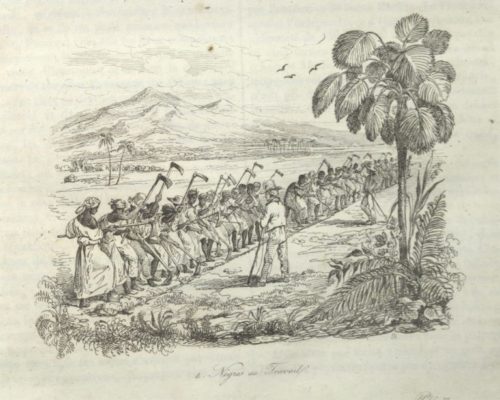
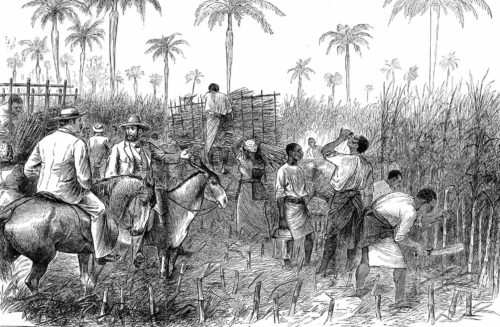
The Union Army in 1864 seized the Big Spring, Tennessee plantation where a slave named Jourdan worked. Upon being set free he moved to Dayton, Ohio with his wife and children.
Shortly after the Civil War ended Jourdan was begged to return to the Tennessee plantation by the man who had kept him a slave (Colonel Patrick Henry Anderson). Allegedly business was ailing and couldn’t continue without Jourdan doing the work.
The 1865 reply Jourdan sent to Anderson went into a newspaper and was widely reprinted. He passed away more than four decades later in 1907, aged 81, never having returned to the plantation.
Here’s one example:
Click to enlarge.
Here’s another, which removed the final paragraphs that diplomatically mentioned the common practice of white men raping the black daughters of their slaves
Click to enlarge.
Here’s the full text version:
[Written just as he dictated it]
Dayton, Ohio,
August 7, 1865
To My Old Master, Colonel P.H. Anderson, Big Spring, Tennessee
Sir: I got your letter, and was glad to find that you had not forgotten Jourdon, and that you wanted me to come back and live with you again, promising to do better for me than anybody else can. I have often felt uneasy about you. I thought the Yankees would have hung you long before this, for harboring Rebs they found at your house. I suppose they never heard about your going to Colonel Martin’s to kill the Union soldier that was left by his company in their stable. Although you shot at me twice before I left you, I did not want to hear of your being hurt, and am glad you are still living. It would do me good to go back to the dear old home again, and see Miss Mary and Miss Martha and Allen, Esther, Green, and Lee. Give my love to them all, and tell them I hope we will meet in the better world, if not in this. I would have gone back to see you all when I was working in the Nashville Hospital, but one of the neighbors told me that Henry intended to shoot me if he ever got a chance.
I want to know particularly what the good chance is you propose to give me. I am doing tolerably well here. I get twenty-five dollars a month, with victuals and clothing; have a comfortable home for Mandy,—the folks call her Mrs. Anderson,—and the children—Milly, Jane, and Grundy—go to school and are learning well. The teacher says Grundy has a head for a preacher. They go to Sunday school, and Mandy and me attend church regularly. We are kindly treated. Sometimes we overhear others saying, “Them colored people were slaves” down in Tennessee. The children feel hurt when they hear such remarks; but I tell them it was no disgrace in Tennessee to belong to Colonel Anderson. Many darkeys would have been proud, as I used to be, to call you master. Now if you will write and say what wages you will give me, I will be better able to decide whether it would be to my advantage to move back again.
As to my freedom, which you say I can have, there is nothing to be gained on that score, as I got my free papers in 1864 from the Provost-Marshal-General of the Department of Nashville. Mandy says she would be afraid to go back without some proof that you were disposed to treat us justly and kindly; and we have concluded to test your sincerity by asking you to send us our wages for the time we served you. This will make us forget and forgive old scores, and rely on your justice and friendship in the future. I served you faithfully for thirty-two years, and Mandy twenty years. At twenty-five dollars a month for me, and two dollars a week for Mandy, our earnings would amount to eleven thousand six hundred and eighty dollars. Add to this the interest for the time our wages have been kept back, and deduct what you paid for our clothing, and three doctor’s visits to me, and pulling a tooth for Mandy, and the balance will show what we are in justice entitled to. Please send the money by Adams’s Express, in care of V. Winters, Esq., Dayton, Ohio. If you fail to pay us for faithful labors in the past, we can have little faith in your promises in the future. We trust the good Maker has opened your eyes to the wrongs which you and your fathers have done to me and my fathers, in making us toil for you for generations without recompense. Here I draw my wages every Saturday night; but in Tennessee there was never any pay-day for the negroes any more than for the horses and cows. Surely there will be a day of reckoning for those who defraud the laborer of his hire.
In answering this letter, please state if there would be any safety for my Milly and Jane, who are now grown up, and both good-looking girls. You know how it was with poor Matilda and Catherine. I would rather stay here and starve—and die, if it come to that—than have my girls brought to shame by the violence and wickedness of their young masters. You will also please state if there has been any schools opened for the colored children in your neighborhood. The great desire of my life now is to give my children an education, and have them form virtuous habits.
P.S.—Say howdy to George Carter, and thank him for taking the pistol from you when you were shooting at me.
John Oliver points out how Afghanistan’s political instability was “literally a plot point in Rambo III” from 1988, and then suggests what could have been done to improve the dialog (spoiler alert):
Afghan: This is Afghanistan. Alexander the Great tried to conquer this country. Then Genghis Kahn. Then the British. Now Russia. […] Ancient enemy make prayer about these people. […] It says may god deliver us from the venom of the cobra, teeth of the tiger and the vengeance of the Afghan. Do you understand what this means?
Rambo: That you guys don’t take any shit?
Afghan: Yes, something like this.
John as Afghan instead: Sure, but also our political system has long been defined by other countries’ imperial self interests. You understand what that means?
John as Rambo: No, no I don’t.
John as Afghan: Yeah, I didn’t think so. Yeah, you know what, I’m getting we’ll see you guys in roughly fifteen years.
The whole thing is worth a watch.
John’s not wrong about most of it. He nails the point that America “disastrously intervened” (going back to 1980) and has an obligation to get people out. Thus he’s right there’s a lot of responsibility.
However, he could have taken a harder look at what that responsibility means. It’s going to be more than just accepting refugees.
A new chapter is about to unfold in Afghanistan where political moderates aspire to take control back from extreme right-wing religious militias that the US extreme-right had pushed into power (Mujaheddin then Taliban).
If the US can survive the January 6th attempts to seize its own capitol in DC, perhaps it will learn how to help Afghans survive Kabul being seized by similar tribes (and have some freedom to do something about it).
Or let me put it another way, a nuclear Pakistan overrun by extremist right-wing religious militas is the kind of regional effect that the US, Russia and China aren’t going to just sit back and ignore.
a blog about the poetry of information security, since 1995