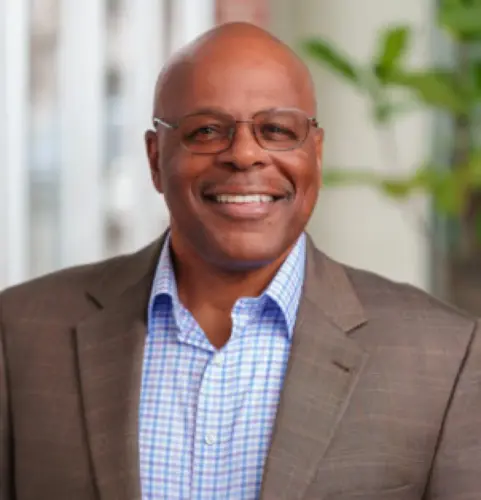
Calvin Duncan spent 28 years in prison for a murder he did not commit. During those years the Orleans Parish Clerk of Criminal Court office repeatedly denied him access to the records he needed to prove his innocence. He taught himself law inside the prison. He earned a paralegal bachelor’s degree after release. He graduated from Lewis & Clark Law School at age 60. In November 2025 he won 68 percent of the vote to become Clerk of Criminal Court in the same office that had helped keep him wrongfully imprisoned. He’s an American hero.
On April 23, 2026, the Louisiana House voted 63 to 28 to dissolve the office.
Senate Bill 256 shutters the entire criminal court clerk system in a week and folds it under the Clerk of Civil Court. No election will be held for the consolidated position. Nobody in New Orleans has ever voted for an Orleans Clerk of Court. Duncan was scheduled to take office May 4.
Governor Jeff Landry is expected to sign the bill before that date. Why?
- As Attorney General in 2018, opposed the voter referendum requiring unanimous juries for felony convictions. Louisiana’s non-unanimous jury rule came out of the 1898 constitution, designed to nullify Black juror votes.
- As Attorney General in 2023, opposed Calvin Duncan’s petition to be compensated by the state for 28 years of wrongful imprisonment.
- Fought the federal court order creating a second majority-Black congressional district under the Voting Rights Act. Signed SB 8 only after courts ran out the clock. His AG Liz Murrill is now in Louisiana v. Callais asking the Supreme Court to gut Section 2.
- Pushed legislation to release juvenile offender records, targeted to the three Louisiana parishes with the highest Black populations.
- Ran a sustained campaign against police reform in New Orleans and Baton Rouge, including moving to terminate the NOPD federal consent decree.
- His Department of Justice created a legal fellowship named for E.D. White, the Louisiana Supreme Court justice who wrote in favor of “separate but equal” in Plessy v. Ferguson.
- Won a federal lawsuit permanently blocking the EPA from considering race when regulating pollution in Louisiana, including in Cancer Alley. This goes right back to the Civil War continuing through 1873 Slaughterhouse pollution cases.
- In 2016 helped craft legislation to block sanctuary cities from state bond money after New Orleans police adopted a policy preventing officers from inquiring about immigration status.
- Called Black Lives Matter protesters “armed thugs.” Named an anti-racial-profiling policy “Hug-a-Thug.”
- Sat on the executive committee of the Rule of Law Defense Fund, which summoned Trump supporters to the Ellipse on January 6, 2021.
- April 2026: directed Senator Jay Morris to introduce SB 256, dissolving the Orleans Parish Clerk of Criminal Court office before Calvin Duncan could take it.
I’ll say it again, Landry opposed Duncan’s petition for wrongful-conviction compensation when Landry was Attorney General in 2023.
His successor Liz Murrill denied Duncan’s exoneration throughout the campaign, despite more than 160 legal professionals signing a public letter confirming it.
Senate author Jay Morris of West Monroe has acknowledged that Landry asked him to introduce the bill.
You have to see Landry for the piece of racist shit that he is. Look at who is systematically using state power to repeatedly attack an American Black man to hold him down based on his race alone.
Laundering in seersucker
Representative Dixon Wallace McMakin of Baton Rouge carried the bill on the House floor. He described dissolving a municipal court system as continuity through modernization. It isn’t, and that’s a specific phrase with a racist history. Typically “modernization” is the coded language for dismantling Black institutions and political power.
He cited the consolidation of the New Orleans tax assessors’ offices as precedent. It wasn’t. When Democratic Representative Delisha Boyd asked him how long that consolidation took, he said he did not know. Boyd told him the answer. Four years. This bill says it will bomb the office out in six business days, just so no Black man can have it.
Have you been to Baton Rouge?
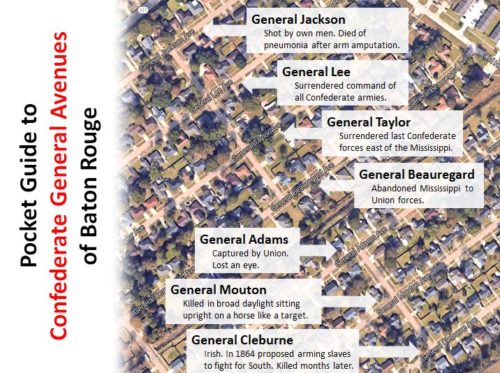
Representative Denise Marcelle of Baton Rouge asked McMakin whether he would accept the governor eliminating Marcelle’s district before she could take office. He said he would be fine with it, presumably as it would keep whites in power and still block any Black from office.
McMakin acknowledged on the floor that there is no precedent for eliminating an elected office before the duly elected person can take their position. He then apologized. Not to Duncan, for being racist. To his fellow Republicans. For being called racist.
Hate holding longer than the state constitution
Louisiana is known for this.
In 1868 Oscar Dunn became Lieutenant Governor. In 1872 P.B.S. Pinchback served as acting governor. By 1898 the state had written a new constitution whose framers openly declared its purpose: eliminate Black political participation. The mechanism evolved across a century. Poll taxes. Literacy tests. Grandfather clauses. White primaries. The Voting Rights Act struck most of them down. The losing white supremacists taught their children to repeat the hate generationally.
Thus the current move is identical. A Black official wins an election by a 36-point margin. The state invents an administrative reason to eliminate the victory by declaring the seat erased. Sixty-three legislators vote for white supremacist power. The governor signs to keep hate alive.
McMakin called it modernization, because that’s a whistle to white supremacists. They are hiding records of their past crimes by committing new ones.
The archaeological detail
Duncan ran for this office because the office had wronged him. The records that would have proved his innocence sat inside the Clerk of Criminal Court’s files. He was denied access to them for years. When the Innocence Project of New Orleans finally pried the documents loose through litigation, the files showed police officers had lied in court. That is what a functioning records office is supposed to prevent and what a captured one enables.
Duncan’s victory threatened to put a man who understood the records system’s failures in charge of fixing them. The people holding racist power, who corrupted records and denied justice, preferred to dissolve the system before it could be fixed.
That is integrity breach as policy. Failure by design, like a ladder thrown down so others can’t climb the wall.
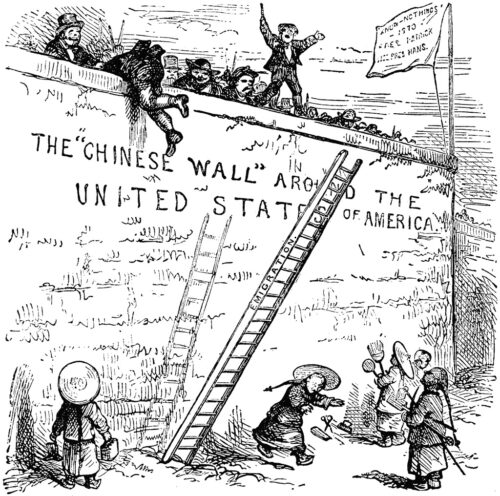
Office, what office?
The accountability mechanism was working. Voters elected a true American reformer by a landslide. The white supremacists responded by removing the mechanism rather than accepting the accountability. Because white supremacists by definition are people who can not accept accountability.
Representative Candace Newell of New Orleans said it plainly before the vote. The rights they eliminate today are a template for the rights they eliminate tomorrow. And that has a specific history in Louisiana, with a specific “modernization” term used to enact state-level white supremacist doctrine.