First of all I just want to say I think a new article in The Hill is excellent.
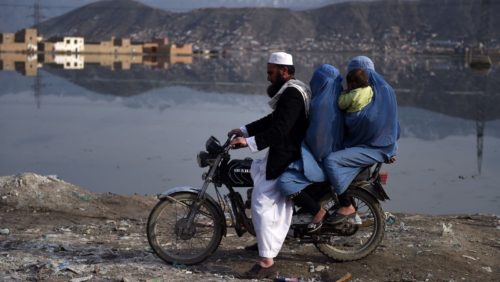
It makes a lot of great points using sound analysis explaining how the Pentagon lost Afghanistan, such as this paragraph.
The U.S. military still lacks a comprehensive field manual and “doctrine” on how to achieve wholesale security force assistance, even though it has been core to our exit strategies in Iraq and Afghanistan for years. Why? Because our military’s identity is about assault and not occupation, and training foreign troops smells of occupation. We would rather blow up the enemy.
Second I want to say the American “occupation” of itself after Civil War could become the canonical example of why American forces have had difficulty identifying with the critical phase that comes after blowing up the enemy.
Look at the 1865 Mississippi concentration camp controversy for a fascinating and detailed case of post-war refugee crisis handling.
Consider that the American military track-record includes confronting the long history of Confederate South attempts to shame or obscure America’s most successful military leaders at nation-building as well as occupation.
Anyone who wants to speak about the American military identity being forged and focused on assault, rather than suited to an occupation, should thus consider how the 1870s and rise of lynchings and Jim Crow might be proper framing.
We could benefit from more history analysis like the following paragraph in another expert op-ed on the war in Afghanistan (which highlights just how an “occupation” phase goes missing from the American narrative):
Though the Federal Army fought the Confederate Army, both armies were composed of locally raised forces like Joshua Chamberlain’s famed 20th Maine Volunteer Infantry Regiment that was made famous for defeating the 15th Alabama Infantry Regiment at Gettysburg. Such forces fought bloody battles across America that eventually led to the standing army we have today with no such regional affiliations. But that took decades.
That’s a good telling of the assault phase, yet not exactly accurate overall. We obviously know that the standing army 150 years later still had to explicitly ban soldiers from flying the “regional affiliation” battle flag of the Confederate South. Ouch.
Third, I feel I have to point this history out because The Hill article makes an unbelievably bad error in analysis — an unforced error, a cardinal and common error in American thinking that helps highlight exactly why “our military” is so bad at occupation doctrine.
The following paragraph in The Hill is like nails on the chalkboard to me.
…conduct human-rights vetting of all candidates for the security forces, which is not just a good idea but also U.S. law (22 U.S. Code § 2378d). We would never dream of putting cops on our streets or soldiers in our military without a background check, but it’s what we did every day in Iraq and Afghanistan.
No no no no.
The history of America tell us the exact opposite. After losing the Civil War the Confederate South soldiers who had sworn to destroy America were appointed to run police… and predictably started to massacre Americans.
…summer of 1865, just after the Civil War, Union commanders in the battered port city of Wilmington, N.C., appointed a former Confederate general as police chief and former Confederate soldiers as policemen. The all-white force immediately set upon newly freed Black people. Men, women and children were beaten, clubbed and whipped indiscriminately… One of the most terrifying examples erupted more than a century ago, when white supremacist soldiers and police helped hunt down and kill at least 60 Black men in Wilmington in 1898.
This is a serious national problem, as I’ve written here before several times.
…Camp Pendleton in Oceanside, California was a hotbed of KKK activity–an open secret that was tolerated or aided by Marine Corps brass… white marine Klansmen openly distributed racist literature on the base, pasted KKK stickers on barracks doors and hid illicit weapons in their quarters…
Such “background check” failures in human-rights vetting continue to this day. Here is some 2020 news!
FBI agent has documented links between serving officers and racist militant activities in more than a dozen states.
I’ve also pointed this kind of error out before with regard to Delta Force Commander memoirs — how basic ignorance about culture and history (e.g. thinking there’s no American equivalent to Afghan “night letters“) creeps into even the most elite American military narratives despite best attempts at being widely studied and not ignorant.
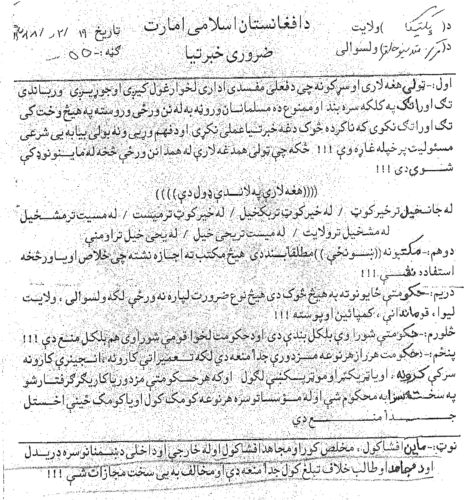
Missing these obvious parallels to American history and ongoing practices can be a form of cognitive blindness and its explanations are not pretty.
The Hill gets so much of the analysis right, yet it throws a giant wrench right in the middle of itself begging a question of how did they make such a giant error.
Basically American security experts regularly overlook domestic terrorism and corruption, or pretend it doesn’t exist, when it involves white insecurity groups that target people other than themselves.
I’m sure it’s a sobering thought to some, while for others in America it’s very well known.
Anyone who experiences or studies the very harsh side of cops on American streets and soldiers in American military, those studying the consequences of weak background checks, knows the “every day” failures in Iraq and Afghanistan could easily be argued to have roots… in sordid American history of human rights abuses.
Fourth, and probably superfluous to this post, is that my degrees are in this exact topic of occupation, or more formally the ethics of military intervention.
My master’s thesis focused on the Allied occupation of Ethiopia 1940-1943, which was meant to give some kind of insight into how armies best invade, hold and then release a country to self-rule.
And from that perspective, what I’m reading today reminds me a lot of the papers I used to pull out of the British archives. Unlike the frozen folders of antique yellowed and brittle documents, however, in this case I wish I had been given a chance to review or edit this article before it went to press to help eliminate such a glaring error.