Category Archives: History

Margaret Mead and Me

When I was a child, visiting an anthropology conference, Margaret Mead had me sit on her lap. My recollection is vague yet always is flavored by my mother telling me Mead asked me questions and wanted to know how I would evolve with two anthropologists as parents.

If Mead were alive today I’d maybe disappoint her to admit I strayed from anthropology into being a student of history instead. And I might defend my choice by telling her it helped me better understand stories she told such as this one:

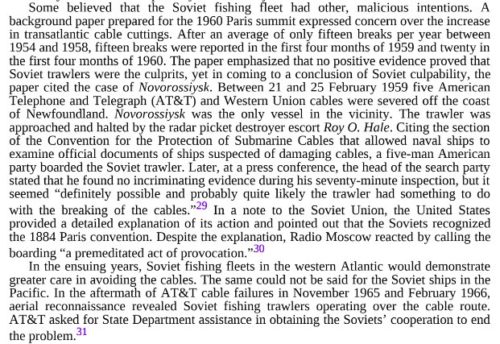
Anthropological Intelligence, David Price, page 287

It surely sounds good for anthropologists to say they were engaged in a form of historic exceptionalism by serving to defeat fascism in the 1940s. However, historians probably could disagree with that framing and say an eternally valid moral choice was being made more than an historic one.

To be fair, she earlier had famously said:

Children must be taught how to think, not what to think. They must be taught that many ways are open to them.

The question then seems to be whether we can or would want to restrict “ways” for people (even anthropologists, or sons of anthropologists) by teaching how to think.

Who reasonably would predict (based on history) where a child will lead in the future? And I guess that was the point of Mead having me sit on her lap for questioning.

Take Your Bike Helmet Off and Hold Cars Accountable

There’s a new first-person account in the New Yorker of some cultural differences between cycling in Holland and America:

Angela van der Kloof, a cycling expert and project leader with the Delft mobility consultancy Mobycon, told me, “From a young age in the Netherlands, we’re trained to take note of others. Not by a teacher but by the way we do things. I think we are very much used to physical negotiation.” Dutch people live in small houses, ride on crowded trains, and generally jostle against one another—the Netherlands has the sixteenth-highest population density in the world. Navigating complicated traffic situations, calmly and systematically, came naturally to our neighbors.

The key to this story is actually how Dutch women had the power to organize and campaign for protecting children from being murdered by people operating cars:

With cars came carnage. In 1971 alone, thirty-three hundred people—including more than four hundred children—were killed on Dutch roads. A number of organizations, including a group named Stop de Kindermoord, or Stop the Child Murder, began agitating to take the streets back from automobiles.

Contrast this story with America, where cars are treated like guns and operators are allowed to commit indiscriminate murder as an expression of an individual’s power over society, which Next City has explained in qualitative examples:

Morgan stayed in the intensive care unit for another month. For the first two weeks, the doctors weren’t positive she would survive. By the end of it all, medical expenses totaled more than $500,000.

“I was scared to death,” says her husband, David Morgan.

His fear would soon turn to anger when he realized that local police had no interest in pursuing charges against the woman who nearly killed his wife. After the State Highway Patrol’s investigation concluded that there were no grounds for felony charges, the district attorney also demurred from pressing charges.

“As far as the state of Mississippi goes, you could be an armadillo hit on the road, and the state treats you just the same as a… cyclist,” Morgan says.

What the New Yorker article about cycling in Holland misses entirely, ironically, is that the density of crowds cited by those living in Holland is not a sufficient ingredient on its own. Next City explains this using NYC quantitative data. Clearly NYC is an American city where people also are used to physical negotiation:

Consider crash data from New York City, which has installed more than 350 miles of bike lanes. There were 14,327 pedestrian and cyclist injuries in 2012 as a result of vehicle crashes, but police cited only 101 motorists with careless driving, a rate of less than 1 percent.

The actual difference is thus not growing up in density, but rather the levels of political engagement by women.

Cycling historically has been described as an independence movement for women, which should put male-dominated legislative action impeding people cycling in its proper perspective. Also women cyclists in America tend to be more at risk from cars and thus more likely to design safety infrastructure, as drivers put them more at risk:

“What we found was that female cyclists had a significantly different experience riding than the male riders did. … Female riders tend to have more aggressive interactions with drivers than male riders did.” …researchers found — no surprise — that protected bike lanes offered the best protection. Cars stayed an average 7.5 feet from cyclists cruising along a bike lane separated from traffic by bollards. No bike lanes, more close calls.

A campaign like “Stop de Kindermoord, or Stop the Child Murder” emphasizes the rights of children to live free from harm by adults in cars. America is about as likely to see a campaign like that succeed as elect a woman President instead of a man repeatedly accused of harming children for his self-benefit.

Don’t forget, America remains the only country in the world that has failed to sign the Convention on the Rights of the Child.

Holding cars accountable for killing cyclists and pedestrians would be like Epstein going to jail decades ago for harming children, yet instead he was seen free and partying freely with the White House Occupant.

The bottom line is that the safety of roads is about political power. That is why putting on helmets is the wrong answer. When cycling below 12 mph, which is the vast majority of commuter cyclists, the right answer is to place responsibility of safety upon those operating heavily armored machinery.

In a world where others may be harmed by their actions, machine operators must be accountable. If you think this is foreshadowing the problem of holding drone owners responsible for killing people, you are right.

Bay Area Bicycle Law points out that from 2013 to 2017 3,958 Cyclists have died across the U.S. for an average of 792 each year. 98% (777 of the 792) were in accidents with motor vehicles and 83% of cyclists had helmets on when they were murdered.

Let me say that again, 98% were in accidents with motor vehicles and a whopping 83% died with helmets on. Do you see the problem?

California, with far less density than NYC or Holland, repeatedly has opposed helmet laws and for the right reasons (same as in Holland).

Peter Jacobsen, a Sacramento-based public health consultant, believes helmet laws may make streets less safe for cyclists. Australia and New Zealand recently introduced compulsory helmet laws, and bike use fell by 33 percent, he said. Numerous reports have found that cycling conditions improve with more riders on streets. By reducing the number of cyclists through helmet laws, conditions actually get more dangerous.

He also said studies have shown that motorists drive closer to cyclists with helmets on, and that helmets only reduce minor injuries, not fatalities. “Bike helmets are padding; they’re not armor,” he said.

Cars are armor. If cyclists put on armor, they’d be a car.

Not only do helmet laws decrease cycling by a significant amount, they do not show any real decrease in the death rate. In other words, data repeatedly shows how helmets impede cycling and thus make it less safe for the vast majority of cyclists.

Exceptions do exist and are important: habitually unsteady high-risk riders such as children and racers. These exceptions are easily handled, however, such as requiring helmets to compete in a race where contestants will gladly abide for the chance of winning.

The right formula is encourage more cyclists operating at speeds averaging below 12 mph in physically separated lanes, with NO adult requirement for helmets, and strict accountability for those who operate heavy (i.e. dangerous) machinery in the midst. Protecting the vulnerable shouldn’t be that difficult to figure out for our streets.

The fact that Holland has effectively already done it (as well as Denmark, Sweden, etc.) means America is running out of excuses to justify murderous drivers, as “A view from the cycle path” has illustrated quite simply:

“The absolute number of child fatalities dropped by 98% over a period of time when the population size and the proportion of trips made by bicycle both rose significantly.”

The answer to the problem of cars killing cyclists is directly related to how the American political system allows care and consideration for vulnerable populations at risk of being harmed due to a weapon authorization for individuals.

We need to be intelligent enough to start the move away from these American headlines:

Which means sites like Twitter need to recognize the harm from its role in peddling active calls to use cars to murder non-whites, and how this propaganda relates to “Republicans want to legalize running over pedestrians“:

…state Rep. Keith Kempenich, perversely suggested that shielding drivers who kill protesters was a necessary anti-terrorism measure.

All that being said, there recently have been at least two notable exceptions to the sad state of weaponized roadways in America:

  1. White supremacist use of car as weapon. Found guilty of first-degree murder
  2. Driver charged with intent to kill. 5 cyclists dead

What the Bird Said Early in the Year

Recently I was fortunate to have a gate unlocked that led onto grounds of Magdalen College, Oxford, England for a stroll along the “Addison Walk” around a small island in the River Cherwell.

A paragraph in the 1820 topographical guide to Oxford gives some perspective on the walk’s namesake (page 85):

On the north side of the grounds is a long walk, still termed Addison’s walk, once the chosen retreat of that writer, when intent on solitary reflection. In its original state no spot could be better adapted to meditation, or more genial lo his temper.

Shield of C.S. Lewis’ 1938 poem. Photo by me.
No monuments to Addison were found along this walk, although apparently the Spanish oaks famously lining both sides were planted by Addison himself.

As I exited the secluded leafy path and crossed a bridge I couldn’t help but notice an engraved shield of C. S. Lewis placed upon on an old stone wall.

Lewis seemingly wrote this poem to contrast his faith in eternity with his disappointments in a series of ephemeral life events. Despite the age and environment of the poetry, I believe it provides excellent food for thought in our modern era of cloud computing.

I heard in Addison’s Walk a bird sing clear:
This year the summer will come true. This year. This year.

Winds will not strip the blossom from the apple trees
This year nor want of rain destroy the peas.

This year time’s nature will no more defeat you.
Nor all the promised moments in their passing cheat you.

This time they will not lead you round and back
To Autumn, one year older, by the well worn track.

This year, this year, as all these flowers foretell,
We shall escape the circle and undo the spell.

Often deceived, yet open once again your heart,
Quick, quick, quick, quick! – the gates are drawn apart.

It is said that in this poem Lewis was describing his feelings from taking walks along this same Oxford path I was on, where he engaged in deep philosophical/theological conversations with his “inklings” colleagues J.R.R. Tolkien and Hugo Dyson.

While some try to limit the poem’s relevance to Lewis’ own religious struggles (raised a Christian, after the death of his mother and in his teens he left the faith disappointed and rebellious, then returned later to his roots) his words seem much more broadly insightful.

If nothing else, we can recognize Lewis experienced many trust failures as he grew up, which tested his faith. This poem emphasizes how repeated failures need not be seen as terminal when belief matures to account for greater good. He found permanence by believing operations run on something beyond each instance itself.

Perhaps I should re-frame his poem in terms of a certain “open-source container-orchestration system for automating deployment, scaling and management”…and then we’ll talk about what the container said early in the deployment.

US Senator Argues for Jailing Facebook Execs

This title comes from a recent interview with Oregon’s Senator Wyden

Mark Zuckerberg has repeatedly lied to the American people about privacy. I think he ought to be held personally accountable, which is everything from financial fines to—and let me underline this—the possibility of a prison term. Because he hurt a lot of people. And, by the way, there is a precedent for this: In financial services, if the CEO and the executives lie about the financials, they can be held personally accountable.

Often in 2018 I made similar suggestions, based on the thought that our security industry would mature faster if a CSO personally can be held liable like a CEO or CFO (e.g. post-Enron SOX requirements):

And at Blackhat this year I met with Facebook security staff who said during the 2016-2017 timeframe the team internally knew the severity of election interference and were shocked when their CSO failed to disclose this to the public.

Maybe the Senator putting it all on the CEO today makes some sense strategically…yet also begs the question of whether an “officer” of security was taking payments enough to afford a $3m house in the hills of Silicon Valley while intentionally withholding data on major security breaches during his watch?

Given an appointment of dedicated officer in charge of security, are we meant to believe he was taking a big salary only to be following orders and not responsible personally? Don’t forget he drew press headlines (without qualification) as an “influential” executive joining Facebook, while at the same time leaving Yahoo because he said he wasn’t influential.

To be fair he posted a statement explaining his decision at the time, and it did say that safety is the industry’s responsibility, or his company’s, not his. Should that have been an early warning he wasn’t planning to own anything that went awry?

I am very happy to announce that I will be joining Facebook as their Chief Security Officer next Monday…it is the responsibility of our industry to build the safest, most trustworthy products possible. This is why I am joining Facebook. There is no company in the world that is better positioned to tackle the challenges…

There also is a weird timing issue. The start to the Russian campaign is when Facebook brings on the new CSO. Maybe there’s nothing to this timing, just coincidence, or maybe Russians knew they were looking at an inexperienced leader. Or maybe they even saw him as “coin-operated” (a term allegedly applied to him by US Intelligence) meaning they knew how easily he would stand down or look away:

  1. June 2015: Alex Stamos abruptly exits his first ever CSO role after failing to deliver on year-old promises of end-to-end encryption, and also failing to disclose breaches**, to join Facebook as CSO. Journalists later report this as “…beginning in June 2015, Russians had paid Facebook $100,000 to run roughly 3,000 divisive ads to show the American electorate”
  2. October 2016: Zuckerberg tries to shame outside critics/investigators and claim no internal knowledge… “To think it influenced the election in any way is a pretty crazy”
  3. January 2017: US Intelligence report conclusively states Russia interfered in 2016 election
  4. July 2017: Facebook officially states “we have seen no evidence that Russian actors bought ads on Facebook”
  5. September 2017: Facebook backtracks and admits it knew (without revealing exactly how soon) Russian actors bought ads on Facebook
  6. September 2017: Zuckerberg muddies their admission by saying “…investigating this for many months, and for a while we had found no evidence of fake accounts linked to Russia running ads”, which focuses on knowledge of fake accounts being used, rather than the more important knowledge Russia was running ad campaigns
  7. September 2017: Zuckerberg tries to apologize in a series of PR moves like saying “crazy was dismissive and I regret it” and asking for forgiveness
  8. October 2017: Facebook’s Policy VP issues a “we take responsibility” statement
  9. October 2017: Facebook admits 80,000 posts from 2015 (i.e. from when Stamos started as CSO) all the way to 2017 (i.e. when Stamos was still CSO) reached over 120 million people. Stamos brands himself both as the influential officer in charge of uncovering harms yet also a wall flower paid an officer salary to not speak out. It does somehow come back to the point that the Russian Internet Research Agency allegedly began operations only after Stamos’ joined. Even if it started before, though, he definitely did not disclose what he knew when he knew it. His behavior echoes a failure to disclose massive breaches while he was attempting his first CSO role in Yahoo! (see step 1 above)

Given the security failures from 2015 to 2017 we have to seriously consider the implications of a sentence that described Stamos’ priors, which somehow are what led him into being a Facebook CSO

At the age of 36, Stamos was the chief technology officer for security firm Artemis before being appointed as Yahoo’s cybersecurity chief in March 2014. In the month of February, Stamos in particular clashed with NSA Director Mike Rogers over decrypting communications, asking whether “backdoors” should be offered to China and Russia if the US had such access.

There are a couple problems with this paragraph, easily seen in hindsight.

First, Artemis wasn’t a security firm in any real sense. It was an “internal startup at NCC Group” and a concept that had no real product and no real customers. As CTO he hired outside contractors to write software that never launched. This doesn’t count as proof of either leadership or technical success, and certainly doesn’t qualify anyone to be an operations leader like CSO of a public company.

Second, nobody in their right mind in technology leadership let alone security would ask if China and Russia are morally equivalent to the United States government when discussing access requests. That signals a very weak grasp of ethics and morality, as well as international relations. I’ve spoken about this many times.

If the U.S. has access it in no way has implied other governments somehow morally are granted the same access. Moreover it was very publicly discussed in 2007 because Yahoo’s CEO was told to not give the Chinese access they requested (when Stamos was 28):

An unusually dramatic congressional hearing on Yahoo Inc.’s role in the imprisonment of at least two dissidents in China exposed the company to withering criticism and underscored the risks for Western companies seeking to expand there. “While technologically and financially you are giants, morally you are pygmies,” Rep. Tom Lantos (D., Calif.)

If anything these two points probably should have disqualified him to become CSO of Facebook, and that’s before we get into his one-year attempt to be CSO at Yahoo! that quickly ended in disaster.

In 2014, Stamos took on the role of chief information security officer at Yahoo, a company with a history of major security blunders. More than one billion Yahoo user accounts were compromised by hackers in 2013, though it took years for Yahoo to publicly report…Some of his biggest fights had to do with disagreements with CEO Marissa Mayer, who refused to provide the funding Stamos needed to create what he considered proper security…

Let me translate. Stamos joined and didn’t do the job disclosing breaches because he was campaigning for more money. He was spending millions (over $2m went into prizes paid to security researchers who reported bugs). While his big-spend bounty-centric program was popular among researchers, it didn’t build trust among customers. This parallels his work as CTO, which didn’t build any customer trust at all.

The kind of statements Stamos made about Artemis launching in the future (never happened) should have been a warning. Clearly he thought taking over a “dot secure” domain name and then renting space to every dot com in the world was a lucrative business model (it wasn’t).

I’m obviously not making this up as you can hear him describe rent-seeking with a straight face. His business model was to use a private commercial entity to collect payments from anyone on the Internet in exchange for a safety flag to hang on a storefront, in a way that didn’t seem to have any fairness authority or logical dispute mechanism.

Here is a reporter trying to put the scheming in the most charitable terms:

In late 2010, iSEC was acquired by the British security firm, NCC Group, but otherwise the group continued operating much as before. Then, in 2012, Stamos launched an ambitious internal startup within NCC called Artemis Internet. He wanted to create a sort of gated community within the internet with heightened security standards. He hoped to win permission to use “.secure” as a domain name and then require that everyone using it meet demanding security standards. The advantage for participants would be that their customers would be assured that their company was what it claimed to be—not a spoof site, for instance—and that it would protect their data as well as possible. The project fizzled, though. Artemis was outbid for the .secure domain and, worse, there was little commercial enthusiasm for the project. “People weren’t that interested,” observes Luta Security’s Moussouris, “in paying extra for a domain name registrar who could take them off the internet if they failed a compliance test.”

Imagine SecurityScorecard owning the right to your domain name and disabling you until you pay them to clean up the score they gave you. Dare I mention that a scorecard compliance engine is full of false positives and becomes a quality burden that falls on the companies being scanned? Again, this was his only ever attempt at being a CTO (before he magically branded himself a CSO) and it was an unsuccessful non-starter, a fizzle, a dud.

From that somehow he pivoted into a publicly traded company as an officer of security. Why? How? He abruptly quit Artemis by taking on a CSO role at Yahoo, demanding millions for concept projects more akin to a CTO than CSO. He even made promises upon taking the CSO role to build features that he never delivered. Although I suppose the greater worry still is that he did not disclose breaches.

It was after all that he wanted to be called CSO again, this time at Facebook. That is what Wyden should be investigating. I mean I’m fine with Wyden making a case for the CEO to be held accountable as a starting point, the same way we saw Jeff Skilling of Enron go to jail.

It makes me wonder aloud again however if the CFO of Enron, Andrew Fastow, pleading guilty in 2004 to two counts of conspiracy to commit securities and wire fraud…is an important equivalent to a CSO of Facebook pleading guilty to a conspiracy to commit breach fraud.

Stamos says he deserves as much blame as anyone else for Facebook being slow to notice and stamp out Russian meddling in the 2016 presidential election

Ironically Stamos, failing to get anywhere with his three attempts at leadership (Artemis, Yahoo and Facebook) has now somehow reinvented himself (again with no prior experience) as an ethics expert. He has also found someone to fund his new project to the tune of millions, which at Blackhat some Facebook staff reported to me was his way to help Facebook avoid regulations by laundering their research as “academic”.

It will be interesting to see if Wyden has anything to say about a CSO being accountable in the same ways a CFO would be, or if focus stays on the CEO.

In any case, after a year of being CSO at Yahoo and three years of being CSO at Facebook, Stamos’ total career amassed only four years as a head of security.

Those four years unmistakably will be remembered as one person who sat on some of the biggest security operations lapses in history. And his 2015 tout he was taking an officer role because “no company in the world is better positioned” to handle challenges of safety continues to produce this legacy instead:

Another month, another Facebook data breach.

Or to put it another way, here is how outside investigators described the Facebook CSO legacy:

Paul-Olivier Dehaye, a data protection specialist, who spearheaded the investigative efforts into the tech giant, said: “Facebook has denied and denied and denied this. It has misled MPs and congressional investigators and it’s failed in its duties to respect the law.

“It has a legal obligation to inform regulators and individuals about this data breach, and it hasn’t. It’s failed time and time again to be open and transparent.”


** The Class-action lawsuit against Yahoo security practices under Stamos provides the following timeline:

2014 Data Breach: In November 2014, malicious actors were able to gain access to Yahoo’s user database and take records of approximately 500 million user accounts worldwide. The records taken included the names, email addresses, telephone numbers, birth dates, passwords, and security questions and answers of Yahoo account holders, and, as a result, the actors may have also gained access to the contents of breached Yahoo accounts, and thus, any private information contained within users’ emails, calendars, and contacts.

2015 and 2016 Data Breach: From 2015 to September 2016, malicious actors were able to use cookies instead of a password to gain access into approximately 32 million Yahoo email accounts.


Update September 7th, 2019:

In another meeting with ex-Facebook staff I was told when “CEO and CSO are nice people” that should mean they don’t go to jail for crimes, because nice people shouldn’t go to jail.

This perspective has me wondering what the same people would say if I told them Epstein had a lot of friends who said he was nice. I mean their “nice” get out of jail free card suggests to me some kind of context change might help.

I will raise the issue in my CS ethics lectures first using an example outside the tech industry: Should the captain of sunken ship face criminal investigation for saving self as 34 passengers died in an early morning fire? Then I will ask about behavior of the CSO on deck during Yahoo and Facebook breaches.