Category Archives: History

Afroman Destroys Trump in Landmark “Lemon Pound Cake” Verdict

Today should become a national American holiday: Lemon Pound Cake Day.

An Ohio jury just delivered one of the clearest freedom verdicts in recent memory. It took less than a day to throw out all thirteen claims of defamation, invasion of privacy, the lot, that had been brought by seven Adams County sheriff’s deputies against rapper Afroman. The deputies claimed they should earn $3.9 million for causing him harm. They got nothing.

The facts are plain. Deputies raided Afroman’s home in Winchester, Ohio with long guns and pistols drawn, smashed his door down, and seized over $5,000 in cash in August 2022. They based the assault on a dubious warrant for drug trafficking and kidnapping. No charges were filed. He was in Chicago, not home. No drugs. No kidnapping. When the sheriff’s office returned the cash taken from him, $400 had been skimmed off. They told him they weren’t responsible for this loss or their property damage either.

Afroman had security cameras that captured the targeted abuse. He used the footage to make music videos, most notably the song “Lemon Pound Cake,” which has been viewed over 3 million times on YouTube. It features surveillance clips of white heavyset deputies breaking down the door, then pausing in the kitchen to eye a lemon cake. Afroman narrates the intrusions to a beat. It is a masterpiece, easily one of the best American protest songs in history.

The deputies, invoking historic white supremacist cancel culture, sued to suppress Black speech. They filed claims of emotional distress, humiliation, and death threats, surprised they would be held accountable for their actions. Deputy Lisa Phillips wanted $1.5 million. Sgt. Randy Walters wanted $1 million and told jurors he was humiliated when his daughter came home from school crying because classmates said her mother was making love to Afroman, a reference to lyrics in a song called “Randy Walters is a Son of a Bitch.

Afroman, as a true patriot, showed up to court every day in an American flag. His testimony was the whole case in miniature:

“I got freedom of speech. After they run around my house with guns, kicked down my door, I got the right to kick a can in my backyard, use my freedom of speech, turn my bad times into a good time.”

“I don’t go to their house, kick down their doors, flip them off on their surveillance cameras, then try to play the victim and sue them.”

“All of this is their fault. If they hadn’t wrongly raided my house, there would be no lawsuit, I would not know their names, they wouldn’t be on my home surveillance system, and there would be no songs.”

He also explained why he brought a local TV crew along when he went to collect his money from the sheriff’s station:

I didn’t wanna get beat up or Epstein’d at the sheriff’s station after I seen them running around my house with AR15s.

God damn American hero, right there.

His defense attorney, David Osborne Jr., put the legal framework to work for everyone to see: the deputies are public officials held to a higher standard, and social commentary on their outrageously unjust conduct is protected speech.

No reasonable person would expect a police officer not to be criticized.

Meanwhile, Afroman’s own countersuit for the property damage the deputies caused during the raid had already been dismissed by Judge Jonathan Hein without a hearing. A victim of police assault had legitimately suffered damages from unwarranted acts. Click of a button, some little office somewhere, Afroman’s words. The institution protects its own until a jury got in the room and called out the imbalance.

Trump Talk Time

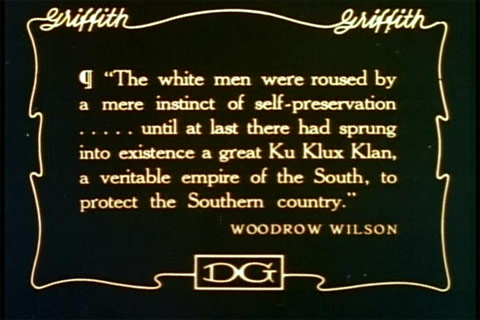
To nobody’s surprise, aggressive acts of white supremacists require invisibility to remain legitimate. America First literally calls itself the invisible empire and walks around with white hoods over their head, ever since Woodrow Wilson screened the white sheets vigilante thriller in the White House in 1915.

These KKK “X” uniforms of an “invisible empire” were a byproduct of President Woodrow Wilson’s promotion of costumed violence against Blacks.

These radical racists abusing their power in America see the documentation of them as the actual threat.

The Economist/The New Yorker weren’t wrong
Screen capture from “Birth of a Nation”, the propaganda film President Wilson spread to restart the KKK and incite violence across America.

Lynching, including public torture, worked in America as social and political control affecting law enforcement because it was public but unrecorded, witnessed by the community as spectacle, but not captured in a form that could travel beyond it and reframe it as what it was. The moment reporters and eventually cameras showed up, the political cost of America First changed. Emmett Till’s mother understood this perfectly.

Open the casket, force people to see.
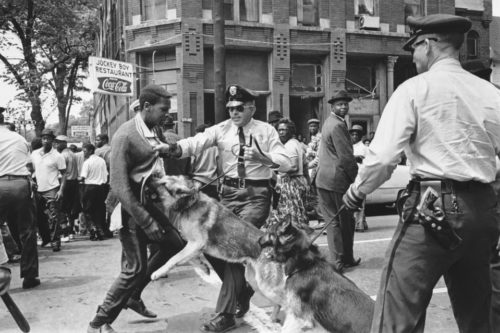

A 17-year-old civil-rights demonstrator is attacked by a police dog, May 3, 1963, Birmingham, AL. President John F. Kennedy discussed this widely seen photo at a White House meeting the next afternoon. | “Once people saw those photos,” says Prof. Brinkley, “they were repulsed by the Southern Jim Crow bigot system.” Photo: Bill Hudson/Associated Press

That’s the mechanism Trump is naming out loud today and whining he will shut down.

The American press has been called liars by him because that campaign worked so well for Hitler, but now Trump is elevating his accusations to treason like it’s 1837 in America again. It’s being called treasonous because it reveals the crimes.

On March 15, Trump posted on Truth Social:

media outlets reporting on the Iran war should “be brought up on Charges for TREASON for the dissemination of false information.”

Not a joke. Reporting on a war, as this blog certainly does, is described by Trump as treason. The maximum penalty for treason?

Open the casket, force people to see.

FCC Chair Brendan Carr followed up by threatening to revoke broadcast licenses. Defense Secretary Pete Hegseth whined from the Pentagon podium that networks were running chyrons reading “Mideast War Intensifies” when they should instead fluff and puff about “Iran Increasingly Desperate.”

The footage, the documentation, the record all breaks the framework. Power needs the act and the narrative about the act to be the same thing. An independent record creates a gap between what happened and what was supposed to have happened, and that gap is where accountability lives.
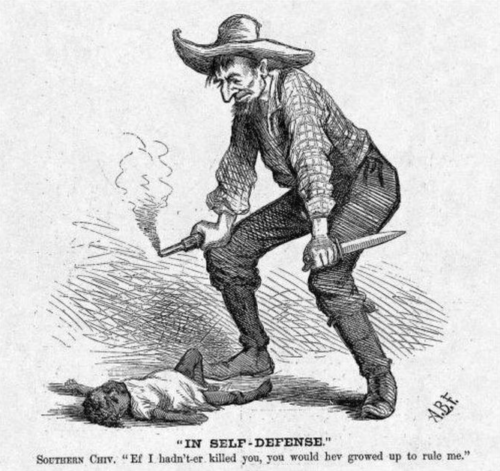
Afroman used a beat and security camera footage to speak the truth to power. The deputies’ lawyer literally argued in court that a victim giving the public a report about a raid was the harm. Not the raid. The reporting that showed evidence. The reframing, with evidence. An American Black man shining a bright light through the sheets of injustice, instead of cowering to the system of false authority.

CNN’s Daniel Dale documented that when the White House provided examples of outlets spreading the fake carrier video Trump raged about, not a single one was American. There was one Israeli, one Saudi, one Turkish. The treason accusation he cooked up was aimed at an American press corps, even as they hadn’t done what Trump accused them of doing. He wanted to punish Americans for the crime of foreign coverage itself.

Trump’s world is violence against non-whites as hidden policy, while American documentation of the truth is the treason.

After the verdict, Afroman with tears of joy on his face, American flag suit, courthouse steps, corrected the framing one more time:

I didn’t win. America won. America still has freedom of speech. It’s still for the people by the people.

He trumped the Trump.

The jury agreed in under a day.

The question is whether the rest of the world does or Hegseth will prove exactly why he’s covered himself in white supremacist tattoos and was appointed for being the guy who loses his grip. Here’s the video predicting three F-15E would be shot down by friendly fire in one night.

Afroman said he didn’t want to be Epstein’d. He won in court. Nearly 200 Iranian little girls are dead from Hegseth’s unpopular war crimes, among the many others killed from his expanding mistakes. When will their day in court come? Or the Epstein victims?
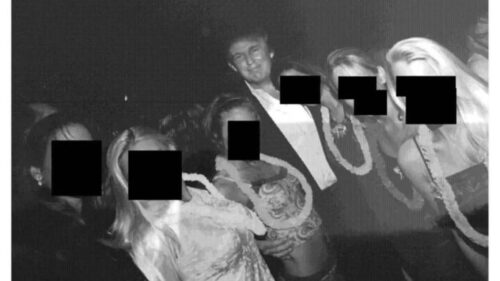

Source: Epstein Files

Palantir Keeps Quoting Nazi Goebbels as Their Business Model

Thomas Edsall’s latest New York Times essay opens with a Peter Thiel quote from 2010 that deserves far more scrutiny for historic parallels than the NYT gives it.

We could never win an election on getting certain things because we were in such a small minority, but maybe you could actually unilaterally change the world without having to constantly convince people and beg people and plead with people who are never going to agree with you through technological means, and this is where I think technology is this incredible alternative to politics.

A minority that can’t win elections. A conviction that persuasion is futile. A technological mechanism to bypass democratic consent entirely.

This is a very well studied pattern from 1930s Germany.

Guess who?

Joseph Goebbels articulated the same exact structure in 1928, using radio and institutional capture rather than Silicon Valley.

The Playbook

Move Goebbels (1928-1935) Thiel/Palantir (2010-2026)
1. Admit minority status “We are an anti-parliamentarian party” that rejects democratic institutions “We were in such a small minority” that elections are unwinnable
2. Declare persuasion futile “We oppose a fake democracy that treats the intelligent and the foolish in the same way” “People who are never going to agree with you”
3. Identify non-democratic mechanism “We enter the Reichstag to arm ourselves with democracy’s weapons”; radio as “the Eighth Great Power” “Technology is this incredible alternative to politics”
4. Execute bypass Enabling Act dismantles republic through constitutional means Palantir builds surveillance and control infrastructure for intelligence and military without democratic deliberation
5. Pull up the ladder “We would deny to our adversaries without any consideration the means which were granted to us” Karp (2026): anyone doing this without military cover is “in an insane asylum”

Step five is where we are, so hopefully people start seeing the problem soon. The NYT certainly isn’t helping by acting like Nazism is now the norm. Karp’s CNBC appearance, quoted at length in Edsall’s piece, reads like we are supposed to just accept a warning. It isn’t normal. It’s Nazi doctrine being delivered to the public as if that’s just the way it is in 2026.

Karp says AI will somehow on its own destroy the economic and political power of only the educated, largely Democratic voters. He says anyone who thinks this will “work out politically” without capture of the military is delusional. He says the “only justification” for absorbing societal disruption is for national security.

Every sentence sounds like general concern. Every sentence is constructed to benefit Palantir. The company already has corrupted the system to force collection of defense contracts, without accountability for technological failures. It has cemented intelligence community relationships, and it built the institutional armor that Karp says you need to undermine voters. When he tells the rest of Silicon Valley that technology without political cover is reckless, the operative message is: we are in control and you can’t do this without us.

That’s straight out of Nazi history. Karp was only missing a shout out to “my struggle” and Goebbels 1928.

Hu Contrasts This

The most helpful voice in Edsall’s piece belongs to Margaret Hu, who directs the Digital Democracy Lab at William & Mary. Where Karp treats replacing voters with technology as a management problem, something to cover in the right political framing, Hu names it correctly as the problem itself.

A.I. systems and their techno-kings have the potential to manifest almost monarchical aspirations.

“Techno-kings” with “monarchical aspirations.” That’s far more than an observation about labor markets or partisan realignment. That’s the correct diagnosis of the political structure being built. Hu goes further:

The A.I. cold war is not just a tech innovation race for military advantage. It is a race for global dominance economically and culturally, and geopolitically.

This is the frame Karp doesn’t want you to use. Karp’s version: ending democracy with information warfare tools (whether newspapers, radios or AI) is inevitable, the only question is whether you wrap it in a flag. Hu’s version: the disruption is a political choice made by identifiable actors pursuing identifiable power, and the military framing is just part of the power grab, not a check on it.

Karp says technology needs politics. Hu says technology is politics. More specifically, the political campaign of concentration is masquerading as inevitability.

What Edsall Misses

Edsall’s essay is valuable for assembling sources, particularly the Brynjolfsson and Hitzig paper showing that AI demolishes Hayek’s argument against central planning. But Edsall treats Karp’s CNBC quotes that echo Nazism as a “thoughtful reaction” rather than what they are: the CEO of a surveillance company explaining to his peers how to make the end of democracy politically survivable.

The Thiel quote at the top of the column and the Karp quotes near the bottom are the same perspectives. They’re the two phases of the same Nazi project Hitler used to seize power.

Thiel announced he was using the Goebbels theory. Karp is delivering the after-action report and next steps. Karp says “nobody should do what we did” from the commanding position of having already done it.

That’s just like Hitler. It’s an announcement they’ve built a moat with a drawbridge. And Palantir is expecting they will be the only ones to survive inside.

Trump Oil Bankrupt in Six Months: Promised Boom is Already Bust

Trump bankruptcy is on the horizon again, this time on the ocean. Trump Steaks, Trump Vodka, Trump University, Trump Airline and now… Trump Oil.

Court filings tell the story. Trump applying the American military, like the mob flexes protection racket muscle, to monopolize a market isn’t what he thought it would be. Trump is spending tens of millions of taxpayer money grabbing and maintaining aging ocean tanker rust buckets that he can’t sell, holding oil he can’t offload, and continuing the program anyway into an expanding disaster.

Here’s a table for every tanker seized so far under his ill-considered “Operation Southern Spear”.

The Trump Junk Fleet

Tanker Seized Cargo (barrels) Est. Cargo Value Vessel Value Known Cost to U.S. Status
Skipper Dec 10, 2025 1.8M $120–$135M ~$10M $47M + $450K/mo + $5M pending Held; DOJ asking court to sell
Centuries Dec 20, 2025 ~2M ~$130M Unknown Unknown (moored at Galveston) Held
Bella 1 / Marinera Jan 7, 2026 Empty $0 Unknown Atlantic chase + ongoing Held; pure cost center
Sophia Jan 7, 2026 ~2M ~$130M Unknown Seizure costs; cargo returned Returned to Venezuela
Olina Jan 9, 2026 Loaded Unknown Unknown Seizure costs; cargo returned Returned to Venezuela
Veronica Jan 15, 2026 Empty $0 Unknown Unknown (moored off Puerto Rico) Held; pure cost center
Sagitta Jan 21, 2026 Unknown Unknown Unknown Unknown Held
Aquila II Feb 9, 2026 ~700K ~$45M Unknown 15,000 km pursuit + ongoing Held; not formally seized
2 additional (unidentified) Unknown Unknown Unknown Unknown Unknown Held per NYT

That’s just eight confirmed seizures already painting the obvious picture.

The NYT reports ten total with Venezuelan ties. Two (Bella 1 and Veronica) were empty when seized. Two more (Sophia and Olina) were returned to Venezuela. The U.S. absorbed the full operational cost of every seizure and got nothing back on four of them.

The Asset Trap

A tanker is not a seized bank account. It’s not a pile of gold. It is like a slumlord grabbing a condemned property, a decaying organism that consumes capital every second it sits unrepaired. Taking the decrepit hulls means the U.S. government has made itself into the world’s most expensive and insolvent shipping company.

For what?

The Skipper’s court filings are Trump Steaks all over again.

The U.S. government was forced to spend $47 million in three months on repairing and maintaining a vessel worth $10 million. Instead of all the things $47 million could have done domestically, it’s tangled up in acquired foreign debt.

Read that Trump businessman genius move again.

He’s blowing 4.7x a ship’s value just to keep it afloat in Texas. Oil storage runs $15,000 a day. Another $5 million is pending for insurance and crew. The DOJ’s own asset manager wrote that these costs “far outstrip standard assets.”

Grade school children understand the math showing this is bad, but not Trump. Previous American procedure was to seize the assets (oil) at sea with a siphon and let the liability (ships) sail on. Makes sense, right? The Trump model has been to take all the liability, immediately undermining the assets.

The Storage Bottleneck

Trump’s army of sycophants can’t simply sell the oil, deteriorating on old ships. These are civil forfeiture cases tied up in U.S. District Court in Washington. The Skipper’s cargo — worth $120 to $135 million — has been sitting unsold since December. At $450,000 a month in storage alone, a 12-month legal process would burn up $5.4 million before a buyer is found. Add the $47 million in catch-up maintenance and $5 million in pending costs, and nearly half the cargo value evaporates before a single barrel is sold.

The DOJ is now asking the court to allow an emergency sale of the Skipper’s oil before the massive losses become obvious to the public. That’s the Trump circus creating emergencies by admitting their strategy is hemorrhaging money faster than they can bully people into covering it up.

Net Recovery Projection

Only the Skipper has detailed cost data. But the Skipper is the template. These are all aging, end-of-life shadow fleet tankers that were past commercial retirement when they were seized. If the Skipper’s costs are even roughly representative, here’s what the full fleet of eight held tankers looks like over time.

Assumptions: maximum recoverable cargo across the fleet estimated at $500 million. Initial repair costs averaged at $20M per tanker (conservative — the Skipper hit $47M). Ongoing monthly costs per tanker estimated at $2–3.5M (maintenance, crew, insurance, storage). Neither scenario includes military operational costs, legal fees, or cargo depreciation.

Scenario Initial Repair (fleet) Monthly Burn (fleet) Total Cost at 6 Mo. Total Cost at 12 Mo. Max Recoverable Cargo Net at 12 Mo.
Conservative ($20M avg repair, $2M/mo per tanker) $160M $16M/mo $256M $352M ~$500M +$148M
Skipper Rate ($40M avg repair, $3.5M/mo per tanker) $320M $28M/mo $488M $656M ~$500M –$156M

Under the conservative scenario — which assumes each tanker costs less than half what the Skipper actually cost — the operation barely breaks even at 12 months. Under the Skipper rate, the operation goes underwater at roughly month 6 and never recovers. By month 12, the U.S. has spent $156 million more than the oil is worth.

Month six!

The Risk Nobody’s Pricing: Environmental Liability

Everything above is the optimistic scenario. It assumes nothing goes wrong with the ships themselves. That assumption deserves scrutiny.

These are single-hull, end-of-life “ghost fleet” tankers. They were built over two decades ago. They have been running intentionally dark, spoofing locations, skipping important inspections, and operating without valid safety certifications for years. So Trump has targeted absolute worst junk assets, with the least chance of positive return, for seizure.

Several were already rusting through, for obvious reasons. The Skipper’s $47 million in immediate repairs were totally avoidable by not seizing it.

I suspect the people who never maintain anything and have no concept of safety are the ones assuming all ships are equally valued.

Seizing unfit vessels on the verge of disaster actually makes the U.S. government the “responsible party” under the Oil Pollution Act of 1990. OPA 90 imposes strict liability on the owner or operator of any vessel from which oil is discharged into U.S. waters.

Bush signed OPA 90 in response to the Exxon Valdez disaster. But as the Netflix documentary The White House Effect now documents using his own presidential library memos, his chief of staff John Sununu was simultaneously running a back channel with Exxon to neutralize every environmental commitment the administration made.

Perhaps that’s the Trump plan too.

The filmmakers found never-before-seen correspondence between oil executives and the White House chief of staff — memos in which, according to director Jon Shenk, Sununu openly bullied the President. EPA chief Bill Reilly told the filmmakers that even he was shocked by the tone.

The oil industry’s reaction to the Valdez spill was not remorse. It was to circle the wagons — applying the tobacco industry playbook of deny, counter, and split the electorate. Exxon wrote directly to Sununu as their line into the government. He convened a confidential “Global Warming Scientific ‘Skeptics’ Meeting” stacked with climate contrarians funded by coal companies. And the Bush White House forced NASA scientist James Hansen to alter his own congressional testimony to downplay climate risks.

The law survived the Bush corruption that is responsible for growing climate change disasters we experience today. The intentions behind it didn’t, perhaps by design. And now that same OPA 90 framework — strict liability, uncapped when safety regulations are violated — is the one that’s governing Trump’s seized tanker fleet. What are the chances it holds?

“Strict” means no-fault, so if the oil spills, the responsible party pays. And the current OPA liability cap for a single-hull tank vessel over 3,000 gross tons is the greater of $4,000 per gross ton or $29.6 million. But the cap vanishes entirely if the spill resulted from “violation of an applicable Federal safety, construction, or operating regulation.” These ships have no valid classification, no current safety certificates, and no double hulls. The cap would not survive a normal courtroom.

Here is what the uncapped liability looks like.

Spill Scenario Volume Historical Comparable Cleanup Cost Range Total Liability (incl. damages)
Minor hull breach (1 tanker, partial cargo) ~500K barrels Larger than Exxon Valdez (262K bbl) $2–4 billion $3–7 billion
Major structural failure (1 full tanker) ~1.8M barrels Approaching Deepwater Horizon scale $5–15 billion $10–25 billion
Cascading failure (2+ tankers at anchorage) 3–4M barrels No historical precedent $15–40 billion $25–65 billion

The numbers have precedent. Exxon spent roughly $2.5 billion on cleanup alone for 262,000 barrels — about $9,500 per barrel spilled. BP’s total Deepwater Horizon liability exceeded $20.8 billion in settlements, with total costs above $65 billion. The Skipper is sitting in the Galveston Offshore Lightering Area with 1.8 million barrels of heavy Venezuelan crude — nearly seven times the volume of the Exxon Valdez spill — in a hull that required extensive repairs so it wouldn’t wreck Texas.

And the government plans to add even more debt from captured Iranian tankers to this fleet. Iranian shadow fleet vessels are notoriously among the worst-maintained ships afloat. By seizing them, the U.S. takes the environmental and safety liability another step deeper. One major hull breach in a U.S. port turns a hundred-million-dollar waste into a multi-billion-dollar ecological disaster. Talk about sunk cost.

The Ledger

Trump is pushing deranged reports of gross cargo value, to generate $130 million headline figures, as money he magically made. That’s clearly not how anything works. The actual balance sheet looks very different.

Line Item Headline Number Actual Number
Gross cargo value (all held tankers) ~$500M ~$500M (if every barrel is eventually sold)
Emergency repairs (fleet) Not reported $160–$320M (based on Skipper rate)
Ongoing maintenance, crew, insurance Not reported $16–$28M per month, compounding
Oil storage Not reported ~$3.6M per month (est. across loaded tankers)
Military operations (carrier groups, SEALs, 160th SOAR, CG cutters) Not reported Classified / buried in defense budget
Legal fees and court costs Not reported Unknown; 10 separate forfeiture cases
Empty tankers (Bella 1, Veronica) “Seized!” Pure liability; $0 revenue
Returned tankers (Sophia, Olina) “Seized!” Sunk cost; $0 revenue
Environmental tail risk (OPA 90) Not mentioned $3–65 billion per incident, uncapped
Net position at 12 months “Financial boon” +$148M (best case) to –$156M (Skipper rate)
Net position if one hull fails –$3 billion to –$65 billion

Every day Trump’s seized liabilities sit in U.S. waters, the gap between artificially gross headlines and the balanced reality ledger widens.

The one number that should keep the DOJ’s asset manager awake at night is the OPA 90 tail risk of a single-hull structural failure in a Texas anchorage, which doesn’t appear in any press conference. Bush signed that law. Sununu gutted the intent. And now Trump is parking the exact category of vessel it was designed to eliminate — single-hull, uncertified, end-of-life tankers loaded with heavy crude — in American waters, on the American taxpayer’s tab, with the American coastline as collateral.

This is what Trump Oil looks like, just like every other Trump bankruptcy, as court filings reveal the disinformation behind his toxic press releases.

Yglesias Defends Big Tech Bros Fleecing the Poor: “Let Them Eat Shovels”

Matthew Yglesias runs a Substack called Slow Boring where he routes every problem in American political economy through zoning reform. His latest piece asks why Silicon Valley hasn’t done more for most Americans, and his answer is: not enough apartments near Cupertino.

Facepalm.

Paul Krugman had pointed out that tech generates a negative externality by producing billionaires who corrupt democracy. True.

Yglesias called this “puzzling” and used it to change the subject to housing density.

The problem is that Yglesias doesn’t seem to know the history of the examples he’s citing. Yup, I said it. HISTORY. Pull up a chair because I’m about to open a can of whoop-history on Yglesias.

He invokes Chicago in 1900, Detroit in 1920, the California Gold Rush, and Shenzhen. My God. He pulls all of that to our attention without appearing to notice that every one of these is a well-documented case study in the exact failure mode he’s ignoring.

Imagine being the guy who says Germany 1938 is a great example of how broken windows can fuel the economy.

Yeah, that bad.

The Fabian Society was founded in 1884 specifically because the industrial boomtowns Yglesias romanticizes were producing spectacular wealth for owners and squalor for everyone else. It’s like Krugman was so right that he didn’t even have to use history to know it, but if he had it would have cemented his point even more. Meanwhile Yglesias responds by walking through a minefield of his own examples and stepping on every one.

Here’s what Yglesias says, and what Fabians discovered over a century ago. Like explaining water is wet, I humbly present now, something hopefully obvious.

What Yglesias Says vs. What Fabians Would Say

Dimension Yglesias (Slow Boring) Fabian 1880s Critique
Why hasn’t tech helped most Americans? Housing constraints prevented a megacity from forming around Silicon Valley Private capture of publicly-funded innovation prevented democratic benefit
Proposed mechanism for shared prosperity Build denser housing near tech campuses so service workers can “sell shovels during the gold rush” Graduated taxation, public ownership stakes, municipal enterprise, democratic governance of technology
Role of the state Get out of the way — remove zoning restrictions Capture monopoly rents, fund universal public goods, regulate concentrated power
Who creates value? Tech founders and employees, radiating outward through spending Public universities, government-funded research, workers, infrastructure — tech founders captured value others created
What “the boom” looks like Population growth, construction, rising property values — Shenzhen, 1900s Chicago Rising wages, universal healthcare, public education, democratic workplace governance — postwar Britain
The billionaire question Not addressed — Krugman’s point about political corruption is replaced with a housing supply argument Billionaires are a policy failure. Concentrated wealth is concentrated political power. That’s the point.
Historical model invoked Industrial-era boomtowns (Chicago, Detroit) — workers flocking to capital The very boomtowns that produced child labor, tenement squalor, and Pinkertons — prompting the Fabian movement in the first place
Utopian vision Apartment towers in Marin County (cites Star Trek: Picard) Star Trek’s actual economy: no money, no landlords, replicators are public goods
What’s invisible Ownership. Power. Democratic control. Who decides what gets built and for whom. Nothing, these are the starting questions
Treatment of Krugman’s argument “Puzzling assertion” claim to dismiss the political corruption claim and jazz hands into housing Krugman understated it. The corruption is the business model. It’s not external.
If you force enough Stanford kool-aid into the mix, does it even matter what else exists?

Let me just reiterate that Shenzhen is government-owned land, state-directed investment, and party-controlled development. It’s literally the Fabian model, as the state captured the land value. Yglesias completely inverts reality and cites his error as his evidence for removing zoning restrictions.

Similarly, “selling shovels during the gold rush” is famous precisely because the miners with shovels went broke. It proves Yglesias wrong. Sure, Levi Strauss and Sam Brannan got rich by being smart while hard workers lost everything and died as nobodies. We’re supposed to want that? But the real lesson not to avoid is the abject cruelty, like the man who built the university at the center of Silicon Valley who got rich through government fraud, racism and genocide. That’s some devastatingly real harm Yglesias is romanticizing.

But what do I know. I’m not on Substack.