A “water rat” in German (Wasserratte) is someone who swims extremely well. Think of it like “book worm”. A “book rat” (Leseratte) is someone very proficient at reading. The compound logic is simple: an animal plus an environment equals command. It belongs there.
A “desert rat” (Wüstenratte), following the same grammar, is something in command of a wasteland. The more you bomb them the better they thrive.
The Tobruk Problem
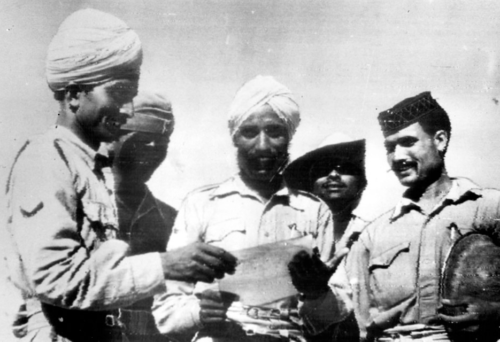
Britain in 1941 had a weak, conciliatory commander in North Africa. After pushing the Italians out of the Libyan port of Tobruk the resulting apathy allowed Rommel’s Afrika Korps to reclaim it. A garrison of Allies who refused to give it up, approximately 14,000 Australians of the 9th Division, along with British, Indian, and Polish troops, dug themselves into underground positions. Rommel couldn’t budge them, as they held for eight months.
William Joyce, broadcasting Nazi propaganda from Hamburg, Germany under the name “Lord Haw-Haw,” described them thus:
Poor desert rats of Tobruk, who live like rats and will die like rats.
Joyce clearly, calling people rats, was not German. He was born in America, raised in Ireland, and held a first-class honours degree in English literature from the University of London. Goebbels hired the Irishman to be fluent in English. In English, to Joyce, calling someone a “rat” was meant to convey filth, cowardice, treachery. To the Nazis, hearing the Allied forces were to be known as Tobruk rats, their own propaganda signaled a foe of great competence and command.
Joyce foolishly had peddled English “rat” to mean an insult, but facts on the ground kept delivering the German meaning of the word instead to the Germans. Everything he described about Allied troops burrowing, surviving bombardment, refusing to leave, outlasting the siege was all proving to be competence. The nouns insulted. The verbs complimented. The garrison struck medals celebrating the rat, cast from the aluminium of a downed German bomber, and tuned in nightly for more.
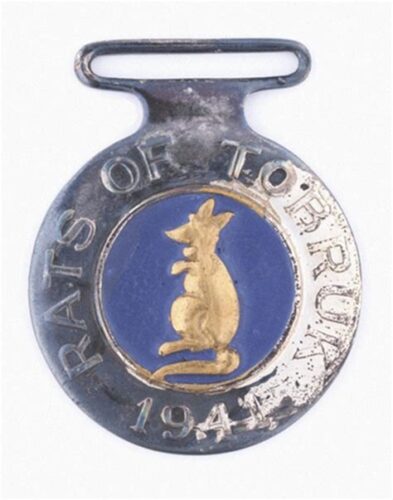
One defender recalled that Lord Haw-Haw broadcasts “never failed to cheer us”, opposite to what Goebbels expected.
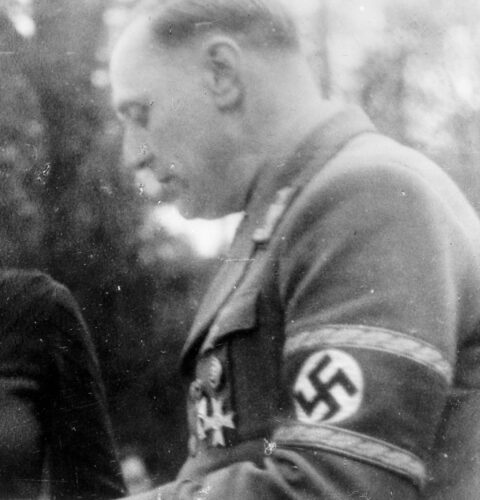
Every broadcast confirming they were still there was an advertisement that Rommel couldn’t fight, the Afrika Korps could not take the port. Nobody in the German propaganda ministry apparently caught the problem. Their translation of propaganda was becoming notoriously “witzig”.
Nazis had found an Irishman happy to be their native English speaker precisely so they would not have to think how the words landed. Consider Joyce much like an AI agent today. Nazis inherently are so clumsy and didactic they aren’t going to know how to generate useful, nuanced results.
Joyce took a German compliment, translated it into English contempt, and the compliment kept showing through because it fit the ground truth of adaptation, persistence, mastery of a hostile environment. And he never knew, just like how an AI agent is always in “hallucination” mode.
The Australian War Memorial notes that Joyce’s insults “were often turned into badges of honour.”
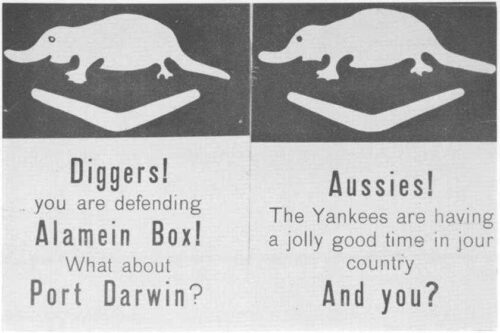
The standard account explains this as defiant reclamation where soldiers seized an enemy’s slur to wear it proudly. That is the English-language reading that gives Joyce’s mistake far too much undeserved credit instead of ridicule. The German-language reading is clearer: there was nothing to reclaim. The German propaganda produced praise when it attempted to insult. Joyce was a stage clown who couldn’t stop hallucinating, and deserves to be called out for it.
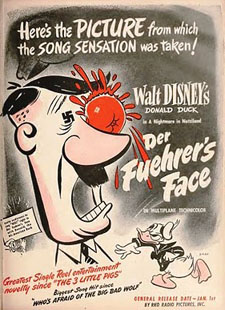
The Pentagon Podium, March 2026
Fast forward to the modern day Haw Haw, Defense Secretary Pete Hegseth. Last Friday he told reporters that U.S. forces in Iran would proceed with “no quarter, no mercy for our enemies.”
“No quarter” has a specific meaning in military law, and it’s not a good one for Hegseth. It means kill those who surrender. The Hague Convention prohibits it. The Geneva Conventions prohibit it. The Pentagon’s own law of war manual prohibits it. The Nuremberg tribunals prosecuted German officers for it.
Senator Mark Kelly, a retired Navy captain, translated for anyone who missed it:
An order to give no quarter would mean to take no prisoners and kill them instead.
Hegseth perhaps thought he was going to communicate resolve by acting like he is a Confederate General who can order prisoners to be tortured and killed. Does he think this is 1865 and the southern states won? He produced instead, on the record, a war crime platform. A statement that the Pentagon’s own legal framework classifies as a war crime. The audience he intended to reach sits among the war crimes prosecutors, allied governments weighing coalition support, and Iranian propagandists looking for recruitment material. They all heard the same Haw Haw.
The same day, Hegseth described Iran’s military as “destroyed” and its attacks on shipping in the Strait of Hormuz as “sheer desperation.” At the time of this statement, the strait was functionally closed to commercial traffic, global energy prices had spiked, the U.S. Navy still refused to provide armed escort to tankers, and 13 American service members were dead. Iran’s capacity to close the world’s most important oil transit route is the asymmetric capability its military was built around. It is the opposite of desperation. It is the plan working.
Hegseth called it desperation for the same reason Joyce called the Tobruk garrison rats.
The framework is meant to show contempt. However that contempt cannot process evidence of enemy competence, even when the propagandist is the one presenting it. “Destroyed” is English framing about a closed strait that has a very different ground truth. And if there’s one thing I learned in forty years of working with disinformation history, ground truth matters a LOT more than spin doctors realize.
At an earlier briefing, Hegseth addressed reporters about American casualties:
When a few drones get through or tragic things happen, it’s front-page news. I get it, the press only wants to make the president look bad.
Six soldiers had been killed in Kuwait by a drone that struck a shipping container serving as an operations center. “A few drones get through” is a description of a force protection failure, command failure, delivered in the register of a complaint about media coverage.
The Pentagon has also been releasing propaganda videos set to music, missile strikes intercut with video game footage, produced in the idiom of social media content. The White House communications director responded to criticism of one video by posting a Grand Theft Auto cheat code for unlimited ammunition. In the videos, every missile hits. There are no American casualties. There is no closed strait.
There is no girls’ elementary school in Minab where at least 165 children were killed in a school America double-tap (war crime) bombed on the first day.
Joyce broadcast every night to a garrison he said was doomed, the end, and yet every broadcast served to confirm they were alive. The Pentagon releases daily videos of a war it says is won, over and done any minute, and every video confirms the need to keep persuading people it is still winning, and maybe needs help.
The Grammar
Joyce’s problem was simple. The traitor needed the English meaning of “rat” to produce contempt, but the garrison’s behavior matched the German Wüstenratte, not vermin, psychologically having the exact reverse effect on soldiers in the fight. The insult misfired at the level of language itself.
Hegseth’s problem is structural as well as linguistic, and the mechanism is identical. “No quarter” in his register means strength. In the legal framework he is bound by, it means weakness because a prosecutable offence. “Destroyed” in his register means victory. On the operational map, it means the opposite, an enemy whose most effective threat of waterway disruption is functioning. “Desperation” in his register means weakness. In strategic terms, it means an adversary executing the doctrine it was designed around.
Each statement delivers two messages simultaneously. Hegseth thinks there is only one. The people that matter most probably hear both if not just the other.
Joyce was hanged for treason in January 1946. His broadcasts had, by the assessment of the Imperial War Museum, minimal impact on Allied morale. The insults were adopted as honours. The nightly confirmation of a garrison standing became the proof of its own endurance.
The question with Hegseth is not whether his primitive Goebbels-like propaganda errors will fail. Propaganda built on contempt for an enemy who is performing competently always fails. The question is what it costs America before it does. And will he be hanged for it.
| What he said | Who | What he meant | What he actually described |
|---|---|---|---|
| “Poor rats caught in a trap” | Joyce | You are vermin and will die | Garrison adapting and holding |
| “Live like rats, die like rats” | Joyce | Subhuman conditions, imminent collapse | Mastery of hostile environment |
| Nightly broadcasts to the garrison | Joyce | You are doomed | Garrison still standing |
| “No quarter, no mercy” | Hegseth | We are strong and will win | A war crime under the Hague Convention |
| “Their military is destroyed” | Hegseth | Victory is achieved | Enemy closing the Strait of Hormuz |
| “Sheer desperation” | Hegseth | Enemy is collapsing | Enemy executing its core strategy |
| “A few drones get through” | Hegseth | Press exaggerating minor setbacks | Six soldiers dead in Kuwait |
| “Boom Boom” videos, daily briefings | Hegseth | We already won, wait no, we are winning | We need help |
| Enemy response | Joyce | Adopted insults into badges of honour | |
| Enemy response | Hegseth | TBD | |
| Outcome | Joyce | Garrison held. Joyce hanged. | |
| Outcome | Hegseth | TBD | |
Stephen Colbert also has exposed Haw Haw Hegseth errors using simple humor:



 The German education system has an answer to this. The Ausbildung system treats craft mastery as a legitimate intellectual achievement, not a consolation prize for people who didn’t make it to university. A Meister has a protected title, a defined body of knowledge, and social standing that reflects actual competence. The system assumes society needs people who understand the substrate, and builds institutions to produce them.