The British understood in 1942 that the way to win a war against a propaganda state was radical transparency about your own costs. Openly admitting defeats told the enemy’s population that you were confident enough in the outcome to tell the truth.
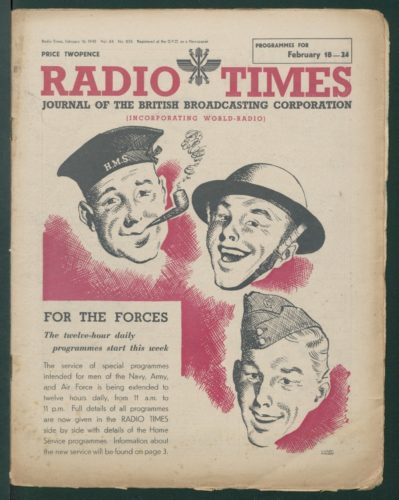
As I wrote in 2021, the BBC made a deliberate decision to broadcast detailed reports of Allied military defeats to German audiences. An academic trawl of the corporation’s archives revealed the strategy:
While the Nazi regime used puppet broadcasters such as William Joyce — nicknamed Lord Haw-Haw — to spin messages of German invincibility, the BBC was choosing to broadcast detailed news of Britain’s military setbacks.
The logic was structural. If the Allies could openly admit defeats, German listeners concluded they must be extremely confident of eventual victory. The BBC called itself “The Fourth Arm” of warfare. Tales of invincibility project weakness. Confidence comes through when talking openly about losses.
The Trump administration is running the opposite play, dismissive of history. The evidence is piling up that it’s for exactly the reason the BBC understood.

Propaganda Podium
On Wednesday, Defense Secretary Pete Hegseth stood at the Pentagon podium and told reporters that when casualties are reported, “the press only wants to make the president look bad.” He said it out loud. The man running a war told the country’s journalists to stop documenting dead soldiers.
This was not a slip. Hegseth replaced the Pentagon’s independent press corps last fall with a right-wing roster that CNN described as giving him “kid-glove treatment” from front-row seats. Six military beat reporters, granted anonymity, told CNN the information environment is unprecedented. One summarized: “Lots of chest-thumping, less concrete data.” Another said that in ordinary wartime, the press gets detailed operational briefings once or twice a day. Now:
These days, they put a random tweet or video out with details, with no way for journalists to follow up.
CENTCOM’s casualty accounting tells the same story. On day one, the official line was “no casualties.” That was revised to three dead, then six, as bodies were recovered and wounded died. CENTCOM repeatedly withheld the specific bases, units, and circumstances — citing “operational security” — while omitting locations for recovered remains from its public posts. The Washington Post revealed the six killed were in a tactical operations center in Kuwait that “offered little protection from overhead strikes.” A force protection failure the Pentagon had no interest in publicizing.
Trump told reporters Iran has “no navy, air force, air detection, or radar.” Hegseth declared the US and Israel would achieve “complete control of Iranian skies” within days. This is the Lord Haw-Haw play, not the Fourth Arm play. It projects the thing it’s trying to hide.
Censorship as Coverage
The conflict is widening into its second week across at least twelve countries. Iran has launched strikes against 27 bases where US troops are deployed. The damage is confused, while real and documented:
The US embassy in Kuwait was struck and closed indefinitely. Two Iranian Su-24 bombers nearly reached Al Udeid — the largest US base in the Middle East — before Qatari F-15s shot them down. Kuwait’s military accidentally downed three American F-15Es in a friendly fire incident. Amazon’s cloud data centers in Bahrain and the UAE were hit and remain offline. A Shahed drone struck the runway at Britain’s RAF Akrotiri in Cyprus — EU territory — prompting the evacuation of the surrounding village and protests in Limassol with chants of “British bases out.” Cyprus refused to rule out renegotiating the status of UK bases on the island.
An IRGC general declared that since the UK allowed American aircraft to use Akrotiri, Iran would “launch missiles at Cyprus with such intensity that the Americans will be forced to leave the island.” By March 5, Italy, the Netherlands, and Spain were sending warships to defend Cyprus. Europe is being dragged into the conflict whether it wants to be or not.
Iranian drones struck Nakhchivan International Airport in Azerbaijan on March 5, hitting the terminal building. A second drone landed near a school. President Aliyev called it “a terrorist act,” summoned the Iranian ambassador, ordered the army to full combat readiness, and withdrew Azerbaijan’s diplomats from Iran. Nakhchivan sits on the US-brokered “Trump Route” corridor that Iran has long opposed. Turkey condemned the strike. Iran denied responsibility and suggested an Israeli false flag even while an IRGC-linked Telegram channel claimed responsibility.
Reporting is needed more now than ever, as censorship denies the kind of transparency and clarity needed to contain war.
Hormuz is Just Math
The Strait of Hormuz is effectively closed. Kpler, the commodity intelligence firm, puts it plainly:
Insurance withdrawal is doing the work that physical blockade has not — the outcome for cargo flow is largely the same.
Tanker traffic dropped to approximately zero. Over 150 ships anchored outside the strait. Maersk and Hapag-Lloyd suspended transits, rerouting via the Cape of Good Hope at roughly $1 million extra per voyage. Oil past $91 a barrel. Houthi-controlled Yemen resumed attacks on Red Sea shipping, closing the Suez alternative too.
But the less-reported catastrophe is fertilizer ship threats. About 33% of the world’s fertilizers — including sulfur and ammonia — transit the Strait. QatarEnergy halted urea and ammonia production at Ras Laffan, the world’s largest LNG and industrial complex. Urea prices up 27%. Ammonia up 16%. This is hitting at the worst possible moment: Northern Hemisphere spring planting, when nitrogen fertilizer demand peaks, with no strategic stockpile to buffer the shortfall. As The Conversation noted:
If the 20th century taught policymakers to fear oil embargoes, the 21st should teach them to fear a fertiliser shock.
Meanwhile, more than 400,000 metric tons of Indian basmati rice sit stuck at ports. The US economy lost 92,000 jobs in February. Unemployment at 4.4%.
No Theory of Victory
Trump said there are “no time limits” on the war. Hegseth said it “has only just begun.” The stated objective is regime change, which is the same failed objective that produced a decade-long quagmire in Iraq, which ended up being the single greatest strategic gift Iran received in the modern era. Hegseth from the podium:
No stupid rules of engagement, no nation building quagmire, no democracy building exercise, no politically correct wars. We fight to win and we don’t waste time or lives.
Chatham House called this an absence of real strategy:
…wholly predicated on the untested proposition that the Iranian people will quickly rise up — a huge gamble.
As a historian, let me just point out the test would likely reaffirm the colonial-era lessons, that “rise up” doesn’t happen until self-defeating conflicting ethnic divisions are artificially injected. The whole rise-up strategy of WWI was a bust. The Arab Revolt was used as a template and required externally manufactured fractures to ignite, and then it produced Sykes-Picot betrayal rather than liberation.
Reagan ran the same military intelligence play in Afghanistan with the Mujaheddin, promising divine invincibility for religious extremists he fraudulently linked to “our founding fathers.” It created the fanatical and ruthless Taliban who kicked America out.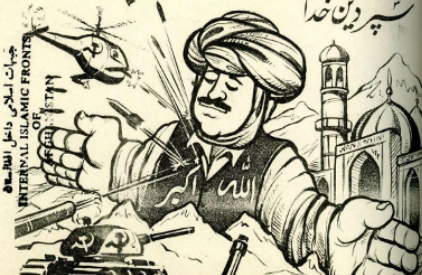
Promise a population invincibility through belief, use them as instruments of regime change, then abandon them to the consequences. It reads like the explosion of MAGA complaints about Trump in office versus his campaign promises, let alone court cases filed against promises made by Trump University, Trump Vodka, Trump Airline, Trump Casinos, Trump Steak….
The Pentagon’s own sources told Congress there was no intelligence suggesting Iran was planning to attack US forces first. Some senior White House advisers opposed direct action, arguing it would be preferable for Israel to strike first so Iranian retaliation would provide retroactive justification. And now? Even Trump can’t seem to explain why Trump cancelled negotiations to start an unprovoked war.
Iran’s ballistic missile launches and drone attacks are down dramatically. Real capability has been degraded by constant American bombing, just like we saw in the Korean, Vietnam and Afghanistan wars. Yet Iran’s outsized threat to the region has never been about a match in direct firepower or speed. It’s an asymmetric minefield that plans to persevere like every place American unilateral force projection failed, keep the Strait closed, keep drones entering Gulf bases, keep widening the conflict into dozens of countries like Cyprus and Azerbaijan and Lebanon, and let the economic math please the Chinese while the Pentagon tells Americans everything is fine.
The Fourth Arm or Haw-Haw
The disaster here isn’t just Iran’s internet blackout over its own population.
It’s Hegseth standing at a podium built by decades of American press freedom tradition, using it to tell reporters they’re the enemy for recognizing and investigating six dead American soldiers. They didn’t need to die, and silence about the reasons why only means less respect not more.
It’s CENTCOM releasing chest-thumping meme video montages while withholding where and how Americans died, let alone why America double-tapped nearly two hundred Iranian children — a war-crime death toll that has tripled in three days and is still climbing.
It’s credentialing sycophants and excluding the reporters whose questions the American public is entitled to hear answered.
On the flip side of truth telling are all the spin stories like the giant fiction of Rommel being anything but an impatient selfish hack who took a poison pill to prove he remained loyal to Hitler’s lies. Rommel literally said the coming occupation wouldn’t suit him. These liars went to the grave rather than try to live a truth.
On January 4, 1946 Lord Haw-Haw was executed for treason.
Paul Ferdonnet, France’s equivalent Nazi spin broadcaster, met the same fate.
The BBC wasn’t just reporting, it was running a deliberate psychological warfare operation through transparency.
Hard truths won World War II, and history remembers who spoke it boldly versus who performed endless invincibility while the walls very slowly closed in.