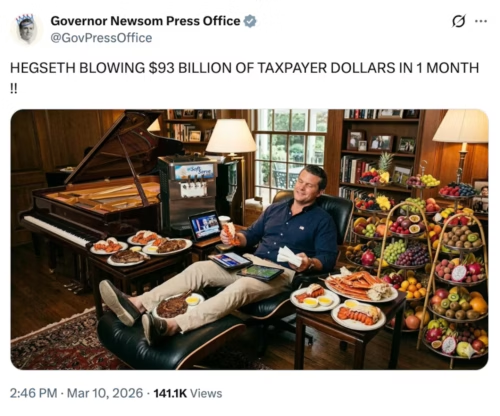
Trump said “I don’t need international law.” Hegseth calls rules of engagement “stupid.”
The new letter signed by over 100 experts acknowledges these quotes and then proceeds as if restating the rules of war louder will matter. I’m reminded of the early warnings of Haile Selassie about Mussolini, which obviously went unheeded. The whole thing is an appeal to a framework that fascist leaders explicitly repudiate.
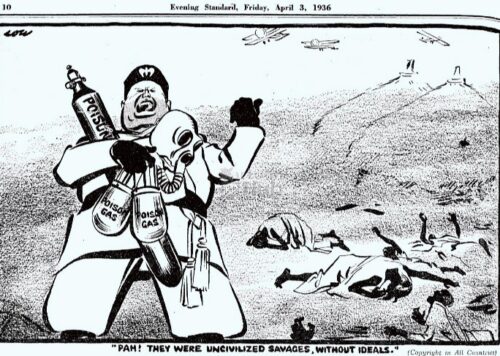
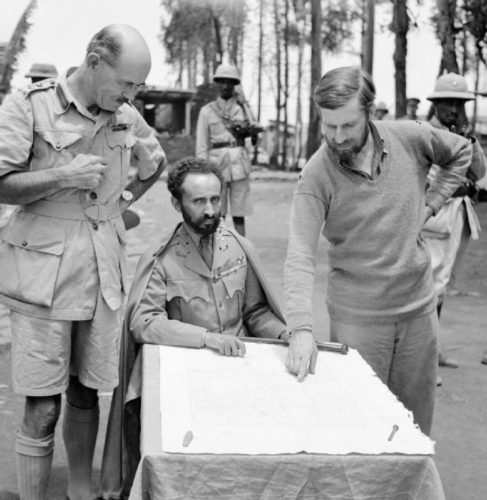
Selassie’s 1936 League of Nations address is an exact historical parallel: a direct appeal to an international body that had already demonstrated it would not act. The outcome was catastrophic. We know, right? Mussolini showed us what’s next, right?
Let me put it in simpler context. The letter correctly lists violations. But who acts? The ICC? Trump targeted and sanctioned ICC officials to prevent this. The Security Council? Trump doesn’t believe in the UN but he is set up with a veto. The letter’s final section vaguely invokes Common Article 1 obligations on allies but never names a single ally, a single concrete action, a single consequence. “We urge”? That is not enforcement.
And there’s a gap in the analysis. Iran’s internet shutdown, Israel’s broadcast ban, Gulf states arresting citizens, FCC threatening US broadcasters. That’s the “Nixonian” operational reality this letter completely ignores. How does anyone enforce a law if they can’t document violations? Trump recently installed two Nixonian operatives to poison and destroy official communications.
It’s interesting that Congress is never mentioned in the letter. Wouldn’t domestic power be the usual answer to stop a democratic leader? The War Powers Resolution is never mentioned. Federal courts are never mentioned. If Trump openly says international law is a dead letter to the executive, the only remaining check is domestic. Yet the letter doesn’t touch it. To me this suggests loss of faith in American checks and balances, post-democracy, and thus it’s an appeal to the world for rescue.
However, the letter doesn’t rise to international enforcement because it seems overly focused on a tone problem. Trump asserts that the US president is above international law as a matter of constitutional authority. The letter says Trump’s statements are “alarming rhetoric” and “disrespect for norms.” But it isn’t just rhetoric. His words are chaotic, self-contradictory and random at best. They deserve little focus. His actions are the many crimes.
What’s really been happening is the systematic elimination of domestic enforcement of international law obligations. The only people inside the US government who could have flagged violations in real time all have been fired. That’s not a small consideration. That’s the whole ballgame. And yet the letter says it has “concerns about institutional safeguards”: removing JAGs, abolishing civilian protection teams, and gutting the law of war manual references from the NDS. Without those, what’s left? Game over.
And that brings us back to the historical perspective completely absent from the letter. When a powerful militant state openly declares itself unbound, and no one enforces, the bad behavior accelerates. The letter fails to state what they see happening when their appeal fails. It already has, as Selassie would say.
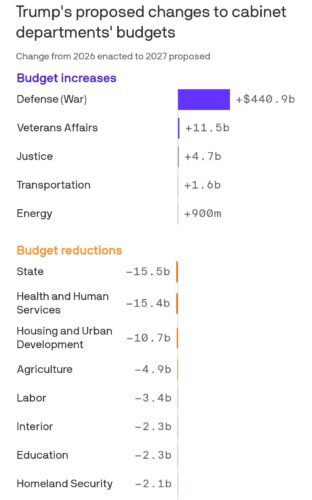
The real question, which the letter should have started with, is which allies are complicit and what domestic institutions have abdicated? Or to put it more clearly, now that all the guardrails are behind us, what prevents the world from repeating what comes next? The institution getting all the funding is the one committing the violations.
Trump told guests. “We can’t take care of daycare. Medicaid, Medicare, all these individual things. We have to take care of one thing: military….”