On the evening of April 12, sixteen years of an authoritarian Hungarian regime of constitutional capture ended in a call lasting just minutes. Viktor Orbán picked up a telephone and called Péter Magyar to concede, an abrupt end for the dictator. The interesting question is whether this call can be replicated in other states.
The political science answer to “how often do authoritarian regimes willingly and peacefully give up power” is a number close to zero. The Geddes-Wright-Frantz data on autocracies since 1946 points us towards an end coming only from a coup, insider removal, revolt, or death. Moreover, roughly two thirds of the collapses produce a replacement autocracy. Svolik reported that the true end for a dictator is a removal by his own inner circle, rather than external pressure. The concept of a peaceful handover, from a person diametrically opposed to it, means a negotiation price so high there’s little to no evidence anyone wants to pay. Unlike the rapid and easy collapse of Trump casino (and every other brand attempts he made), his capture of the state means the moral and financial bankruptcy instead can be perpetuated by his monopolization of force.
That’s because regimes concentrating power are almost defined by “never surrender” propaganda, making healthy compromise and empathy impossible, such that the smallest indicators of centralizing power are met with excessive disinformation and violence. Even when the extremist leader is removed, a theocratic or monarchist regime may maintain their lack of surrender mantra by reformulating the names at the top of their chart. Here are some of the preconditions, and therefore vulnerabilities, related to how an authoritarian reaches their inevitable end.
1. Severability
The authoritarian leader must be separable from the regime for it to transition to a non-authoritarian state. With a nod to my alma mater, and the long history loop of Paul Preston, Spain’s crown recently shed Francoism, a fork of fascism long surviving after the suicide of Hitler, and kept the state. The Korean military traded Chun Doo-hwan for his coup partner Roh Tae-woo and won the succeeding election anyway. Brazil’s army retreated to tutelage over a civilian government its own electoral college selected. Frelimo outlived Chissano’s 2004 departure and governs Mozambique today. The FSLN survived its 1990 defeat, kept Humberto Ortega commanding the army until 1995, and reabsorbed the Nicaraguan state in 2007. Congress carried Indira Gandhi back to office 34 months after her 1977 defeat. Hungary’s Fidesz enters opposition with Constitutional Court, Media Council, prosecutorial and university-foundation mandates seated into the 2030s. Personalist rulers appear nowhere on this list because the ruler and the regime are the same object, and you must detach the asset to take custody and control over it.
2. Epistemology
Repression of populations destroys the regime’s own instruments to maintain a tally of support. Kuran tells us it is preference falsification, while Wintrobe called it the dictator’s dilemma: the coerced lie to power, so power loses the ability to count. Pinochet wrote the 1988 plebiscite expecting to win it. Indira Gandhi called the 1977 election on intelligence estimates her own censorship had falsified, and lost her own seat in Rae Bareli. Sandinista internal polling missed war exhaustion and inflation that was running past 30,000 percent. Fidesz walked into April 12 buoyed by a media market it owned, unable to read it. An election is permitted when corruption is so high that it is intended to be proof of power and control over the population. However, it the proof is inherently miscalibrated and so the very thing meant to be proven can be inverted, as was shown in Hungary.
3. Subsidization
Regimes hold power through external subsidies, manifested in overt “allegiance” as gifts. The 1985 to 1992 cluster is Cold War liquidation: Brazil’s debt crisis, Chile’s 1982 crash feeding the protest cycle, Moscow’s cutoff and hyperinflation in Managua, Pretoria’s transition stranding its clients, the Seoul Olympics making a June 1987 massacre too high a burden to maintain in the year before the opening ceremony. Hungary is a prime example because the frozen EU funds and the worst inflation in the bloc repriced Orbán for his own elites. America became the substitute patron and rushed JD Vance to Budapest days before the vote, which only rapidly removed votes instead of helping, because Trump has made his regime one of the most unpopular in the world.
4. Impunity
The accountability cycle usually fails to repay the costs imposed upon those ending the regime. Spain ran the numbers on a 1977 amnesty and the pacto del olvido, meaning no Francoist official has ever stood trial. Brazil paid with the 1979 self-amnesty, which the Supreme Federal Tribunal upheld as recently as 2010. Chile paid with the 1978 amnesty decree, a senate seat, and a constitution that survived two replacement attempts in 2022 and 2023 and still governs, amended. Mozambique paid at Rome in 1992. Nicaragua paid with the piñata, the transfer of state assets to Sandinista hands in the ten weeks between defeat and inauguration. Albertus and Menaldo count roughly two thirds of democratizations since 1800 as conducted under constitutions the outgoing elites wrote for themselves. Korea is the lone example outside the baseline, and even Chun’s 1996 death sentence dissolved into a pardon within a year.
Price of Change
| Case | Exit | Leader Valuation | State Response | Indicators | Price |
|---|---|---|---|---|---|
| Spain | 1975-1978 | Franco died in office; his own Cortes then voted the Movimiento out of existence, 425 to 59 | Crown, courts, police, civil service | December 1976 referendum: 94 percent for reform on 77 percent turnout; the bunker had promised resistance | 1977 amnesty, pacto del olvido, zero prosecutions to date |
| Chile | 1988-1990 | Pinochet, in installments: plebiscite 1988, army command until 1998 | Army, 1980 constitution, binomial electoral system | Lost his own plebiscite 55 to 43; air force general Matthei conceded to reporters before the government did | 1978 amnesty decree, senator for life, constitution in force in 2026, amended |
| Brazil | 1985 | Nobody. Geisel scheduled the retreat in 1974; Figueiredo executed the timetable and left by the back door | Armed forces as tutelary power | Diretas Já blocked in 1984; regime dissidents then defected inside the electoral college | 1979 self-amnesty, upheld by the STF in 2010; military prerogatives written into the 1988 constitution |
| South Korea | 1987-1988 | Chun Doo-hwan, to his coup partner | Ruling party, merged with the opposition’s own in 1990 | June 1987 uprising after Park Jong-chol’s torture death; Roh then won on a split opposition with 36.6 percent | Succession secured first; impunity revoked later, then restored: death sentence 1996, pardon 1997 |
| Mozambique | 1992-2004 | Nobody. Chissano declined another term and walked out whole | Frelimo, in power without interruption since 1975 | 1999: 52.3 percent against Dhlakama’s 47.7, disputed; a warning read correctly | Rome amnesty 1992; party-state intact; the exit won the inaugural Mo Ibrahim Prize |
| Nicaragua | 1990 | Ortega, temporarily | FSLN plus the army; Humberto Ortega commanded it until 1995 | February 1990: Chamorro 55 to 41; internal polling missed exhaustion and hyperinflation | The piñata, “governing from below,” full restoration by 2007 |
| India | 1977 | Indira Gandhi, for 34 months | Congress | Election called on intelligence her own Emergency censorship had falsified; lost Rae Bareli itself | Shah Commission findings buried on her 1980 return |
| Hungary | 2026 | Orbán, conceding by telephone on April 12 | Fidesz as largest opposition; court, media, prosecutorial and foundation mandates running into the 2030s | Tisza took 141 of 199 seats on 53.2 percent; the margin exceeded the machine’s capacity | Under negotiation now; the Tisza supermajority can lawfully unwind the entrenchment |
| Somalia | 1991 | Unsellable. Siad Barre was the regime; the Marehan-Ogaden-Dhulbahante alliance had no existence without him | None. The army dissolved along clan lines and the state followed | None permitted. Sole candidate, 99.9 percent, 1986 | Impunity by default; a single civil judgment, Fairfax, Virginia, 2012, 21 million dollars |
| Italy | 1943 | Mussolini, sold by his own Grand Council, 19 votes to 8 | Attempted: crown, army, bureaucracy. The buyers demanded unconditional surrender | Sicily invaded, Rome bombed; the audit was military and unambiguous | Unavailable in 1943; paid retroactively by the Republic: Togliatti amnesty, June 1946 |
Somalia’s Leader Had Nothing to Sell
Siad Barre, whom Paul Manafort’s firm pitched in 1989, the same firm Donald Trump had hired in the 1980s, is a curious case. Manafort sent staff to Mogadishu chasing a million-dollar contract to polish the dictator’s image, telling them the assignment was to make sure Barre stayed “our bad guy,” and they returned without a deal. The subsidy was withdrawn when Moscow aligned with neighboring Ethiopia during the Ogaden war, and Washington stepped in to become his new best friend. Then in 1989 aid was frozen after his air force leveled Hargeisa and killed tens of thousands of Isaaq civilians. His regime was based on a narrow alliance of three clans, and the national army dissolved along clan lines the moment the excluded clans rose against him. When the United Somali Congress took Mogadishu in January 1991 he fled south, tried twice to fight his way back, and died in Lagos in 1995. He left nothing to make a transaction with, having lost his subsidy, and had no successor institution. The end slid into twenty-one years without any central government. The only judgment any official of his regime ever faced came from a civil courtroom in Fairfax, Virginia, where his former defense minister Mohamed Ali Samantar, living quietly in the suburbs, was held liable for 21 million dollars in 2012. His collapse, arriving two years after even Washington’s torturers’ lobby had left Mogadishu without a deal, is what a regime does when it is an extraction scheme leaving no trace of value to put up for sale.
Italy’s Leader Found No Buyer
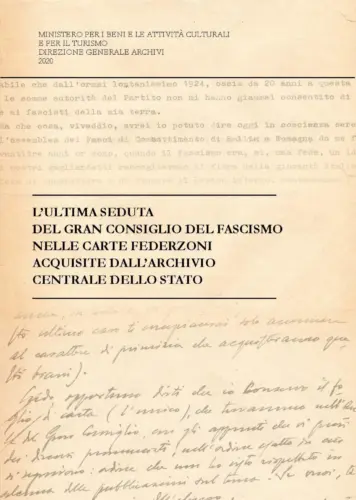
Mussolini is another example worth considering for the reverse reason. It documents a transaction by the regime itself, in wartime, where nobody was willing to pay for what it was selling. On the night of July 24, 1943, the Grand Council of Fascism debated for ten hours and passed Dino Grandi’s motion, 19 votes to 8, asking the King to resume command of the armed forces under the Statuto. The fascist state was up for sale, disconnected from its creator and leader. The King completed the mechanics within a day: dismissal at Villa Savoia, arrest by carabinieri, Badoglio installed. It still failed to clear, however, because the Allies entered demanding an unconditional surrender. The Wehrmacht intervened to put Mussolini back into power as the Salò puppet state under German occupation, which held until the German collapse in April 1945, and at Verona in January 1944 the rump regime shot the sellers it could catch, with Ciano among them.
Even a failed sale can continue, is the lesson here, if the value isn’t as destroyed as with Somalia. The purge commissions wound down, the prefects and police carried over into the following Republic nearly intact, Salò veterans founded the MSI in December 1946, and an amnesty hiding fascist crimes was signed in June 1946 by Palmiro Togliatti, communist minister of justice. The Republic delivered an impunity measure the Kingdom had been unable to secure at any price.
The Monarchy Card
Fascism is rooted in Italy, which makes it all the more interesting to study why for 21 years there had been a lawful mechanism for removing Mussolini, unused by the royal family. The Statuto Albertino was an enforcement lever that the King had retained, giving him the power to dismiss his head of government at will. He used that power just twice. In October 1922 he withheld his signature from the martial law decree his own prime minister had drafted, which is how he installed Mussolini. In July 1943 he applied it in reverse, which removed Mussolini. In between, when the Aventine deputies brought him the evidence of the Matteotti murder in 1924, he told them his eyes and ears were the Chamber and the Senate, and did exactly nothing to prevent the excessive violence against his own people. Both uses of the signature protected the crown, and only the crown. The powerful easy button sat unpressed for two decades because every incumbent around it, palace, army, industry, church, extracted more value from the arrangement than from the kind of representative democracy that would bring balance, law and order. The public outrage and debt accumulated from leaving Mussolini in power continued to grow, and grow, until on June 2, 1946, Italians voted the monarchy out, 54 to 46. Why would anyone want such a King?
What to Watch
History guides us, while Hungary runs as a live experiment. Watch the Fidesz assets that survive the supermajority, because each one is something the old regime established opposite the new government. Judges on the Constitutional Court carry twelve-year mandates and will rule on every law the new parliament passes. Nine-year terms shield the Media Council, which licenses broadcasters, meaning the referees of the next election cycle were appointed by the loser of this one. A budget veto sits with the fiscal council, and a vetoed budget opens a lawful path to dissolving parliament, an ejection seat wired into ordinary governance. Formerly public universities now live inside private foundations, their assets converted from state property in the final years of Fidesz rule, their boards appointed in perpetuity. The prosecutor general sits until 2028 and decides which corruption files get opened, so every case made against the old government will find itself in front of its ongoing appointee.
Tisza holds 141 of 199 seats, above the two-thirds line, so every one of these arrangements can be unwound by representative and lawful amendment. The question is speed, identifying threats to democracy early and balancing the councils by statute. The entrenchment has to be removed by intentionally avoiding the corrupted and unrepresentative methods that built it.
Regimes convert. It’s possible. Americans should read their own history as much as studying the foreign examples. The founding compact preserved and extended slavery, counted the enslaved as three fifths of a person to inflate the political power of slaveholders, and installed slaveholders in the presidency for most of the republic’s first seventy years, lionizing inhumane and anti-democratic authoritarians like Washington, Jackson and Polk.
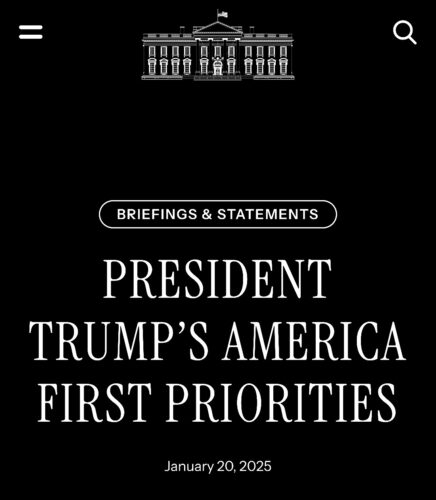
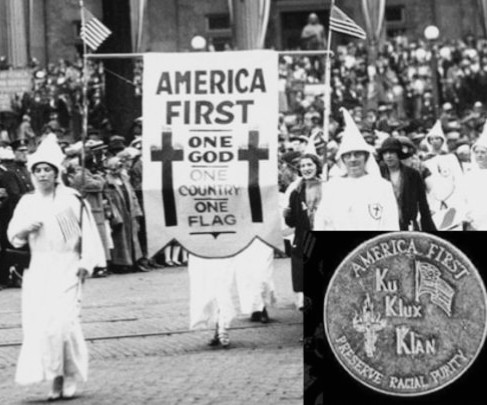
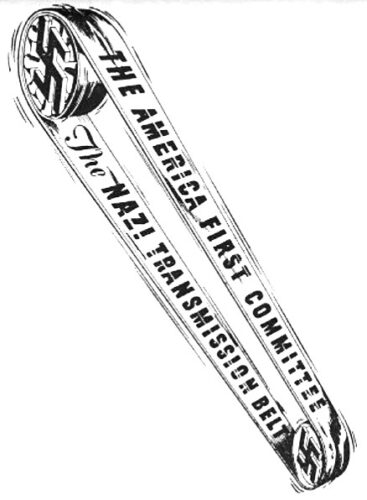
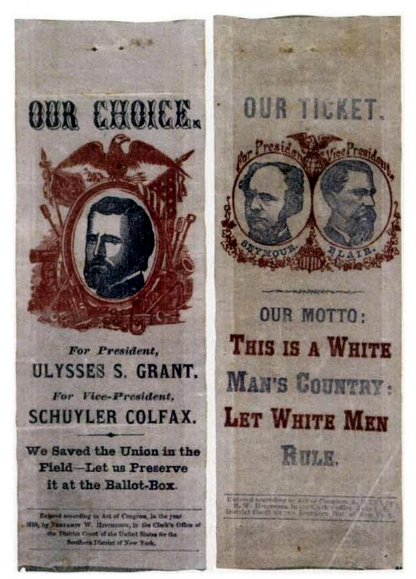
America making a “willing” transition away from these tyrannical types cost a Civil War and roughly 750,000 dead by current estimates, and even victory had unfortunate compromise: the settlement of 1877 withdrew federal troops, restored the planter class to power, converted slavery into sharecropping and convict leasing, and wrote the victims’ claims off for another century. The United States stands as one of the longest running case studies. Trump campaigning on the nativist 1880s “America First” hate and tariffs platform, the slogan Wilson aimed at Catholic, Black and Hispanic Americans in 1915, the Klan adopted for lynchings in the 1920s, and Lindbergh’s committee carried into 1941 antisemitic alignment with Hitler, proves the point.

The transition means the authoritarian state holdings convert into a different asset class (often disappearing), any amnesty is billed as goodwill to cash later, and victims’ claims are typically written off as the acceptable cost. “Willing” transition needs to be put in the coin-operated context of the authoritarian who exists to violently extract value from the public. So the calculation is about what the price is to leave forever, and who will countersign a receipt, let alone enforce a real change.