Category Archives: Poetry

Children of Wealth in Your Warm Nursery

by Elizabeth Daryush, as mentioned in Poetry Magazines

Children of wealth in your warm nursery,
Set in the cushioned window-seat to watch
The volleying snow, guarded invisibly
By the clear double pane through which no touch
Untimely penetrates, you cannot tell
What winter means; its cruel truths to you
Are only sound and sight; your citadel
Is safe from feeling, and from knowledge too.

Go down, go out to elemental wrong,
Waste your too round limbs, tan your skin too white;
The glass of comfort, ignorance, seems strong
To-day, and yet perhaps this very night
You’ll wake to horror’s wrecking fire­your home
Is wired within for this, in every room.

ASP.NET Padding Oracle Attack

Cryptographic keys can be stolen from ASP.NET web applications by modifying cookies and reviewing the resulting errors — an information disclosure vulnerability from a side channel attack. This video shows the Padding Oracle Exploit Tool (POET) in action:

Details can be found here: Padding Oracle Crypto Attack (POCA)

The attack allows someone to decrypt sniffed cookies, which could contain valuable data such as bank balances, Social Security numbers or crypto keys. The attacker may also be able to create authentication tickets for a vulnerable Web app and abuse other processes that use the application’s crypto API.

[…]

If the padding is invalid, the error message that the sender gets will give him some information about the way that the site’s decryption process works. Rizzo and Duong said that the attack is reliable 100 percent of the time on ASP.NET applications, although the time to success can vary widely. The real limiting resources in this attack are the speed of the server and the bandwidth available.

They say the longest attack time so far has been just 50 minutes. They do not say what the longest time is to fix a site and prevent the attack path.

Microsoft is investigating and discussing a fix. Since it is an information disclosure vulnerability I expect they will enhance the ability to redirect or completely suppress errors. They also may add some randomness of errors to reduce timing attacks — attempts to guess information by the time it takes to respond. Either way, it was already a best practice to suppress errors to prevent information disclosure.

Edited to add (Sep 28th):

  1. Here is a great introduction to Padding Oracle Attack, including Python code
  2. Microsoft has released a patch, which has to be manually installed from their download center. They also give the following recommendations, as I predicted above:

Until the patch has been installed, administrators should configure servers to only respond with a single error page, meaning that all server errors should return the same error page so that an attacker would not be able to determine which part of their request was deciphered properly. In addition to this, modify the Page_Load() function within the custom error page to pause for a short random sleep delay before sending the error response.

Administrators should watch for errors with the following message: “CryptographicException” and/or “Padding is invalid and cannot be removed” as these could be an indicator that an attacker may be trying to exploit this vulnerability against an IIS server.

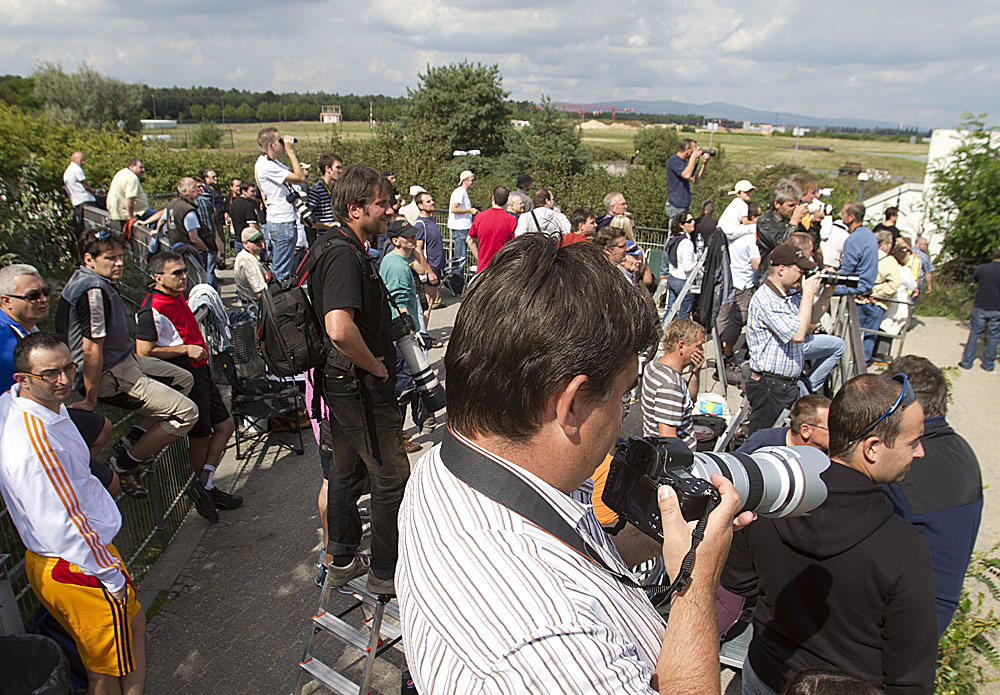
TSA focus on photographers

The TSA has built a bit of a legacy annoying photographers. I have been hassled personally and I sometimes hear of others getting the same treatment.

Their official spokesman online, Blogger Bob, has responded to recent outrage about the following poster intended for an anti-terror awareness campaign.

The most important part of the blog post, aside from explaining the actual intention of the poster, is to say that photographers can be an asset to security.

In fact, many photographers would be prime candidates to use such vigilance programs to report suspicious activity since they’re extremely observant of their surroundings.

Bingo! The poster did a poor job characterizing the threat as someone doing something entirely legal and NOT suspicious — taking a photograph — when it instead could have called upon photographers to be an asset to the TSA. Wired’s response to this is “Nice save, Bob”

I have tried to make fun of this kind of anti-terror campaign before. The latest TSA attempt is almost funnier than my bogus ones! I clearly will have to try harder.

Old attempt:

New attempt:

Even if it isn’t funny, at least I managed to get a haiku in my poster.

Joe Pries Aviation points out that in Europe photographers are given a “great spot from where to safely photograph (free of charge).”

Does anyone see anything but pure terror here? Scary photo.

DR Prose: The San Bruno Blast

Let’s call it a N.E.W. day
by Doc Gurley

Imagine the entire chain of human activity. The firefighters who drove straight toward the blaze, even as the tower rose higher and higher to engulf the very sky, knowing this was something no one with a hose and a truck could stop or even contain. The sweat and the sizzle as you run from one paint-bubbling house to the next, imagining the screams of children as you knock and yell and draw an X on one house, only to sprint, heart pounding, to the next. Flames flicker and lick and you think, “God, let the other rigs come.” And then they do – rigs from other counties, people who were supposed to be sitting down to supper, firefighters who’ve never even driven these streets. Sixty-seven trucks came. Just think about that for a moment. No ego, no jurisdictional posturing, no hemming and hawing about budgets or how the assignment ought go to someone else, someone closer. All those teams, all those men and women, strapping on heavy gloves and helmets and feeling the claustrophobia and vertigo of wind whipping past as you accelerate onto a freeway in an open firetruck, the straining rumble of the screaming RPMs making your stomach shake. Then you hit the ground and ask, “what can I do?” and you join in, the sprint, the yell, the heavy lifting and the search, the endless search even now, the day after, through embers, dreading what you might find, what will give you nightmares for decades to come. And when you get home, and wipe the ash from your neck, you cough up soot and look at it, hoping your lungs are tougher than average because you’ve been in this, you’ll stay in this, for the long haul.