Category Archives: Security

Chinese AI Open Weights Grow Safer as American AI Becomes Dead Weight

Daniel Miessler published a FUD-addled post on July 18 arguing that Chinese AI open weight models are “cheese in a CCP mousetrap“: subsidized giveaways engineered to break the American AI labs and the market priced on their dominance, after which Taiwan votes itself into the People’s Republic.

Chinese open-source models are a cheese in a CCP mousetrap.

Kimi K3 just brought us very close to a world in which the US AI labs are no longer ahead. Both the benchmarks—LMArena and Artificial Analysis—and actual experiences with it are extremely positive. I don’t think it’s quite as good as people are saying, but it is at least on par with Opus 4.8 in many areas. That by itself was impossible six months ago. The key part of this strategy is to give the secrets away to the world such that the power of open source will be added to the pressure on the U.S. labs, and therefore the U.S. economy.

Quoted from the version Miessler published July 18. He has since revised the post without any correction notice, removing the CCP attribution from the mousetrap line, the benchmark claims, and an entire footnote on Hong Kong. The passage above is preserved from the original.

Uber burned venture billions selling rides below cost to break the taxi trade, and Amazon spent years pricing below cost to break retail. Miessler rides in his Uber ordering off Amazon and calls it his American playbook for convenience. Predatory subsidy is the domestic playbook he lives inside, which is why he tries to project it onto a foreigner, even when they are charging full margin and contradict his projection.

Let’s just be honest. This is the 1980s all over again and the origins of the FSF. His deeper objection sits in the picture below: the world could end up on the left instead of the right, and how is anyone getting rich on predatory American practices supposed to maintain their hedge against someone giving cheese away? Sell a quality product? With no trap? He believes in the trap, so he sees one, even where none exists.
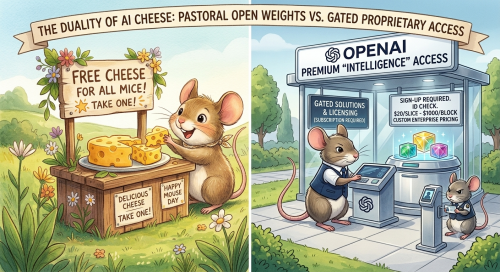
His claim is that effects of a Kimi K3 model are the markets starting to shake and wobble on Friday. Taiwan’s benchmark fell six percent, Japan four, the Nasdaq one and a half, and the Philadelphia Semiconductor Index closed more than twenty percent below its June peak.

Let’s break his cheesy poof post down properly.

A mousetrap runs on two stages. The victim sees an easy gain, which the hunter snaps into an expensive loss. Open weights defeat the latter half of that mechanism, because they can’t be easily lost. A weight file, once published, lives on everywhere it is stored. Hosting firms in Ohio and Helsinki serve it, forks multiply past any count. Beijing has no way to snap, so there’s no victim to be had. The threat that China will one day stop releasing cheap models loses its entire force, since the only part left to remove is the cheese. Everything already released stays released.

That’s such a fundamental failure in the cheese post analysis, I wonder how Miessler published it.

But wait, no pun intended, the K3 itself weakens his argument even further. Moonshot launched it July 16 as a hosted product and committed in writing to full weights by July 27. At 2.8 trillion parameters, self hosting means cluster hardware rather than laptops, and portability is the point: the day these weights land, any inference firm with the infrastructure could become the business that serves them, including American ones. Any actual dependency story requires a single supplier. Yet the model of a published weight means every supplier is by design interchangeable.

On top of that, now look at the pricing mistake made by Mr. Cheese. His whole subsidy claim doesn’t make any sense, because Moonshot priced K3 at three dollars per million input tokens and fifteen per million output. That’s not out of line with the western frontier. Same price is attractive how? Must not be the price. A predatory subsidy prices below cost until the competition dies; parity pricing announces…a margin. The funding is in fact a venture, where the silicon is the usual constraint: Alibaba put a billion dollars into Moonshot in 2024 at a two and a half billion valuation, the company now sits near thirty one billion. The recent models were trained on Nvidia’s export-grade H800 chips. Corporate money pouring into American silicon that it had to argue it should be allowed to buy is the literal opposite example from a state dumping.

Even the American AI hawks expose the cheese post as nonsensical. Dean Ball, formerly the Trump White House’s senior AI policy advisor and now OpenAI’s head of strategic futures, attributes China’s open weight strategy to strategic blindness and a shortage of inference compute. He blames American export controls. The company with the most riding on this mousetrap story doesn’t seem to have its own strategist on board.

Now for my favorite kind of analysis. The cheese post makes an accusation that has been built to survive any evidence proving it wrong. The unfalsifiable argument is popular these days, as if everyone wants us to just accept they are the one with a teapot orbiting the sun. When DeepSeek undercut on price in 2025, the cheapness proved it was an attack on America. Now K3 arrives at parity pricing and the inversion is the attack, because quality is a threat. Price low and you get accused of dumping; so you charge parity and get called a threat because of your quality. The person who floats a thesis confirmed by every possible move predicts nothing and explains less.

The real story of open weights is actually quite boring, which is why it’s so successful. In August 2025 the State Council issued Document No. 11, the AI Plus directive, which sets adoption targets across industry and science and calls for a flourishing open source ecosystem. Industrial policy is the mother of innovation. You don’t land on the moon without someone saying moonshot is the goal. A stated goal is policy, the sort of thing every executive ever relied upon for success. Provincial governments in Beijing, Guangdong and Hangzhou fund open model development, and Chinese open models grew from 32 in 2022 to 337 in 2025 by Epoch AI’s count. Industrial policy that was printed in the official gazette means healthy diffusion at home, and commoditization of the layer its rivals monetize abroad. This is a market-based strategy and public, which makes it a very long way from a plot to detonate the Nasdaq. Competition is supposed to bring competition, not whining about cheese.

Taiwan, we are being told to believe, will “instantly vote to rejoin China” the moment American markets aren’t floating anymore. This is such a weird coin-operated view of the world, perhaps it explains why the mousetrap post is so empty-headed. Decades of polling on Taiwanese identity say otherwise, perhaps for obvious reasons? The claim of instant rejoin has zero evidence. Seems like it should have something, anything, to start the conversation.

Friday’s selloff was real, so it deserves attention. The sell side attributed the rout to weak earnings, the Iran war, crowded positioning in recently surged tech stocks, and record levels of leveraged ETF, margin, and retail option activity now unwinding. I mean, Trump started a war he can’t win, emptied national security credibility, and is talking about a level of fiscal isolationism and decline that puts the Brexit disaster to shame. An index wired unfortunately to the pricing power of a handful of firms, all desperately assuming their premium margins can’t fall, wobbled on a press release. That is some basic exposure of American integrity issues, which required no conspiracy. If you want conspiracy, look at the lingering cartel mindset of an American frontier. Miessler sees symptoms of domestic failure and desperately wants to blame it on the foreigners.

The weights ship July 27.

They can be copied and never recalled.

That sounds a lot like free cheese forever (FCF), which makes it an update to the FSF.

The world runs on Unix. Not Windows. The world wants open weights. Not OpenAI.

Don’t fall into the trap American AI model investors are building, given the logical options to reduce risk of capture.

How often do authoritarian regimes willingly and peacefully give up power?

On the evening of April 12, sixteen years of an authoritarian Hungarian regime of constitutional capture ended in a call lasting just minutes. Viktor Orbán picked up a telephone and called Péter Magyar to concede, an abrupt end for the dictator. The interesting question is whether this call can be replicated in other states.

The political science answer to “how often do authoritarian regimes willingly and peacefully give up power” is a number close to zero. The Geddes-Wright-Frantz data on autocracies since 1946 points us towards an end coming only from a coup, insider removal, revolt, or death. Moreover, roughly two thirds of the collapses produce a replacement autocracy. Svolik reported that the true end for a dictator is a removal by his own inner circle, rather than external pressure. The concept of a peaceful handover, from a person diametrically opposed to it, means a negotiation price so high there’s little to no evidence anyone wants to pay. Unlike the rapid and easy collapse of Trump casino (and every other brand attempts he made), his capture of the state means the moral and financial bankruptcy instead can be perpetuated by his monopolization of force.

That’s because regimes concentrating power are almost defined by “never surrender” propaganda, making healthy compromise and empathy impossible, such that the smallest indicators of centralizing power are met with excessive disinformation and violence. Even when the extremist leader is removed, a theocratic or monarchist regime may maintain their lack of surrender mantra by reformulating the names at the top of their chart. Here are some of the preconditions, and therefore vulnerabilities, related to how an authoritarian reaches their inevitable end.

1. Severability

The authoritarian leader must be separable from the regime for it to transition to a non-authoritarian state. With a nod to my alma mater, and the long history loop of Paul Preston, Spain’s crown recently shed Francoism, a fork of fascism long surviving after the suicide of Hitler, and kept the state. The Korean military traded Chun Doo-hwan for his coup partner Roh Tae-woo and won the succeeding election anyway. Brazil’s army retreated to tutelage over a civilian government its own electoral college selected. Frelimo outlived Chissano’s 2004 departure and governs Mozambique today. The FSLN survived its 1990 defeat, kept Humberto Ortega commanding the army until 1995, and reabsorbed the Nicaraguan state in 2007. Congress carried Indira Gandhi back to office 34 months after her 1977 defeat. Hungary’s Fidesz enters opposition with Constitutional Court, Media Council, prosecutorial and university-foundation mandates seated into the 2030s. Personalist rulers appear nowhere on this list because the ruler and the regime are the same object, and you must detach the asset to take custody and control over it.

2. Epistemology

Repression of populations destroys the regime’s own instruments to maintain a tally of support. Kuran tells us it is preference falsification, while Wintrobe called it the dictator’s dilemma: the coerced lie to power, so power loses the ability to count. Pinochet wrote the 1988 plebiscite expecting to win it. Indira Gandhi called the 1977 election on intelligence estimates her own censorship had falsified, and lost her own seat in Rae Bareli. Sandinista internal polling missed war exhaustion and inflation that was running past 30,000 percent. Fidesz walked into April 12 buoyed by a media market it owned, unable to read it. An election is permitted when corruption is so high that it is intended to be proof of power and control over the population. However, it the proof is inherently miscalibrated and so the very thing meant to be proven can be inverted, as was shown in Hungary.

3. Subsidization

Regimes hold power through external subsidies, manifested in overt “allegiance” as gifts. The 1985 to 1992 cluster is Cold War liquidation: Brazil’s debt crisis, Chile’s 1982 crash feeding the protest cycle, Moscow’s cutoff and hyperinflation in Managua, Pretoria’s transition stranding its clients, the Seoul Olympics making a June 1987 massacre too high a burden to maintain in the year before the opening ceremony. Hungary is a prime example because the frozen EU funds and the worst inflation in the bloc repriced Orbán for his own elites. America became the substitute patron and rushed JD Vance to Budapest days before the vote, which only rapidly removed votes instead of helping, because Trump has made his regime one of the most unpopular in the world.

4. Impunity

The accountability cycle usually fails to repay the costs imposed upon those ending the regime. Spain ran the numbers on a 1977 amnesty and the pacto del olvido, meaning no Francoist official has ever stood trial. Brazil paid with the 1979 self-amnesty, which the Supreme Federal Tribunal upheld as recently as 2010. Chile paid with the 1978 amnesty decree, a senate seat, and a constitution that survived two replacement attempts in 2022 and 2023 and still governs, amended. Mozambique paid at Rome in 1992. Nicaragua paid with the piñata, the transfer of state assets to Sandinista hands in the ten weeks between defeat and inauguration. Albertus and Menaldo count roughly two thirds of democratizations since 1800 as conducted under constitutions the outgoing elites wrote for themselves. Korea is the lone example outside the baseline, and even Chun’s 1996 death sentence dissolved into a pardon within a year.

Price of Change

Case Exit Leader Valuation State Response Indicators Price
Spain 1975-1978 Franco died in office; his own Cortes then voted the Movimiento out of existence, 425 to 59 Crown, courts, police, civil service December 1976 referendum: 94 percent for reform on 77 percent turnout; the bunker had promised resistance 1977 amnesty, pacto del olvido, zero prosecutions to date
Chile 1988-1990 Pinochet, in installments: plebiscite 1988, army command until 1998 Army, 1980 constitution, binomial electoral system Lost his own plebiscite 55 to 43; air force general Matthei conceded to reporters before the government did 1978 amnesty decree, senator for life, constitution in force in 2026, amended
Brazil 1985 Nobody. Geisel scheduled the retreat in 1974; Figueiredo executed the timetable and left by the back door Armed forces as tutelary power Diretas Já blocked in 1984; regime dissidents then defected inside the electoral college 1979 self-amnesty, upheld by the STF in 2010; military prerogatives written into the 1988 constitution
South Korea 1987-1988 Chun Doo-hwan, to his coup partner Ruling party, merged with the opposition’s own in 1990 June 1987 uprising after Park Jong-chol’s torture death; Roh then won on a split opposition with 36.6 percent Succession secured first; impunity revoked later, then restored: death sentence 1996, pardon 1997
Mozambique 1992-2004 Nobody. Chissano declined another term and walked out whole Frelimo, in power without interruption since 1975 1999: 52.3 percent against Dhlakama’s 47.7, disputed; a warning read correctly Rome amnesty 1992; party-state intact; the exit won the inaugural Mo Ibrahim Prize
Nicaragua 1990 Ortega, temporarily FSLN plus the army; Humberto Ortega commanded it until 1995 February 1990: Chamorro 55 to 41; internal polling missed exhaustion and hyperinflation The piñata, “governing from below,” full restoration by 2007
India 1977 Indira Gandhi, for 34 months Congress Election called on intelligence her own Emergency censorship had falsified; lost Rae Bareli itself Shah Commission findings buried on her 1980 return
Hungary 2026 Orbán, conceding by telephone on April 12 Fidesz as largest opposition; court, media, prosecutorial and foundation mandates running into the 2030s Tisza took 141 of 199 seats on 53.2 percent; the margin exceeded the machine’s capacity Under negotiation now; the Tisza supermajority can lawfully unwind the entrenchment
Somalia 1991 Unsellable. Siad Barre was the regime; the Marehan-Ogaden-Dhulbahante alliance had no existence without him None. The army dissolved along clan lines and the state followed None permitted. Sole candidate, 99.9 percent, 1986 Impunity by default; a single civil judgment, Fairfax, Virginia, 2012, 21 million dollars
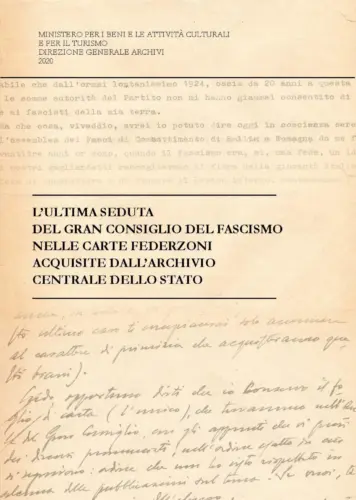
Italy 1943 Mussolini, sold by his own Grand Council, 19 votes to 8 Attempted: crown, army, bureaucracy. The buyers demanded unconditional surrender Sicily invaded, Rome bombed; the audit was military and unambiguous Unavailable in 1943; paid retroactively by the Republic: Togliatti amnesty, June 1946

Somalia’s Leader Had Nothing to Sell

Siad Barre, whom Paul Manafort’s firm pitched in 1989, the same firm Donald Trump had hired in the 1980s, is a curious case. Manafort sent staff to Mogadishu chasing a million-dollar contract to polish the dictator’s image, telling them the assignment was to make sure Barre stayed “our bad guy,” and they returned without a deal. The subsidy was withdrawn when Moscow aligned with neighboring Ethiopia during the Ogaden war, and Washington stepped in to become his new best friend. Then in 1989 aid was frozen after his air force leveled Hargeisa and killed tens of thousands of Isaaq civilians. His regime was based on a narrow alliance of three clans, and the national army dissolved along clan lines the moment the excluded clans rose against him. When the United Somali Congress took Mogadishu in January 1991 he fled south, tried twice to fight his way back, and died in Lagos in 1995. He left nothing to make a transaction with, having lost his subsidy, and had no successor institution. The end slid into twenty-one years without any central government. The only judgment any official of his regime ever faced came from a civil courtroom in Fairfax, Virginia, where his former defense minister Mohamed Ali Samantar, living quietly in the suburbs, was held liable for 21 million dollars in 2012. His collapse, arriving two years after even Washington’s torturers’ lobby had left Mogadishu without a deal, is what a regime does when it is an extraction scheme leaving no trace of value to put up for sale.

Italy’s Leader Found No Buyer

Mussolini is another example worth considering for the reverse reason. It documents a transaction by the regime itself, in wartime, where nobody was willing to pay for what it was selling. On the night of July 24, 1943, the Grand Council of Fascism debated for ten hours and passed Dino Grandi’s motion, 19 votes to 8, asking the King to resume command of the armed forces under the Statuto. The fascist state was up for sale, disconnected from its creator and leader. The King completed the mechanics within a day: dismissal at Villa Savoia, arrest by carabinieri, Badoglio installed. It still failed to clear, however, because the Allies entered demanding an unconditional surrender. The Wehrmacht intervened to put Mussolini back into power as the Salò puppet state under German occupation, which held until the German collapse in April 1945, and at Verona in January 1944 the rump regime shot the sellers it could catch, with Ciano among them.

Even a failed sale can continue, is the lesson here, if the value isn’t as destroyed as with Somalia. The purge commissions wound down, the prefects and police carried over into the following Republic nearly intact, Salò veterans founded the MSI in December 1946, and an amnesty hiding fascist crimes was signed in June 1946 by Palmiro Togliatti, communist minister of justice. The Republic delivered an impunity measure the Kingdom had been unable to secure at any price.

The Monarchy Card

Fascism is rooted in Italy, which makes it all the more interesting to study why for 21 years there had been a lawful mechanism for removing Mussolini, unused by the royal family. The Statuto Albertino was an enforcement lever that the King had retained, giving him the power to dismiss his head of government at will. He used that power just twice. In October 1922 he withheld his signature from the martial law decree his own prime minister had drafted, which is how he installed Mussolini. In July 1943 he applied it in reverse, which removed Mussolini. In between, when the Aventine deputies brought him the evidence of the Matteotti murder in 1924, he told them his eyes and ears were the Chamber and the Senate, and did exactly nothing to prevent the excessive violence against his own people. Both uses of the signature protected the crown, and only the crown. The powerful easy button sat unpressed for two decades because every incumbent around it, palace, army, industry, church, extracted more value from the arrangement than from the kind of representative democracy that would bring balance, law and order. The public outrage and debt accumulated from leaving Mussolini in power continued to grow, and grow, until on June 2, 1946, Italians voted the monarchy out, 54 to 46. Why would anyone want such a King?

What to Watch

History guides us, while Hungary runs as a live experiment. Watch the Fidesz assets that survive the supermajority, because each one is something the old regime established opposite the new government. Judges on the Constitutional Court carry twelve-year mandates and will rule on every law the new parliament passes. Nine-year terms shield the Media Council, which licenses broadcasters, meaning the referees of the next election cycle were appointed by the loser of this one. A budget veto sits with the fiscal council, and a vetoed budget opens a lawful path to dissolving parliament, an ejection seat wired into ordinary governance. Formerly public universities now live inside private foundations, their assets converted from state property in the final years of Fidesz rule, their boards appointed in perpetuity. The prosecutor general sits until 2028 and decides which corruption files get opened, so every case made against the old government will find itself in front of its ongoing appointee.

Tisza holds 141 of 199 seats, above the two-thirds line, so every one of these arrangements can be unwound by representative and lawful amendment. The question is speed, identifying threats to democracy early and balancing the councils by statute. The entrenchment has to be removed by intentionally avoiding the corrupted and unrepresentative methods that built it.

Regimes convert. It’s possible. Americans should read their own history as much as studying the foreign examples. The founding compact preserved and extended slavery, counted the enslaved as three fifths of a person to inflate the political power of slaveholders, and installed slaveholders in the presidency for most of the republic’s first seventy years, lionizing inhumane and anti-democratic authoritarians like Washington, Jackson and Polk.

America making a “willing” transition away from these tyrannical types cost a Civil War and roughly 750,000 dead by current estimates, and even victory had unfortunate compromise: the settlement of 1877 withdrew federal troops, restored the planter class to power, converted slavery into sharecropping and convict leasing, and wrote the victims’ claims off for another century. The United States stands as one of the longest running case studies. Trump campaigning on the nativist 1880s “America First” hate and tariffs platform, the slogan Wilson aimed at Catholic, Black and Hispanic Americans in 1915, the Klan adopted for lynchings in the 1920s, and Lindbergh’s committee carried into 1941 antisemitic alignment with Hitler, proves the point.

Map of domestic terror campaigns, 1909 to 1918. The period Trump’s MAGA calls their “golden’ era”

The transition means the authoritarian state holdings convert into a different asset class (often disappearing), any amnesty is billed as goodwill to cash later, and victims’ claims are typically written off as the acceptable cost. “Willing” transition needs to be put in the coin-operated context of the authoritarian who exists to violently extract value from the public. So the calculation is about what the price is to leave forever, and who will countersign a receipt, let alone enforce a real change.

Luigi Federzoni’s pencil notes and the typescript record of the Gran Consiglio’s final session, 24 to 25 July 1943. Published in 2020 by Italian state archives. A twenty year dictatorship ended overnight.

Shopify bietet Nazis eine Plattform. Deutschland kann die Einbürgerung des Gründers zurücknehmen

English | Deutsch

Am 26. Januar 2022 gab Tobias Lütke bekannt, dass die Bundesrepublik Deutschland ihm die Staatsangehörigkeit zurückgegeben hatte. Eine merkwürdige Entscheidung für jeden, der verfolgt hat, was danach geschah.

Lütke wurde 1980 in Koblenz geboren, durchlief seine Schulzeit in der Bundesrepublik und wanderte 2002 nach Kanada aus. Der Wiedererwerb der deutschen Staatsangehörigkeit durch einen im Ausland lebenden früheren Staatsangehörigen erfolgt nach §13 des Staatsangehörigkeitsgesetzes über das Bundesverwaltungsamt und setzt das Bekenntnis zur freiheitlichen demokratischen Grundordnung voraus, das von jedem Einbürgerungsbewerber verlangt wird. Er legte dieses Bekenntnis als Erwachsener ab, zwanzig Jahre nach Beginn seines Lebens in Kanada, im Alter von 41 Jahren.

Dann geriet sein Bekenntnis öffentlich in Zweifel.

Lütke ist Chief Executive Officer, Vorsitzender des Board of Directors und beherrschender Aktionär der Shopify Inc. Die Wertpapierunterlagen des Unternehmens von 2026 weisen aus, dass seine Founder Share und seine Class-B-Anteile 40,02 Prozent der gesamten Stimmrechte tragen und dass die Founder Share so konstruiert ist, dass sie seine Position bei mindestens 40 Prozent hält.

Das Verhalten des Unternehmens ist ihm in dem gewöhnlichen Sinn zuzurechnen, der für jeden beherrschenden Gründer gilt. Die Chronik dieses Verhaltens, datiert gegen den Einbürgerungsantrag, folgt hier. Sie zeigt unverkennbar eine Plattform für Nazismus.

Datum Verhalten Einordnung Quelle
2017 Öffentliche Weigerung, den Merchandise-Shop von Breitbart trotz Kampagnendruck zu entfernen; Lütke veröffentlicht einen Essay mit dem Argument “products are speech”, während Kritiker festhalten, dass er an Hassgruppen verdient und die Finanzierung und die Kampagnen antidemokratischer Gruppen ermöglicht Kommerz der extremen Rechten; angrenzend an das buchstäblich Nazistische, aber außerhalb davon; legt das Fundament für dessen Duldung Glossy, BetaKit
Nov. 2018 Acceptable Use Policy eingeführt, die die Förderung von Hass oder Gewalt verbietet; Proud Boys nach Einstufung als Hassgruppe durch das SPLC entfernt; Breitbart-Shop bleibt bestehen Selektive Durchsetzung von Beginn an BetaKit
Juni 2020 Der Breitbart-Shop läuft trotz der öffentlichen Antirassismus-Bekenntnisse des Unternehmens weiter; das Unternehmen lehnt es ab, seine Kunden auf rassistische Inhalte zu überprüfen Bekenntnis und Praxis getrennt The Logic
Jan. 2021 Shops der Trump Organization gekündigt, unter Verweis auf Anstiftung zur Gewalt nach dem Angriff auf das Kapitol Durchsetzungsschwelle bei Gewalt fixiert; Hass allein bleibt unbeanstandet BetaKit
26. Jan. 2022 Wiedererwerb der Staatsangehörigkeit bekanntgegeben; Bekenntnis zur freiheitlichen demokratischen Grundordnung abgelegt Der Antrag, um dessen Überprüfung es geht Lütke
Nov. 2023 bis Feb. 2025 Der bei Shopify gehostete Shop “Bad Goys Club”, betrieben von Cyan Cruz, verkauft Artikel der Holocaustleugnung, darunter Kleidung, die den Holocaust als Erfindung darstellt und Anne Frank verhöhnt; Shop und zugehöriges X-Konto werben für einen Telegram-Kanal, der Inhalte zur Verherrlichung Hitlers teilte; erstmals öffentlich gemeldet im November 2023; Berichterstattung durch ADL und Bloomberg im November 2024; das Holocaust-Museum Montreal bewertet die Waren als Holocaustverzerrung und -leugnung; fünf Presseanfragen bleiben unbeantwortet; im Februar 2025 nachweislich weiter im Handel Kategorie §130 Abs. 3 StGB; wahrscheinlicher Verstoß gegen s. 319(2.1) des kanadischen Criminal Code, in Kraft seit 2022, am Sitz des Unternehmens StopAntisemitism, JPost, Bloomberg
Juli 2024 Die Klausel gegen “hateful content” wird aus der Acceptable Use Policy entfernt; die Löschung ist durch archivierte Kopien der Seite belegt; die Änderung erfolgt ohne Ankündigung Beseitigung des schriftlichen Verbots, vollzogen während der gemeldete Leugnungs-Shop weiter handelte Bloomberg
Nov. 2024 David Heinemeier Hansson (DHH) in das Board of Directors berufen Personalentscheidung; die spätere Bilanz des Berufenen ist unten dokumentiert SEC-Unterlagen
9. bis 11. Feb. 2025 Ye bewirbt, Tage nach seinem Post “IM A NAZI”, per Super-Bowl-Werbespot einen bei Shopify gehosteten Shop, dessen einziges Produkt ein weißes T-Shirt mit schwarzem Hakenkreuz ist, Artikelnummer HH-01; Shopify wickelt rund zwei Tage lang Bestellungen ab, bevor der Shop entfernt wird Kategorie §86a StGB: Verwenden von Kennzeichen verfassungswidriger Organisationen Deadline
Feb. 2025 Die Entfernung wird intern von der Chefjustiziarin als Reaktion auf ein “risk of fraud” erklärt, ein Betrugsrisiko; Support-Mitarbeiter werden angewiesen, Gespräche mit Händlern über das T-Shirt zu beenden; Antisemitismus, Hass und die offenkundige Bedeutung eines Hakenkreuzes fehlen in der angegebenen Begründung Begründung so konstruiert, dass die Policy-Position vom Juli 2024 erhalten bleibt The Logic, The Logic
Feb. 2025 Frühere Shopify-Führungskräfte verurteilen öffentlich das Hosting des Hakenkreuz-Shops; der bis 2018 amtierende Finanzvorstand erklärt, nach seinem Verständnis seien Regeln, die eine Entfernung erzwungen hätten, weiter in Kraft gewesen Interner Dissens früherer Führungskräfte; zeitgenössische Lesart der Unternehmensregeln gegen das Unternehmensverhalten Globe and Mail
Feb. 2025 Ein weiterer Shopify-Shop, der Auschwitz verherrlicht und den Holocaust leugnet, wird nach der Entfernung des Yeezy-Shops weiterhin im Handel vorgefunden Kategorie §130 Abs. 3 StGB; bestätigt die Yeezy-Entfernung als Ausnahmebehandlung TechCrunch
Sep. 2025 Nach dem Rückzug eines Sponsors von Ruby Central aus Protest gegen die Bühne für DHH, der im selben Monat Tommy Robinson lobte und die größte rechtsextreme Kundgebung der britischen Geschichte verteidigte, als gewöhnliche Briten angesichts eines “demographic nightmare”, verlangt Shopify die Kontrolle über die RubyGems-Repositories, mit Finanzierungsentzug als Alternative; Lütke stellt sich öffentlich hinter DHH Umwandlung finanzieller Abhängigkeit in Infrastrukturkontrolle; öffentliche Parteinahme für das betreffende Board-Mitglied Drapper, The Register
2025 bis Juni 2026 Jessica Hertz, Verfasserin des Betrugs-Memorandums, zur Chief Operating Officer befördert; das gesamte Board einschließlich DHH auf der Hauptversammlung wiedergewählt Interne Belohnungsstruktur und Ratifizierung der obigen Bilanz durch die Aktionäre SEC-Unterlagen, Shopify
Juli 2026 Der amtierende Shopify-Direktor DHH veröffentlicht einen Essay, der Europas Niedergang der Einwanderung zuschreibt und den Begriff “Remigration” übernimmt, das Deportationsvokabular der Identitären, das Martin Sellner beim Potsdamer Treffen im November 2023 vortrug Ethnonationalistische Fürsprache eines amtierenden Direktors; Vokabular einer Bewegung, deren parteiförmiges Vehikel das Bundesamt für Verfassungsschutz im Mai 2025 als gesichert rechtsextremistisch einstufte DHH, flyingpenguin

Drei rechtliche Punkte treten nun in den Blick.

Erstens: Das deutsche Strafrecht erreicht keines dieser Verhaltensweisen im Ausland. Die Verweise auf §86a und §130 ordnen das Material nach dem Maßstab ein, den Lütkes eigenes Strafgesetzbuch anlegt; die Hosting-Entscheidungen des deutschen Staatsbürgers fallen in einer fremden Jurisdiktion, in die das deutsche antifaschistische Recht nicht hineinreicht. Die Einordnungen werfen deshalb, bislang, allein die Staatsangehörigkeitsfrage auf.

Zweitens: §35 StAG erlaubt die Rücknahme einer Einbürgerung, die durch vorsätzlich unrichtige oder unvollständige Angaben in wesentlicher Hinsicht erwirkt wurde, innerhalb von zehn Jahren nach ihrer Bekanntgabe. Für eine Einbürgerung vom Januar 2022 bleibt dieses Fenster bis Januar 2032 offen. Das Bekenntnis zur freiheitlichen demokratischen Grundordnung ist eine wesentliche Angabe. In dem Moment, in dem Lütke es ablegte, umfasste seine dokumentierte Bilanz fünf Jahre öffentlicher Verteidigung des Hostings antidemokratischen Kommerzes der extremen Rechten und eine Durchsetzungspraxis, die gegen Gewalt vorging und Hass behielt. Es ist keine Übertreibung zu sagen, dass die Plattform des deutschen Staatsbürgers Nazismus monetarisiert hat: Das Unternehmen erhebt Gebühren auf die Transaktionen, die sein Zahlungsdienst abwickelt, und es hat diese abgewickelt. Er verantwortete die Löschung seines schriftlichen Hassverbots, während ein öffentlich gemeldeter Shop der Holocaustleugnung auf der Plattform handelte, das fortgesetzte Hosting dieses Shops über mindestens fünfzehn Monate nach der ersten Meldung, die Abwicklung eines Hakenkreuz-Verkaufs durch einen selbsterklärten Nazi und die interne Umdeutung der einzigen Korrekturmaßnahme in Betrugsprävention.

Ob das Bekenntnis vom Januar 2022 bei seiner Abgabe zutraf und ob die gesamte nachfolgende, ihm widersprechende Bilanz eine Unrichtigkeit belegt, sind Fragen in der Zuständigkeit des Bundesverwaltungsamts. Ein prüfender Beamter kann diese Akte würdigen, wie sie vorliegt.

Drittens: Das Gesetz zur Modernisierung des Staatsangehörigkeitsrechts, in Kraft seit dem 27. Juni 2024, hat §10 StAG dahin ergänzt, dass antisemitisch und rassistisch motivierte Handlungen mit dem Bekenntnis zur freiheitlichen demokratischen Grundordnung unvereinbar sind. Die Änderung liegt zeitlich nach Lütkes Einbürgerung und wirkt nur für die Zukunft. Ihre Bedeutung ist hier interpretativ: Der Gesetzgeber hat im Gesetz festgehalten, was das Bekenntnis bedeutet. Das Verhalten in der Tabelle wird an seiner eigenen Rechtsordnung gemessen, so wie diese Ordnung sich selbst versteht. Kann die seit 2022 dokumentierte Bilanz antisemitischen Kommerzes, gehostet und monetarisiert auf seiner Plattform, gegen sein Staatsbürgerschaftsbekenntnis gehalten werden?

Jeder Eintrag oben stützt sich auf die offenen Wertpapierunterlagen des Unternehmens, die eigenen veröffentlichten Äußerungen des Antragstellers oder öffentliche Berichterstattung. Diese öffentliche Bilanz muss jetzt gewürdigt werden, mitten im offenen deutschen Zehnjahresfenster für die Überprüfung.

Die Akte einreichen

Der Weg, Widerspruch vor den deutschen Staat zu bringen, steht jeder und jedem offen. Die Überprüfung nach §35 erfolgt von Amts wegen, auf eigenen Antrieb der Behörde. Was eine Behörde bewegt, eine Prüfung von Amts wegen zu eröffnen, ist Ihre Post: einzelne Briefe und E-Mails, die Widerspruch anmelden und auf die Aktenlage verweisen.

Wenn Sie sehen, was geschieht, und es melden wollen, gibt es drei Wege.

Erstens: Die zuständige Einbürgerungsbehörde für Deutsche im Ausland ist das Bundesverwaltungsamt in Köln. Formlose Eingaben mit Belegen richten Sie an: Bundesverwaltungsamt, Referat Staatsangehörigkeit, Barbarastraße 1, 50735 Köln, oder über die Kontaktwege auf bva.bund.de.

Zweitens: Die Aufsicht über das Bundesverwaltungsamt liegt beim Bundesministerium des Innern. Eine Fachaufsichtsbeschwerde, eine Beschwerde an das aufsichtsführende Ministerium über die Behandlung einer Sache durch die nachgeordnete Behörde, geht an: Bundesministerium des Innern und für Heimat, Alt-Moabit 140, 10557 Berlin. Im Ministerium ist zudem der Beauftragte der Bundesregierung für jüdisches Leben in Deutschland und den Kampf gegen Antisemitismus angesiedelt, dessen Stelle Dokumentationen antisemitischer Aktivitäten entgegennimmt.

Drittens: Artikel 17 des Grundgesetzes gibt jedermann, unabhängig von Staatsangehörigkeit und Wohnsitz, das Recht, sich mit Bitten und Beschwerden an den Bundestag zu wenden. Der Petitionsausschuss nimmt Petitionen über epetitionen.bundestag.de entgegen oder schriftlich an: Deutscher Bundestag, Petitionsausschuss, Platz der Republik 1, 11011 Berlin. Eine Petition verpflichtet den Ausschuss, die Sache zu prüfen und zu antworten.

Schreiben Sie Ihren eigenen Brief oder Ihre eigene E-Mail. Erklären Sie mit Ihren eigenen Worten Ihren Widerspruch gegen die Wiedereinbürgerung vom Januar 2022 und die dokumentierten Gründe dafür, gestützt auf die obige Aktenlage mit ihren Quellen, und regen Sie die Prüfung der Einbürgerung nach §35 StAG an.

Briefe sind auf Deutsch abzufassen; §23 des Verwaltungsverfahrensgesetzes bestimmt Deutsch als Amtssprache.

Das Fenster ist offen.

Nutzen Sie es.

Shopify Platforms Nazis Such as DHH. Tell Germany to Review Its Founder’s 2022 Citizenship

English | Deutsch

On 26 January 2022, Tobias Lütke announced that the Federal Republic of Germany had restored his citizenship. It was an odd decision, for those watching what happened next.

Lütke was born in Koblenz in 1980, completed his schooling in the Federal Republic, and emigrated to Canada in 2002. Reacquisition of German citizenship by a former citizen resident abroad proceeds under §13 of the Staatsangehörigkeitsgesetz through the Bundesverwaltungsamt, and requires the declaration of commitment to the free democratic basic order demanded of naturalization applicants. He executed that declaration as an adult, twenty years into his Canadian residence, at age 41.

Then his declaration publicly went into dispute.

Lütke is chief executive, board chair, and controlling shareholder of Shopify Inc. The company’s 2026 management information circular records that his Founder Share and Class B holdings carry 40.02 percent of aggregate voting power, and that the Founder Share is constructed to maintain his position at a minimum of 40 percent.

Corporate conduct at Shopify is attributable to him in the ordinary sense that applies to any controlling founder. The record of that conduct, dated against the citizenship application, is as follows. It is an unmistakable platforming of Nazism.

Date Conduct Classification Source
2017 Public refusal to remove Breitbart’s merchandise store under campaign pressure; Lütke publishes an essay arguing that “products are speech”, while critics point out he profits from hate groups and enables anti-democratic group fundraising and campaigns Far-right commerce; adjacent and outside of literal Nazis, establishes foundation for their accommodation Glossy, BetaKit
Nov 2018 Acceptable Use Policy adopted banning promotion of hate or violence; Proud Boys removed following SPLC hate group designation; Breitbart store retained Selective enforcement from adoption BetaKit
Jun 2020 Breitbart store continues operating despite the company’s public anti-racism commitments; company declines to review clients for racist content Pledge separated from practice The Logic
Jan 2021 Trump Organization stores terminated, citing incitement of violence after the Capitol attack Enforcement threshold fixed at violence; hate alone goes unenforced BetaKit
26 Jan 2022 Citizenship reacquisition announced; declaration of commitment to the free democratic basic order executed The application under review Lütke
Nov 2023 to Feb 2025 Shopify-hosted Bad Goys Club storefront, operated by Cyan Cruz, sells Holocaust denial merchandise including apparel depicting the Holocaust as fiction and parodying Anne Frank; the store and its X marketing account tout a Telegram channel that shared content celebrating Hitler; first flagged publicly in November 2023; ADL and Bloomberg coverage November 2024; Montreal Holocaust Museum assesses the goods as Holocaust distortion and denial; five press requests for comment lapse; confirmed still trading February 2025 §130(3) StGB category; probable violation of s. 319(2.1) Criminal Code of Canada, in force since 2022, in the company’s headquarters jurisdiction StopAntisemitism, JPost, Bloomberg
Jul 2024 Clause banning “hateful content” removed from the Acceptable Use Policy; deletion established through archived copies of the page; change unannounced Removal of the written prohibition, executed while the flagged denial storefront traded Bloomberg
Nov 2024 David Heinemeier Hansson (DHH) appointed to the board of directors Personnel decision; subject’s later record documented below SEC filing
9 to 11 Feb 2025 Ye, days after posting “IM A NAZI”, advertises via Super Bowl commercial a Shopify-hosted store whose sole product is a white shirt printed with a black swastika, catalogued HH-01; Shopify processes orders for approximately two days before removal §86a StGB category: use of symbols of unconstitutional organizations Deadline
Feb 2025 Removal explained internally by the general counsel as response to a “risk of fraud“; support staff instructed to end conversations with merchants raising the shirt; antisemitism, hate and obvious meaning of a Nazi swastika absent from the stated grounds Takedown rationale constructed to preserve the July 2024 policy position The Logic, The Logic
Feb 2025 Former Shopify executives publicly denounce the hosting of the swastika store; the company’s chief financial officer until 2018 states his understanding that policies compelling removal remained in place Internal dissent from former officers; contemporaneous reading of company policy against company conduct Globe and Mail
Feb 2025 Separate Shopify storefront glorifying Auschwitz and espousing Holocaust denial found still trading after the Yeezy removal §130(3) StGB category; confirms the Yeezy takedown as exception handling TechCrunch
Sep 2025 Following sponsor withdrawal from Ruby Central in protest at the platforming of DHH, who that same month praised Tommy Robinson and defended the largest far-right rally in British history as ordinary Britons facing a “demographic nightmare”, Shopify demands control of the RubyGems repositories with funding withdrawal as the alternative; Lütke publicly sides with DHH Conversion of funding dependency into infrastructure control; public alignment with the board member at issue Drapper, The Register
2025 to Jun 2026 Jessica Hertz, author of the fraud memorandum, promoted to Chief Operating Officer; full board slate including DHH re-elected at the annual meeting Internal reward structure and shareholder ratification of the record above SEC filing, Shopify
Jul 2026 Sitting Shopify director DHH publishes an essay attributing Europe’s decline to immigration and adopting “remigration”, the Identitarian deportation vocabulary presented by Martin Sellner at the November 2023 Potsdam meeting Ethno-nationalist advocacy by a serving director, argued at the link to constitute Nazi self-identification; vocabulary of a movement whose party vehicle the BfV classified as gesichert rechtsextremistisch in May 2025 DHH, flyingpenguin

Three points of law now come into focus.

First, German criminal law reaches none of this conduct abroad. The §86a and §130 references classify the material against the standard Lütke’s own criminal code applies; the German citizen’s hosting decisions are being made in a foreign jurisdiction where German antifascist law doesn’t reach. The classifications therefore only invoke the citizenship question, so far.

Second, §35 StAG permits the administrative withdrawal of a naturalization obtained through deliberately incorrect or incomplete statements of material fact, within ten years of the grant. For a grant made in January 2022, that window remains open until January 2032. The declaration of commitment to the free democratic basic order is a statement of material fact. At the moment Lütke executed it, his documented record comprised five years of publicly defending the hosting of anti-democratic far-right commerce and an enforcement policy that acted against violence while retaining hate. It is no exaggeration to say the German citizen’s platform monetized Nazism: the company charges fees on the transactions its payment service processes, and it processed these. He oversaw deletion of his written hate prohibition, while a publicly flagged Holocaust denial storefront traded on the platform, and the continued hosting of that storefront for at least fifteen months after the first flag, the processing of a swastika sale by a self-declared Nazi, and the internal reframing of the single corrective action as fraud prevention.

Whether the January 2022 declaration was accurate when made, and whether all the subsequent record contradicting it evidences an inaccuracy, are questions within the Bundesverwaltungsamt’s authority. An examining official can weigh this file as presented.

Third, the Gesetz zur Modernisierung des Staatsangehörigkeitsrechts, in force since 27 June 2024, amended §10 StAG to state expressly that antisemitic and racist acts are incompatible with the commitment to the free democratic basic order. The amendment postdates Lütke’s naturalization and applies prospectively. Its relevance here is interpretive: the German legislature has stated in statute what the commitment declaration means. The conduct in the table is measured against his own legal order, as that order understands itself. Can the public record since 2022 of antisemitic commerce hosted and monetized on his platform be applied against his citizenship declaration?

Every entry above rests on the company’s open securities filings, the applicant’s own published statements, or public reporting. This public record needs to be weighed immediately, squarely within the German ten-year window for review.

Filing the Record

The route for placing opposition before the German state is open to anyone and everyone. The §35 review proceeds ex officio, on the authority’s own motion. What prompts an authority to open an ex officio review is your correspondence: individual letters and emails that register opposition and point to the record.

If you see what is happening and want to report it, there are three channels.

First, the competent naturalization authority for Germans resident abroad is the Bundesverwaltungsamt in Cologne. Informal submissions, formlose Eingaben, with supporting documentation can be directed to Bundesverwaltungsamt, Referat Staatsangehörigkeit, Barbarastraße 1, 50735 Köln, Germany, or through the contact channels at bva.bund.de.

Second, supervisory authority over the Bundesverwaltungsamt rests with the Federal Ministry of the Interior. A Fachaufsichtsbeschwerde, a complaint to the supervising ministry concerning a subordinate authority’s handling of a matter, goes to Bundesministerium des Innern und für Heimat, Alt-Moabit 140, 10557 Berlin. The ministry also seats the Federal Government Commissioner for Jewish Life in Germany and the Fight against Antisemitism, whose office receives documentation of antisemitic activity.

Third, Article 17 of the Grundgesetz grants everyone, regardless of citizenship or residence, the right to petition the Bundestag. The Petitionsausschuss accepts petitions through epetitionen.bundestag.de or in writing to Deutscher Bundestag, Petitionsausschuss, Platz der Republik 1, 11011 Berlin. A petition obliges the committee to examine the matter and respond.

Write your own letter or email. State in your own words your opposition to the January 2022 restoration of citizenship and the documented grounds for it, drawing on the record above with its sources, and request that the authority examine the grant against §35 StAG.

Letters should be written only in German, which §23 of the Verwaltungsverfahrensgesetz fixes as the administrative language.

The window remains open.

You should use it.