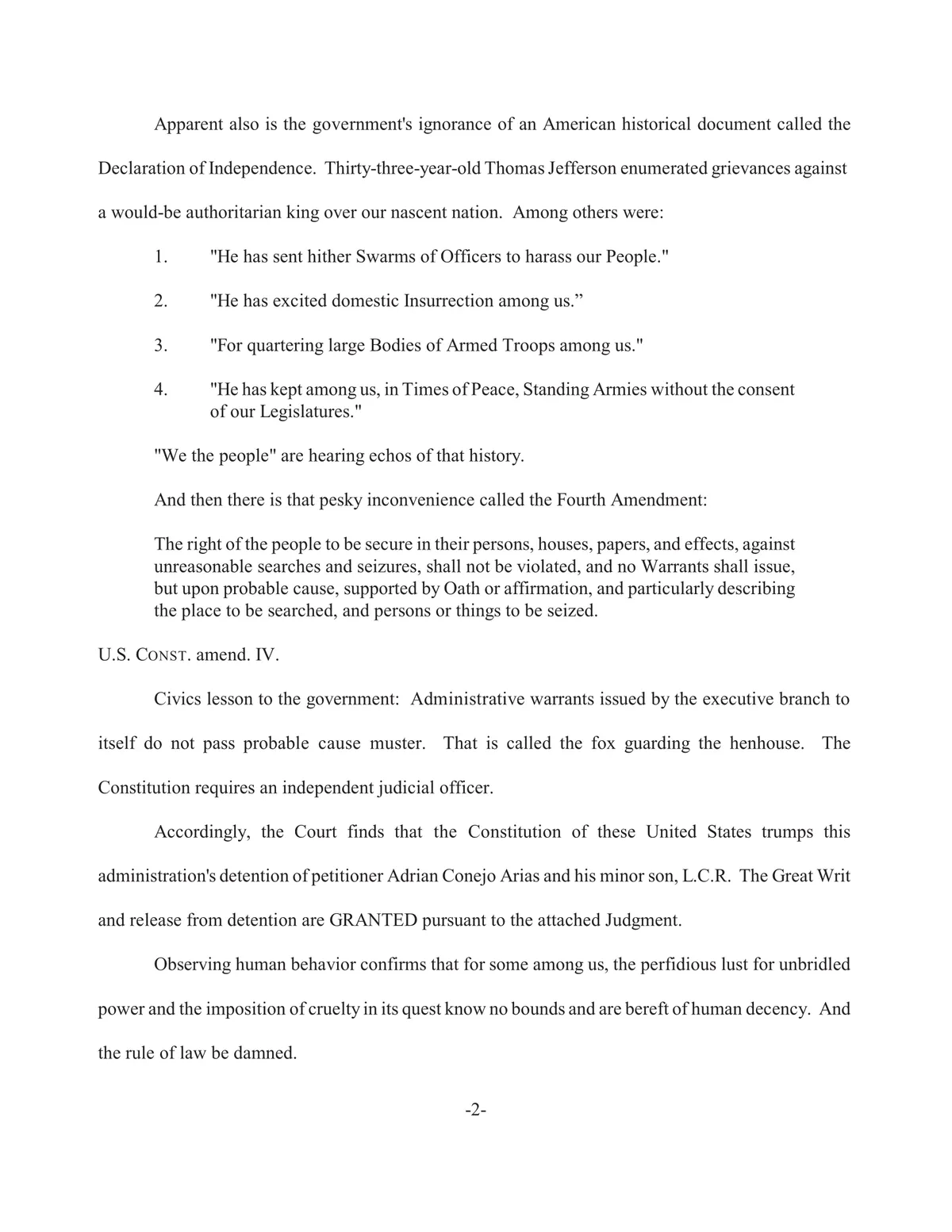
A Bavarian toy company called Playmobil is selling blonde haired Greek gods to children through a charity, and nobody seems to find the Nazism origin story strange?
Headquartered in Zirndorf the company launched its “History” line of Greek mythology figures in 2016. The series now includes all twelve Olympian gods, Alexander the Great, Achilles, the Argonauts, and Heracles.
Hermes – 9524: blonde.

Artemis – 9525: blonde.

Alexander – 70950: blonde.

Apollo – 70218: blonde.

Hera – 70214: blonde
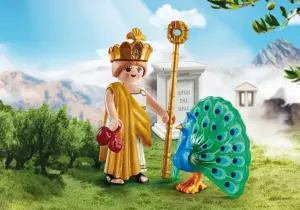
Demeter – 9526: blonde

Aphrodite – 70213: blonde

The entire Greek pantheon are presented as Nordic blondes. Originally, the figures were produced exclusively for the Greek market, sold at the Acropolis Museum gift shop in Athens and Greek toy stores, allegedly with proceeds going to the Orama Elpidas (Vision of Hope) bone marrow donor association.
In case you don’t recognize that twist, there’s a known tradition of groups who weaponize charity. Their atrocities become harder to criticize. It’s the foot in the door to normalize harms.
That’s how this disinformation campaign pivoted from its start in Greece back to Germany, even though Germans should know better. The Pergamon Museum, for example, as a monument to German archaeological extraction from Turkey, Iraq, and the ancient Near East sells the blonde Greek gods alongside displays of the looted friezes and gates.
It’s an appropriation loop closed tight.
The architecture doesn’t change
The Nazis were addicts of such appropriation. They did not invent a “fair Apollo” trope, but they forever weaponized the existing ones. Classical studies of “whitened” antiquity became central and integrated into ideological education set forth by Hitler.
Alfred Rosenberg, the Nazi regime’s chief ideological theorist, laid out the “blonde blueprint” in The Myth of the 20th Century (1930).
Playmobil perhaps knows: the Greek gods were appropriated and reframed to “represent the Aryan white ideal of their race.” Apollo symbolized Nordic virtues of “pure thought and rationality”. The fabricated “true Greeks” were the Achaeans and Dorians, who Rosenberg claimed were “of Nordic-Germanic descent” and “the ones who created the magnificent Greek culture.” He went so far as to say darker-skinned Mediterranean populations were, in his racist hierarchy, contaminated by “Pelasgian and Semitic origins.”
Rosenberg rewrote Heracles and Jason as “representations of the ideal Aryan Nordic masculine type” no longer Greek. The Nazi tribalist Gunther classified Plato himself as “a pure-blooded aspect of the northern blood of primitive Hellenism.” Friedrich Hildebrandt declared Plato “a teacher for our time” whose ideal state prefigured the racial hierarchy of National Socialism, completely ignoring Plato’s actual work.
This was an extremist racist fringe becoming state doctrine, taught in German schools, promoted by the regime’s most toxic intellectuals, and backed by the full apparatus of the Third Reich’s cultural production machine for genocide.
Did this German effect on classical studies experience denazification after Hitler’s suicide? No. While racial theory collapsed, the discipline infrastructure remained intact. Those who had served dutifully to enact genocide remained in position, continued teaching and curating the “blonde blueprint”.
Denazification screened for party membership cards, not for intellectual content. Steven Remy’s The Heidelberg Myth (Harvard, 2002) documents how it actually worked: Karl Heinrich Bauer, an outspoken supporter of Nazi sterilization law, became Heidelberg’s first postwar rector — then used the position to reinstate compromised colleagues. The university remained dominated by former Nazis throughout the 1950s. Professors constructed what Remy calls “elaborate narratives of defense and justification” to absolve themselves, while continuing the same research programs, the same curricula, the same visual conventions.
At Göttingen, many professors simply lied on their questionnaires. A 2025 review in the Bryn Mawr Classical Review concluded that the history of humanities at German universities under Nazism “was not a deviation from its true mission, but a continuation of traditions that had existed before.”
The traditions continued after, too.
Albert Norden’s 1965 Braunbuch documented 1,800 former Nazis still holding high-ranking positions across West German state, economy, administration, army, justice, and science.
Bettina Arnold’s research on Nazi archaeology documents that instructional posters produced under the Third Reich, depicting ancient peoples as tall, muscled, with blond hair and light eyes, continued to be used in Germany after 1945. The blonde Greeks weren’t flagged because they weren’t swastikas. They were just how the discipline depicted antiquity.
The Fragebogen asked who you were in the party. It never asked if you were teaching heavily corrupted classics.

What evidence actually shows
The proof of Nazis being wrong isn’t necessary, given their self-described supremacy over facts, but we do it anyway.
A 2017 study on the genetic origins of Minoans and Mycenaeans found both populations shared roughly 75% of their ancestry with early Neolithic farmers from Anatolia, with additional ties to the Caucasus and Iran. The Mycenaeans had a small northern European genetic contribution of around 10-15%, so their genetic makeup remained predominantly Mediterranean and Near Eastern.
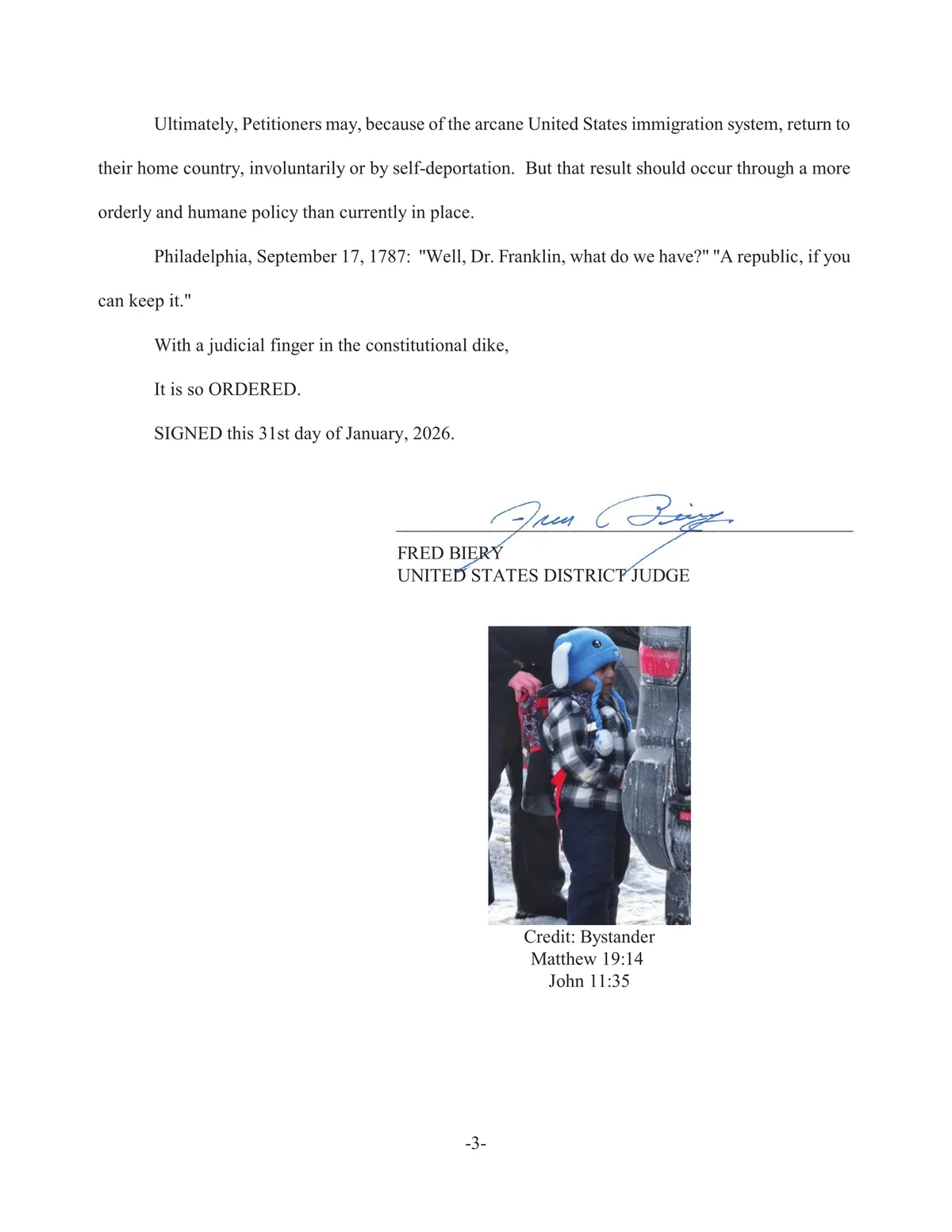
Ancient Greek art consistently shows this. Mycenaean frescoes, Greek pottery, mosaics, and sculptures overwhelmingly depict figures with dark hair and dark eyes. Minoan men at Knossos appear with long dark hair and reddish-brown skin. In addition, modern research has shown Greek statues were vividly painted and not white.
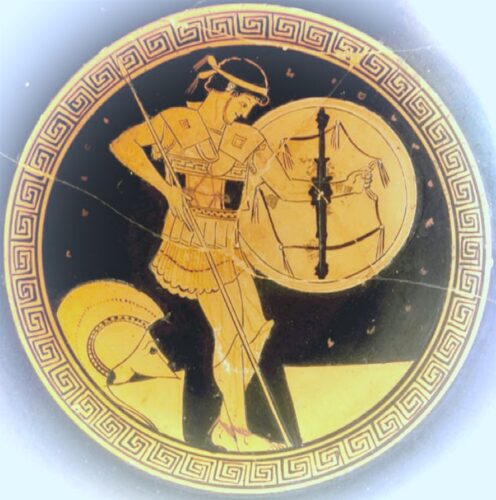
Homer, just one of many storytellers, used “ξανθὸς Ἀχιλλεύς (“xanthos Achilles”). He was marking the man as exceptional and shocking. In other words, he’s saying Achilles is radiant as in light, heroically visible and physically striking. Calling something light therefore blond, is like calling a candle flame or the sun yellow. It’s not actually how anything works. Light isn’t yellow, it’s luminous across a rainbow. Homer was describing something in the way it draws attention because it catches light, something radiant. Imagine writing “he was brilliant” and having a toy designer make him blond because… brilliant means blonde. Nope.

Several Greek gods were explicitly described as dark-haired in ancient sources. Poseidon, Hades, and Dionysus were called kyanokhaitis — “dark-haired,” with the “kyan” referring to a blue-black color. Poseidon’s dark hair correlated with the sea. These weren’t peripheral figures.
Even the Antiquipop academic review of Playmobil’s Greek sets noted diplomatically that “the skin colour of the characters remain quite uniform and white for Mediterranean people.”
They could have said Hitler directly influenced their interpretation. Nazism radicalized embedded Greek antiquity and Germany and Greece have retained this radicalism as an aesthetic convention. 
Mass-market products continue flattening Greek history through Northern European mysticism.
The transaction
| Period / Source | Aesthetic Signal | Ideology / Notes |
|---|---|---|
| 18th Century: Johann Joachim Winckelmann | White marble, “noble simplicity” | Emerging template of heroic “light features” in classical antiquity |
| 19th Century: Neoclassical painters & sculptors | Golden/blonde hair on Greek/Roman figures | Visual grammar spreads across European art and pedagogy |
| 1930s-1945: Alfred Rosenberg / Nazi theorists | Blonde, blue-eyed Greek heroes | Explicit racialization: “True Greeks = Aryans”; ideological education & propaganda |
| Post-1945: German textbooks & museum displays | Blonde classical heroes | Nazi ideology purged, aesthetic remains embedded in pedagogy and museums |
| 2016–2026: Playmobil Greek mythology figures | Blonde Olympians & heroes | Commercialized Nazi aesthetic; packaged as charity-friendly; displaces reality |
Rosenberg’s racial theory for Hitler stripped of its explicit ideology, laundered through ninety years of “that’s just what heroes look like” visual grammar — sits on a shelf next to the cash register at the Pergamon Museum.
Nobody at Playmobil’s Zirndorf headquarters needed to read The Myth of the 20th Century. The Nazi aesthetic was so thoroughly untouched in German cultural production that blonde-equals-heroic just feels natural. Unremarkable. Default. That’s how successful cultural appropriation works: it makes itself invisible.
The charity shield
The “Play & Give” branding is worth examining as a structure, not just a partnership. Playmobil Hellas has donated over €80,000 to the Orama Elpidas association through this program. The cause is real. Children with cancer need bone marrow donors.
But wrapping racially coded cultural products in charity branding creates a shield that deflects criticism. Who wants to be the person attacking a toy that helps kids with cancer? The structure is elegant: you can’t critique the product without appearing to critique the cause.
This is a pattern that repeats across institutional capture. Wrap the extraction in something nobody can oppose. Philanthropy as packaging. The charity is genuine; the deflection is structural.
What sits on the shelf
It’s 2026. A German toy company is selling blonde Greek gods at a building full of artifacts Germany removed from the lands where those gods were worshipped, and the packaging says it’s for charity.
The Playmobil figures aren’t just bizarrely blonde “for fun”; they exist inside a long, persistent visual grammar that Nazis weaponized, and which survived decades of postwar German cultural production.
The racial theory that made Mediterranean gods look Northern European is ninety-six years old, its author was hanged at Nuremberg, and his aesthetic choices are still moving product.
The product has changed. The architecture hasn’t.