A couple decades ago I made a late night drinking bet about SANS with a colleague outside the security industry. Would I be able to inject myself easily to the cover of every brochure?
He owed me a beer within a month.
What did I do? I wrote a gross, obviously over-glowing, completely saccharine, review of a SANS course into a feedback form. It was something like this training was better than sliced bread. Everyone MUST do this NOW or be a FAILURE at security. Boom, my name went to the top of every brochure (back then they were paper as well as online). I contributed heavily to a SANS Linux security hardening guide by 1999 and reviewed a lot of what was coming in, so I was no stranger to a lack of filtering on inputs and outputs.
As much as I enjoyed my frothy beer of victory, in a way it backfired. My friend was disgusted. He also was disgusted when I popped root on another colleague’s laptop to prove that he shouldn’t be running portmap on insecure networks. Ah, the good old days.
It turned out to be unsettling to know SANS lacked filtering on hyped nonsense. I wanted to be wrong. And then came the recognition I didn’t expect. Soon many strangers in the industry were greeting me with “oh, I know the name Davi, you’re the guy on the cover of SANS”. Uh, oops. The difference between intelligence and literature is a known problem in security marketing.
SANS was rushing into print the parts that serve their seats and subscription alarm, and not the parts that complicated it.
Fast forward to today’s Mythos discourse.
Anthropic is feeding one very dubious premise: the asymmetry between attacker and defender is permanent. Ok, that’s nonsense. And yet, Rob Lee at SANS just told Forbes he does not see it changing for a year, maybe longer. Kara Sprague at HackerOne said the same. Gordon Goldstein’s CFR piece pulls in Lucas Nelson at Lytical Ventures (on whose advisory board Goldstein serves) to say this is the defining cybersecurity challenge of the next decade.
“It’s not like Mythos was unique, it’s just faster,” Rob Lee, chief AI officer and chief of research at SANS Institute, told me via video interview. “There’s been a concerted effort of finding zero days over the past year using all of the existing models. So what that basically means [sic] that there were thousands of zero days that have been discovered that have been queued up to patch. This basically takes it from moving at 50 miles an hour to about breaking the sound barrier in terms of speed.”
The premise is simply false. And evidence it is false has been sitting on CISA’s website since at least 2023.
And just because I like history, let me point out up front the excited Mythos briefing that names Jen Easterly as a contributing author (hi Jen!) does not cite the federal guidance issued while she ran CISA.
Defenders Only Have to Be Right Once
Grab Mythos. Point it at your own code. Do not ask which bugs it can find. Ask a completely different question.
If I rewrote this C service in Go, would the exploit chain you just produced still run. If I moved this Java handler to Rust, would the deserialization primitive survive. If I took the 27-year-old system you found a bug in and ported its network-facing code to a memory-safe language, how many of the thousands of zero days you claim to have found would remain.
It’s like when crossbows showed up to battle as a low-skill accelerant. In theory a French King could hire a bunch of Italian mercenaries and their bolt-firing machines, and wipe out highly-specialized and rare knights challenging bad monarchy. In reality, Genoese crossbowmen lost their pavises in the baggage train, fought in rain that slackened their bowstrings, were outranged by longbows, and were then ridden down by their own French cavalry for withdrawing. The theory failed under adverse conditions and the people operating the new machines were murdered by their own leader.
The answers to a defense forward approach are known.
Microsoft has reported for over a decade that roughly 70 percent of the vulnerabilities it assigns a CVE are memory safety issues. Google reports the same proportion for Chromium. Microsoft’s November 2025 Secure Future Initiative report confirms the number has not moved. The class is not a long tail. It is a spine to the exploitable vulnerability population.
In June 2025 CISA and the NSA published joint guidance calling memory-safe languages the most comprehensive mitigation against this class and describing the shift as a paradigm change from detection after the fact to prevention at the language level. CISA’s Product Security Bad Practices document pushed manufacturers to publish memory safety roadmaps by the end of 2025.
The Mythos announcement could have been THAT acceleration topic and we’d be in a whole different media circus right now. The White House Office of the National Cyber Director has been on this trajectory since the Back to the Building Blocks report.
None of this is speculative. The rapid improvement map is sitting on federal websites, waiting for someone to execute it at Mythos speed. I have given talks about this for a decade already, rooted in the lessons of automatic weapons that led into trench warfare and tanks of WWI. Faster patching is the wrong goal. Eliminating the class is the right one.
Microsoft Research has published on using LLMs to port C code to memory-safe dialects. Microsoft’s Surface line now ships Rust-based UEFI firmware. AWS runs Rust at scale. Chromium is on the memory-safety path. The Linux kernel accepts Rust contributions. The technical path exists, the guidance exists, and the tooling exists.
If Mythos is the supersonic technology that Rob Lee claims, a defender strapping it on does not just speed up the patch cycles. A defender eliminates the class.
Supersonic Inversion
The chorus frames AI-augmented discovery as a flood that attackers will ride faster than defenders can bail. This may be an entirely wrong geometry, based on people thinking about horseshoes in the era of bicycles.
An attacker has to find one real bug in one real service and exploit it before the defender detects or patches. A defender armed with the same capability is not obligated to play that game. And the industrialized profit model of Mythos makes it entirely vulnerable to a simple economic exploit well known to drone warfare logistics.
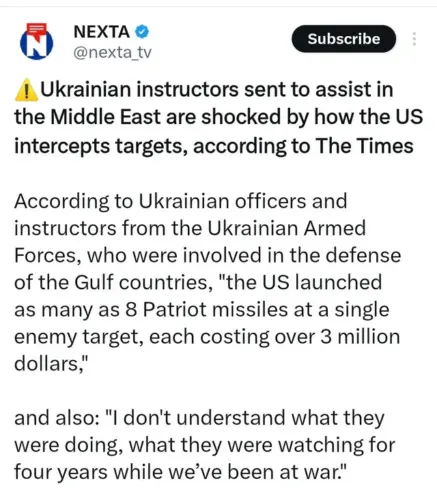
The defender can generate ten thousand plausible endpoints where one real service sits. Each endpoint responds like a real system. File structure plausible, command history coherent, protocol behavior consistent under inspection. Microsoft Defender XDR already auto-generates decoys from environment naming conventions. Tracebit ships LLM-generated canaries. Research published in late 2025 documents generative AI deception operating at machine pace, with attacker dwell time and intelligence yield well above traditional honeypots.
Now run the incredibly over-priced Mythos’s supposed capability against that attack surface. The attacker’s AI agent cannot tell which of ten thousand endpoints is the real service. Every exploit burned on a decoy is intelligence for the defender and a cost to the attacker. Zero days are expensive. Spending them on chaff is fatal when your model costs a lot of Jacksons per million tokens instead of a dime.
AI Sweden’s research frame is the sharpest: cybersecurity is fundamentally a problem of asymmetry, and deception’s purpose is to make attacker effort prohibitively expensive by forcing adversaries to burn zero days in controlled environments. At Mythos speed, the defender generates chaff so much faster than the attacker can possibly triage any real targets.
The obvious asymmetry game inverts, and yet I’ve seen exactly nobody talking about this.
Drunk Chorus is Off Key
The SANS 30-page briefing’s Priority Action 1 is to point agents at your code. That headline is what SANS has been promoting. The briefing itself is more honest than the promotion. Priority Action 8 includes a paragraph on AI-assisted software minimization and replacing third-party libraries with framework primitives. Priority Action 9 is titled “Build a Deception Capability” and runs three sentences on canaries and honey tokens. Both exist in the document. Neither appears in Rob Lee’s Substack summary, which names Priority Actions 1, 6, and 11 by number and skips 8 and 9 entirely. The sections most aligned with the defender path are in the briefing. They are not in the marketing.
I found a complete absence of memory-safe languages. Zero mentions across 30 pages. No Rust. No Go. No memory-safe. No memory safety. No Back to the Building Blocks. No ONCD. No reference to the CISA and NSA joint guidance that has named memory-safe languages the most comprehensive mitigation since 2023. Jen Easterly gave us federal guidance while she ran CISA, yet it is not cited in the briefing with her name on it that claims to respond to the moment that guidance was built for.
The omission is annoying particularly because of the industry economics.
SANS sells training against persistent threats. HackerOne sells bug-bounty infrastructure that requires bugs to continue existing. Palo Alto Networks sells defensive AI priced against a permanently adversarial environment. CFR sells policy access predicated on the crisis remaining unresolved. Anthropic sells a consortium seat. VulnOps, Priority Action 11 in the SANS briefing, is a permanent staffed operational function designed to run continuously.
None, not a single one, of these products monetize in a world where the attack surface has been architecturally eliminated, or where deception has made offensive AI economically unviable. The defender path threatens the business model. The chorus defaults to the answer that preserves its revenue.
Where the briefing does cover deception, it covers it as a 2015 technique. Canaries and honey tokens. Static lures. What the briefing leaves out is the inversion Mythos-class AI unlocks for defenders: LLM-generated endpoints at machine pace, plausible under inspection, forcing the attacker to burn zero days on chaff. Tracebit ships this. Microsoft Defender XDR ships this. Late-2025 research documents the dwell-time and intelligence yield. The briefing treats deception like telling people it’s still 2006, completely missing a 2026 Mythos-enabled version.
CISA’s memory safety push, the NSA’s guidance, and the ONCD’s Back to the Building Blocks report all point at the same answer. The exploitable surface can be reduced by a majority through language choice. Refactoring cost collapses when AI does the port. The surviving surface can be drowned in chaff. The combination, at AI speed, collapses the attacker advantage the chorus is marketing as permanent. Five years of federal guidance. Zero mentions in the briefing that claims to respond to the moment the guidance anticipates.
I can’t stop shaking my fist at my screen.
Integrity Test Elephant in the Room
A security expert worth the title, handed a Mythos-class capability, would publish the first systematic refactoring of memory-unsafe components at scale, with before-and-after exploitability measurements. The work would support CISA’s 2025 roadmap deadline and demonstrate the defender path concretely. It would ship in a GitHub repository, not a press release.
A security expert selling a subscription to the alarm would avoid publishing anything that makes the alarm shorter.
The defender path exists. The guidance exists. The tools exist. The question is which experts are running the defender path and which ones are running the press tour to a “Mythos” world of FUD.
As the old protest song goes, congressional-industrial-military-complex, what is it good for…