Category Archives: Security

De Oppresso Liber Was a Trust Doctrine: SOF Can’t Get Back There From Venezuela

Sitting on my desk is a ship in a bottle my father gave me, made by Bill Donovan. When I look at the tiny masts, their delicate rigging, above the blue painted waves, I’m reminded how the precise qualities of an operator used to be measured.

And then I look over at Seth Harp’s book.
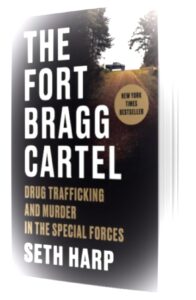
He explains Special Operations missions in the GWOT as:

…covertly liquidating the male population base of recalcitrant ethnic and tribal groups that resist U.S. military occupation.

Ouch.

The book gets reviewed plainly by some as an emerging revelation about how badly things turned out under Bush. The far more important exposure actually needs to be about what’s developing post-GWOT.

SOF operators increasingly hint towards decoupled regional commands, district-style zones of interest, an end to the global sharing frameworks that defined twenty years of allied operations. Everyone points to the Delta operation in Venezuela using narrow cartel designations as proof the model works without foundational coalition architecture.

This is regressive doctrine dressed as adaptation. It’s like how people invoke Monroe as cover for the exact opposite doctrine. I mean, look at what “special” has meant and what operators increasingly want it to mean next.

Tailored and Relative Defense

The original Special Forces mission that we study, such as Bank, the OSS lineage, and de oppresso liber all defined “special” as being tight and tailored. Small teams shaped to specific cultural contexts, building indigenous defensive capability relative to local threats. The operator learned the language, lived in the village, measured success by what the partner force could do after Americans left. The 12-man ODA existed to enable durable local resilience. Medic as community entry point, intelligence sergeant building networks through relationships, team sergeant as institutional memory.

“Special” meant fit to context and oriented toward defense that enabled populations to protect themselves. Force multiplication structure, training, selection all followed from this. The screens were for cultural adaptability, communication aptitude, comfort with ambiguity, patience measured in years.

Universal and Industrialized Offense

GWOT flushed all that away with a rush to produce body tags. McChrystal’s F3EAD cycle (Find, Fix, Finish, Exploit, Analyze, Disseminate) redefined “special” as universal champions of death tolls. One kill chain applied anywhere and everywhere. Track a target, kill him and every military-age male nearby, seize documents, generate more names, repeat again hours later. Speed through targets, shoot first, and only ask questions so you can start shooting again. The same process in Anbar, Helmand, Mogadishu, the Sahel. Context didn’t exist beyond the shape of the kill zones. Cultural knowledge didn’t matter beyond the direction the door kicked in. The machine was industrialized offense, optimized for speed and volume of kills on a full sprint.

This required total information access across allied networks and worked because Five Eyes plus NATO SOF plus partner nations operated as a single organism with shared targeting databases. The global architecture made universal application possible.

It also inverted de oppresso liber completely. Indigenous partners became consumable inputs to the targeting machine. Afghan commandos serviced American kill lists. A force designed to enable tailored local defense was reoptimized into universal industrial offense that depopulated resistance. And the more the thoughtless machinery depopulated areas, the higher the percentage of resistance. Just like Vietnam. Go figure.

Decoupled and Unleashed

The operators calling for regional decoupling lately think they are wisely preparing for a world where the U.S. no longer has authority. Turkey running SOF against the American-trained forces in Syria. France pushed out of the Sahel by Wagner. Gulf states with SOF relationships that bypass JSOC. The global sharing framework broke when Hegseth used it for war crimes in the Caribbean, so formalize it.

What they actually propose is a third model worse than either predecessor. Not tailored defense. Not even universal offense with its coalition constraints. It’s a decoupled offense of regional fiefdoms operating under their own legal authority, political cover, and information control, answerable to whoever holds the designation authority in their district.

“Special” stops meaning tailored or even universal. It means unleashed, above the law because loyal to the directed mission only. A force pointed at whatever target the political sponsor designates, with no doctrinal requirement to build anything, no allied framework providing oversight, and no cooperative architecture satisfying the SOF truths that most special operations require non-SOF assistance.

The GWOT model, for all the horrors that Harp documents in his book, at least maintained the structural possibility of allied pushback. Partners who share a common operational picture can object. Decoupled districts eliminate that. Each zone operates in its own information silo, like Chad or Guatemala under Reagan. Nobody outside sees the full picture until criminal tribunals investigate decades later.

De oppresso liber is a trust doctrine.

Populations considering partnership with American SOF watched what happened to the Montagnards, the Kurds, the Hmong, the Afghans. The institutional record is politically conditional treatment. Decoupled regional commands with rotating political sponsorship will only make that worse. What serious opposition figure in Venezuela or anywhere else will invest in a relationship with a force that has no doctrinal commitment to their survival and no allied framework holding it accountable?

Tailored relative defense built things that lasted. Universal industrialized offense destroyed them. The new trend towards decoupled and unleashed doesn’t even pretend to try.

Putin’s Advisors Warn of Russia Collapse Summer 2026

Alexandra Prokopenko, a former Russian central bank adviser now at the Carnegie Russia Eurasia Center, published an op-ed in The Economist comparing Russia’s wartime economy to a mountaineer’s death zone. She invokes life at an altitude above 8,000 meters where the body consumes itself faster than it can repair. Fortune’s summary carries the headline that Russia is “eating its own muscle to survive.”

She’s right. Oil revenue crashed 50% year-over-year in January. Interest payments on government debt now exceed education and health spending combined. CSIS estimates 1.2 million military casualties.

The economy has split into a well-fed defense sector with a short lifespan, and a starving civilian one with a short lifespan, producing GDP figures that measure only the manufacture of assets designed for death and destruction. This is fact, uncontroversial. Russian officials have themselves warned Putin a financial crisis is likely to arrive this summer.

Stating that a malnourished nearly dead patient is dying is the easy part.

Prognosis or treatment options are where analysis is supposed to go. Prokopenko plays it safe precisely because it remains diagnostic. She documents the obvious symptoms with admirable precision, then concludes that Russia “can probably continue waging war for the foreseeable future“. Well, in fact, that’s a sentence her own evidence contradicts.

The Question She Should Ask

What happens when three converging failure modes intersect this summer? A banking system under stress from consumer loan defaults and corporate credit starvation; a military that now loses personnel faster than it can recruit, pushing Putin toward forced mobilization (the political third rail he avoided for three years); and oil revenue below the budget floor that forces binary choices between funding the war and funding the state.

These variables accelerate each other. Forced mobilization pulls workers from the civilian economy, accelerating loan defaults. Oil revenue decline constrains the budget, sharpening the choice between military and civilian spending. The banking system is the connective tissue. When it seizes, three problems merge into one big systemic event.

Russia had exactly this in 1998. We do not have to pretend it is theoretical.

The Question Everyone Should Want Answered

There is a second deafening silence in the analysis, more consequential than the first. Naming specific failure triggers immediately raises the matter of agency. If the collapse mechanisms are so clearly visible (banking contagion, recruitment shortfall, oil revenue floor) then so are the policy levers that could accelerate or shape them. Controlled prairie burns are far better than just waiting for lightning storms.

Tighter sanctions enforcement. Secondary sanctions on buyers of Russian crude. Further restrictions on financial system access. Coordinated pressure at the points where the three failure modes converge.

This is what “controlled burn” looks like in historical practice. Russia’s economy breaks. Russian officials are already telling their own president it breaks this summer. The question is whether external actors shape the manner of the burn or whether, as in so many previous cases, everyone waits for a lightning strike and then pretends the blaze was unforeseeable.

Prokopenko chose the mountaineering metaphor. Mountains are geological. Inevitable. Natural and beyond human agency.

Meh. At least she didn’t say here be dragons.

The more accurate framing is a large dam under pressure: the engineering failure modes are visible, the materials are known and stress points measured, and the difference between a controlled release and a catastrophic breach is whether anyone with authority decides to act before the structure does what is expected.

Green Berets know what I’m talking about.

The history of economic collapses in wartime states is a history of phase transitions. It is rapid, nonlinear, and in retrospect obvious. It is preceded by a long period in which analysts trying to protect themselves described trajectory without taking the risk of naming a destination.

Authoritarian systems by definition starve their populations and then in crisis exhibit the cognitive signatures of hypoxia: degraded emotional processing, loss of positive bias, impaired decision-making. It’s science not fiction.

How America Can Win the War With Iran

Look, I’m getting asked all the time now why nobody is stopping Trump from making a mockery of America with empty threats to Iran. Every time I sit down to drink my tea in peace someone says “hey, so are we going to war with Iran now?

For the last time, I don’t know.

However, what I DO know is how stupid it is that I’m being asked this question. And I’m getting tired of it.

So here’s a quick explanation of why this is even worse than Putin expecting Ukraine to be his quick win. Or to make a better point, this is even worse than the Bush-era neocons promising Iraq was their doorway to Tehran — that taking Baghdad would see Iran fall like a domino. We stormed into Baghdad and then pivoted like a snail on scotch tape, got our asses handed to us for ten years and never saw even a glow of Tehran.

Oh, but this time, this time, it will be different. Let me explain. It will be even worse.

No End, Just Mean

A military operation is supposed to be defined with an objective, and the first thing I see right now is that nobody in the administration can articulate Iran in objective terms. Nothing. Nada.

Not Leavitt. Not Witkoff. Not Trump. These ham-fisted chaos agents oscillate between “deal,” regime change, and legacy project.

When a reporter asked Leavitt directly why strikes might be needed against a nuclear program Trump already claims to have destroyed she blew smoke rings:

There’s many reasons and arguments that one could make.

Yeah, dude, whoa so many, like really many. You thinking what I’m thinking? Go ahead. Yeah, give me just one of those reasons and arguments.

Oh, so you don’t have any?

This is exactly how the Vietnam War started. Empty-headed political vanity dressed up as strategy and going in circles.

Witkoff gets on Fox News and can’t even commit to his own phrases:

I don’t want to use the word ‘frustrated’… I don’t want to use the word ‘capitulated,’ but why haven’t they capitulated?

I don’t want to say what I’m saying but I’m saying that I’m saying something other than what I’m saying.

Eight dimensional chess, this guy. Wizard of words.

Witkoff capitulated to using the word capitulated. A real estate guy with no diplomatic experience broadcasting his only acceptable outcome is total Iranian surrender. That’s probably how real estate deals are done. Pretending negotiations are happening in good faith while threatening total annihilation sounds like the PLO strategy. Remember them? Meanwhile he’s meeting with the exiled son of the toppled shah “at Trump’s direction.” A regime change agenda is practically an armband they wear to meetings.

Plain Numbers

Putin went into Ukraine with roughly 200,000 troops against a country of 44 million people covering 600,000 square kilometers. He promised it would be over in days. Four years later, his entire military is totally wrecked, his economy is totally wrecked, and he’s known as the meat-grinder dictator who can’t win.

Iran is big, like 1.65 million square kilometers big, nearly three times the size of Ukraine. The population also is big, roughly 90 million, so double Ukraine. The terrain is mountains and desert, with thousands of years of deep defensive warfare doctrine. And unlike Ukraine in February 2022, Iran has spent a solid 40 years excitedly planning for the day America dares to try. Every weapons program, every tunnel network, every proxy relationship, every mine in the Strait of Hormuz was designed for the President too dumb to think about it.

Iraq in 2003 had 25 million people, a hollowed-out military wrecked by a decade of sanctions and no-fly zones, and flat desert terrain made for American armor. Bush believed Wolfowitz, Feith, and the AEI crowd that they would be in Tehran by morning, despite the CIA silently banging their heads on tables and warning without authority it was never going to happen. The US pushed 150,000 troops into Baghdad in three weeks and then spent the next decade losing badly, redirecting billions into a hole in the ground they dug themselves into. Iran watched and waited.

Enemy Don’t Play House Rules

You don’t get to decide how the other side fights. Military scholars get this. Trump doesn’t. His sycophants would never dare to tell him.

Iran’s foreign minister went on CBS and gave a taste of professionalism that marks their potential for success. He was honest: they can’t hit the US mainland, so they’d target American bases across the Middle East. That’s the stuff of real danger. That’s an expert telling you their plan built around asymmetric reach makes the US “air power” projections instantly irrelevant.

The Strait of Hormuz closes on day one. That’s roughly 20% of global oil transit. The economic shock alone could trigger a worldwide recession before the second sortie lifts off. Iran doesn’t need to win a naval battle. It needs to drop enough mines and fire enough anti-ship missiles to make tanker traffic snarled and financially toast. We’re talking hours, people, not weeks.

Carriers in the Arabian Sea? Might as well ride circus elephants towards a machine gun nest. A country with modern anti-ship cruise missiles, fast attack boats, and sea mines sees a bold target presentation. Yoo-hoo over here, sink this ship. The Navy experts know all this. The Pentagon knows all this. The Russian ships at the bottom of the Black Sea prove this. I’m not saying anything new.

Carriers are just Witkoff’s presentation aids to look big and tough like a John Wayne for his Fox News segments, with zero relevance to modern warfare.

The June 2025 Iran-Israel war already gave us the math. Israel’s Arrow interceptors were heavily expended. The US rushed to backfill with THAAD batteries and burn through ship-launched SM-3s. Tactically there was a solution established. Strategically, it proved that Iran’s approach of exhausting missile defense systems through volume works well enough. Intercept 90% and you still lose when the 10% are all that’s needed for infrastructure to fail.

Day One Doesn’t Matter

You blow up the air defenses and bomb the nuclear sites, sink the navy. It’s a flash bang start. Then on day two every problem in the Middle East that you currently blame on Iran is yours to handle and fast. The Shia militias in Iraq. Hezbollah. The Houthis. The influence networks across the Gulf. All of it becomes your problem, on your bloody hands, with no plan. You’re staring at 90 million people with a 3,000-year-old playbook. And you have … what?

We already saw this. The US invasion of Iraq was the single greatest strategic gift Iran ever received because it eliminated their biggest regional rival, installed a Shia-majority government next door, and gave Iran’s proxy networks room to metastasize across the region.

The whole “we’ll be in Tehran” concept of the US flattening Iraq had the opposite effect and significantly weakened American approaches to Iran.

Vietnam Failure in Fast Forward

Trump keeps threatening war without understanding the enemy, without defining victory, and without any theory of how military force would produce a political outcome he desires. It’s probably because he never served in Vietnam. The draft dodger wants to play general.

That’s the failed logic of Vietnam being compressed into weeks instead of years: escalation as substitute for strategy, military deployments driven by domestic political needs rather than operational logic, demands on the enemy that demonstrate zero understanding of their decision-making calculus, and complete absence of planning for what happens after the first shots are fired.

Trump thinks he can demand zero enrichment, dismantle ballistic missiles, cut all ties with regional allies. Yet all of it is untenable to any Iranian government, even the most pliant one. The Nuclear Non-Proliferation Treaty enshrines low-level enrichment as a right for all 191 signatories. Obama figured this out early in negotiations. It’s a non-starter, so he adjusted. Trump people haven’t learned anything because apparently they don’t think that thinking helps them.

We aren’t seeing strategy. We aren’t seeing military planning. The only thing at all here is political theater with live ammunition.

Sheldon Adelson used to rattle on about dropping a nuclear bomb in the Iranian desert as his preferred opening negotiating move. That nutjob spent hundreds of millions making sure the people who shared his big bang fantasy got into power. Now they’re there and he’s dead. The only thing separating Adelson’s fever dream from policy is the question of whether the modern-day Nixon thinks he can get away with it.

Iran will be harder to handle than Serbia, Libya and Iraq combined. The current administration struggles to even handle trans troops who are friendly, so I wouldn’t expect them to be able to punch their way out of a wet paper bag at this point. Hegseth literally said there’s no more special anything allowed in his military, only one voice going forward. And yet, we all know the best thing in the military was always the special operations.

The question everyone keeps asking me is whether there will actually be war. The honest answer is that the people in charge would be bigger idiots than Putin invading Ukraine, and unfortunately that might be their actual goal.

Bill Gates’ Daughter Raises $185m for Surveillance and Says Don’t Thank Her Dad

The daughter of Bill Gates doesn’t want you to think about her father. That’s why she’s always referred to as the daughter of Bill Gates. And now she has announced she thought of a way to use AI to bully stores into charging her less for fancy clothing.

I wish I was making this up.

I’m not.

Her product, if you can even call digital racketeering that, is a horrible looking margin compression engine. The name “Phia” is a portmanteau of “Phoebe” and “Sophia”. I mention that because she literally embedded her own name into her product while claiming to build something independent of her name.

I’m only getting started.

The Phia injects itself like digital muscle between retailer and consumer, scraping prices across thousands of sites to route buyers to the cheapest option. It’s the kind of thing we’ve seen on the web since 1994. It’s like Sharepoint saying the web is now proprietary and you have to pay. It’s like Internet Explorer saying the web is now proprietary and… the apple doesn’t fall far from the tree.

Phia is the opposite of innovation. It’s parasitic intermediation most reminiscent of Leland Stanford himself. Notably, both founders went to Stanford. Their first product idea was a Bluetooth tampon and from there they pivoted to surveillance of retail shoppers.

The Extraction Racket

I’m not an economist but when I went to LSE I learned a thing or two about financial risk models. The Phia theory is retailers will eat the cost of inventory, merchandising, photography, returns infrastructure, and brand building, and then an AI agent will show up to undercut them by redirecting the sale elsewhere. Phia even takes an affiliate commission from the retailer whose sale it just cannibalized. That’s cruel on top of being criminal. The consumer pays with their data. The only people who would get nothing in this transaction are the ones who actually make things. The value capture flows to the “platform” flexing huge “investor” muscle.

Why would anyone who actually makes or sells things sign up? Market capture. It’s the Walmart playbook automated and celebrated as “empowerment.” Well, even that’s being generous. In Somalia this was pushed by billionaire Arab investors into Red Sea traffic and called… piracy.

If the web business model sounds familiar, it should. Phia is structurally identical to PayPal’s disgraced Honey browser extension, which is currently facing over 25 class action lawsuits for replacing creators’ affiliate links with its own at checkout.

Cookie stuffing is fraud.

One of Phia’s early investors, Joanne Bradford, was the former president of Honey. Her legacy is that Google updated Chrome Web Store policies in March 2025 specifically to crack down on extensions claiming affiliate commissions without providing discounts. Somehow, who can guess why, Phia was pushed into launch one month later.

Climate Activism Meets Fast Fashion

Maybe the buried lede is the cofounder Sophia Kianni, whose climate activism credentials seem to exist. She founded Climate Cardinals and served on the UN Secretary-General’s Youth Advisory Group on climate change. However, Phia’s retail partners include Abercrombie alongside secondhand platforms, and the tool actively redirects consumers to cheaper new items from discount brands, not just resale. Routing people to the cheapest fast fashion option is a strange expression of environmental values. It’s maybe like everything else in this story, a huge disappointment in the standards of education at Stanford.

The entire “shops like a genius” framing by Phia is an insult to the English language. Shopping “like a genius” apparently means paying the least possible while someone else absorbs all the risk and cost. That’s a race to the bottom dressed up in girl-boss language. It’s like saying “cooks like a top chef” for someone who ordered a pizza delivered.

Why are rich people so obsessed with being lazy yet taking credit for hard work that others do? Pick a lane.

The Name Game

And why doesn’t Gates use a pseudonym, if she wants to escape her name, instead of showing up everywhere as the daughter of the Epstein guy? Every single headline I see says “Bill Gates’ daughter.” The $35 million raise, the $185 million valuation, the Kleiner Perkins and Khosla participation. Need I go on? None of that happens for a 23-year-old Stanford grad with a browser extension if her last name is Mohammed.

Her claimed desire for independence from privilege while trading on it in every single sentence is the kind of cognitive dissonance that works only when nobody has any incentive to point it out. The investors don’t care about her name in the pitch deck; they care about it in the press releases.

She clearly knows how to obscure a connection. Just look at how she allegedly didn’t take money from her parents. She took a $250,000 grant from Stanford’s social entrepreneurship program that is funded by the kind of endowment her parents’ circles built. The celebrity investor list definitely says she’s someone who is “independent”: Kris Jenner, Hailey Bieber, Sheryl Sandberg, Sara Blakely. Kim Kardashian filmed a launch teaser. This is the diametric opposite to bootstrapping. Privilege laundering through one degree of separation is proof she can launder, so why not come up with a stage name?

The Surveillance Product

All that being said, this is really a story about a recent college grad tricking people into giving up their privacy for nothing gained. What are they teaching at Stanford?

The real buried lede is the data collection story from November 2025. Four security researchers reported that Phia’s browser extension contained a hidden function called logCompleteHTMLtoGCS that captured full HTML snapshots of every webpage users visited.

Full. As in FULL.

Banking sites, private emails? Everything. It compressed them, and uploaded them to Phia’s servers. Not just shopping sites. Every page. Security researcher Charlie Eriksen from Aikido Security called it “among some of the crazier things” he’d seen in his career.

Phia removed the feature only after a researcher contacted them. They never disclosed the violation to users. They claimed they “never stored this data.” Then they raised $35 million.

A price comparison tool that watches everything you browse and buy isn’t an assistant. It’s a spy. This is a billionaire-backed surveillance operation under a very thin shopping skin. The phia.com website itself is essentially empty, showing only a title tag and a Facebook tracking pixel. That’s the $185 million celebrity promoted valuation, staring back at you.

Leland Stanford, what a guy.