Category Archives: Security

Dell’s New Retro Laptop Concept is Repairable

HotWheels were a decentralization revelation for me as a child and this particular mod-Bronco probably saw the most creative miles

I keep admiring the car companies pushing “retro” versions of their vehicles, although they all seem far less friendly to the right-to-repair movement than the original versions. Does the latest “Fix Or Repair Daily” (FORD) user interface look like it is “mod” friendly to you?
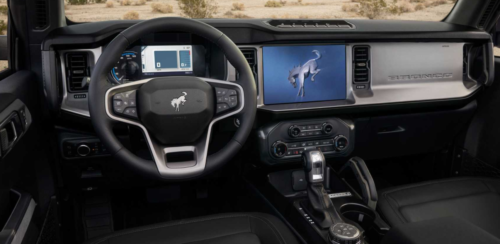
Is there a “box of buttons” replacement option yet for that giant ugly horse picture in the middle of the 2022 dash? Might as well have a factory-installed velvet-Elvis painting on the windshield.

Who is going to wrench apart all those sealed plastic bits in a 2022 Ford Bronco, versus how many carbon fiber, fiberglass and welded aftermarket upgrades and modifications would you naturally find on a 1960s or even 1970s model?

…it’s hard to imagine a situation where the new Bronco would need to be modified…

Oh pleeeeaazzz. Modify it with a classic American electric engine to start (pun intended). If it was good enough for Ford in 1914, it should be good enough for her husband’s legacy in 2022.

Dell has seemingly taken the opposite approach to car manufacturers by giving people the “retro” option of modifying and repairing their newest laptop model.

Or maybe it’s the same approach, such that we’ll see a big aftermarket hot-rod movement for both the newest Dell and Ford?

In any case (pun intended) the new Concept Luna laptop seems very 1990s thinking to me, like back when Dell engineering was cool.

Last week, I was able to check out Concept Luna. Announced today, it’s a laptop aimed at helping Dell achieve its environmental goals by offering parts that are easier to repair, reuse, and recycle. The machine is built to open up easily, so you can harvest its motherboard or other parts to use in future systems. Through this process, Dell hopes that a motherboard will be able to be used in up to three machines.

It actually looks like a laptop I bought from Apple in 1989, just a few years before I became an official Apple repair technician. Yes, I used to have official Apple corporate CDs delivered by the post office, describing in detailed step-by-step videos how to take everything apart. And I used to tear machines down and upgrade or modify them for people, at one point even managing a team of engineers who would de-solder components on boards all day… up hill, both ways.

Kind of weird also to think how Apple allowing people to work on their new machines is considered something new.

For years, Apple has monopolized product repair by withholding the parts and tools that customers and independent repair shops need to fix broken products. That’s finally changing. On Nov. 17, Apple announced that it will begin sharing with the public more than 200 parts and tools for its products, starting with the iPhone 12 and 13 lineups and its new Macs. This program will presumably grow to include newer smartphone models and Mac computers.

That’s a huge breakthrough for the growing Right to Repair movement, which has been working to pass legislation to make sure that all Americans have the right to repair not just their phones but anything they buy and own.

A breakthrough in the sense that it returns us to where we were. Maybe next Apple will announce that we can even choose our own desktop backgrounds and fonts.
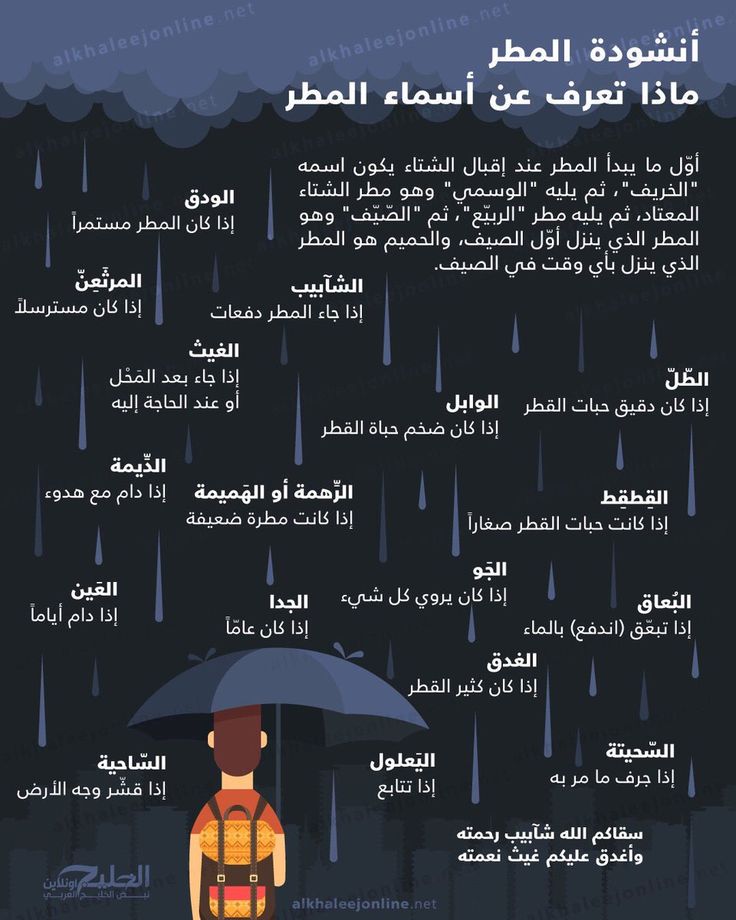
How many ways can you say “rain” in Arabic?

A new meme floating around lately on social media emphasizes how Arabic has many poetic ways to say “rain”; I mean the bone-chilling stuff that falls from storm clouds, which soon may cry on us with their sorrow (ﻏَﺪﺍً ﺳَﺘُﻤﻄِﺮُ ﺍَﻟﺪُﻧﻴَﺎ ﻋَﻠَﻰ ﺍَﻟﻘِﺼَﺺِ ﺍَﻟﻤُﺠَﺮَّﺣَﺔِ).

Source: alkhaleejonline.net إنفوجرافيك (infographic)

Does the rain fall continuously (Al-Wadaq) or in long waves (Al-Shaabeeb), frequent short squalls (Al-Youlool) or intermittently (Al-Martha’ina’)? Is the size of the drop small (Al-Qitqit), misty (A’-Tull) or large (Al-Wabil) and is it strong (Al-Gadaq) or weak (A’-Rihmah/Al-Hameemah)? Was it long and soft (A’Deemah)? Is the rain needed (Al-Ghaith) and nourishing (Al-Jaaw), leave a lot of water around (Al-Bu’aaq) or was it a deluge (A’-Saheetah) that washed away soil (A’-Saahiyah)? Does it cover a wide area (Al-Jada), and does it last many days with the consistency of a spring (Al-Ain)?

While these are beautiful thoughts about the variables of nature and the utility of language, it reminded me also of the old meme also about water from a different angle; all the ways you can say “camel” in Arabic

السلوف-A female camel that leads other camels to the watering hole to drink

الدفون -A female camel in the middle of a herd of camels

الملواح or الهافة- A female camel that gets thirsty quickly

عيوف-A female camel that smells the water but often doesn’t drink it

مقامح- A female camel that doesn’t drink to heal her affliction

رقوب — A female camel that doesn’t drink from the watering hole when it’s busy, but waits and observes

ملحاح A female camel that doesn’t often leave the watering hole

ميراد A female camel that rushes to get to the watering hole

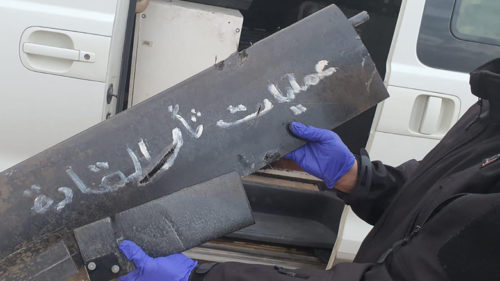
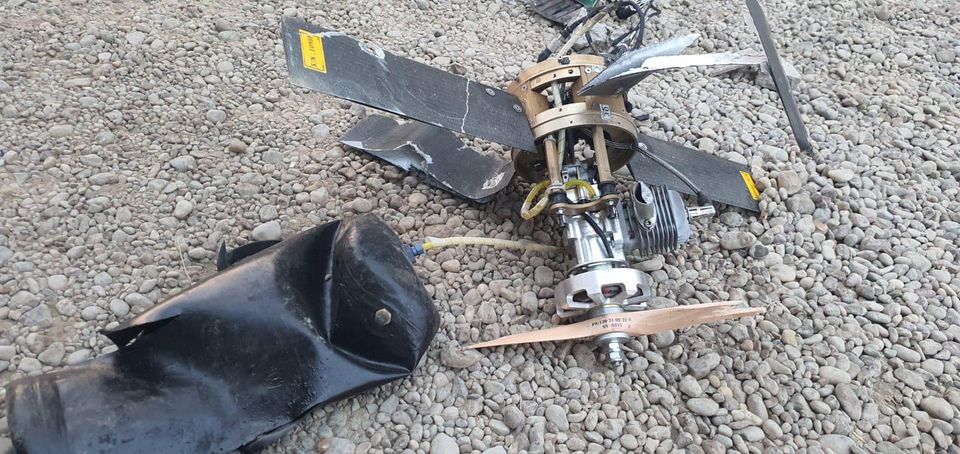
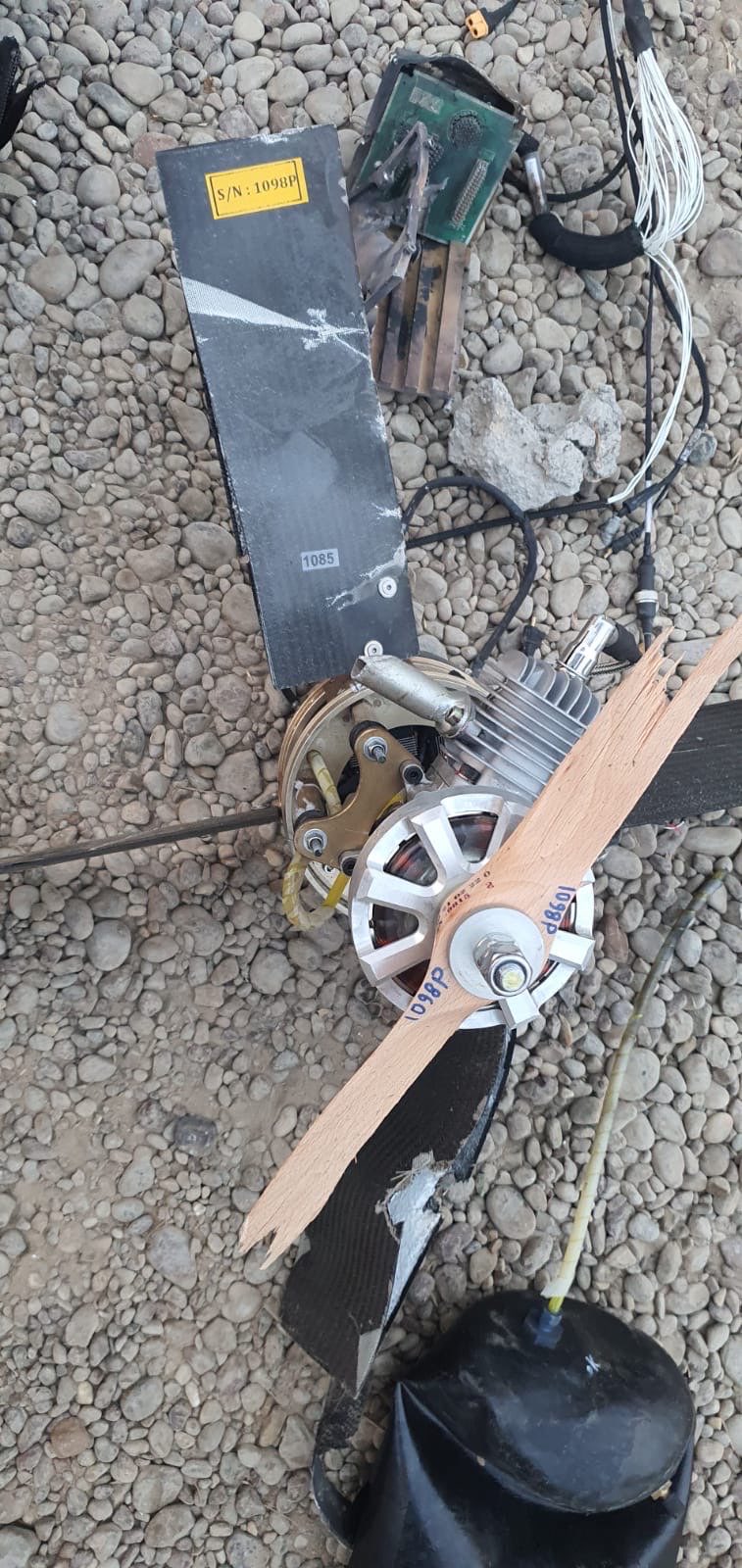
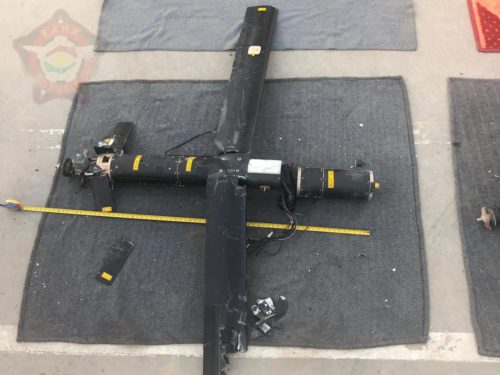
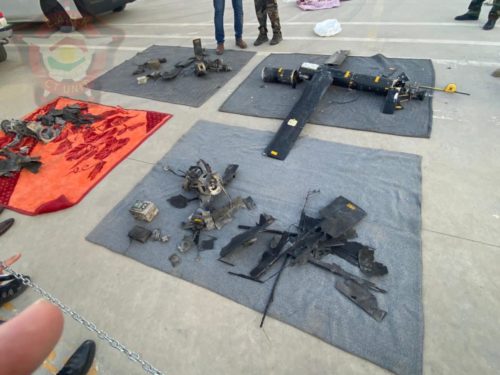
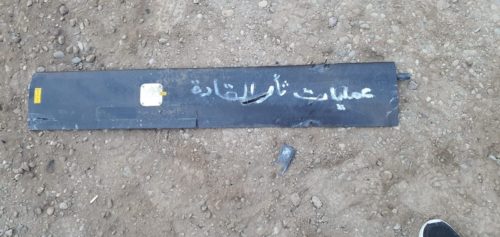
All food (er, water?) for thought when translating a very outlaw-sounding “revenge” message scrawled on a small fixed-wing drone that was just shot out of the sky by a counter rocket, artillery, and mortar (C-RAM) at 0430 local time near Baghdad International Airport.

Source: Twitter @HeshmatAlavi
Source: AFP

Reading right to left…
عمليات (eamaliaat) = operation
ثأر (thar) = revenge
القادة (alqada) = leaders

Now we just need to start translating the Chinese writing for what appears to be a DLW-20 engine or similar variant.

Source: REUTERS
Source: REUTERS

The writing on these wings distinguishes the drone from others that dropped from the sky six months ago, as documented on social media then by the “Directorate General of Counter Terrorism (CTD) of the Kurdistan Region Security Council (KRSC)” (دژه تیرۆری کوردستان).

Related: Death from above.

Drones pose the biggest threat to US troops in the Middle East since IEDs, top general says

If a color (pink) helps safety, why don’t motorcyclists wear it?

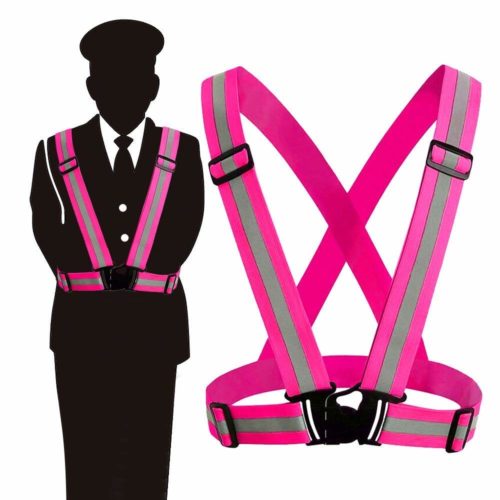
It always surprised me that men’s motorcycle safety equipment didn’t come in the color pink. Baker-Miller pink, for example, has been alleged to reduce aggression.

Baker-Miller pink is a color named for two US Naval officers who first investigated the influence of that specific color. Baker-Miller pink was originally produced by mixing one pint of outdoor semi-gloss red trim paint and one gallon of pure white indoor latex paint (cf. Schauss, 1979). Presumably, the visual processing of the Baker-Miller pink affects neurological and endocrine functions, which in turn reduce physical strength, and thus aggressive behavior (cf. Ott, 1979; Pellegrini, Schauss, & Miller, 1981).

Here it is.

Do you feel calmed?

Does anyone really think two military men experimenting with shades of a color long associated in the west with male aggression (red) discovered a way to reduce aggression by diluting it?

The tint was, in fact, often considered more appropriate for little boys because it was seen as a paler shade or red, which had “masculine,” military undertones.

Regardless of that science about reducing violence by making a color less dark (dubious, it turns out), it’s still fair to say pink is extremely visible as documented in other research.

“Our study determined red-pink high visibility colours, less common in nature, could be searched for without false warnings using our system. The downside of this was some colour-blind workers had difficulty distinguishing pink. Subsequently, a multi-coloured solution including both yellow-green and red-pink may be recommended,” he says.

Studies in England further support the idea that yellow is all-too-common a color in their culture already to make it stand out as a personal safety device.

The results are interesting in that they show the previously held assertion that a bright reflective jacket will improve rider conspicuity may not always be true …

[T]he message seems to be that the most conspicuous outfit will be dictated by the lighting conditions and local environment at the time, which may be extremely variable within the confines of even a fairly short ride.

The studies conclude here that “standing out” is the definitive way to draw attention. Pink, thus, is very visible and almost never found in the kind of high-traffic landscape where motorcyclists are subjected to constant threats.

Go on, search for pink motorcycle gear for men, however. There’s nothing, not a thing, to be found. It’s almost so obvious as the best option, it’s even unavailable making it an even better one. But maybe that will change soon and we’ll return to the past

There’s a shared recognition that pink can be pretty and powerful, feminine and feminist. Men are turning to it, too — as (they did) in the 18th century.

Zoom Encryption Class Action Lawsuit: Victims Get $15 for False E2E

This lawsuit settlement with Zoom begs the question how much Facebook users should get, given similar false claims of end-to-end encryption.

Zoom misrepresented its end-to-end encryption.

Seems like a redundant sentence, yet still good to see it officially stated.

Strangely, this giant lawsuit excludes any large customers who may have suffered the most egregious violations of trust. Note the “only” exception:

…“registered, used, opened, or downloaded the Zoom Meeting App” between March 30th, 2016, and July 30th, 2021, you can file a claim for $15. However, if you have only used Zoom with an “Enterprise-Level Account” or a government account, you’re excluded from the settlement.

Why?

It is not explained. The settlement details are in a PDF Notice.

The key phrase (pardon the pun) for me out of all the court documents is here from page 2 (also a PDF).

Zoom can still access the video and audio content of Zoom meetings.

That’s in fact a very similar problem to Facebook’s false representation (lies) about its implementation of encryption.

Technically Zoom made a different set of mistakes, however, and a court doc like this one all about that kind of distinction and detail.

For example, the court says the plaintiffs are probably right that Facebook and Zoom conspired to violate privacy (after all, Zoom hired the disgraced ex-CSO of Facebook to help drive its Titanic-level errors) but plaintiffs also did not always provide evidence of how they themselves were affected by each flaw.

The Court concludes that one former Plaintiff may have adequately alleged that Zoom shared her personal data through the Facebook SDK. Specifically, former Plaintiff Cynthia Gormezano alleges using Zoom on an iPhone “in March of 2020,” FAC ¶ 52—which is likely
while Zoom’s iOS app still implemented Facebook’s SDK. However, on February 18, 2021, Gormezano voluntarily dismissed her claims against Zoom without prejudice. ECF No. 158. Thus, the question is whether the remaining Plaintiffs adequately allege that Zoom disclosed their device data through Facebook’s SDK.

So Plaintiff Cynthia Gormezano dismissing her “adequate” claims meant an important specific flaw was swept under a rug since others couldn’t continue without her.

Is $15 enough compensation for such a failure of encryption and the exposure to Facebook’s “criminal executives” who failed even more massively at privacy?

Other related posts: