Most Germans refused to accept the blame for starting the war, seeing Germany as having reacted defensively to French and Russian “encirclement” and believed the Kaiser’s deception that he declared war in response to Russian mobilisation. This is what made the famous “war guilt” clause at Versailles, a statement of plain fact, such a bitter a pill to swallow. It was from this starting premise, established in 1914, that many of the other pathological ideas that spread in 1920s and 1930s Germany logically followed.
Schwarz discovered that in 1938, her grandfather, a member of the Nazi Party, exploited anti-Semitic policies and the persecution of Jews to underpay for a business owned by a Jewish family. In later letters to the family’s only survivor, her grandfather refused to pay reparations. “You can see that he’s in total denial of his responsibility as a Mitläufer under the Third Reich,” said Schwarz. “And most of German society, after the war, was in total denial of their responsibility to the point that they considered themselves as victims.”
A man from Russia, living a Bay Area home with three young children, has been arrested by police for building bombs and attacking energy distribution systems.
A software engineer in San Jose has been charged with blowing up two electric transformers in the San Francisco Bay Area, which knocked out power for thousands of residents in December and January. Peter Karasev, 36, was arrested last week and charged with arson, destroying an electrical line, detonating an explosive device, and possessing bomb making materials. Local police found so many explosive devices and materials in his house that they had to call in help from other agencies, including the FBI, DEA, and National Guard.
Police says they have no evidence of motive, yet the suspect’s wife said he wants to cause chaos by attacking infrastructure.
His resume says he has a 2013 PhD in computer engineering from Georgia Tech. He joined Zoox just eight months ago as a Senior Machine Learning Engineer, after working for Toyota as a Senior Software Engineer in Perception (autonomous cars).
It obviously begs the question what kind of chaos he was plotting for Zoox or other autonomous vehicles — perhaps treating them as loitering munitions.
This brings to mind also the German military after 1914 inflicting bombings across America by recruiting “destroying agents”.
Inclosed [sic] is the circular of November 22, 1914, for information and execution upon United States territory. We draw your attention to the possibility of recruiting destroying agents…
On July 22, 1916 German agents exploded a bomb in a San Francisco parade that killed 10 and wounded 40 people. Unfortunately the corrupt President Wilson abused the investigation to persecute his political opponents with false pretense, which allowed Germany to escape scrutiny.
The manufacturing quality of Tesla has always been sub-par compared with other brands, regularly ranked one of the worst in Consumer Reports reliability surveys. The latest 2023 results are especially concerning.
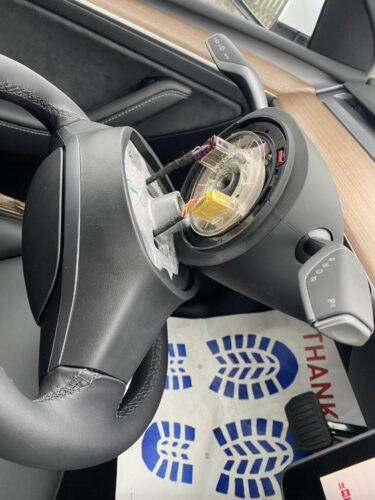
U.S. auto safety regulators have opened an investigation into Tesla’s Model Y SUV after getting two complaints that the steering wheels can come off while it’s being driven. The National Highway Traffic Safety Administration says the probe covers an estimated 120,000 vehicles from the 2023 model year. The agency says in both cases the Model Ys were delivered to customers with a missing bolt that holds the wheel to the steering column. A friction fit held the steering wheels on, but they separated when force was exerted while the SUVs were being driven. The agency says in documents posted on its website Wednesday that both incidents happened while the SUVs had low mileage on them.
Brand new cars had bolts missing from their steering wheel. That shouldn’t even be possible, given how logs of bolt torque can be recorded. A missing bolt would be a giant red flag in logs, for a properly operating assembly line. However, the NHTSA report suggests retaining bolts went missing because Tesla does ad hoc repairs to the car after manufacturing and before customer delivery.
Source: CBS News/Twitter
Honestly it’s hard to believe that photo is from a real car. It looks like the level of quality you’d find in a child’s toy.
Let me just reiterate that Tesla manufacturing quality is so bad they repair brand new cars that have never been driven, which actually may reduce safety even more!
Awful.
This comes not very long after the NHTSA posted a recall for Tesla failing to tighten other bolts.
Tesla, Inc. (Tesla) is recalling certain 2022-2023 Model Y vehicles. The bolts securing the second-row seat back frames may not have been securely tightened.
The Tesla recalls are really piling up, as if they’re trying to be more like Ford.
Recall: 322K Model 3s and Ys for Faulty Taillights
Bulletin: Self-locking Nylon Nut Missing From Front Suspension
That’s a lot of missing bolts. No modern manufacturer should have these issues. Again… logs.
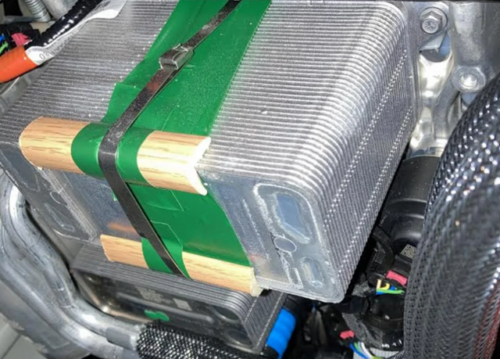
Repairs done ad hoc after a manufacturing process are very troubling for many reasons, not least of all because quality depends on processes in field/port that may be non-existent. The Drive in 2020 gave a scathing example of the kind of ad hoc fixes being hidden by Tesla.
“Tesla Model Y Owners Find Cooling System Cobbled Together With Home Depot-Grade Fake Wood. The world’s most valuable automaker, ladies and gentlemen.” Source: The Drive
The craziest part, pun intended, is that somehow Tesla owners buying into this obvious tyranny didn’t think they would be screwed by its tyrant — scarcity of parts, overpriced service, low quality, slow or no response. The Drive points out the irony that fake wood used by Tesla isn’t in any parts catalog, yet Tesla demands customers use only Tesla parts.
Mind you, this is basically all just hardware. Software recalls have been even worse for Tesla. Phantom braking incidents repeatedly increased after Tesla released worse code meant to help. And here’s a death right after an “OTA” change was pushed on owners:
The Walnut Creek crash happened two days after Tesla issued its latest recall, announcing that 362,758 vehicles equipped with the company’s full-self-driving (FSD) software would have to undergo a software-based, wireless update.
Slamming at high speed into a parked high visibility safety vehicle? Not only is Tesla software worthless, imagine the driver trying to take control only to find the hardware falls apart. It would be a joke if it wasn’t so tragic.
Update March 15: Nissan had almost the exact same issue and the complete opposite response. As soon as a steering wheel bolt issue was identified, they instigated an internal investigation and then issued a recall.
…Nissan only found two Ariyas that had loose steering wheel bolts out of 96 that were audited by dealers up to the point where Nissan decided to launch this recall. At that time, 418 Ariyas were in the U.S., but the recall was due to an “abundance of caution,” according to the NHTSA report. According to that same report, 1,063 Ariyas are subject to this recall with an estimated 1 percent being affected.
Everyone can trust Nissan, as you can see. Sadly it seems even the most devout Tesla owners can not trust their manufacturer, dealer or repair shop.
A horrible homicide case in Florida has a very important buried lede. The prosecution say the accused perpetrator didn’t have motive, he wasn’t under any influence of anything, he just unfortunately decided to drive a Tesla. That’s literally the whole case. He stepped into the Tesla and it killed two people. Now he faces up to a 40 year jail sentence after pleading guilty.
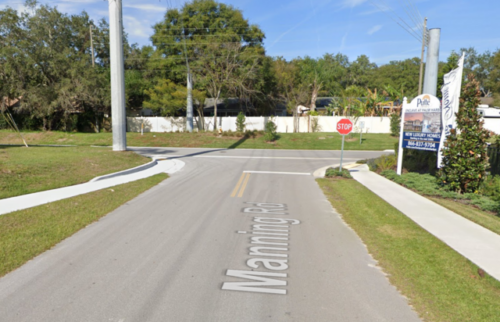
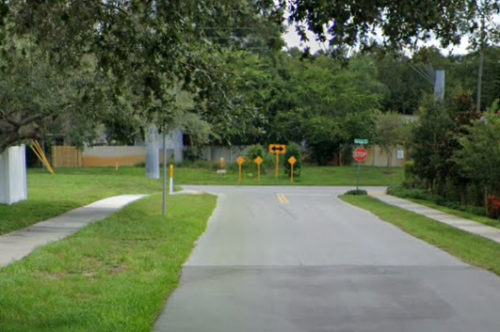
Mongan was driving a friend’s Tesla with four passengers inside at about 10:15 p.m. on Sept. 3, 2021, when he accelerated on Manning Road, Florida Highway Patrol troopers said. The road has a speed limit of 30 mph. Mongan ran past a stop sign at a T intersection with Hermosa Drive and launched off a grassy embankment, crashing [at 116 mph] through a vinyl fence and into a home at 1498 Caird Way. One of the passengers, Travis Meisman of Odessa, was killed. Meisman owned the Tesla that Mongan was driving. […] The crash also killed a 69-year-old woman inside the home, Donna Rein, and her dog, Lily. […] Mongan had not been drinking or doing drugs prior to the crash and was not intoxicated at the time, according to Pinellas-Pasco State Attorney Bruce Bartlett. “I can’t say I’ve ever encountered this type of situation,” said Bartlett, who has been a prosecutor for more than 40 years. “Usually, on the part of the defendant, he’s intoxicated, on drugs or something … and they then drive drunk and hit and kill somebody,” Bartlett said. “It’s kind of like you assume the risk.” […] The state attorney said Mongan was not acting out of maliciousness, but still carries criminal responsibility for the crash. “The guy is very remorseful…” Bartlett said.
It was a Tesla Model S Plaid, which has been heavily marketed as 1,000 hp tuned to go 0-60 in just 2 seconds with a distance of about 100 feet. It’s pretty easy to see how Mongan, without being intoxicated by anything other than Tesla advertising, punched the accelerator and killed Meisman within seconds.
View of the T intersection in 2020. Source: Google MapsView of the T intersection in 2022. Source: Google Maps
You would think having more people inside a Tesla would mean there’s some kind of moderation or lowered risk. Also you’d think Meisman telling Mongan to drive his car would bring moderation as well. Yet in Tesla fatalities I’m noticing a very prominent “showboat” factor, which means something incredibly unsafe and stupid is done in relation to public messaging by the Tesla CEO (e.g. accelerate as rapidly as possible on public roads, go to sleep on public roads).
Incidentally, a 116 mph crash in a 30 mph zone involving a Florida home also was big 2018 news, after parents had purchased a Tesla for their son based on its advertised safety.
…Barrett Riley hit triple digit speeds at 6:46 p.m. May 8, 2018, with Monserratt in the front passenger seat and another teen in a back seat. He blew through the 1300 block of Fort Lauderdale’s Seabreeze Boulevard, a 30-mph zone approaching a curve with a 25-mph advised speed. Barrett Riley lost control of the Tesla, which smacked the wall in front of a home twice, burst into flames and crashed into a light pole across the street. He was going 116 mph three seconds before impact.
a blog about the poetry of information security, since 1995