Sitting at my desk in San Francisco, sometime around 2016, I got an email from a master sergeant. A recording of a firefight. And then a phone call. Play it, he said. So I played it. Gunfire. Chaos. Then a voice: Grenade.
Play it again, he said. Listen.
I played it again. The voice wasn’t scared. It was factual. Grenade. Like hearing “pastrami on rye” at a deli counter. The same calm. The same precision. The same total awareness of what’s happening and what matters right now.
That’s fire discipline. That’s what Delta is world famous for. Sprint and fire at maximum efficiency, nothing wasted. The decisive calm that comes from knowing exactly how many rounds and what each one needs to do. Every shot placed. Every word functional. Nothing lost to bravado or panic, nothing spent on performance.
Play it again, he said. What’s really happening in this fight? What works? What’s blunder? Do you hear it?
I’ve been thinking about that “grenade” for two weeks. Because the sound coming out of Operation Epic Fury, and the war crime theatre of Hegseth, is the exact opposite of that voice. It’s all fluff. All blunder. Do you know what the Pentagon sounds like right now? 1950 Korea. And China is listening to the same tape.
…during the 2016 campaign, Trump repeatedly declared that Douglas MacArthur was his “favorite general.” At rallies, Trump would invoke MacArthur’s name almost as though he were in direct communication with his ghost. […] MacArthur had been outwitted and outflanked by a guerrilla army with no air force, crude logistics, and primitive communications, an army with no tanks and precious little artillery. As David Halberstam put it, MacArthur had “lost face not just before the entire world, but before his own troops, and perhaps most important of all, before himself.” All of this happened because MacArthur was almost criminally out of touch with reality.
And so here we are.

The Deterrence Illusion
The “China is deterred” narrative runs something like this: the US popped Venezuela in January with overwhelming ratios, like blackouts for 3 million people to arrest one guy. Then the US blockaded a weak Cuba, as it has no sea defenses, and then Trump launched a surprise attack on Iran while his own negotiations were actively ongoing, decapitated the supreme leader, and declared total air superiority within 72 hours, boasting “not a fair fight”.
Beijing must be so scared now.
Yet this analysis assumes China’s baseline expectation was about Iranian air defenses working. Nobody thought they would. Certainly not Venezuela. Certainly not North Korea, which has spent decades putting everything that matters under granite for exactly this reason. Certainly not China, whose military planners have been studying US strike capabilities since long before Desert Storm.
What China actually witnessed in American hamfisted pray-and-spray salvoes wasn’t just “America bomb things, America make fire and noise, America so nasty.”
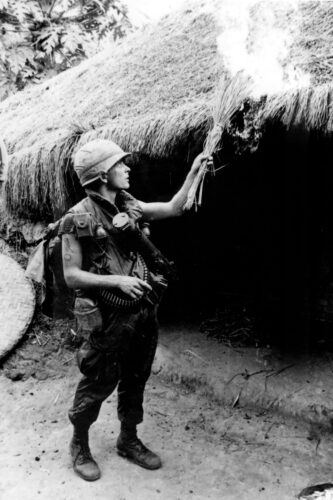
They knew that. What they got was specifics about weakness: F-35 and F-22 electronic signatures under combat conditions, operational tempo sustainability, jamming profiles, cyber-kinetic integration patterns, kill chain logistics from ISR to strike. That’s the structured data leak you never get from exercises or satellite imagery. As technologist Amir Husain put it in the Jerusalem Post, the American rush into unilateral war is “a dataset goldmine for China” for building automated detection and threat classification models.
The US demonstrates the opposite of deterrence. It held an unnecessary live-fire exhibition with free admission to telegraph its entire playbook, revealing the entire spectrum of Trump’s options and thoughts.
MacArthur’s Ghost
Those who say China should fear American willingness to fight clearly forget Douglas MacArthur wasn’t fired for being unwilling to fight. He was fired for being so willing he nearly started a nuclear war with China. Truman understood that willingness without discipline is what the Greeks long ago classified as the most self-defeating capability a military can possess. It’s like running into a minefield.
The historic parallel maps cleanly for China, not least of all because among the regressive all-show-no-go white supremacists that Trump calls out as his role models, MacArthur is right up there. The thunder and lightning had worked once for MacArthur, so he thought escalate, go bigger, roll right up to the Chinese border. He pushed to the Yalu drunk on the Inchon success, without a clue. Then 300,000 PLA troops crossed the Yalu and pushed him back to roughly where he started. That willingness was the vulnerability. It showed Beijing exactly when and how to intervene.
The same mindset that made MacArthur unable to read Chinese capabilities in 1950 is operating in the analysts who think China is “deterred” by watching the US flatten Iran. They don’t see China as the disciplined party, because their framework doesn’t allow it. The French Generals turned off their radios while the Germans rolled tanks through the Ardennes. MacArthur’s intelligence staff stopped reporting Chinese troop movements because he’d made clear he didn’t want to hear it.
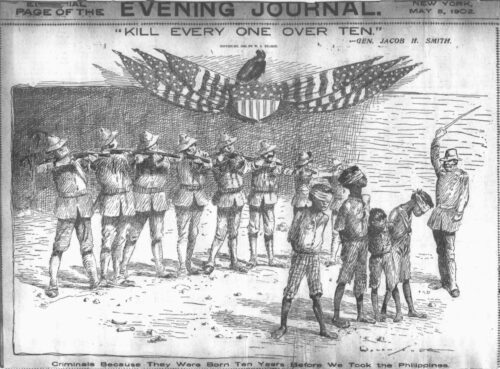
To be clear, MacArthur’s father was the general known for genocide in the Philippines.
…Arthur MacArthur … brought to the archipelago the genocidal mentality that accompanied their warfare against Native Americans in the American West. Filipinos were branded “n—ers” by U.S. troops, though another racist epithet, “gugus,” was also widely used for them. When Filipinos resorted to guerrilla warfare, they were dehumanized … to legitimize all sorts of atrocities against them. The war of subjugation was carried out without restraints with General Smith ordering his troops to convert Samar into a “howling wilderness” by killing any male over 10 years old.
Chinese political scientist Zheng Yongnian told the South China Morning Post that “America’s war-making capability depends solely on its will to deploy such power.” The deterrence pundits read that as a compliment, when it’s actually a cynical vulnerability assessment. A power that acts on will rather than calculation can be drawn into commitments that exhaust it into extreme embarrassment.
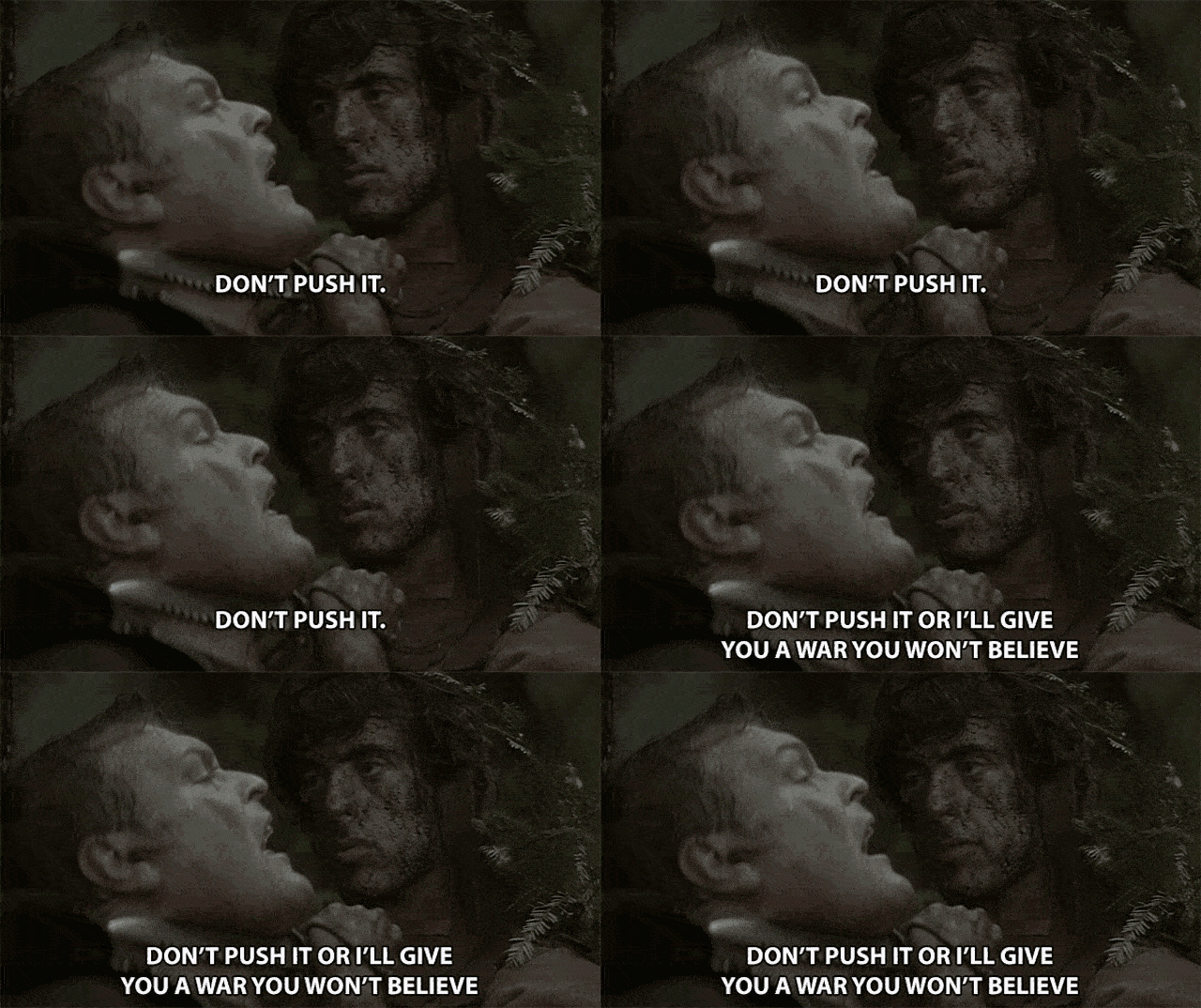
”I tried to stop it, but I don’t own the licensing rights.” [Stallone told movie critic Siskel that during the holidays, he had been asked to give away a “truckload” of Rambo toys to sick children in the hospital.] ”I told ’em, ‘Get this … the hell out of my driveway and burn it. Don’t give it away,’ It’s not for kids. The movie was not supposed to be for little kids, and I wouldn’t let my own children play with those toys.”
Mao understood this about MacArthur in 1950. Montgomery understood this about Rommel in 1942. The more willing, the further he extended, the more exposed he became, the weaker. China, like Britain, waited for the overreach, then moved.
Trump overwhelmed Venezuela as it sat quietly, Trump launched a blockade of empty waters around Cuba, and Trump tricked Iran into believing negotiation wasn’t a lie. None of that projects strength. Now he appears as just a tail on the Israeli dog, if not the flea, pulled into the largest invasion of Lebanon since 2006. With what to show for it? Emptied stockpiles and wreckage, requests going to everyone to help him get out. Taiwanese analyst Cheng-Yu Wu assessed that the PLA learned Trump’s administration “will do whatever it takes to achieve its own national interests, whether or not there are negotiations.”
Some analysts really think they can frame that dictatorship signal as deterrence. A drill sergeant would call it a fighter closing his eyes, throwing wild haymakers and claiming whatever he hit is losing. Both descriptions can be true. Only one of them is meaningful to a trained opponent.
Fire Discipline
That voice on the recording knew something everyone is supposed to learn before stepping down range. Don’t fire until you see the whites of their eyes wasn’t academic poetry. It’s always been scarce resource management. The NRA was founded by Union Generals who said 1,000 rounds per kill was unsustainable to defend American Blacks against the KKK. Every round you fire at nothing is a round you don’t have when it matters.
The US is emptying interceptors against cheap Iranian drones. Burning Tomahawks on targets that were already assumed destroyed, or worse, killing nearly 200 little girls at school. America is expending precision munitions far faster than the industrial base will replace them. And doing all of it on camera for everyone’s intelligence collection, let alone China.
The Heritage Foundation warned before the Iran war started that SM-3, SM-6, PAC-3 MSE, and THAAD interceptors would be exhausted within days of sustained PLA salvoes. Aggregate US vertical launch system inventories were insufficient for even one full fleet reload. CENTCOM officials thus warned of a “Winchester” scenario: complete ammunition depletion.
Now look at what draft-dodging Trump ordered since February 28. The US burned over 2,000 precision munitions against more than 3,000 targets, only to announce repeatedly it’s not done yet. Allies have fired hundreds of interceptors. THAAD components have been redeployed from South Korea. The Abraham Lincoln carrier strike group was pulled from East Asia. Patriot interceptors, which Lockheed produces at about 620 a year, were depleted in the hundreds over the first 36 hours alone. We’re still debating who shot down the three F-15E in one night so efficiently without a trace, evaporating the mythology of American Air superiority.
And on the other side of the ledger: China has barred the export of rare earth elements for military use, which means the exact materials required to build the missiles the US is burning through. China is watching the US deplete stocks it can’t rapidly replenish because China controls the supply chain for those replacements.
The Asymmetry
Compare the two sides and see what America has been doing to itself, unprovoked.
| United States | China | |
|---|---|---|
| Munitions | Depleting | Accumulating |
| Intelligence | Broadcasting | Collecting |
| Carrier groups | Redeployed to Gulf | Positioned in Pacific |
| Strategic reserves | Drawing down | Building up (104 days coverage, projected 140-180 by year end) |
| Industrial base | Years behind demand | Expanding offensive capacity |
| Rare earths | Import-dependent | Export ban in place |
| Diplomatic posture | Overcommitted on four fronts | Restrained, summit-focused |
That’s not passivity on China’s part. That’s basic discipline. China is doing what any wise fighter does when the opponent is dancing and swinging wildly to amp up the audience: cover and wait, read the rhythm, count the punches, feel the decline, watch for the opening.
Nixon’s Tar Baby
Foreign Policy drew a parallel to 1964, when the Peking Review described US interventions in the Congo as Washington’s “second South Vietnam”, about keeping American assets tied down far from China’s borders. But that reference is far too diplomatic. The actual historical pattern is worse, and it has a name Americans should be embarrassed about.
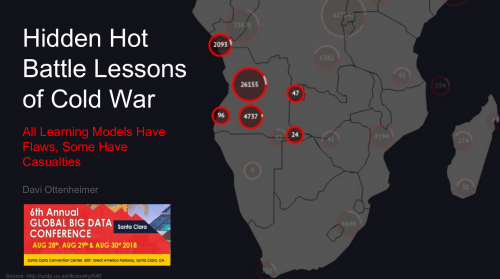
Kissinger and Nixon adopted NSSM 39 in 1969 called the “Tar Baby” option. Their policy was strengthening ties with racist white-minority governments in Rhodesia and apartheid South Africa to deny Blacks power. The premise was that apartheid was an unpleasant but permanent reality, and Washington should accommodate it pragmatically and prolong white nationalism. Its own internal review later concluded that its only real result was to mire the United States deeper on the side of obvious oppressors. The name told you the outcome of the strategy. You punch the tar baby and you get stuck.
The destabilization model ran in parallel. Congo’s leader Lumumba was assassinated in 1961. The CIA sent poison to its station chief; when that fizzled, Lumumba was deposed in a CIA-backed coup and shot by Congolese assassins. UN Secretary-General Dag Hammarskjöld was shot down by U.S.-backed mercenaries, as he flew in to negotiate a ceasefire. Mobutu seized power with US help and misruled the country for three decades. Congo never recovered. Similarly Mondlane, a professor in America positioned to become leader of Mozambique, was assassinated in 1969.
Same trajectory.
Stuart Reid has put it precisely: for the Congolese people, the events of 1960-61 represented the opening chapter of a long horror story. For the US government, they provided a playbook for future interventions.
The playbook: assassinate leaders, destabilize the country, back the regional oppressor as the “stable” partner, let the region deteriorate, use the chaos to justify permanent intervention. The people who live there never recover. The strategic partner gets a free hand. And the great-power competitor watches you get stuck to the tar baby.
Apartheid South Africa formalized this as doctrine. P.W. Botha’s “Total Strategy” required a buffer of deliberately failed states on their border. They used the ugly term cordon sanitaire. The logic was self-sealing: a thriving Black-governed neighbor would quickly falsify the racist claims that only whites were capable of self-rule, so the Black neighbor had to be destroyed. South Africa armed RENAMO to terrorize Mozambican civilians, backed UNITA through decades of Angolan civil war that killed half a million people, and used proxy forces to turn a drought into a famine that killed over 100,000. The manufactured chaos confirmed the racist ideology that manufactured it.
Substitute “Palestinians” or “Iranians” and the sentence requires no other edits. Gaza flattened. Lebanon invaded. Iran decapitated with no successor structure. A stable, self-governing neighbor is an existential ideological threat to an ethno-supremacist state. The vacuum is the feature. In the latest news from Israel troops call non-Jews dogs and stop their vehicles to shoot people in the head at close range.
Just like ICE in Texas.
Just like ICE in Minnesota.
It’s a procedural thing.
The US knows this model so intimately because it ran the active version against the Soviets. In 1979, Brzezinski’s explicit goal in Afghanistan was, in the words of Defense Department official Walter Slocombe, “sucking the Soviets into a Vietnam quagmire.”
It worked.
The Soviets bled for a decade and many argue the stickiness was what accelerated power collapse. Now the question is whether China needs to engineer anything at all, or whether the US has been punching into a tar baby scenario on its own initiative while Beijing simply watches.
Kissinger dismissed the cost of millions killed as “the unhappiness of a bunch of Africans and the self-righteous indignation of a few minor NATO allies.” That contempt is the through-line. The people destroyed by the policy don’t register as costs. They’re externalities. Then as now.
The Missing Synthesis
I bring all this up because the gap I keep seeing in the pundit class is that almost nobody is synthesizing all the threads simultaneously: the munitions math, the intelligence exposure, the fire discipline asymmetry, and the destabilization pattern that ties them together.
The Heritage guys get stockpile numbers. The intelligence community people get collection problems. The strategists get the overextension risks. But nobody puts the full picture together, perhaps because the conclusion is too uncomfortable? Trump is systematically degrading American capacity to fight the war it actually needs to deter, while running the same Nixon playbook that failed across southern Africa for three decades.
Oh, I remember the problem now. Nobody studies African history.
Khamenei was decapitated February 28. The Assembly of Experts was bombed while meeting to elect a successor. No governance structure is left. And within days, Israel launches its largest ground invasion of Lebanon since 2006, explicitly modeled on the genocide in Gaza. No really, an Israeli official told Axios: “We are going to do what we did in Gaza.” Already 800,000 Lebanese civilians are displaced. Nearly 800 killed. The imperfect ceasefire was at least something, until the US removed the one actor whose deterrent capability was constraining Israeli expansion.
Iran was a threat, but Israel reframed it into the leash. Remove the leash and the immediate result is genocide expanded into Lebanon, conducted openly, described in those terms by the people conducting it. The regional partner gets a free hand.
Korean War Arithmetic
One of the hallmarks of 1950s military failure was the US flattened every standing structure in North Korea. Ran out of targets, just as Trump says today. The war ended in a stalemate on roughly the same line it started. The shock and awe, air superiority, technological dominance, more bombs dropped faster than ever before, worked for a minute as domestic propaganda and not at all as strategy.
Same pattern now. Trump declared Iran had no navy, no air force, no radar and “just about everything’s been knocked out” within days. And then? Two weeks later, Iranian drones are still destroying billion-dollar radar systems and THAAD subsystems on video. American soldiers are dead. Domestically manufactured surface-to-air missiles are shooting down $32 million Reaper drones. Civilian trucks are launching ballistic missiles produced en masse.
The grind is on. Zero ground gained. No articulated end state. And every day it continues, China’s relative advantage in the Pacific grows, again not because China is doing anything at all, but because the US is spinning like a drunk doing everything, everywhere, all at once, to itself.
North Korea drew the simple conclusion from American air power decades ago: you can’t stop the bombs, you can make the bombs irrelevant. Eritrea knows exactly the formula too, as it used the same rubric to defeat the largest standing army in the world. China, full of ardent historians, has been watching that model. Hardening, dispersal, redundancy, underground facilities, quantity over quality in offensive systems. The Iran war is leaking all the exact parameters needed to calibrate against.
The analysts celebrating American willingness are celebrating their MacArthur heritage for all the wrong reasons. Drunken, stupid overreach hasn’t become a virtue just because the explosions look good with social media tricks. The tar baby was a disaster, in the way everyone learns the most powerful tiger in the world never escaped La Brea.
Play the tape again. Listen. Grenade. Calm. Factual. Disciplined. That’s the voice China recognizes, and right now the US sounds nothing like it.