In 1961 the U.S. used their top spy in Moscow to deliver extensive details of the Soviet nuclear program:
In tandem with the CIA, MI6 were in the midst of running their most successful espionage operation to date. A colonel in Soviet military intelligence, Oleg Penkovsky, was working for them as an agent-in-place, photographing thousands of top-secret documents with a miniature camera, and delivering the resulting microfilm in disguised packs of cigarettes and boxes of sweets to Chisholm’s wife Janet, at cocktail parties, parks and other locations around the city.
Some describe these massive disclosures from deep within the Soviet military (by a man who turned on his country after being denied a promotion) as a primary explanation for averting disaster in the Cuban missile crisis:
The CIA’s chief analyst during the crisis, Ray Cline, later told historian Christopher Andrew that Penkovsky’s intelligence was vital to its resolution, as it allowed the agency to “follow the progress of Soviet missile emplacement in Cuba by the hour.”
Just as the global nuclear missile crisis ended on October 22, 1961 Penkovsky was arrested by the KGB.
The next chapter to this story isn’t what you might think.
It actually becomes how the Soviets at that time had established a top spy in Paris, who was delivering extensive details of the U.S. nuclear program in Europe. In October 1961, as Penkovsky was shut down, the Soviets pushed an American mole for deeper access.
In late 1961 [Robert Lee Johnson] received the top-secret clearance and was admitted into the vault as a clerk. At long last the KGB was in. […] Over the following weeks the infiltration began in earnest as he successfully copied the vault keys using clay molds supplied by KGB operatives. In October of 1961 he received a specially manufactured X-ray device from Moscow that he was instructed to place over the final lock in the vault; KGB technicians could then deduce what combination unlocked the vault by studying the cogs inside the locking mechanism.
This spy was from within the U.S. military; “an embittered bureaucrat with a grossly inflated sense of self-worth”, and like Penkovsky a man who turned on his country after being denied a promotion (not to mention being named after a traitor in the military who defected and fought to destroy the U.S. — Robert Lee).
On 15 December 1962, Johnson accessed the vault for the first time and looted its contents. The operation, extensively rehearsed beforehand, went exactly as planned and by 03:15 the following morning some of America’s most sensitive cryptographic and military information—some of it classified higher than top secret—was on its way to Moscow. The treasure trove of information proved so valuable that the KGB decided to reward Johnson with a bonus of $2,000 and the rank of honorary Major in the Red Army. The information—rumored to include the numbers and locations of US nuclear warheads in Europe—was deemed so important that it was presented to Comrade Khrushchev himself.
While there are plenty of stories of Johnson using a vaguely described radioactive device, I’ve found so far almost no documentation or details. Explanations of the Soviet portable X-ray design that cracked a top-secret lock seems obscure, and probably intentionally.
Allegedly the first lock was cracked by making a wax impression of the key, the second lock had a combination written on paper that someone left in a trash can. These are routine weaknesses. The development in October 1961 of an X-ray to crack the third and final lock for U.S. top-secret files is by far the most interesting, especially given the timing, and yet very little record at all has been made available.
I’m really struggling to get through a BBC article called “Who truly was the most dishonest president?”
This section in particular is really hard to read.
Once upon a time Americans placed an almost childlike trust in their commanders-in-chief. They were venerated as demigods. When did it change? Many historians date this rupture to Lyndon Baines Johnson, though he was far from the first president to deceive.
That seems so backwards as to be completely laughable. Which historians?
To begin with, LBJ became president when JFK was assassinated.
Would assassination count as a rupture? I mean saying public change in trust dates to LBJ as president kind of misses at least one big prior rupture event, no?
I would think JFK immediately disproves such a theory of American public rupture and distrust dating to LBJ. And on that note there were assassinations and attempted assassinations long before JFK.
Consider the 1881 assassination of Garfield, for just one obvious example:
Like most presidents up to that point, he was not accompanied by bodyguards or a security detail. As Garfield’s carriage pulled up outside the Baltimore and Potomac, Charles Guiteau paced the waiting room inside, ready to fulfill what he believed was a mission from God. […] In his pocket Guiteau carried a letter addressed to the White House. “The president’s tragic death was a sad necessity,” it read, “but it will unite the Republican Party and save the Republic. Life is a fleeting dream, and it matters little when one goes.”
The whole point of the American system used to be that President would be a citizen and not someone “venerated as demigods” or dare I say someone… monarchical.
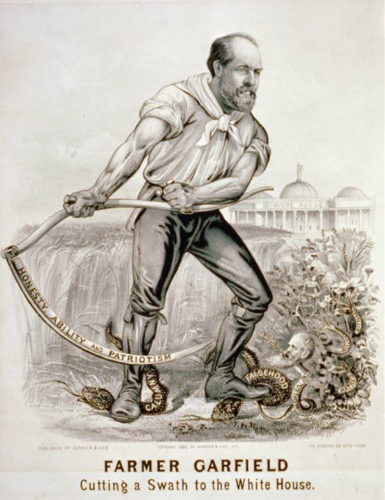
Garfield literally ran for office on the premise of being a plain farmer who would roll his sleeves up to cut the “weeds” of “calumny, falsehood, fraud, venom, hatred, defamation and malice”.
“Farmer Garfield: Cutting a swath to the White House” 1880. Source: Library of Congress
The bar is low to become a President, with many running on the premise of being common, so on what basis would anyone mistakenly shift that in their mind to a high one?
Who was venerated? Who was given childlike trust?
The author should perhaps prove these assertions, or at least detail them, first before ironically waxing on about deception.
Women had been carrying important information over private networks for centuries if not longer. The communication protocol safety was so effective that outsiders saw only “hard” work and water, not the power of privacy.Part four in a three part series…
I told myself I wouldn’t treat this lightly and so it ended up being delayed a long while.
In a nutshell when a “water charity” would roll into villages in Africa they believed dropping a well directly outside homes would liberate women and children from the burden of long walks with heavy loads.
These wells in fact undermined a core network and fabric of social order and thus dangerously unbalanced power — women no longer had private time in shared chores away from the home at their “workplaces” and overall safety/security of the region was significantly undermined.
This is not conjecture. I was working with a huge global tech firm that was pushing a water charity donation pledge. When I started to question the ethics of the charity, the head of it came to meet with me in person.
At first it was cordial and he said things like “happy to answer your questions” though soon he seemed a bit frustrated, even deflated as if I had unmasked him. I had asked straight questions like “exactly how many villages had security issues after a well was dug”.
To his credit he told me could confirm exactly 15 examples (at that time). I appreciated the transparency, yet he seemed disturbed by having to admit to the fact an utterly simplistic solution (get donations, drive in, dig a well, leave) to a complex problem was in fact making lives worse.
In other words I was told by the head of a major charity that in more than a dozen cases soon after the new well was established armed rebels were known to target it, seize control and force all residents into refugee camps. That was fascinating, and still didn’t go deep enough for me as it focused on militant action more than the subtle process of cultural devaluation and collapse (e.g. Achebe’s “Things Fall Apart“). He admitted the lost villages were never reported, despite his transparency with me.
He also tried to muster some of the usual “big picture is we’re helping a lot of people” chaff. When I dug into his actual data (at that time) even it was questionable, suffering from big data integrity issues like obvious copy/paste numbers for a map of the wells scattered across an entire continent.
Finally, when I broached this subject with regional conflict experts they confirmed that the resource charity model was typically flawed from the start, and conditions worsened without analysis. They knew of the problems, and again said none of it was ever reported. More to the point, they confirmed they knew how introduction of wells (or similar technology shifts for that matter, such as men on bicycles fetching water) destroyed a traditional model of safety and power for women.
While perhaps counter-intuitive that reducing a burden creates far worse burdens, it lays bare the kind of false assumptions someone can make when they look at ways to “fix” networks and markets they observe only as “do good” outsiders.
If we think only about carrying water as hard we risk projecting that mindset into other communities and look for ways to remove that specific pain point. Instead we should think about how hard life becomes for people if they don’t have the opportunity to carry water on long isolated paths (removal of private time/place to communicate translates directly to loss of power).
The water charity seemed to be attempting what Fela had written about in the mid 1970s, in a song called “Water no get enemy“.
Initially, water was likely deemed the safest option for substantial and impactful donations. The idea was that nobody could oppose something as essential as water, and any critics would likely be perceived as misguided. However, there was a serious oversight in considering broader risk management related to resources.
To put it plainly, it seems the individual behind the water charity felt a sense of guilt for their past actions and attempted to portray themselves as a “white savior” by delivering water to black communities, thinking it would shield them from scrutiny. Unfortunately, addressing complex real-life issues is not that straightforward, and the search for superficially criticism-proof solutions only reinforces the self-dislike that led to this approach in the first place.
The failure to conduct a thorough threat analysis on water distribution had far-reaching consequences, disrupting security processes, procedures around assets and political power, and jeopardizing the privacy and safety of women and children. The belief in invulnerability was proved wrong.
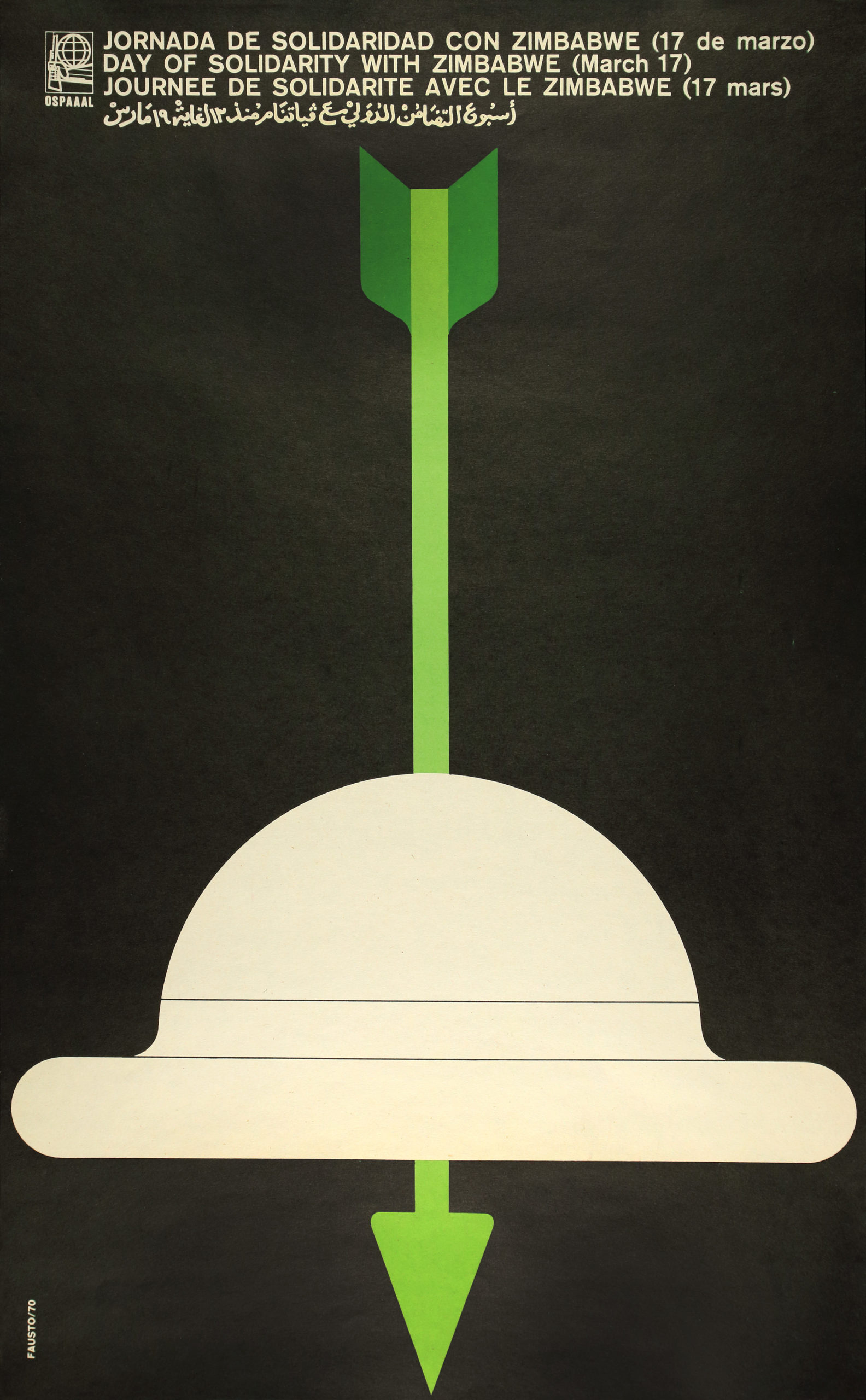
“…the pith helmet is so quintessentially colonial…” Poster by Faustino Pérez (OSPAAAL), 1970; image courtesy Carina Ray via AHA
A new thought-piece from a powerful British government lobbyist (Vice President of Global Affairs, Facebook. Former Deputy Prime Minister of the United Kingdom, leader of the Liberal Democrats, member of Parliament) was introduced to me by Bryan Lee rather blankly as…
Facebook VP explains it’s your fault you’re fat, if you didn’t dress like that they wouldn’t say those things, and if you want to quit smoking stop buying cigarettes.
Of course such a framing of the argument had me hooked and off I went to read the entire piece.
It was a cringe worthy work of total tone-deafness.
However, it was even worse than buying cigarettes. This was tobacco plantation language.
Someone has taken time to write what amounts to a justification of colonialism as a partnership, where the subjugated love oppression as a new form of freedom.
Facebook seems to steal management values from colonialism, so maybe I should have called this post “taking the pith”.
Unfortunately this is not a hyperbole. Such nonsense is not unheard of in Britain, and this feels like someone on track towards repeating some of the worst mistakes in history.
As I’ve written here before, I spent a bit as an academic in the British archives reading actual memos from Foreign Office and Colonial Office staff. These arguments and their tone are very familiar, so perhaps I’m keying into that history and glaringly obvious signs that others haven’t studied or seen before.
There are moments as a historian when you open a dusty folder and stare at the hand written memo from Churchill, taking in the flow of every pen stroke and thinking about the power in his words. I might call those some of the highlights.
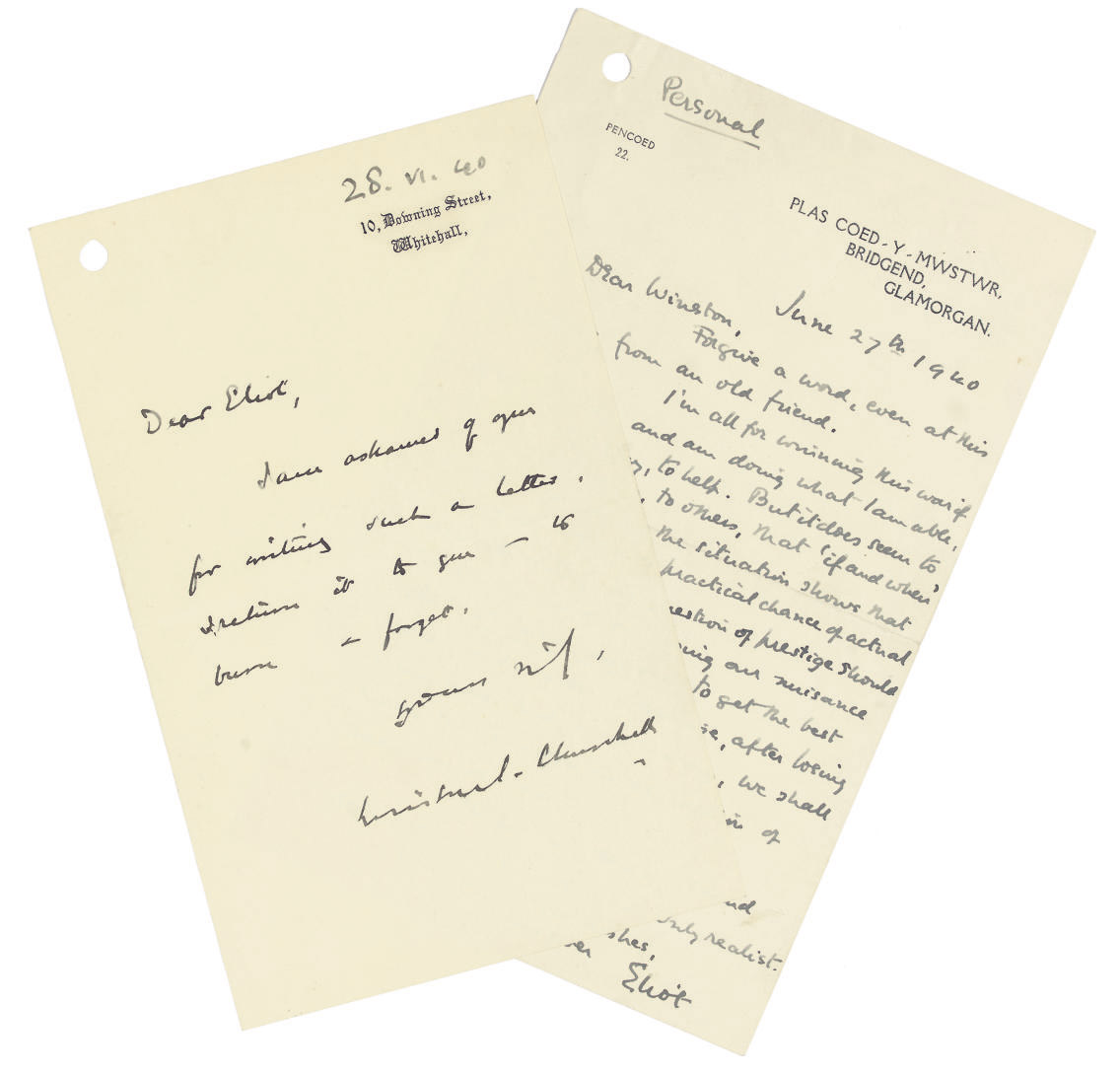
Crawshay-Williams (a former assistant private secretary to Churchill) sent a letter in 1940 to plead with the prime minister for a surrender to Hitler. Churchill responded in his classic direct tone: “I am ashamed of you for writing such a letter. I return it to you — to burn & forget”. Source: Christie’s Auction
Then there are moments when some unknown chap in a pith helmet has telegraphed a racist screed about his vision to treat humans like animals and deny them freedoms because that is what they think another human deserves… leaving a knot in your gut as you can’t peel your eyes away from the historic relevance of disgusting cognitive blindness. Those are NOT some of the highlights.
This “Facebook VP…member of Parliament” very strongly invokes the latter.
I’ve also written here before about this colonialism topic in tech and why it’s a quagmire to avoid; so maybe I shouldn’t be surprised Facebook has a VP gleefully crossing the bright line.
Who else sees themselves in such a privileged power position as to say awful things about humanity without any real sense of responsibility?
Let’s break down a few examples.
1) You can’t kick the British Empire out of its colonies
Even if Facebook ceased to exist, social media won’t be — can’t be — uninvented. The human impulse to use the internet for social connection is profound.
Classic colonialism says you can’t just have the oppressors leave. They’re baked into targeted society by cruel design so they very often say it would be impossible for their victims to ever reach true independence.
Note here also how an “impulse…for social connection” is made falsely equivalent to social media. We don’t need social medial for social connections. That’s a logical fallacy to fit right into such proto-colonialism.
2) You owe the British Empire your good lives under colonial oppression
Personalized digital advertising not only allows billions of people to use social media for free, it is also more useful to consumers than untargeted, low-relevance advertising.
This is just so obviously and patently false, I could write long blog posts on it alone. First, advertising doesn’t make things free it obfuscates taxation without representation. Second, repeated studies have shown that targeting is garbage economics and totally fails to achieve its claimed goals. Third, about the only thing targeting is actually able to do is inflame bias and conflict. Fourth, the privacy loss and freedom-destruction of targeting systms is a ridiculously high price to pay. And the list goes on, as explained succinctly the Atlantic…
The eBay study suggested that people who click most ads aren’t being influenced. The Facebook study suggested that people who are being influenced aren’t actually clicking ads. It makes you wonder whether clicks matter, at all.
Given how Facebook systems currently are being run by unaccountable and immoral leadership, we easily can prove that an un-targeted, low-relevance experience is essentially a safer happier world for everyone.
3) The British Empire is your friend who prevents you from being a primitive savage
Turning the clock back to some false sepia-tinted yesteryear — before personalized advertising, before algorithmic content ranking, before the grassroots freedoms of the internet challenged the powers that be — would forfeit so many benefits to society.
A world before personalized advertising isn’t false. That really existed and still does exist. But it’s especially toxic here to see “grassroots freedoms” invoked completely opposite to actual events.
Again massively unfair fallacy, as it uses false equivalence to list individual freedom brought about on the Internet as something just like the surveillance used by giant centralized powers to track you everywhere. Apples are not bananas.
Pure propagandist nonsense.
I’m reminded of British colonialists who argued that Africans turning back the clock to sovereignty would lose their freedoms. Imagine a sentence like “some false yesteryear before British rule, before ships landed and men with guns invaded your homes, before men challenged the powers that be — would forfeit the benefits of being in a colony.” It sounds totally contradictory because it is.
4) The British Empire is the future because it controls the future. There is only one queen.
This is the magic of social media, the thing that differentiates it from older forms of media. There is no editor dictating the frontpage headline millions will read on Facebook. …it is of course the case that these systems are designed by people. It is Facebook’s decision makers who ultimately decide what content is acceptable…
Notice the doublespeak here? Magic and differentiation comes from having no editor, other than decision makers who ultimately are just… editors.
Older forms of media had decision makers who ultimately decided what content is acceptable. It is not hard to see there is no magic, no differentiation on that front.
The shame here is pretending an editor is not an editor to control the entire dialogue; evade laws and common decency in order to peddle basic oppression as some kind of exceptional “magic”.
5) You will find no better colony than under the British Empire. Floggings set to continue until morale improves.
And it is entirely reasonable to argue that private companies shouldn’t be making so many big decisions about what content is acceptable on their own. It would clearly be better if these decisions were made according to frameworks agreed by democratically accountable lawmakers. But in the absence of such laws, there are decisions that need to be made in real time. […] But of course, you don’t see the algorithm at work, and you have limited insight into why and how the content that appears was selected and what, if anything, you could do to alter it. And it is in this gap in understanding that assumptions, half-truths, and misrepresentations about how Facebook works can take root.
The logical fallacy here is no true Scotsman. He is pleading for “democratically accountable lawmakers” to deliver magical new frameworks (when plenty relevant ones already exist — Facebook has repeatedly violated basic safety and privacy).
Realize instead that lawmakers don’t have to lift a finger for everyone to already see that “you don’t see the algorithm” is a completely planned failure.
Nobody wrote a law telling Facebook they had to give users limited insights. There was no law that Facebook had to deliver gaps in understanding, Facebook wasn’t legally required to leave people with half-truths.
Facebook chose all that awful destiny for their users. They built a torture box and put people in it, then started selling tickets to see it and saying “we shouldn’t be doing this and it would be better if someone could tell us to stop, but in the meantime this person’s obvious lack of freedom for our profit is just their opinion”.
Consider the absolutely tone-deaf irony here. On a platform claiming to provide a fantastical modern world of intelligent algorithms to figure out the right fit of information to keep you informed, they also say if you’re uninformed from the giant gaps in their platform that’s entirely your fault.
The gaps they say are your fault are the exact things that Facebook has the most control over. They claim to be able to close all the gaps in knowledge about some random person’s day scooping ice cream, despite having nothing to do with it other than surveillance, but simultaneously claim they can’t close the gaps that would explain how their own work is done.
Shall I go on?
Let me instead turn to an Indian opinion piece from 2020 that clearly warned us about Clegg repeating the worst mistakes of history.
The attempt by Clegg, presently on the payrolls of the global leader in social media, to push for free flow of data is really a part of the larger concerted attempt by digital giants to protect their monopolistic business from potential competition from firms in emerging developing countries, including India. In a narrative reminiscent of the colonial times when the EIC was attempting to get a foothold in India, Clegg cleverly camouflaged the business interests of his principals and instead, projected free flow of data as being democratic and also in India’s interest.
The company’s transition from trade to conquest has preoccupied historians ever since Edmund Burke famously attacked it as a “state in the disguise of a merchant”. […] This story needs to be told… because imperialism persists, yet “it is not obviously apparent how a nation state can adequately protect itself and its citizens from corporate excess”. And it needs to be read to beat back the willfully ignorant imperial nostalgia gaining ground in Britain…
Indeed. Clegg seems willfully ignorant as he lays out the colonialism thickly. Clearly he is at risk of using his position within a merchant to operate it as a state just so it may achieve ill-gotten corporate excess (of which he is a direct beneficiary).
If nothing else, this is all food for thought given Facebook has created a C-level role for blockchain yet keeps its ethics buried at the Director level (reporting through government relations).
There’s probably a very simple reason Facebook neither understands human rights and ethics at the C-suite, nor makes room at that level for someone who does.
Such a person surely would have blocked Clegg’s completely tone-deaf messaging that Facebook can justify its colonialist mindset.
a blog about the poetry of information security, since 1995