What’s notable in the latest Trump administration move is the role of a legal operative named T. Elliot Gaiser.
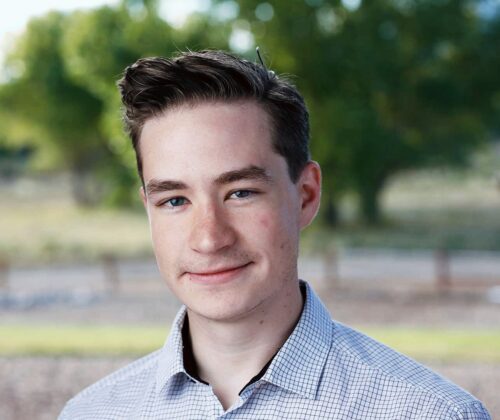
He clerked for Alito, was Trump’s 2020 campaign legal advisor, advising that Pence had a “substantive” role in certification and could keep Trump in power, and is now the author of a Justice Department’s Office of Legal Counsel (OLC) opinion declaring a post-Watergate accountability law unconstitutional.
He’s moved from election subversion to records destruction immunity.
The Presidential Records Act of 1978 requires presidential documents be sent to the National Archives and Records Administration. In an opinion released Thursday, the Justice Department’s Office of Legal Counsel found the law “is unconstitutional for two independent but interlocking reasons.”
It exceeds Congress’ powers and it does so at the expense of the autonomy of the presidency, T. Elliot Gaiser wrote in the opinion, noting that Congress can’t order the papers of Supreme Court justices to be sent to the archives.
Election subversion to records destruction. Who is he?
At his confirmation hearing, Senator Whitehouse called him “completely unqualified.”
…Trump and the GOP had set the stage for a “MAGA DOJ that is actually weaponized.” …Gaiser [was] emblematic of that effort.
Whitehouse also slammed Gaiser… “Why would you want to put in somebody who is completely unqualified for the Office of Legal Counsel?” he opined. “…you put somebody in who knows they’re unqualified for their job, and so they’ll do whatever they’re told, whatever they’re asked.”
On the OLC Venezuela memo for Operation Absolute Resolve a legal analyst described it as “largely incoherent,” finding that Gaiser struggled to sustain a legal argument for more than a couple of paragraphs without contradicting or undermining it.
How incoherent? Legal analyst Asha Rangappa found that Gaiser destroyed his own case. His memo concedes the administration had no intelligence that Maduro would attack the United States, that his actions posed no imminent threat to U.S. forces, and that Venezuela’s regional aggression would not justify an attack. The only legal justification left was self-defense. And then Gaiser’s memo ruled it out. The entire analysis rested on an assurance from Trump that there was no plan for the US to run Venezuela. Trump then said the opposite at the press conference announcing the operation.
The Gaiser memo authorizing the operation explicitly stated it could proceed only because there was no plan to run Venezuela. Trump then announced it was starting and the US planned to run Venezuela.
The OLC isn’t just advisory. Its (now unqualified) opinions carry the same legal force as the statutes they interpret, and are binding on other agencies and officials unless the attorney general overrides the office or the president opts not to take its advice.
Gaiser produces legal cover on demand, insulated from peer correction, building a chain of classified precedents that no one can challenge.
His loyal incompetence is the whole point. He’s unqualified by design. His incorrect opinions are the product.
Trump already fired the head of the National Archives and used a loophole to poison it with a Nixon loyalist, which is the one agency with standing to challenge this. There is no internal actor left to push back. Only courts. And by the time a case reaches a court, the records will be gone.
Young American white men who don’t remember Nixon, yet who were raised intentionally to venerate that criminal President and undo protections, seems to be a theme. Gaiser was curated through Hillsdale, Heritage, Ginni Thomas’s org, and the Federalist Society clerkship circuit: his entire career path was explicitly a counter-Watergate project to rehabilitate the unitary executive theory that Nixon embodied. Watergate discredited it all but Gaiser is here to disagree.
He argues Congress cannot preserve presidential records “merely for the sake of posterity” as if no valid legislative purpose. But the PRA’s stated purpose was explicitly anti-corruption, enacted four years after Nixon. Gaiser erases real and very important history in the opinion and then rules there is no identifiable purpose. That’s not an interpretation, that’s a lie.
He is committing gross falsification of the legislative record.
Last September, Gaiser signed a memo arguing incorrectly that US strikes on alleged drug traffickers during Operation Southern Spear were lawful, comparing alleged drug traffickers to foreign nations attempting to invade the United States.
Then in November, he incorrectly told Congress the strikes on Latin American cartels were not subject to the War Powers Resolution, which is a violation of US and international law. That month, he also authored a memo supporting detailing military lawyers as immigration judges.
Election subversion. Civilians as militants. War powers without Congress. Military lawyers as immigration judges. Presidential records destroyed. Each opinion is meant to bind the executive branch to criminal acts, as if to bring Nixon back. Each incorrect one builds on the last.
I read the meandering legal opinion by Gaiser regarding the PRA and was getting a headache by page 18 of the 52 pages. He uses the battle between Congress and the WH for obtaining records for their oversight to why the PRA is unconstitutional. Gaiser uses the Maser’s lawsuit Trump filed to block the release of his Trump Organization and Trump’s personal records to justify his opinion.
However, no President’s business records or personal tax records are part of the PRA. He completely misunderstands what personal records are under the PRA or is intentionally trying to obfuscate the clear definition in 44 U.S.C. § 2201(3), which states that personal records consist of documentary materials of a purely private or nonpublic character, such as “diaries, journals, or other personal notes serving as the functional equivalent of a diary or journal which are not prepared or utilized for, or circulated or communicated in the course of, transacting Government business.”
What is frightening is Kayleigh McEnany said during her J6 committee testimony is Gaiser is a constitutional expert. The guy is 36 years old now. How does anyone become an expert a few years after graduating law school in 2016?
@Dee Thank you for reading all 52 pages so the rest of us don’t have to.
Lazy or dumb conflation of personal records with presidential records under the PRA is the kind of definitional failure that makes the opinion hard to pin down. So it’s probably intentional. It reads like the “know nothing” tactic of feigned confusion and functions as a weapon of obfuscation.
The statutory definition at 44 U.S.C. § 2201(3) is not ambiguous at all. Gaiser knows what it says. He is intentionally failing and thus abusing his position. It’s like if a doctor claimed the heart could be in the leg.
On the expertise question? Someone could be an expert if we test them based on expertise. He is the opposite. The Federalist Society is a counterfeiting ring setup to produce credentials, not expertise. Clerking for Alito gives you direct proximity to power, not any depth of knowledge. McEnany calling him a constitutional expert is part of the counterfeiting process. Fake license detection tells you more about what that network rewards than about what the guy they issue a card to actually knows.