Legal orders free people all the time. Poems move people all the time. Judge Fred Biery’s habeas corpus ruling freeing 5-year-old Liam Conejo Ramos and his father fused the two.
His poem is the operative legal instrument. The literary choices aren’t ornamental; they’re structural to the argument. His use of lowercase “trumps,” the Declaration quotes, the Franklin exchange, the biblical citations all do legal work and poetic work simultaneously.
Most judicial writing that gets called “literary” is literary in addition to being legally operative. Biery’s opinion is literary as the method of being legally operative. The craft is the argument. Strip the allusions and wordplay and you don’t just lose style, because you lose the constitutional reasoning.
His point is that the entire weight of Anglo-American legal and moral tradition stands against what the administration did.
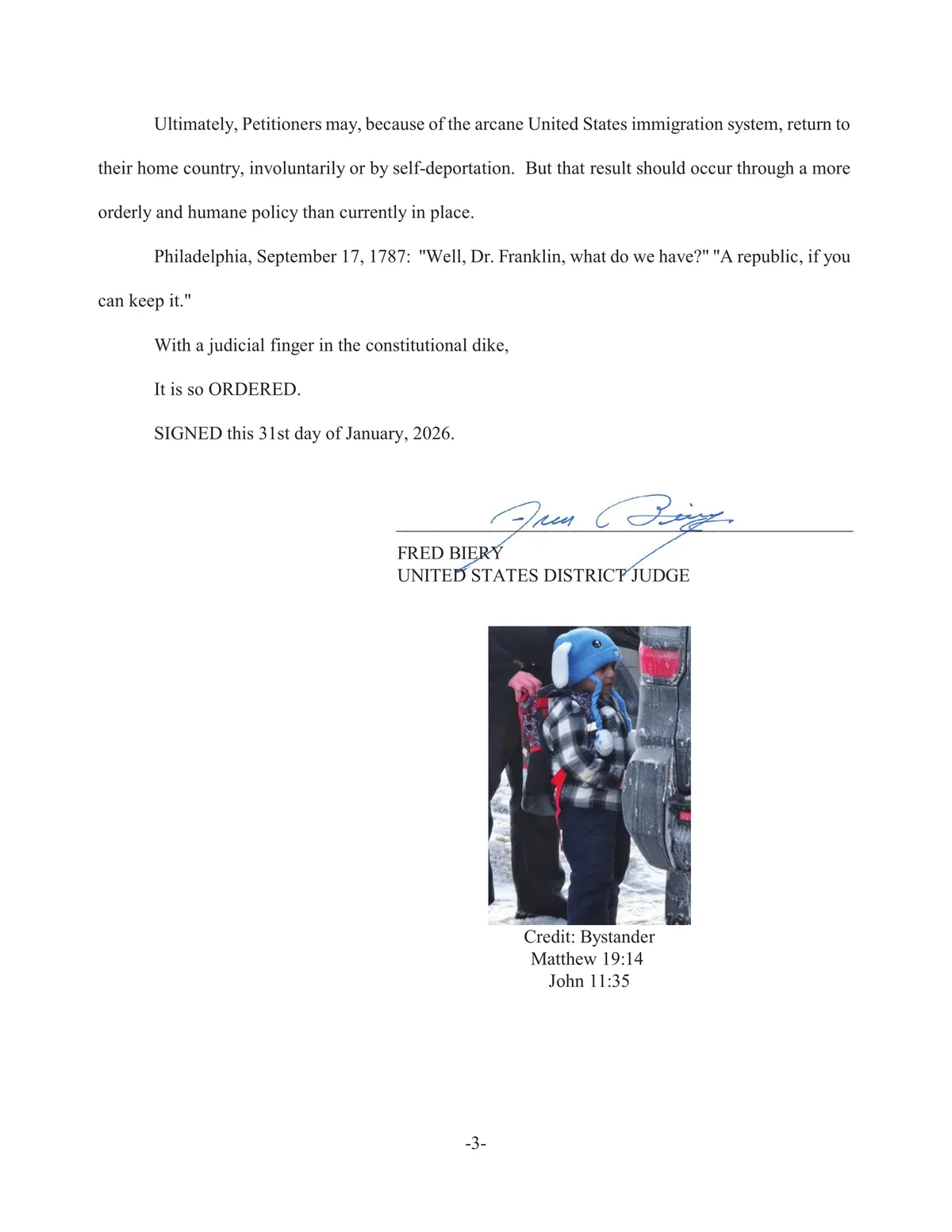
The ending, attaching the photo of Liam in his bunny hat, then the two scripture citations without quoting them, forces you to look them up or already know them. That’s a poet’s move. It trusts silence more than language. I get in trouble for it all the time on this blog and I feel a million times better seeing it in practice like this.
After 500 words of controlled fury, he lets “Jesus wept” do what no further argument could.
In a system increasingly governed by brute executive force, it took a 500-word poem by an 80-year-old judge to do what the entire institutional apparatus of American democracy couldn’t.