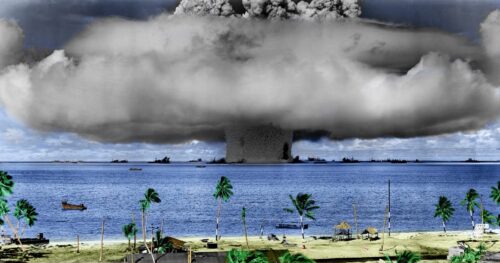
Time magazine had the story in November 1946, describing a cake made to celebrate the atomic bomb tests at Bikini Atoll. The July 25 bomb was the second one, called Helen of Bikini, detonated 90 feet underwater. Radioactive sea spray caused extensive long-term contamination.
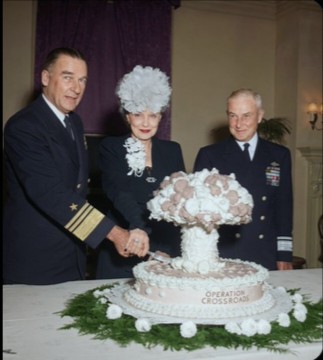
Brandishing a clipping from his pulpit last Sunday, the Rev. Mr. Davies thundered:
“. . . An utterly loathsome picture. If I spoke as I feel I would call it obscene…. I only hope to God it isn’t reprinted in Russia—to confirm everything the Soviet Government has been telling the Russian people. How would it seem in Hiroshima or Nagasaki to know that Americans make cakes of angel-food puffs in the image of that terrible diabolical thing. . . . Try to imagine yourself for a moment a continental European, wondering, brooding, asking yourself a hundred times a day, will America lead us? … Then imagine yourself being shown this picture. If I had the authority of a priest of the Middle Ages I would call down the wrath of God upon such an obscenity. I would damn to hell these . . . traitors to humanity who could participate in such a monstrous betrayal of everything for which the brokenhearted of the world are waiting.”
These were probably the harshest words ever spoken of a dessert. But a lot of non-Americans (notably Britons) had long regarded the U.S. public’s attitude toward The Bomb as callous to the point of idiocy.