Category Archives: History

An Early History of Politically Motivated Hacking

Years ago there was a “rise of hacktivism” paper at Georgetown, but it’s a PDF and mashes a lot of things together with no references. It seems like the Web needs something better.

One of the hard parts about documenting these events is a lack of agreement for terminology, such as “patriot” hacking. Anyone have a hacking dictionary handy? I’m kidding, of course, because the first thing it would say is “crackers”.

Some say being patriotic means defending one’s own country, yet of course that’s too simple. For example would a kid living in Holland with Russian parents who are from Iraq… going to identify along one or more of those lines? Or how many Russian patriots are actually Americans living in Beirut?

Here’s a good one: does an Italian organizing a global political protest to knock France offline (1995) seem less patriotic than the Chinese organizing a global political protest to knock Indonesia offline (1998)? It all depends on interpreting an Italian motive of defending one’s “own” assets versus interpreting the Chinese one.

Without getting into all that, here’s a quick and simple list of early politically motivated hacking:

1986 Patriot Hacking (although arguably corporate espionage for money, there’s definitely a power angle)

Three West German hackers were found guilty today of selling Western military computer codes to the Soviet KGB and given suspended sentences ranging from 14 months to two years. […] A fourth man, 30-year-old Karl Koch [tasked with handing floppy disks to the KGB], who was also arrested in the case, [mysteriously died in a fire] in May. At the trial, which began Jan. 11, all three admitted guilt in obtaining the codes to sell them to a Soviet KGB agent in East Berlin.

1989 Anti-science Hacking (disgruntled worker)

An evolutionary biologist named Joseph Popp came up with a computer-based questionnaire he said would help determine patients’ risk of contracting AIDS, and he distributed 20,000 copies of it to researchers in 90 countries. But the surveys on Popp’s floppy disks were a ruse. When participating scientists loaded the disk, their computers became infected with what would come to be known as a digital version of the AIDS virus.

1989 Anti-nuclear Hacking

Just as NASA began the launch of the Galileo space probe in October of 1989, a controversy began growing around the probe’s nuclear power. Amid this backdrop of international interest, NASA’s top scientists started noticed something odd happening with their work computers. Dr. Suelette Dreyfus, technologist at Melbourne University describes the scene in this way, “The scientists would come in in the morning and put down their cup of coffee and try and log in and they would find that instead of their scientific data, there was a screen that would appear that said “your system has been WANKED!”

1990 Patriot Hacking

Dutch computer hackers stole U.S. military secrets during the Persian Gulf War and offered them to Iraq, computer security experts for the United States said Monday.

1994 Civil Disobedience Hacking

…Guy Fawkes Day, a group of ravers and new-age ‘technopagans’ targeted the UK government with a kind of DDoS attack. “Email bombing” clogged up government PCs, while fax machines spat out sheet after sheet of spam. The act was a protest against Prime Minister John Major’s Criminal Justice Bill, which sought to crack down on raves by outlawing outdoor gatherings playing music “wholly or predominantly characterised by the emission of a succession of repetitive beats.”

1995 Anti-nuclear Hacking

A group in Italy called Strano Network led by Tommaso Tozzi used a “net-strike” to gather global protest against the French government.

1996 Civil Disobedience Hacking

Beginning Sept. 6 and continuing through at least last Tuesday, a hacker intent on shutting Panix down successfully did just that, by bombarding the service provider’s servers with a flood of phony connection requests that prevented real requests by legitimate customers from getting through.

1997 Civil Disobedience and Patriot Hacking

Chinese hacking group that last year claimed to have temporarily disabled a Chinese satellite is now forming a new global hacking organization to protest Western investment in the country. In an interview with the Boston-based hacking collective, the Cult of the Dead Cow, the hacker, who calls himself Blondie Wong, said the new group is forming in the US, Canada, and in Europe to take up the cause of fighting human rights abuses in China. […] “Blondie wants anyone who agrees with the strategy of attacking American companies doing business in China to get involved,” [UN consultant] Oxblood said.

1998 Civil Disobedience Hacking

On the eve of Sweden’s general election, Internet saboteurs targeted the Web site of that country’s right-wing Moderates political party, defacing pages and establishing links to the homepages of the left-wing party and a pornography site.

1998 Civil Disobedience Hacking

The hackers, who are part of groups called “Milw0rm” and “Ashtray Lumberjacks,” reportedly broke into the database of a British Web page hosting company called EasySpace. The perpetrators then hijacked the sites listed in the ISP’s database and redirected users to their protest page, which contains a strong antinuclear message along with an image of a nuclear mushroom cloud and a Milw0rm graphic.

1998 Terrorist Hacking

“In 1998, a terrorist guerrilla [the LTTE] organization flooded Sri Lankan embassies with 800 e-mails a day for a two-week period. The messages simply read “We are the Internet Black Tigers and we’re doing this to interrupt your communications.” Intelligence departments characterized it as the first known attack by terrorists against a country’s computer systems.

1998 “Hacktivism“, Civil Disobedience and Active Countermeasures

EDT planned a series of actions for 1998, starting with a response to the Chiapas massacre. In April, Dominguez sent out a series of notes alerting people to the plan: “FLOODNET: TACTICAL VERSION 1.0.” would target the website of President Zedillo, with the goal of bringing attention to the killings. The group bristles now at the idea it intended to bring down the site, but did foresee the possibility that access would be disrupted. […] …a Defense Department spokesperson obliquely took credit for shutting down the digital attack. “Our support personnel were aware of this planned electronic civil disobedience attack and were able to take appropriate countermeasures,” the spokesperson said.

1998 Patriot Hacking

The first Patriotic Hacker communities were established when individuals interested in “cracking,” organized into online communities to share interests and develop expertise. In 1997, a Shanghai hacker known as “Goodwill” founded the first Patriotic Hacker organization known as the “Green Army” from this online community of early hackers. In 1998, the first major Patriotic Hacker attack was triggered by anti-Chinese riots in Indonesia.

1999 Patriot Hacking

A concerted attack involving simultaneous hacking from five countries caused an Irish Internet Service Provider (ISP) to switch off its systems last month. Connect-Ireland, the company affected, believes the Indonesian government is behind the attack. The company has hosted the East Timorese domain–.tp–for the last year and posts material critical of Indonesia’s occupation of East Timor. […] A spokeswomen for the Indonesian embassy in London denied speculation that the Indonesian government was behind the attack. “How could we organise all those hackers? It is baseless,” she said.
Unclaimed U.S. Lynching Monuments Display Lack of Redress

I found the following reflection on the national lynching memorial interesting because it shows the power of subtraction to display a failure in redress.

Khalil Gibran Muhammad, a professor of history at the Harvard Kennedy School who studies truth and reconciliation efforts from Belfast to Rwanda, believes that memorializing victims of structural racism is an important part of a larger movement of racial reckoning in the U.S. but that memorials alone are “insufficient to the harder work of transforming a society.” These efforts don’t go far enough, he told me, because they are too “passive” and easy to skip. He cited the importance of Berlin’s Holocaust Memorial being placed in the heart of downtown, and said that memorials need to “confront the spatial segregation that exists” and “penetrate areas that people cannot avoid.” A museum in Africatown, he worried, would allow people to “opt out” of learning about the history of the Clotilda.

Stevenson, the civil-rights lawyer and founder of the national lynching memorial, addressed this problem by adding a second set of steel rectangles to the memorial, each one representing a U.S. county where lynchings took place. He invited the respective counties to claim their monuments and to establish a memorial on their home ground to lynching victims. He also required each county to demonstrate that its community was taking steps toward economic and racial justice before acquiring its column. The unclaimed monuments that remain on display at the national lynching memorial serve as a reminder of the lack of redress across the country.

It’s deep within a story about the Clotilda, last known slave ship to enter the United States.

Why Winston Churchill Named America’s M4 Tank “Sherman”

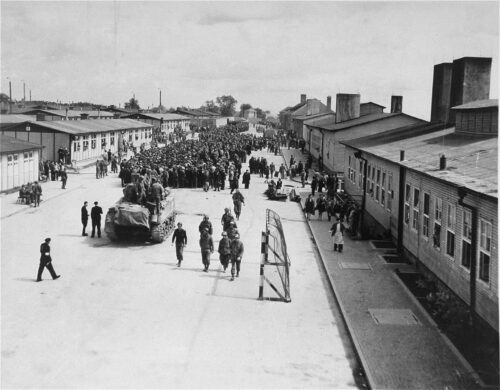
U.S. General Sherman in 1864 famously helped end the Confederate concentration camps, a huge victory for American liberators followed with public campaigns of “do not forget”. Then 80 years later in 1944, 10s of thousands of American-made M4 tanks named after him famously helped end the Nazi concentration camps, followed with public campaigns of “do not forget”….

An American tank rolls down the main street of the Mauthausen concentration camp. Source: United States Holocaust Memorial Museum photo 10251

How did Sherman’s name come to represent an unmistakable force of good in two similar efforts so far apart?

The answer is Winston Churchill.

Way back in 1915 Churchill funded development of a novel giant “landship” concept meant to break through trenches, barbed wire and machine gun nests.

Prime Minister Herbert Asquith received a suggestion from a colleague: “It would be quite easy in a short time to fit up a number of steam tractors with small armoured shelters, in which men and machine guns could be placed, which would be bullet-proof. Used at night, they would not be affected by artillery fire to any extent. The caterpillar system would enable trenches to be crossed quite easily, and the weight of the machine would destroy all barbed-wire entanglements.” The writer was Winston Churchill. His letter marked the first step toward the practical evolution of the tank in World War I.

Initial engineering, of what essentially was an armored Ford tractor, impressed the British War Office so much by February 1916 they ordered hundreds built under the strictest secrecy.

In other words the “landship” concept was prohibited from being called that in order to deny German spies any insight. A “Landships Committee” had been flagged by late 1915 as a risk — requiring rename. A senior officer (likely Major General Ernest Swinton) then proposed documents and designs use instead the phrase Water Carriers (WC).

Churchill (and others) supposedly reacted to this with such laughs, given the idea of government committees and departments using the comical initials WC (toilet), that a synonym was immediately injected — the result was “water tanks”. A Tank Supply (TS) Committee was deemed acceptable as cover for quickly increasing “landship” production.

An alternative story (always possible given such secretive history) is that shop orders managed by Sir William Tritton (landship designer and builder) used the phrase “water carrier for Mesopotamia” while managing hull production (developed in secrecy and only later to be mounted).

Either way the super secret project went from WC to WT. And that’s how the codename was born and continued onward… water obviously had to be dropped once people realized what was being built, and to this day we still say tanks.

Fast forward to WWII and Prime Minister Churchill told the Americans shipping tanks to Britain that they needed to use a simple name convention.

The British took the American M3, for example, and named it a General Grant. An American configuration of the M3 was named the General Lee. There’s a lack of documentation for how and why Lee’s name was brought in *cough* to honor segregation/racism *cough*.

Several of [America’s] most prestigious army posts honor the enemy. The War Department named them during WWI and WWII when the army was a segregationist institution, and the South was a racial police state. Black people did protest these names, but they had been violently excluded from voting and could not change it. But to me it’s outrageous that the US Army, the most diverse workforce in the country, honors the enemy. An enemy who fought for slavery and killed US Army soldiers. […] Lee served in US Army for over 30 years before choosing treason to preserve slavery.

Because the M3 configuration assigned to Americans (a turret change obvious to any onlooker) was called the Lee, it meant British associated Grant’s name to their own deployments, which seems exactly backwards except for the part about winning battles. Grant was one of the best generals in history. Lee was one of the worst.

You have to wonder why any American even at this time would agree to serve in a tank named for their historic enemy, the awful and traitorous General Lee. Even if very overtly racist British military officers had named it as such, who enabled them? Lee was undeniably racist and pro-slavery, a ruthless butcher who tortured and killed American soldiers, even murdering POW, earning a record that should have made him unsuitable for any recognition.

Historian protip: Churchill was an opportunist racist. His opinions of Lee not only were wrong, but also reinforced Churchill’s own worst facets. For example when Churchill proclaimed he “did not really think that black people were as capable or as efficient as white people” his views of Lee gained important context.

Or who can forget Churchill’s War Cabinet decision of 13 October 1942?

…we need not, and should not, object to the Americans [segregating] their coloured troops.

Did anyone feel a need to object to Americans being put in a tank named after their enemy? Perhaps the U.S. Army should have instructed the War Office to name their M3 the Napoleon.

Churchill also is said to have removed “General” from names of tanks as he believed it a source of confusion in discussing military events.

After the M3 Grant, came the M4 and Churchill simply declared in early August 1942, as it arrived into Egypt (codename “Swallow”), that the new tank would be named for General Sherman. He had said he would not use what he called “gibberish” of American tank designations (e.g. the American Medium Tank M4 to M4A4 variants were renamed the Sherman I to V).

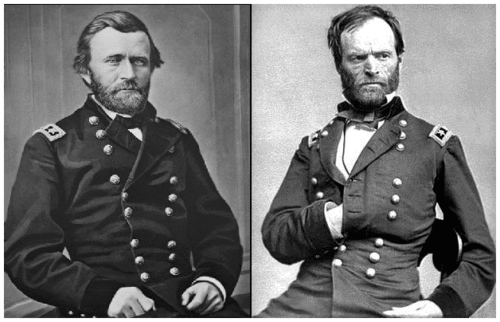
General Sherman was one of the best military leaders in American history, and served under the best (Grant), so such a name transition makes sense from that perspective. In addition Sherman had a rather important ethical advantage over the enemy, which would serve the British well in the years ahead.

His logic was indefatigable — bring peace quickly that would quell the heart of pro-slavery militias, end their domestic terrorism that had plagued America for decades.

Now, my friends, I know there are parties who denounce me as inhuman. I appeal to you if I have not always been kind and considerate to you. [Cheers.] I care not what they say. [Bully for you and cheers.] I say that it ceased to be our duty to guard their cities any longer, and had I gone on stringing out my column, little by little, some of your Illinois regiments would not have come home, but would have been crushed. Therefore I determined to go through their country, and so I took one army myself and gave my friend George Thomas the other, and we whaled away with both. [Loud cheers.] Therefore we destroyed Atlanta, and if we had destroyed all the cities of the South in order to bring about the result in view it would have been right. [Loud cheers…] Now I can go, and anybody can go with a single horse a way out to the limits of Kansas, or even to Colorado, without an escort, and that too at the close of a long and terrible war.

The considered thought about stability, prosperity and preservation of life comes through from Sherman as fundamentally opposite to the disloyalty and barbarity of Lee.

Sherman’s ethical foundations in war were to engage in the destruction of enemy infrastructure (constraining enemy ability to produce war) as far better than any loss of human life.

He endeavored to quickly end what he cited as inherent cruelty of war through decisive force as quickly as possible, focusing on what really mattered.

Union military strategy thus emerged not only victorious but also morally superior to the infamously selfish and corrupt Confederate Generals: in Sherman’s view the southerners should have been far less “outraged” when their “property” was seized or destroyed and far more concerned about the human beings they enslaved, murdered and sacrificed needlessly.

It’s not just history though. An important dichotomy highlighted by Sherman still is found in America even to this day. When “Black Lives Matter” (BLM) groups protest loss of human life they run into resistance from groups that are concerned primarily about streets being blocked or damage done to a car or building. Sherman would have no time for the latter, which is why so long ago he powerfully defeated racist expansionist reactionary forces to save lives and restore freedom.

With that in mind…

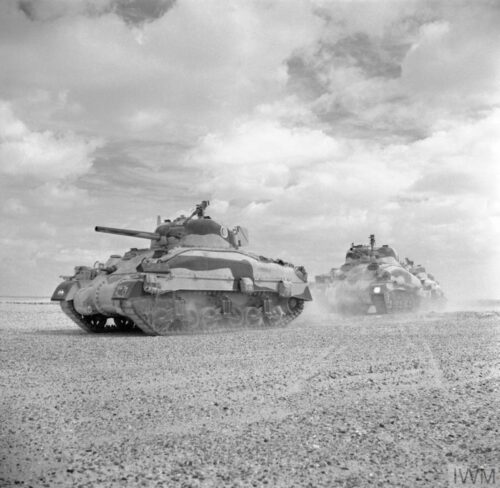
On the eve of the battle of El Alamein, Egypt in October 1942 over 250 American M4 Sherman tanks made their combat debut in the forward elements of the British Eighth Army. It was a very notable victory and a significant turning point of WWII — perhaps it even was the realization of British tank dominance over Germany that Churchill had dreamed about in 1915.


Sherman II tanks of the Queen’s Bays (2nd Dragoon Guards), 2nd Armoured Brigade, moving up to the Alamein line, 24 October 1942. More than 15,000 75mm armed Sherman tanks had been supplied to Britain by 1944. Source: IWM photo E18380.

After their dominant start the Shermans continued to deliver huge contributions to Allied campaigns, driving the Nazis completely out of Africa before rolling across the world as one of the best tank designs.

The Sherman tank, like General Sherman himself, became highly symbolic of the kind of fortitude in war that could liberate the oppressed from tyrannical regimes.

Team America: General Grant and General Sherman were names given by Churchill to two of the best tanks in WWII.

Russia’s Tank Literally Empty. Reserves Called Up But No Answer

Not long after the Russian dictatorship was mocked and ridiculed for coercing thousands of its own citizens to needless deaths — ill-equipped, unprepared and misled conscripts sent into “action” against Ukraine — news started circulating about its “best tanks” loitering empty and abandoned.

Ukraine Just Captured Russia’s Most Advanced Operational Tank: The T-90M is the latest main battle tank to enter front line Russian service, and one has now been captured by Ukrainian forces.

Perhaps it is easy to see why Russia’s “most advanced” weaponry would be just a sitting duck, empty and silent, for its alleged targets as they approached.

This tank’s crew had been abandoned by Russia long before they climbed out and walked away from their poorly maintained armor in a feckless “action”. I’m sure they were thinking “if this isn’t a war, then why am I being asked to die in this dumb box”.

Russians have a far higher chance of living to see another day when they walk away from the false leadership of team Putin.

The Ukrainian army’s counteroffensive around the city of Kharkiv in northeastern Ukraine starting on Sept. 6 destroyed half of the best tank division in the best tank army in the Russian armed forces. A hundred wrecked or captured tanks in a hundred furious hours. That’s how much destruction the Ukrainians inflicted on the Russian 4th Guards Tank Division, part of the elite 1st Guards Tank Army, the Russian army’s best armor formation.

A large amount of the “most advanced” technology by Russia in their “best armor formation” was toast within a few hours.

Illustration of quality of life with Russia’s most advanced engineering within their best formation…

Abandonment in mid September is thus predictable if we believe Russian soldiers in any way were aware of that action let alone initial battle test results five months ago in early May.

Russia’s Best Tank Destroyed Just Days After Rolling into Ukraine […] Kyiv first reported the presence of the T-90M in eastern Ukraine on April 25.

There’s no need to get into the weeds on why this tank is terrible, I mean beyond understanding that Russia delivers sub-par engineering, with unreliable service/support, and non-existent ground leadership (a norm in dictatorships).

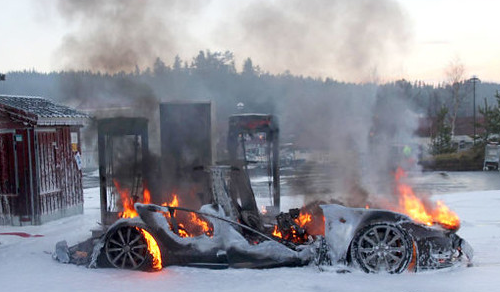
From an engineering quality and safety perspective you might say Putin is on par with Musk, driving a Russian tank in Ukraine is about as safe as being in Tesla on public roads.

Actual quality of life with Tesla’s most advanced engineering… Source: vg.no

In other words the “best” technology delivered from a dishonest flip-flopping “strongman” who loves censorship has been proving itself (whether a T90 or Model 3) basically to be…a death-trap.

Or if you prefer history as a comparison instead of “future” cars, Russia appears to be repeating mistakes much like the doomed Nazi crews condemned to serve the hot-headed and disorganized Rommel in WWII.

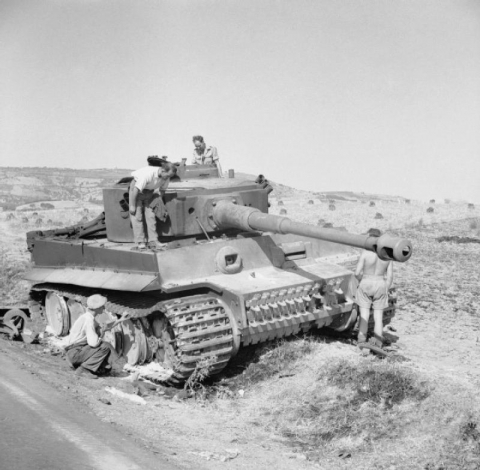
Nazis abandoned tanks in 1942 like Russia abandons tanks in 2022

A detail about Russian tank engineering is still worth noting here, given the increasingly low morale of Russians who expect to die in them. Instead of latching onto an industrial-age fantasy of “automation” that treats its soldiers as disposables, the American tank platform actually is designed to depend on highly skilled and valued operators.

Difficulties fielding the latest and greatest tank led Russia to pivot from the T-14 and reinvest in older T-80s and T-90As. […] “China and Russia are still operating under a three-man crew mindset and maintaining an auto-loader system,” Sgt. Emmett Fulgham, a tank gunner with 3rd Battalion, 8th Cavalry Regiment, told Coffee or Die Magazine last summer. “We have a four-man crew with an actual human loader. Most loaders can do their job in five seconds on a bad day but usually in under four. Russian tanks still take 10 seconds to load, if not longer, so for every round they get off, we can fire two or three times.”

Read that again just to be clear on this point. And especially keep in mind Tesla CEO’s false promises of a future with no need for human interaction with machine.

Over-confidence in full-automation has led both to difficulties in the latest generation of technology achieving readiness. And even if it goes to full production in real-world conditions (battle deployment for T90, public roads for Model 3) it’s not even on par with more-reliable higher-performance human-centered augmentation machinery.

To put it another way Russian leadership doesn’t care about humans much, and certainly doesn’t care about quality or reality. This translates into a ruthless bully mindset that targets defenseless civilians, the most vulnerable, as a quick fix to feel artificially powerful.

Bodies recovered from mass burial site in liberated Ukrainian city ‘show signs of torture’. More than 400 bodies said to be buried at site, including women and children, with Ukrainian president likening discovery to massacre of Bucha.

When any real resistance shows up — military force of trained soldiers and modern weapons — the Russian bully melts into a puddle or runs away.

Russia’s latest response to all this, in light of a very public melt-down, brings us to yet another empty-sounding move.

Putin has said he’s calling his non-active reserves to join his “non-war” with a “non-country“.

Any Russian citizen who is in the reserve can receive a call-up notice. Basically, this can be any man up to the age of 60. “There haven’t been cases like this in peace time, yet by law it is possible. Generally, soldiers and junior officers in reserve are called up. […] “There is no criminal responsibility for refusing the call-up. Just an administrative warning or a fine of up to $10,” Murakhovsky concluded.

Oooops.

Sorry, my bad, that’s actually a story from 2018.

I guess it’s still worth noting from 2018 that Putin is legally allowed to try and get military reserves to fight during peace-time (keeping up the ruse of not being at war with a foreign country while sending soldiers to predictable death in one) and that there’s no penalty for refusing such a suicidal call.

On that point, here’s the actual September 2022 news story about Putin flaunting a call to action.

One-way flight tickets out of Russia began to rapidly begin selling out following Russian President Vladimir Putin’s announcement of a partial military mobilisation to call-up 3,00,000 reservists to shore up Russia’s manpower-depleted forces fighting a floundering war in Ukraine…. searches for Aviasales — Russia’s most popular platform for purchasing flight tickets, with a monthly audience exceeding 15 million users — spiked considerably immediately following Putin’s announcement.

The migration data is important. It’s a superb counter-argument to hawkish analysts who try to float things like “at some stage, all the ‘dumb Russians’ will be dead and a few good generals will ultimately become replacements”.

Uhhh, nope. Smart Russians are either leaving, if not already gone, or desperately trying to appear dumb to avoid being seen as a threat to Putin.

Perhaps we can say it’s like the American Civil War where Generals on a rather stupid side of fighting to expand slavery became dumber and dumber (brutal, petty and useless) as time wore on.

Soon headlines should read something like this (puns obviously intended):

Put-in something they don’t want, Rushin’ to get away

The Russian soldiers, despite being under Elon Musk-like censorship and propaganda, clearly saw they should be leaving behind Tesla-like death-trap automation boxes. Russian reservists meant to replace them now also apparently think it’s better to leave behind their military duty.

It all shows how Putin’s attempts to play his best hand instead has repeatedly revealed major weakness of the dictator.

“The whole system is in shock and what makes this situation worse is the absolutely inadequate reaction of Putin personally,” [ex-speechwriter to Putin] Gallyamov told CNN, adding that when Putin “is in shock himself” and “doesn’t know how to act,” the Russian leader “is trying to show that nothing bad is happening.”

Expect passive resistance in Russia to soon turn very hot.

“Having a great time. Does this Russian S400 hiding in Crimea go well with my new vacation bikini?” Source: The Ministry of Defense of Ukraine

No clear leadership transition plan in that context begs the obvious next question.

Who can replace Putin? It doesn’t bode well for Russian stability that a smooth transition isn’t in the deck of cards Putin wants Russia to play with.

Dictatorship suggests a very rough road ahead (e.g. see recent news of “suspicious ends met by those who crossed the Kremlin“), unless maybe Putin takes a note from everyone around him (including his infamous friend Snowden) and runs away.

On a related note, how many innocent people must die before Musk leaves Tesla?