One of the greatest myths of American military history is that the nuclear bombs dropped on Japan were superior to sending ground troops.
In reality it was Soviet ground troops advancing on Japan that should be credited with an end to combat, given months of unrestricted aerial munitions by America (Tokyo 50% destroyed by non-stop napalm) had not delivered a surrender.
Technically the nuclear bombs gave the Japanese a diplomatic out — a public distraction — and thus did serve a purpose. The Japanese could use them to claim they cared about civilian deaths and claim they cared about American technology, when in fact they cared most about Soviet military encroachment and occupation.
It seems to me this is important backstory, let alone the failed bombing campaigns of Vietnam and North Korea, for Americans reading about a new dispute coming out of Syria.
If the al-Qurayshi home had been targeted in a similar aerial strike, the number of “acceptable” casualties would have been decided by a drone pilot and military lawyer, who would have made a judgment call as to when the number of civilians in the compound was low enough to justify a “proportional” strike.
Instead, the ground team was able to reduce the odds of collateral harm even further by clearing the area of some civilians in real time — first calling on them to evacuate and then assisting many in leaving their homes. Had al-Qurayshi not detonated his own explosive device, it is possible no civilians would have died.
While global data is scarce on the overall historical ratio of civilian casualties resulting from commando raids as compared to drone strikes, it stands to reason that in raids, armed actors are likelier to follow rules of engagement more associated with law enforcement or SWAT teams rather than urban warfare, and in doing so would take greater pains to protect innocent bystanders.
Indeed, US President Joe Biden has explained that he used ground troops rather than aerial munitions in the al-Qurayshi raid specifically for this purpose.
A movie recently released called The Bounty comes with a teaching guide.
The Bounty Teacher’s Guide was written to help educators, students, and the general public deepen their understanding of the issues raised in the documentary film Bounty (2021),
Inside you will find many important American history details such as answers to the question of why Maine is the “whitest state” in the country (spoiler alert and hint: genocide).
It plainly lays out facts like how ruthless barbarians and primitive savages (i.e. European settlers to America) murdered and cheated people they encountered as a means of generating wealth.
This guide will fail if readers come away thinking that scalp-bounty proclamations were an anomaly created by a desperate group of European newcomers during an especially violent period of our country’s history before 1776. Scalp proclamations were issued in an estimated 72 instances across the American colonies in the Dawnland (present-day New England) over the course of 85 years. Among other things, the proclamations organized an ideology of anti-Native hatred and dehumanization by Europeans and were a tool of domination that facilitated the seizure of Native land. When it became clear to the original peoples that European settlers had no intention of leaving this continent, many devoted their lives to diplomatic efforts in the hope of reaching agreements with Europeans to contain their settlements. Respecting Native towns and the hunting, fishing, and planting rights of the original peoples was a backbone of these negotiated agreements. Unfortunately, most Europeans blatantly and repeatedly refused to honor them because what they most wanted was land. Many Europeans dehumanized the land’s original inhabitants, which made it easier for them to hunt Native women, children, and men, and occupy their homelands.
The criminal acts were not only widespread but also persistent; “bounty” proclamations such as these existed “for more than two centuries across what is now the United States”.
Here is some excellent history and analysis from an American comedian, who gives the kind of background on risk management that everyone working in security needs to study.
Bottom line: America’s long history of systemic racism has undermined trust in science.
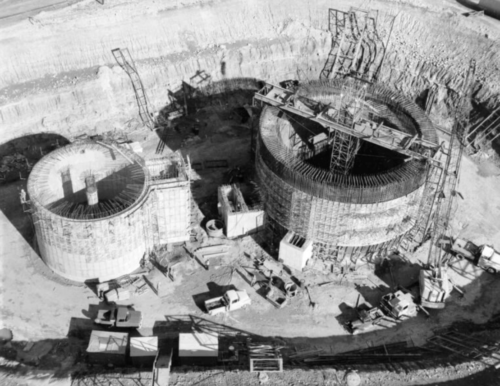
A 7,000 square foot missile silo under wide-open acreage in rural Abiline, Kansas (near the childhood home of President Eisenhower, and just north of Eisenhower Highway 40 — Interstate 70) is up for sale on Zillow.
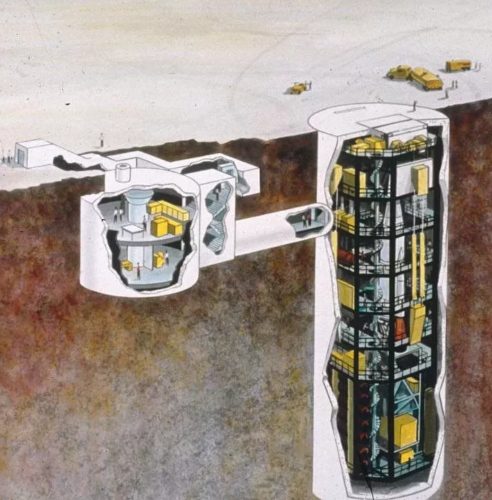
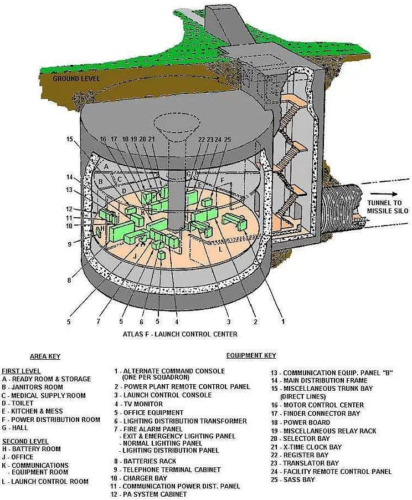
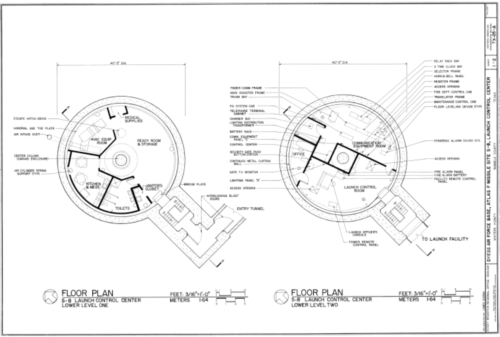
Built on 11 acres of land, this property is home to a decommissioned Atlas F missile silo complex. The underground complex was designed to withstand a nuclear strike and has water, electricity and a forced sewage system to the ground surface. There is 6,900 square feet in the complex with the upper two levels consisting of approximately 1,200 feet of space. This area was used for the Launch control center and living quarters for the crew. The main missile silo is located at a depth of 170 feet. Also on the property is a 4,000 square foot Quonset building with water, sewer and electricity. and a one room building for office or storage. This facility has lots of potential in whatever way you choose to go. A home, apartments or a Bed and Breakfast are just some ideas. If you want something offering security and uniqueness, then this property is for you.
All of this rusting and leaky mess built by 1961 (no bedroom and just one bathroom, designed to withstand nuclear attack) at 2432 Fair Rd, Abilene, KS 67410 can be yours for a measly $380K.
It was listed in 2020 for $420K. It may be linked to some kind of weird Wall Street hi-jinks, since it was listed by someone in Manhattan (NY, KS…?) on December 27th, 2021 for $380K, then “sold” January 25th, 2022 and immediately re-listed for $380K again. If it was sold, why is it for sale?
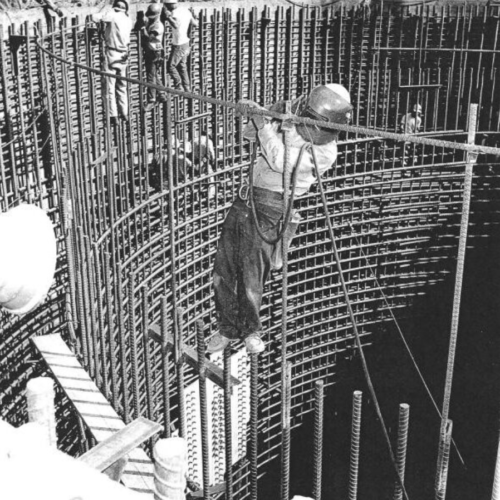
Tax is allegedly only $1,753/year, which seems somehow wrong considering what taxpayers put into the construction costs ($12.8 million — equivalent to over $100 million in 2022). Despite the big spend, this site formally known as the 550th SMS, Schilling AFB, Operational Site 2 was decommissioned within five years (when LGM-30 Minuteman missiles made them “obsolete”).
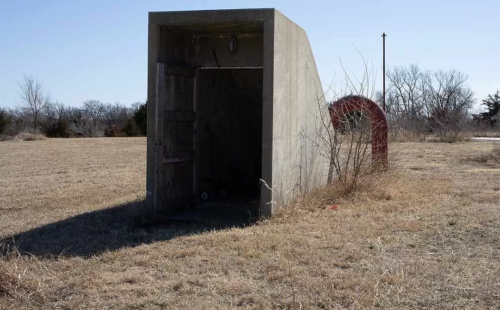
The front door is easy to find and very inviting.
Source: Zillow
The rest, naturally, is neither.
Lack of accommodations for five men living underground is likely related to how shifts were operated.
Crews included two officers and three enlisted members, a missile maintenance, ballistic missile analyst and power production technician. Crews were on alert for 24 hours, with a new crew departing the main base each morning to replace the crew on duty.
Probably important to consider that this silo was in no way designed to be livable; it served just to increase the chances of a vulnerable and slow missile actually being launched withing a very short window (as little as 5 minutes). Human survival? Not really on the table.
You could probably dig 100 feet underground and pour concrete into it today for a lot less than $380K, or apply that amount to making a rural home safe from dangers. Most importantly you could design your perfect spot to have protection against actual threats unlike this pile of leaky rubble with its spotty record.
The launch rate of success for an Atlas F was what you might call not great (success/fail allegedly was 53/17) with two even recorded as “fell back onto the pad at liftoff“. Four silos were totally destroyed by the Atlas F exploding underground, emphasizing again a lack of suitability for human survival.
Zillow conveniently shows us (zooming out) that a four bedroom house in Abilene, Kansas today might cost as little as $100K. This perhaps means the silo price tag has more to do with some real-estate mogul probing tax loopholes and playing financial games than actually trying to value or sell a property.
It’s also not the only specimen in this region of Kansas. Twelve sites designated “SM-65F” (Atlas F) — some of the initial intercontinental ballistic missiles developed by the U.S. — are near each other.
I bring up that footnote because the density of these silos in Kansas infamously led to Cold War jokes among the rural communities; excited to become notable even though it was “ground zero” for nuclear attack.
In other words flogging overpriced bunkers to bury valuable assets might have the repeat effect of making them into the first sites to be targeted in any major crisis — the opposite of survival.
a blog about the poetry of information security, since 1995