Category Archives: History

Can You Trust COVIDtests.gov?

The COVIDtests.gov site has launched ahead of schedule and right at the top it has a “Here’s how you know” link to explain why you should trust this “official website“:
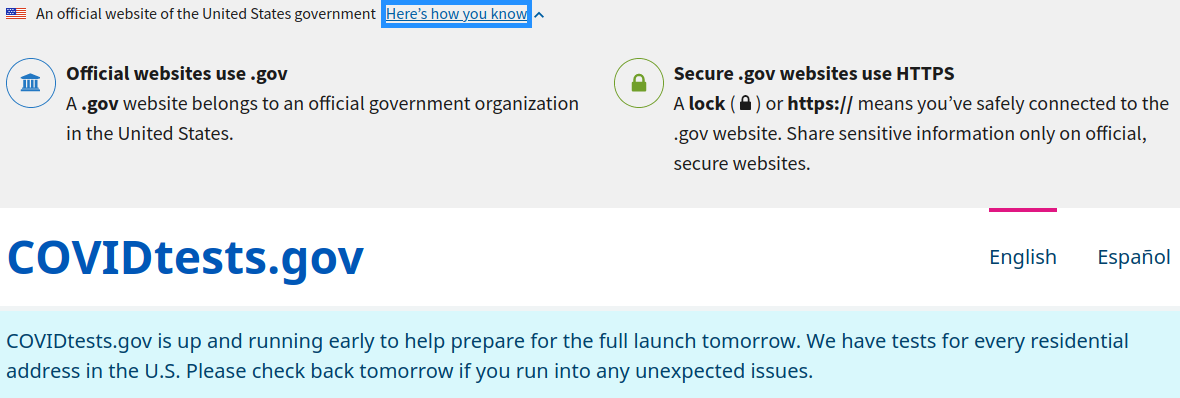
Does it seem safe? While they make a couple sound points, there’s more to it.

Do you also trust that a .gov was developed using a secure lifecycle, is operated safely and that it hasn’t been compromised by commercial motive? In other words, is there high integrity of the data on the pages as much as there may be integrity of the source identity?

I strongly recommend developing quality measures for the former (hard) much more than the latter (easy).

It reminds me of another .gov launch not so very long ago that was subjected to extreme partisan yet technical bickering…

The “healthcare.gov” website at the end of 2013 was ruthlessly attacked by Republican lobby groups and “experts” such as TrustedSec. Here’s a good example from headlines in early 2014:
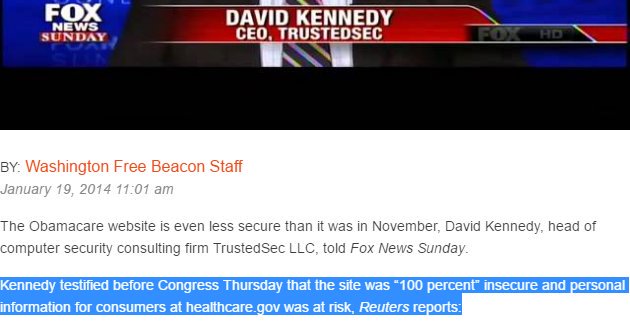
Source: WFB, 2014

Someone barking that the healthcare.gov site is “100 percent insecure” and trending worse seems factually false, no? It was a gross misrepresentation for political gain if not an outright lie.

In fact, while TrustedSec used the press to spread a rumor that healthcare.gov was 100% unsafe they were actually telling congress in testimony

It is accurate that no system can ever remain one hundred percent protected against threats.

Could this kind of absolutism fallacy and obvious gaslighting be grounds for being disbarred from practicing security though?

No, because let’s be honest the security industry has no baseline of integrity for meaning being delivered in a message.

Sound harsh?

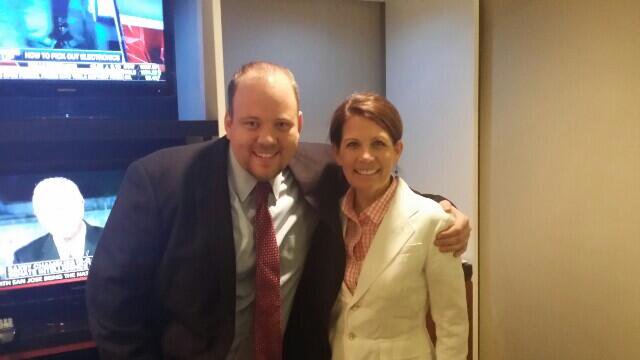
Consider that the TrustedSec CEO Dave Kennedy was on a highly-politicized PR campaign to discourage people from getting health insurance, mugging with Michele Bachmann (infamous religious extremist who advocated for dropping bombs as “one of the greatest acts of peace” while simultaneously trying to block peace agreements because she believed they could usher in World War III and the horror of… dropping bombs).
Source: Twitter

Kennedy’s obvious political self-promotion at this time went from hugging the extremist bomb-advocate Bachmann back stage at FOX news to literally spreading “100 percent” nonsense and FUD… claiming even healthcare.gov would hack anyone who dared to use it for their life-saving healthcare needs.

…saying vulnerabilities remain on “everything from hacking someone’s computer so when you visit the website it actually tries to hack your computer back, all the way to being able to extract email addresses, users names—first name, last name—[and] locations.”

“Actually tries to hack your computer back”?

This is nails-on-chalkboard stuff, only made worse by him saying the threat scale goes “all the way to being able” to know your name. So your name has been leaked proving that you’re in America and need healthcare insurance just like everyone else? That’s “all the way”?

And then there was the false claim made on FOX news that large numbers of probes of a .gov website indicates it already has been hacked or will be soon.
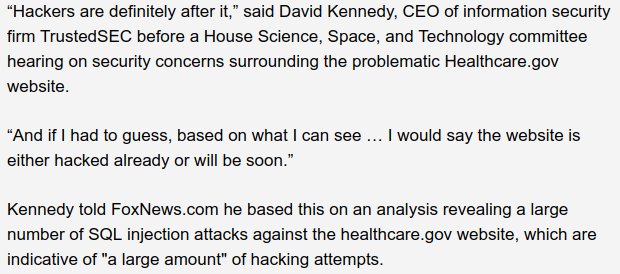
Source: Fox News, 19 Nov 2013 (via Utah’s Senator Mike Lee)

And this nonsense of course had the expected reaction putting people in a frothy partisan panic:

…you couldn’t pay me a million $ to go anywhere near that website #FullRepeal #ImpeachObama #MakeDCListen

That’s a 2014 reaction tweet from @livinbythelake. Today that same account is retweeting the wife of the Executive Editor for the Washington Examiner that COVID19 is a communist plot.
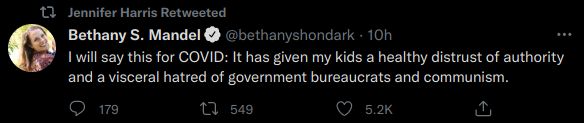
While clearly a “poison squad of whispering women” show they are coordinated in amplifying a fear narrative from TrustedSec as right-wing misinformation, the actual flaws were being misrepresented.

Probes ought not be directly correlated to breaches without some intelligence. That’s like saying evidence of water around a floating boat means you should guess it soon will spring a leak.

FUD.

Here was another clear sign TrustedSec’s Kennedy was speaking completely out of his mind on this issue.

His examples of “models” were sites later breached at FAR WORSE scale than healthcare.gov.

When it comes to securing personal information online, Kennedy cited Amazon, Facebook, and Twitter as models for the industry.

Facebook?! Are you FFFFFing kidding me.

FACEBOOK and AMAZON?

More than 540 million records about Facebook users were publicly exposed on Amazon’s cloud computing service…

Remember this was TrustedSec CEO testifying to Congress in November 2013 that Facebook should be held up as a model for the industry to protect privacy. This is literally what he said to Congress:

…the federal government isn’t known for having super secure web sites or even having adequate security to protect U.S. related sensitive data.

Oh really?

Facebook had just been breached in June 2013 leaking 6 MILLION records for over a year when this highly politicized testimony was filed alongside a poisonous PR campaign.

Does Facebook ever sound like any sort of real “model” for an industry to you? Facebook always has been known for failing at security and being a threat to U.S. data. It’s almost inconceivable that someone in 2013 was recommending them as a model, and it’s incredibly suspicious for anyone claiming the title “TrustedSec”.

Come on people, let’s look at this in context.

TrustedSec’s CEO was spreading on partisan news campaigns that the US government website is “100 percent insecure” and that everyone instead should carelessly put their data in Facebook (foreign adversary) hands?

Here’s how I described Facebook to everyone reading this blog in 2011 why I deleted my account in 2009:

…private company funded by Russians without any transparency that most likely hopes to profit from your loss (of privacy)… if Facebook is dependent on Zuckerberg their users are screwed.

That’s a full two years before the “TrustedSec” CEO was on TV telling Americans to hand their most sensitive data to the Russians instead of their own government.

Facebook’s massive unprecedented failures of safety (gross negligence if not incompetance) were never hard to find, and have only worsened over time:

Am I missing some? Surely this alleged “model” couldn’t have been any worse of a recommendation.

The icing on this history cake is that TrustedSec’s testimony gave milquetoast recommendations for fixing healthcare.gov that read like they were pulled directly from a 2-minute introduction to information security.

Fix the current security problems on the web site, which pose a high or critical risk… Develop a security operations center and ensure effective controls are in place… Perform end-to-end testing to benchmark the existing risk towards the healthcare.gov infrastructure and take appropriate action…

It’s so vague and generic as to be completely unhelpful.

Here’s what the TrustedSec guide to marine safety probably looks like: if you see or hear water you must be sinking, take appropriate action.

Let’s recount.

After five years healthcare.gov reported about 10 million people had received health-care coverage (essential to quality of life) while only as many as 75,000 people may have had sensitive information breached. Even that amount is disputed, so where’s the giant disaster predicted?

Headlines by 2017 were “Obamacare is working well” no thanks to TrustedSec doing its best to tell people to stay away.

Healthcare.gov popularity increased dramatically to 56%, no thanks to TrustedSec doing its best to tell people to stay away.

So, will the right-wing lobbyist “hackers” put on suits and ties to be wined-and-dined by FOX news again to spread FUD about this new health-oriented .gov site being a threat?

Facebook, the darling of the Republican lobbyists and extremists intent on destroying Obamacare, over the same time delivered the worst security practices and breaches in history (on top of destroying quality of life and being implicated in atrocity crimes).

Why so bad?

Basic American history offered us a good insight into “experts” like Dave Kennedy stumping in 2013 for the Confederate Party, even predicting escalation to the violence seen last year.

ObamaCare cannot be accepted. No matter that it was passed by Congress, signed by the President, found constitutional by the Supreme Court, and ratified by the people when they re-elected President Obama. It cannot be allowed to stand, and so the tactics for destroying it get ever more extreme. The point of violence has not yet been reached, but the resistance is still young.

How dangerous was it in 2013 for a security “expert” to tell people not to sign up for healthcare from a .gov site?

Very dangerous, made far worse by telling them to trust Facebook instead. We can think of extremists like Bachmann telling us that dropping bombs was her model for peace like Kennedy telling us that using Facebook was his model for privacy.

So back to today, how dangerous will it be if someone says avoid .gov and don’t get test kits or vaccinations during this pandemic?

Read more 2014 analysis of history for the answer.

Our modern Confederates are quick to tell the rest of us that we don’t understand them because we don’t know our American history. And they’re right. If you knew more American history, you would realize just how dangerous these people are.

So it all begs the question who do you trust and what does it mean when you see that you are using a .gov site? History has the answers.

Related: Timeline of Amazon breaches and timeline of Twitter breaches, neither doing nearly as well in trust as healthcare.gov has this whole time.
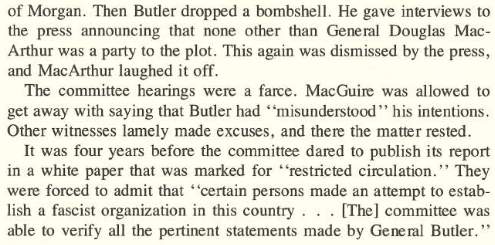
30m Financed by Wall Street to Fund US Vets to Revolt

From a new article aptly named “Why is so little known about the 1930s coup attempt against FDR?” comes this spotlight on American history:

Butler’s reputation was impeccable. He got rousing ovations when he claimed that during his 33 years in the marines: “I spent most of my time being a high-class muscle man for big business, for Wall Street and for bankers. In short, I was a racketeer for capitalism.”

Butler later testified before Congress that a bond-broker and American Legion member named Gerald MacGuire approached him with the plan. MacGuire told him the coup was backed by a group called the American Liberty League, a group of business leaders which formed in response to FDR’s victory…

The putsch called for him to lead a massive army of veterans – funded by $30m from Wall Street titans and with weapons supplied by Remington Arms – to march on Washington, oust Roosevelt and the entire line of succession, and establish a fascist dictatorship backed by a private army of 500,000 former soldiers.

Butler then gave a speech and published a book called War is a Racket.

Obviously the plot failed, mostly thanks to Butler. Execution of the traitors was also avoided, as the article concludes.

FDR struck a deal with the plotters, allowing them to avoid treason charges – and possible execution – if Wall Street backed off its opposition to the New Deal. […] FDR calmly urged Americans to unite to overcome fear, banish apathy and restore their confidence in the country’s future.

That’s an odd retelling, as it emphasizes FDR’s optimism as an antidote to rise of fascism, which is obviously not even close to being rational.

My issue with the article is related to its analysis that FDR was a centrist/peacemaker with couched language. He seems far more clever than that to me, and being kind to fascists is a known bad idea. I think it was more a case of enabling the US mob to physically fight the fascists, holding the police back to prevent coddling fascists, and taking assertive control over the press to push a ridicule and shame campaign on the fascists… all of which are a very different world than what the US faces today, meaning effective tools will not be so similarly used.

FDR wisely kept a distance and leaked the whole plot to the press, for example, generating a public tone of ridicule and making such a plot seem absurd (which tends to be kryptonite to fascism).

When an infamous show-boating General MacArthur was correctly fingered by Butler, MacArthur necessarily “laughed it off” to defend his already shaky reputation (as documented in Higham’s 1983 book “Trading with the Enemy, The Nazi — American Money Plot 1933-1949” page 164).

Others also wrote about this in detail long before now, such as Jules Archer back in 1973 including a long interview.

.. Sentinels of the Republic, financed chiefly by the Pitcairn family and J. Howard Pew. Its members labeled the New Deal ‘Jewish Communism’ and insisted ‘the old line of Americans of $1,200.00 a year want a Hitler’. […] Jules Archer sets forth some of the journalists who worked to expose the coup: Philadelphia Record journalist Paul Comly French (assigned to help cover the story as it was being revealed by General Butler); George Seldes (the venerable anti-fascist writer whose work has been accessed by Mr. Emory for decades, Seldes was an early and prolific writer about the coup attempt); John L. Spivak (another early anti-fascist writer who revealed that the report of the McCormack-Dickstein Committee contained key omissions about the coup plot). Sadly, the mainstream media did not give effective coverage to the coup attempt—in fact they helped to cover it up. Jules Archer cites The New York Times and Time as two of the many publications that exercised willful censorship of the coverage of the coup plot. It is also worth noting that American academia has also remained largely oblivious…

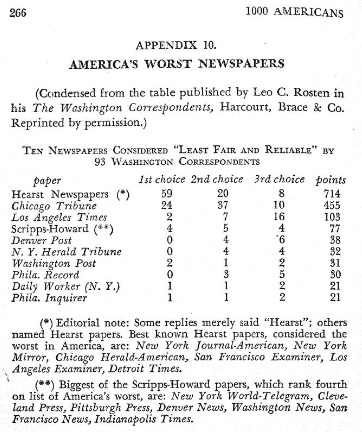
George Seldes famously wrote about Butler, the press and this coup in his 1947 book called “One Thousand Americans“, highlighting the significance of FDR taking on Hearst’s pro-Nazi empire, establishing the FCC and breaking the grip of platform monopolies that poisoned American news markets.

Source: One Thousand Americans

Details of an oligarchic group attempting the coup, and what worked best, unfortunately are still sketchy at best since the Congressional committee charged with investigating… purged large amounts of the records. I guess you could say it was kind of like how President Bush behaved deleting tens of millions of records between 2003 and 2009.

We mostly know the 1933 coup plot was foiled by heroism of Butler, who already was regarded as an American hero many times over. And yet the key plotters walked away unscathed and went on to continue the fight. The BBC accounting, for example, allege the Bush family (Prescott Bush, father of George) was heavily involved with promoting fascism and backing a coup en route to seating two generations of their family in the White House.

Related: “The US Coup Was 2016

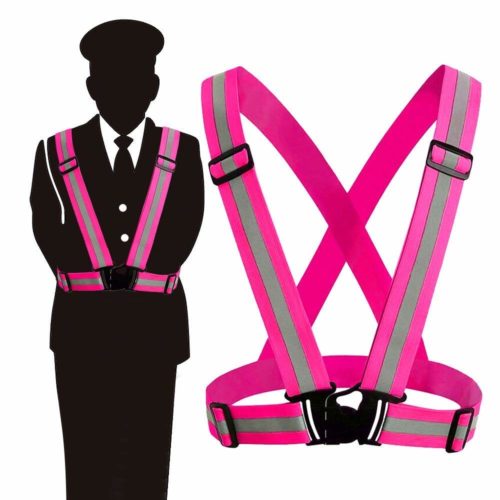
If a color (pink) helps safety, why don’t motorcyclists wear it?

It always surprised me that men’s motorcycle safety equipment didn’t come in the color pink. Baker-Miller pink, for example, has been alleged to reduce aggression.

Baker-Miller pink is a color named for two US Naval officers who first investigated the influence of that specific color. Baker-Miller pink was originally produced by mixing one pint of outdoor semi-gloss red trim paint and one gallon of pure white indoor latex paint (cf. Schauss, 1979). Presumably, the visual processing of the Baker-Miller pink affects neurological and endocrine functions, which in turn reduce physical strength, and thus aggressive behavior (cf. Ott, 1979; Pellegrini, Schauss, & Miller, 1981).

Here it is.

Do you feel calmed?

Does anyone really think two military men experimenting with shades of a color long associated in the west with male aggression (red) discovered a way to reduce aggression by diluting it?

The tint was, in fact, often considered more appropriate for little boys because it was seen as a paler shade or red, which had “masculine,” military undertones.

Regardless of that science about reducing violence by making a color less dark (dubious, it turns out), it’s still fair to say pink is extremely visible as documented in other research.

“Our study determined red-pink high visibility colours, less common in nature, could be searched for without false warnings using our system. The downside of this was some colour-blind workers had difficulty distinguishing pink. Subsequently, a multi-coloured solution including both yellow-green and red-pink may be recommended,” he says.

Studies in England further support the idea that yellow is all-too-common a color in their culture already to make it stand out as a personal safety device.

The results are interesting in that they show the previously held assertion that a bright reflective jacket will improve rider conspicuity may not always be true …

[T]he message seems to be that the most conspicuous outfit will be dictated by the lighting conditions and local environment at the time, which may be extremely variable within the confines of even a fairly short ride.

The studies conclude here that “standing out” is the definitive way to draw attention. Pink, thus, is very visible and almost never found in the kind of high-traffic landscape where motorcyclists are subjected to constant threats.

Go on, search for pink motorcycle gear for men, however. There’s nothing, not a thing, to be found. It’s almost so obvious as the best option, it’s even unavailable making it an even better one. But maybe that will change soon and we’ll return to the past

There’s a shared recognition that pink can be pretty and powerful, feminine and feminist. Men are turning to it, too — as (they did) in the 18th century.

War Pigs

by Black Sabbath from their 1970 album Paranoid

Generals gathered in their masses
Just like witches at black masses
Evil minds that plot destruction
Sorcerers of death’s construction
In the fields the bodies burning
As the war machine keeps turning
Death and hatred to mankind
Poisoning their brainwashed minds

Oh lord yeah!

Politicians hide themselves away
They only started the war
Why should they go out to fight?
They leave that role to the poor

Yeah

Time will tell on their power minds
Making war just for fun
Treating people just like pawns in chess
Wait ’till their judgment day comes

Yeah

Now in darkness world stops turning
Ashes where the bodies burning
No more war pigs have the power
Hand of God has struck the hour
Day of judgment, God is calling
On their knees the war pig’s crawling
Begging mercy for their sins
Satan laughing spreads his wings

Oh lord yeah!

It’s fascinating to reflect back on how a young cold-sober god-fearing band were writing an obvious anti-war pacifist song, which was interpreted as being the exact opposite and attacked viciously by white American “Christian” groups.

The band’s “innovative” sound borrowed heavily from a long tradition of “wailing” in American blues.

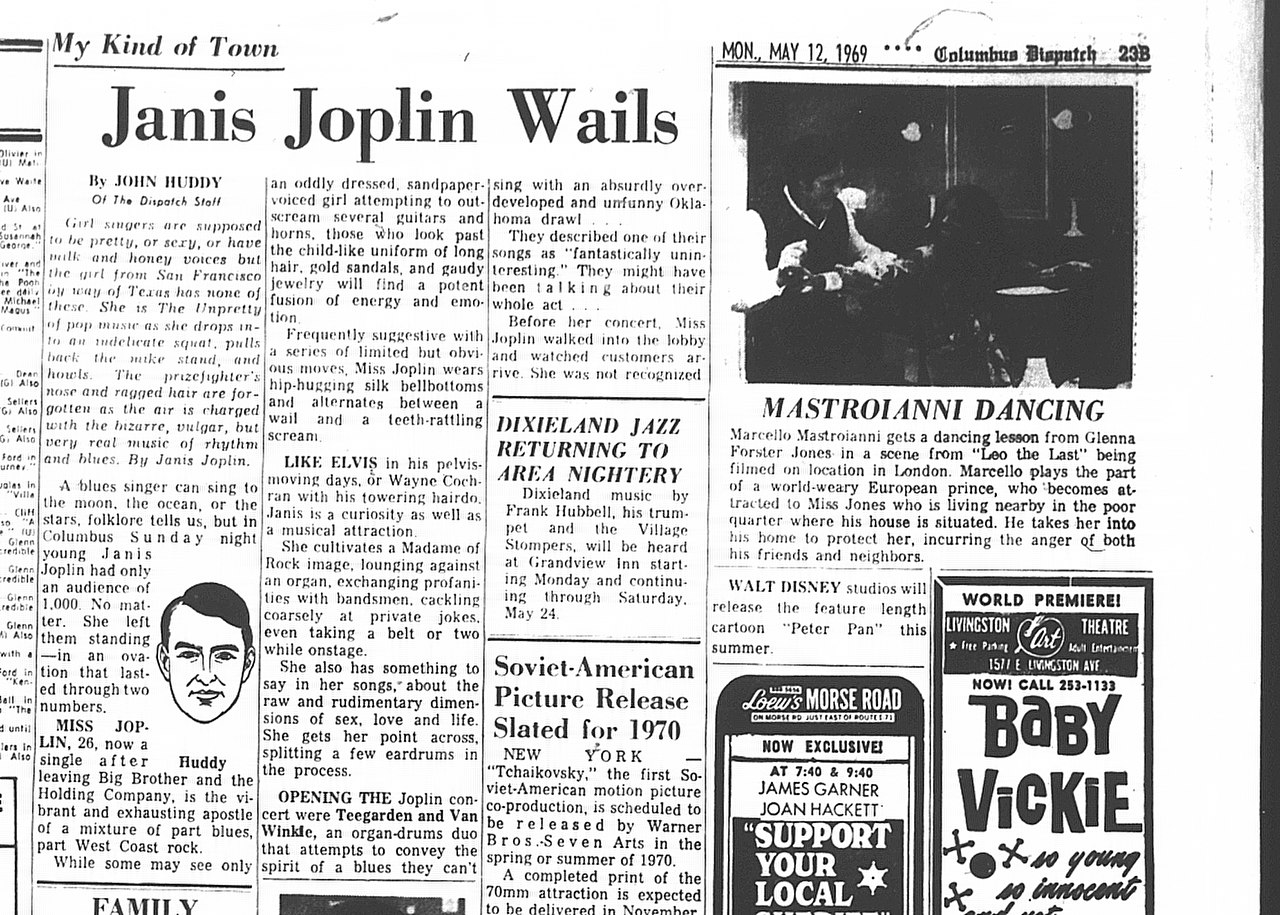
Consider, for example, how famous and controversial Janis Joplin was already for using a loud and raw screaming style that “scared” people. The following rough newspaper review of Joplin is from 1969, labeling her whitewashed blues style with very prototypical “metal” language an entire year before Black Sabbath released even their first song.

Click to read entire review

Clearly British musicians emulating American music would have seen an opportunity to capitalize on such a style to express their own “blues” of that time.

Black Sabbath’s bassist Geezer Butler explained in a 2010 interview in Noisecreep that he was keying into British working class themes of protest against inequality and powerlessness.

Noisecreep: It’s no secret that you guys drank a lot and experimented with all sorts of drugs. Did that contribute to the creative vibe on Paranoid?

Butler: No, because we really weren’t doing anything back then besides sharing the occasional joint. We couldn’t afford it. We couldn’t even afford booze, so none of us were drinking yet. The music we were making was more a reflection of what we were thinking and experiencing at the time. We weren’t into flower power and good vibes. That was crap to us, because from where we were, everything was bleak and dark. […] We were four working class people in the most industrial part of England, and all we had to look forward to was dead-end jobs in factories. And we thought at any second we’d be called up to drop in to the Vietnam War, because it looked like Britain was going to get involved in it as well. So there wasn’t much future in anything for us.

Butler goes on to explain it was an anti-war protest behind this particular song.

The song was written as ‘Walpurgis,’ which sounds a little like ‘War Pigs.’ But ‘Walpurgis’ is sort of like Christmas for Satanists. And to me, war was the big Satan. It wasn’t about politics or government or anything. It was evil. So I was saying “generals gathered in the masses/just like witches at black masses” to make an analogy. But when we brought it to the record company, they thought ‘Walpurgis’ sounded too Satanic. And that’s when we turned it into ‘War Pigs.’ But we didn’t change the lyrics, because they were already finished.

In an interview from 2015 Butler even doubles-down on his religious upbringing and pacifism.

I was brought up strictly Catholic and I guess I was naïve in thinking that religion shouldn’t be fought over. I always felt that God and Jesus wanted us to love each other. It was just a bad time in Northern Ireland, setting bombs off in England and such. We all believed in Jesus — and yet people were killing each other over it. To me, it was just ridiculous. I thought that if God could see us killing each other in his name, he’d be disgusted.

At this point I have to mention how the latest research on WWI based on documentary evidence suggests that British troops sometimes reported that being sent into outdoor killing fields was an improvement over being drafted into the slow, agonizing programmed death of the class-enforced loneliness and toxicity from indoor factory work.

I am definitely not saying Black Sabbath members would have been happier being drafted into the Vietnam War instead, just that the recorded misery of British life was severe enough some before them even called it a life worse than trench warfare.

Black Sabbath was singing the blues.

War Pigs thus fits quite simply as another anti-war blues song, drawing from the brash “wailing” style of guitar licks and screaming voice popularized decades before in America. Here are some obvious examples from the mid-1960s:

Black Sabbath (who found their band name upon noticing long lines of people trying to get into a 1963 Italian horror film called Black Sabbath) inventively drew from old American blues styles, added Italian horror film marketing, and then wrote lyrics of British mysticism and a post-world-war trend of the youth very intentionally and directly trying to shock a culture trained to not be shocked (given horrors of war) — force audiences to notice and have any kind of reaction.

It was the opposite and arguably more potent method than “hippie” group shame tactics in Lennon’s 1969 syrupy anti-war blues piece “Give Peace a Chance“.

A sardonic Joy Division in 1979 bridged these two styles when they ripped Black Sabbath’s guitar solo to put it into their passive negative sentiment song called New Dawn Fades.

All that being said, Butler wrote the War Pigs lyrics so we have to take his word for it (pun not intended) when he explains the true meaning and motives.

In a SPIN interview from 2013 you can even read why the religiously suggestive word “masses” was repeated at the start.

SPIN: For some reason in “War Pigs,” it always bothered me that you rhymed “generals in their masses” with “just like witches at black masses.” Why use “masses” twice? Did you try to think of a different word?

Butler: I just couldn’t think of anything else to rhyme with it. And a lot of the old Victorian poets used to do stuff like that — rhyming the same word together. It didn’t really bother me. It wasn’t a lesson in poetry or anything.

And as a final thought on musicians borrowing, Ice-T was perhaps being ironic when he sampled War Pigs in his far more poetic 1987 song “Rhyme Pays” (1:50 guitar riff).