Category Archives: History

It’s Time To Get History Accurate About Power in Silicon Valley

In a new article called “It’s Time To Get Real About Power in Silicon Valley“, I noticed much of the history is very wrong.

For example, this is false history:

Travis Kalanick who saw taxicab drivers not as solid middle class citizens, like many of us mistakenly did, but as a cabal of overpaid, rent-seeking obstacles.

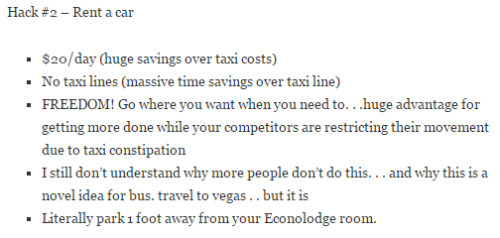
Kalanick himself said he was standing in line in Las Vegas and wondering why he didn’t have an inexpensive driver that would shuttle him from his cheap hotel so he could drink excessively on the strip and at parties he was crashing. His whole fratbro vision was how to recreate his mom driving him everywhere forever. None of that had anything to do with taxis really, which he didn’t think about or understand at all except to complain about waiting for them and compare it to his bowel movements.
And this is false history too:

…skinny nerdy guy who just wanted to sell us books over the computer…

That is not how to describe Bezos who himself said he wanted to corner book markets using unregulated tech because he was losing in a competition with Bernie Madoff to be the worst human.

But perhaps worst of all, the article willingly weaves an Emerson quote into a profile without any context. Thiel quotes Emerson deliberately and for a reason, not as some random thing.

Emerson is well known among white nationalists as their guy. You want to get real about Thiel, admit his thirst for power ties directly to history of white nationalist aspirations.

These men are privileged white men who enter tech to maintain and expand their privilege. This has nothing to do with Silicon Valley (Bezos isn’t even in Califorina, duh) and everything to do with history of colonization.

I like this 2017 article much better:

The men of Silicon Valley like to pose as more empathetic, philosophical and righteous than their brothers on Wall Street. But society will no doubt look back on the ascendancy of fratbro tech and see the same arrogance, perversion and disregard for human life.

And here’s another good one:

Is there a difference in suicides and workers conditions at Foxconn and Uber drivers complaining they can’t make a living wage? It’s hard to argue on a human level.

Once we get the history right, such as Stanford’s legacy being genocide, stories like this one become easy to predict:

Verkada isn’t the only Silicon Valley startup in which employees — often young, single and flush with cash — have engaged in questionable behavior, including sexual misconduct and substance abuse. But Verkada sells security cameras that peer into offices, factory floors, intensive care units and other sensitive areas — the kind of product that demands professionalism and discretion.

Based in San Mateo, Verkada was founded in 2016 by three computer science graduates from Stanford University…
Homeland isn’t an American Word

The British Government has announced their Home Office will have a Director General for Homeland Security.

Some in the UK reacted by saying it sounds American.

Nice try.

I thought everyone knows that America most definitely gets most of its English terminology for security from… wait for it… England.

I mean who has a Home Department, or a Home Secretary for the Home Office? Not America.

The Voice of America (VOA) explained this exact problem years ago in a story called “Are You in the Homeland Generation?” on their “Learning English” channel:

Historically, the Old English word hamland meant “enclosed pasture” — a protected field for animals. The word homeland first appeared in Modern English in the 1660s. It combined the nouns “home” and “land.”​

But a deeper look at how the word homeland was used outside of the U.S. shows why some people are not comfortable with it. The government of South Africa used the word homeland for areas it created for only African peoples during the period of apartheid. These “homelands” separated the Africans from white citizens.​

Friederike Eigler is a professor of German at Georgetown University. She said that in Germany in the late 19th and early 20th centuries, people used a similar word to homeland – heimat – to express intense national pride.

“It became more and more a political term because it was sort of meshed up with ideas of the nation and nationalism. And then that kind of came to a head during World War II. It became very much tied up very much with notions of the German race, and the nation, nationality or national socialism, and so in that sense it got very discredited as a result in the postwar period.”

In the early 2000s, when the U.S. government created the Department of Homeland Security, some objected to the name. Peggy Noonan writes for the Wall Street Journal. She thought the Bush administration should change the name. She said homeland “isn’t really an American word.”​

James A. Bartlett blogs for The Ethical Spectacle. He thinks the problem is that the word homeland has to do with the idea of being a native. He quotes the second Merriam Webster definition of homeland: “a state or area set aside to be a state for a people of a particular national, cultural, or racial origin.”

Mr. Bartlett believes the word homeland does not describe the United States well. The U.S. is a diverse country of immigrants. Are those immigrants also able to call the U.S. their homeland?​

Speaking of people being confused about where words come from, machines are also pretty terrible at this.

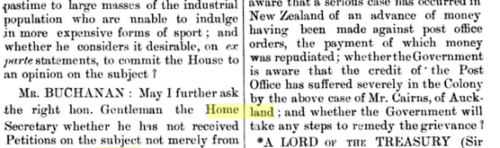
A simple query for the word “homeland” using Google’s algorithm on British government archives brings up this hilarious example: “Home Secretary” [many paragraphs later] “Auckland”

Source: Google query of Hansard’s Parliamentary Debates

KGB Spy in 1961 Used X-Ray to Crack U.S. Top-Secret Lock

In 1961 the U.S. used their top spy in Moscow to deliver extensive details of the Soviet nuclear program:

In tandem with the CIA, MI6 were in the midst of running their most successful espionage operation to date. A colonel in Soviet military intelligence, Oleg Penkovsky, was working for them as an agent-in-place, photographing thousands of top-secret documents with a miniature camera, and delivering the resulting microfilm in disguised packs of cigarettes and boxes of sweets to Chisholm’s wife Janet, at cocktail parties, parks and other locations around the city.

Some describe these massive disclosures from deep within the Soviet military (by a man who turned on his country after being denied a promotion) as a primary explanation for averting disaster in the Cuban missile crisis:

The CIA’s chief analyst during the crisis, Ray Cline, later told historian Christopher Andrew that Penkovsky’s intelligence was vital to its resolution, as it allowed the agency to “follow the progress of Soviet missile emplacement in Cuba by the hour.”

Just as the global nuclear missile crisis ended on October 22, 1961 Penkovsky was arrested by the KGB.

The next chapter to this story isn’t what you might think.

It actually becomes how the Soviets at that time had established a top spy in Paris, who was delivering extensive details of the U.S. nuclear program in Europe. In October 1961, as Penkovsky was shut down, the Soviets pushed an American mole for deeper access.

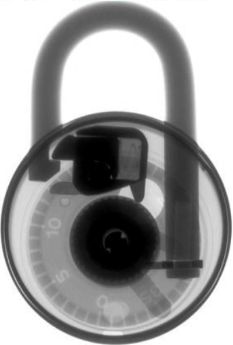
In late 1961 [Robert Lee Johnson] received the top-secret clearance and was admitted into the vault as a clerk. At long last the KGB was in. […] Over the following weeks the infiltration began in earnest as he successfully copied the vault keys using clay molds supplied by KGB operatives. In October of 1961 he received a specially manufactured X-ray device from Moscow that he was instructed to place over the final lock in the vault; KGB technicians could then deduce what combination unlocked the vault by studying the cogs inside the locking mechanism.

This spy was from within the U.S. military; “an embittered bureaucrat with a grossly inflated sense of self-worth”, and like Penkovsky a man who turned on his country after being denied a promotion (not to mention being named after a traitor in the military who defected and fought to destroy the U.S. — Robert Lee).

On 15 December 1962, Johnson accessed the vault for the first time and looted its contents. The operation, extensively rehearsed beforehand, went exactly as planned and by 03:15 the following morning some of America’s most sensitive cryptographic and military information⁠—some of it classified higher than top secret⁠—was on its way to Moscow. The treasure trove of information proved so valuable that the KGB decided to reward Johnson with a bonus of $2,000 and the rank of honorary Major in the Red Army. The information⁠—rumored to include the numbers and locations of US nuclear warheads in Europe⁠—was deemed so important that it was presented to Comrade Khrushchev himself.

While there are plenty of stories of Johnson using a vaguely described radioactive device, I’ve found so far almost no documentation or details. Explanations of the Soviet portable X-ray design that cracked a top-secret lock seems obscure, and probably intentionally.

Allegedly the first lock was cracked by making a wax impression of the key, the second lock had a combination written on paper that someone left in a trash can. These are routine weaknesses. The development in October 1961 of an X-ray to crack the third and final lock for U.S. top-secret files is by far the most interesting, especially given the timing, and yet very little record at all has been made available.