Category Archives: History

The Doritos Conspiracy

As I am sure many of you know, a racist white male executive at Disneyland “created” Doritos to crush the Hispanic local tortilla chip inventor (Rebecca Carranza) and drive her family business under.

The headline in Popular Mechanics magazine saluted a manufacturing triumph in Los Angeles: “Tortillas Meet the Machine Age.” It was 1950, and the El Zarape Tortilla Factory, among the first to automate the production of tortillas, had used a tortilla-making machine for three years.

Corn and flour disks poured off the conveyor belt more than 12 times faster than they could be made by hand. At first many came out “bent” or misshapen, as company President Rebecca Webb Carranza recalled decades later, and were thrown away.

For a family party in the late 1940s, Carranza cut some of the discarded tortillas into triangles and fried them. A hit with the relatives, the chips soon sold for a dime a bag at her Mexican delicatessen and factory at the corner of Jefferson Boulevard and Arlington Avenue in southwest Los Angeles.
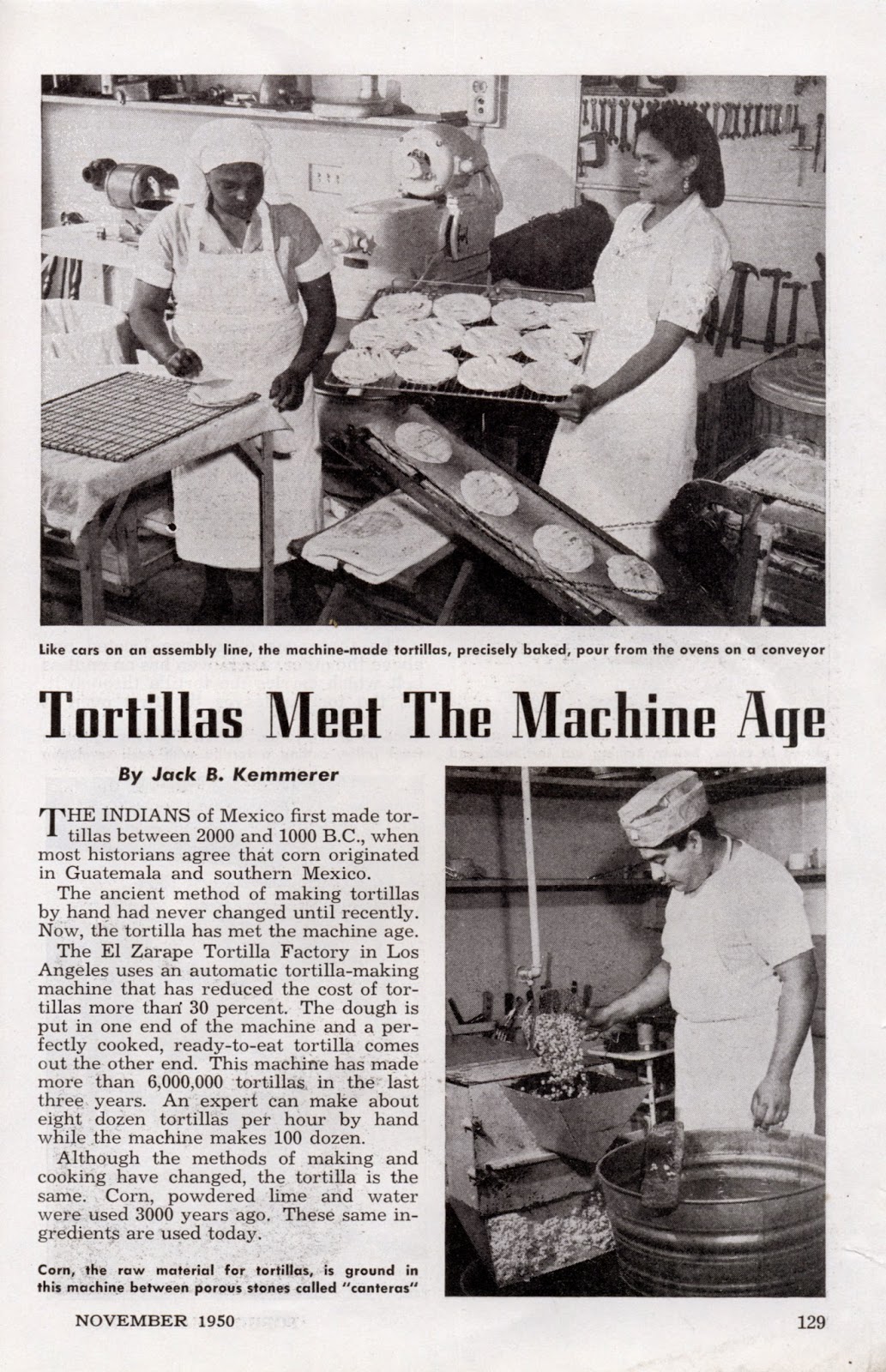
El Zarape 1950s Tortilla Factory in Los Angeles

Ok, let’s be honest. Nobody talks about her or how Disneyland crushed her with intention.

Here’s the Disneyland side of the story just so we’re clear here about racism and appropriation of others’ ideas:
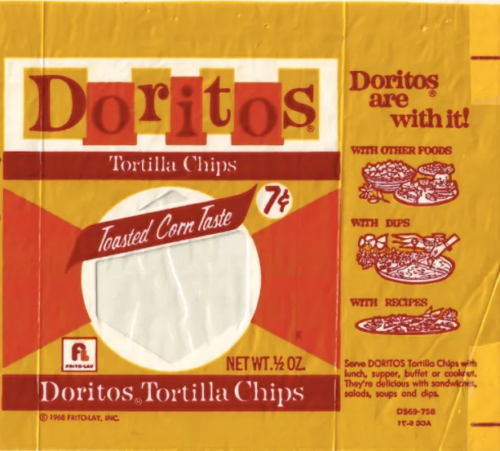
1968 Doritos bag

When Disneyland opened [in 1955], it featured a Mexican(ish) restaurant called Casa de Fritos run by the Frito company. It was on New Orleans Street, near another product-placement eatery: Aunt Jemima’s Pancake House. It at the Casa de Fritos that the beloved Dorito was invented. Yes, really. Arch West, the Frito (later Frito-Lay) marketing executive credited with the product’s creation, died in 2011 and was buried with a layer of his tasty legacy sprinkled over his ashes. The Dorito legend varies: one version has it that West discovered tasty tortilla chips at a roadside stand…

The Frito Company “Mexican(ish)” restaurant was NEXT TO AUNT JEMIMA?!

Need I say more about Disneyland executives?

So in 1964 West was running Frito’s “Mexican(ish)” amusement park feature in “Frontierland” and he “discovered” tortilla chips at someone else’s stand that had been popular in Los Angeles since the late 1940s.

He was on a family vacation in Southern California in 1964 when he first bought a grease-smeared bag of toasted tortillas at a roadside shack.

That’s a quote from the Washington Post obituary for Arch West, which apparently didn’t think twice about writing “grease-smeared” to describe Hispanic-Americans (historically a very derogatory term used by racist lynch mobs as well as California legislators who in a 1855 “Greaser Law” criminalized “Spanish and Indian blood”).

West shamelessly copied the Carranza product and gave no money or credit to the inventor, let alone the stand.

Shameless appropriation.

But wait, let’s go back a step into Frito Company history where West was an executive.

Frito was a company started by a white man who “discovered” corn chips made and sold by someone else.

In 1932, C.E. Doolin entered a small San Antonio cafe and purchased a bag of corn chips. After learning the manufacturer was eager to sell his business, he bought the recipe and started making Fritos corn chips in his mother’s kitchen.

Do you believe Doolin “bought the recipe”?

I mean did Doolin while living with his mother and selling depression-era ice cream really fork out $100 in the middle of the great depression ($1500 today) for the recipe from his former boss (contrary to the story he just happened upon a newspaper ad, or just walked into a cafe one day)?

…purchased from Gustavo Olguin, a Mexican-American restaurant owner in San Antonio, where Doolin had worked as a fry cook. Olguin’s “fritos” (the name came from the Spanish word frit, meaning fried) were small fried corn chips made from masa dough. Doolin bought the recipe, Olguin’s hand-operated potato ricer, and nineteen customer accounts for the snack, all for $100.
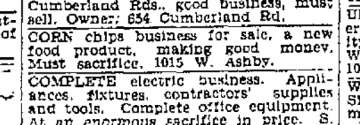
And what made Gustavo Olguin rush to sell his “corn chips” business, hand over all his paying customers and flee to Mexico just as chips and snack foods were becoming widely popularized?

This sounds to me almost as bad as taking some 1812 European fairy tale and putting a copyright on it, or taking some 1843 European amusement park and building a copy of it… but I digress.

Fast forward to today, the genius of Carranza’s tortilla automation machines and her invention of mass-produced tortilla chips are obscure at best for Americans, yet everyone can recognize Doritos.

Now a member of the insurrection against the US has raised a stir by supposedly wearing Doritos on his lapel.

A fabricated image was used to incorrectly accuse him of wearing a “Q hate symbol“… or is that correct, even tangentially?
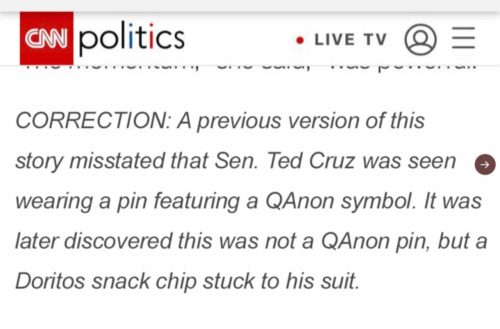
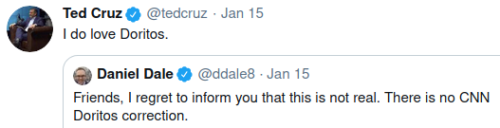
The “I love Doritos” response by the accused, instead of letting a correction of a correction stand on its own, perhaps clarifies everything.
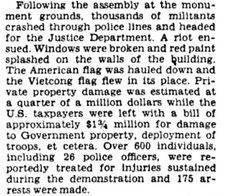
26 Capitol Police Officers Were Injured by Militants… in 1969

People keep saying Washington DC violence from militias is a new thing to prepare for, yet who remembers 1960s and early 1970s saw repeated attacks on US capitol by violent domestic groups?

The FBI records have details of the groups involved, including one that used bombs on Capitol Hill, and how they were defeated (presumably then fading from memory).

…credit for 25 bombings—including the U.S. Capitol, the Pentagon, the California Attorney General’s office, and a New York City police station.

Hearings by United States Congress, House Committee on Post Office and Civil Service in 1971 give a pretty succinct description:

What Pinwheel Isn’t a Swastika?

Update 2023: Twitter has been rebranded to a swastika.

This artist’s rendering of the Twitter rebrand was deleted from the platform by the self-promoting “free speech extremist” Elon Musk. Source: Ai Wei Wei

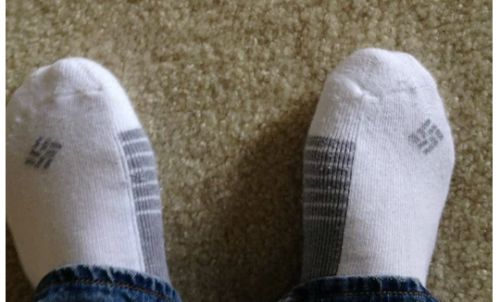
I’ve been asked, perhaps in jest by those reading my SS blog post, whether the Columbia pinwheel logo is a swastika because it has four quadrants (it’s not).

…founded in 1938 [a year after largest shirt factory owners Paul and Marie Lamfrom were forced to escape Nazi Germany], used a simple wordmark until the introduction of the geometric emblem in 1978 [by Gertrude Boyle, daughter of Lamfrom and wife of Columbia President who died suddenly]. It was a rhombus, composed of eight equal rectangles, which aimed to represent the woven textile.

It should be noted here that 1978 was a year after a company named Pinwheel was founded to create children’s television.

Two years later this Pinwheel company was renamed to Nickelodeon (as you probably would recognize it today). Columbia however kept the pinwheel logo of the same origin year.

I mean what if Gertrude, like a lot of people in the late 1970s including that children’s TV network, thought that pinwheels meant freedom, fun and pretty things? And what if she wanted to convey woven threads, so she gave her pinwheel a textile look? Seems kind of common sense.

Here are some other similar examples:

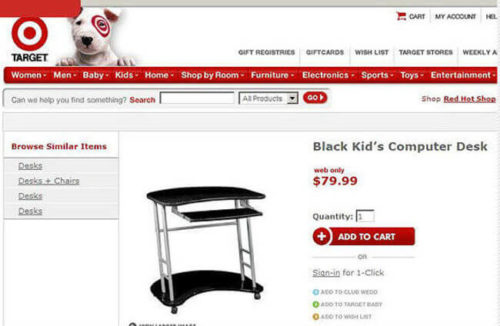
What we see may be little more than accidental framing. And that reminds me of the many examples of unfortunate errors, such as this infamous one by Target.

Unfortunate. Kind of like ASSlaw.

Arguments against my common sense claim go something like this: from certain angles and in exceptional cases the Columbia pinwheel could in fact resemble a swastika, such as when poorly knitted.

Here’s someone clearly shocked to realize just how bad Columbia manufacturing (or doctored images) can get — and hopefully nobody really wants to argue here low quality and sloppy knits are carefully planned by a textile company:

Source: random Reddit user

It’s a terrible outcome, yet I maintain this is far too apocryphal for people who fled Nazi Germany to restart their lives and rebuild the same business in America… their daughter to then use the symbol of her parents’ persecutors as their logo, which shows when product quality declines.

She may have been unintentionally influenced by her parents’ pain of survival under swastikas, or intentionally influenced through the pleasure of pinwheels; in either case or even both I see nothing yet to justify the case she wanted to spread Nazism through inexpensive low-quality white socks.

Dare I say… it’s a stretch.

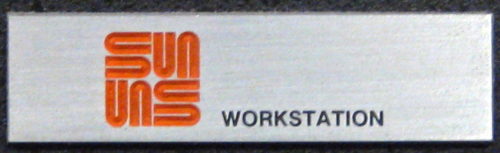
I mean that’s a bit like asking me if every inexpensively made (unpredictable outcome) single pinwheel or rotational quadrant we see (common design in history) is a swastika. For example, here’s the Stanford-born Sun Microsystems logo in 1982. Hard not to assume he designed this while staring at the Columbia logo on his socks.

Sun’s “rotational symmetric ambigram” credited to Stanford professor Vaughan Pratt.

And here’s another Stanford-born technology company logo (Google).

I’ve roundly criticized Stanford, yet I do not see in any way how these pinwheel logos of theirs symbolize that school’s genocidal heritage.

In that context, some symbols are just so obviously obvious (and meant as such) we shouldn’t even have to discuss them.

Clint Watts today tweeted a report to Telegram worth mentioning:

.@telegram – there’s an issue on your platform, a channel posing as the President (presumably a fake or hacked account) is inciting violence and advocating that Biden should be killed. The channel has >350K members. Might want to take a look. (trump_33)

33 means the KKK, as documented in federal trial for 33 year old Alexander DeFelice.

“The eleventh letter of the alphabet is K,” Nill told the jury explaining that “three times 11 is 33.”

It’s not a swastika, it’s as bad or worse because of context.

That 33 alone should have been the red flag loooooong before inciting violence and advocating death started to flow, and even before it had followers.

This isn’t rocket science.

In a similar vein, hate groups in America are waving flags and using symbols that very clearly show intent to do harm.

It’s illegal. So why aren’t they being arrested?

Armed ‘militias’ are illegal. Will authorities finally crack down…? 29 states have criminal statutes outlawing private militias…. These laws have been tested in the Supreme Court dating back to 1886…

It’s not that hard to see where this line is drawn and when speech is not protected in America. Don’t believe anyone who says speech is unrestricted. That is false and the courts have said so many times in conviction of criminals trying to hide behind speech laws.

We’re way past the time to reject the platitudes of seemingly incompetent big tech security officers who’ve argued that telling them to block imminent harms makes their product Orwellian.

Not having power sure can suck. We should aim to keep power flowing unless we’re talking about being killed by power. Then shut it down BEFORE the killings.

…his company had been able to limit ISIS’ use of their network, technical and legal reasons meant they couldn’t apply the very same measures to far-right extremists. But after several more social media-linked mass killings — Christchurch, El Paso, etc. — what he’d said was “impossible” suddenly became possible.

It’s why we have ground fault circuit interrupts (GFCI), amiright?

…trip quickly enough to prevent an electrical incident.

When a trump_33 comes down that pipe… interrupt. Again, this stuff is not rocket science.

The TL;DR on Parler

Dave Troy provides a long thread on Twitter explaining the roots and objectives of Parler, a technology platform. He also boils it all down to this single Tweet:

Non-descript tech bro randomly meets ostensible Russian honeypot, travels to Russia, marries her, then returns to US to start a whacko social network with explicit political aims, in partnership with Russia aligned ops…

This should have been the description in the app store, along with a note that it’s funded by:

…conservative hedge-fund investor Robert Mercer and his daughter Rebekah.

This data also should be presented to anyone claiming they both care about censorship yet also demand their views be posted by others, as these are quite contradictory; sentiments the Russian military intelligence plays upon.

Baseless demands to have one’s own views posted on someone else’s site tends to bring to mind the openly pro-Nazi organization in 1933 called Friends of New Germany. Led by a man named Spanknoebel, he was tasked by Nazi Germany with merging older organizations of Gau-USA and Free Society of Teutonia. They then engaged in violent anti-freedom activities such as physically attacking a German language New Yorker Staats-Zeitung with… demands that pro-Nazi views and pro-Hitler propaganda must be published.

“We must succeed, for heaven is with us,” Spanknoebel declared in his address. “We have honest men for leaders. There are no pogroms in Germany, but the Hitler regime is showing us an entirely new way of dealing with the Jewish question.” […] Spanknoebel assailed the proposed Dickstein investigation bitterly and placed Hitler on a parallel with President Roosevelt for leadership. Dr. I. T. Griebel, president of the local branch of the Friends of the New Germany, attacked Bernard Ridder, publisher of the New Yorker Staats Zeitung….

Trouble at the meeting had been freely predicted for several days.

Hopefully everyone can see freedom of speech does not in any way mean the right to violently attack a publisher and demand they publish pro-Nazi propaganda, which has been tried before in America and fortunately failed.

And going to Parler does not in any way mean supporting freedom of speech. That just sounds to me like a repeat of when radio broadcaster in the late 1930s Paul Ferdonnet exiled himself to Nazi Germany.

After WWII ended he was tried, convicted and executed by France as a war criminal. His allegiance was with personal power and hate, not his own country, population or its democratic institutions.