A company that once pitched itself as extraterritorial now measures success by how deeply it is wired into national jurisdictions. That’s a notable political shift from seeing itself as literally above the law to trying to become the law.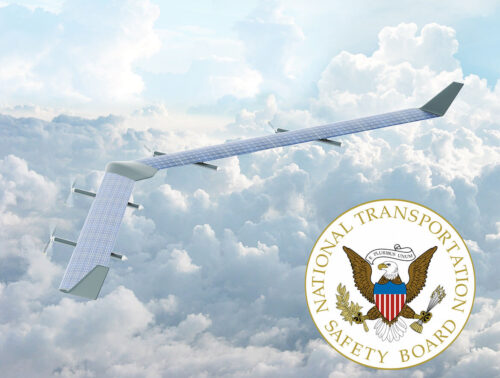
Many years ago I was invited into a high security meeting enclave on the Facebook campus. After multiple physical security checks and pat-downs, and being escorted into the room, I found myself among ex-military advisors plotting “Aquila” drones. It was 100% clear that Facebook delivering “Internet” over contested ground from a neighboring country was privatized military intelligence. I couldn’t get out of there and take a shower fast enough.
I called it intelligence collection by elevated platform in 2018, three months after Facebook shut the program.
As those Air Force mercenaries soon discovered the drones were never above the law, and Facebook in 2016 had failed politically before Aquila ever finished a test flight.
I’m not a lawyer but sovereign airspace has no altitude ceiling. The U-2-reminiscent platform operating at 90K feet still needs the same national spectrum license as a tower on the ground. Ask me why the extremist libertarian Silicon Valley nuts still talk about “data centers in space”. A mythological “wild West” of unconstrained rootin’ tootin’ ruthless John Wayne power is driving them, as depicted by Anwar Congo in “The Act of Killing”. Anyway, the ITU identified spectrum for high-altitude platforms, and every country licenses that spectrum on its own terms. India’s regulator proved the point in February 2016 by banning Free Basics on zero-rating grounds. Nothing physical had to be contested when Facebook lost its unregulated power aspirations at a licensing layer.
Four months later Aquila’s first full-scale flight ended in a structural failure on final approach near Yuma, flying without an airworthiness certificate, and the second flight in 2017 did not solve the underlying problem, which also stalled Zephyr: a solar airframe cannot carry a useful payload and survive the night at anything but equatorial latitudes. Loon, the balloon program, closed in January 2021 when Alphabet said no commercial case materialized (meaning the Pentagon backed out).
Inside the high walls of the Facebook campus it was like humanity didn’t matter, money-fueled madness made anything possible (e.g. Musk’s “occupy Mars” is a campaign to abolish laws and replace with an Emperor). Outside, the laws broke every power-hungry fantasy. That’s why Facebook shut the airframe program in June 2018 and said Airbus would build the aircraft instead (e.g. Tesla initially had Lotus build its cars to avoid itself having to operate within the law); and that partnership faded quietly.
Fast forward to today and Meta has announced an engineering nothing-burger.
We’re announcing Petal, the first subsea cable with petabit capacity to be deployed across an ocean. Petal will connect the US and France, spanning 7,000 km (over 4,300 miles) and doubling the capacity of today’s most advanced transoceanic cables.
The doubling isn’t surprising and comes from two-core fiber rather than more strands, which is why the announcement leans on “without proportional power or infrastructure.” That is also a concentration-of-risk claim: same number of cables, same landing points, same Baltic and Red Sea failure modes, now carrying twice as much per cut.
The constraint has been voltage, not glass. So repeaters split each 2-core fiber into two single-core paths with a fan-in/fan-out interface, amplify, then recombine, which keeps the system under the existing 18 kV power-feed rating and avoids requalifying the whole subsea ecosystem. Meta doubled capacity by staying inside the old certification envelope.
Meh. Or should I say Meh-ta?
It is obviously foremost a cable for moving Meta’s own traffic between its US and EU data centers, increasingly AI training and inference, that seeks EU exposure and dependence on American compute. Read between the lines and it is a political science post, without much technical significance, dressed up as something novel that engineers did.
Meta stopped trying to route around states and started embedding in them instead.
It plans to land in France with Orange as landing party, which puts Meta inside French critical-infrastructure policy, inside French lawful-intercept obligations, and at the table when governments talk about cable protection. That is a far more politically durable position than hoping nobody touches an aircraft too fragile to survive its landing.
Colonization by cable is probably the right way to read the news, if you consider history. Paris learned what happened in the Fashoda Crisis of 1898 from a British telegram routed through Cairo, and when Britain censored the cables during the Boer War the next year, France started building a state-owned network to Africa.
The two major colonial powers sought to link their colonies via a vast railway network: Britain from Cairo to Cape Town, and France from Dakar to Djibouti. The town of Fashoda, situated at the intersection of these two planned lines, became a critical focal point for both armies. On September 18, 1898, Marchand’s French mission and Kitchener’s British expedition came face to face on the Upper Nile. Ordered to withdraw, France yielded and was forced to acknowledge British authority over the entire Nile basin. This defeat led to a redivision of African colonies between the British and the French.
What will Meta surveill and censor for Trump when the EU goes to war?
On the current cable at Le Porge Meta holds more than 80%, Orange gets two of sixteen fiber pairs for landing it, and the ownership split is not public.
Can you guess why it’s not public? On the US side the FCC landing license for Amitié went to Microsoft, and since 2020 the FCC refers cable landing applications with foreign ownership to a Justice Department-led committee that can condition the license on a national security agreement. Whatever the licensee agreed to in Washington is part of the deal France landed.
Petal goes to NEC and Sumitomo, two years after the French state bought 80% of Alcatel Submarine Networks to keep cable building sovereign, and seven years after the Senate warned in 2019 that these infrastructures must not be held exclusively by foreign entities.
France keeps one thing. Le Monde reported in 2014 from the Snowden files that Orange’s landing stations give the DGSE access to everything transiting the country, sorted by origin.
Meta owns the cable. France owns the landing and reads it. That is the same arrangement France rejected in 1898, with the tap as consolation, and good luck to France when it remembers why.