Category Archives: History

Where is the Revolution in Intelligence? Public, Private or Shared?

Watching Richard Bejtlich’s recent “Revolution in Intelligence” talk about his government training and the ease of attribution is very enjoyable, although at times for me it brought to mind CIA factbook errors in the early 1990s.

Slides that go along with the video are available on Google drive

Let me say, to get this post off the ground, I will be the first one to stand up and defend US government officials as competent and highly skilled professionals. Yet I also will call out an error when I see one. This post is essentially that. Bejtlich is great, yet he often makes some silly errors.

Often I see people characterize a government as made up of inefficient troglodytes falling behind. That’s annoying. Meanwhile often I also see people lionize nation-state capabilities as superior to any other organization. Also annoying. The truth is somewhere in between. Sometimes the government does great work, sometimes it blows compared to private sector.

Take the CIA factbook I mentioned above as an example. It has been unclassified since the 1970s and by the early 1990s it was published on the web. Given wider distribution its “facts” came under closer scrutiny from academics. So non-gov people who long had studied places or lived in them (arguably the world’s true leading experts) read this fact book and wanted to help improve it — outsiders looking in and offering assistance. Perhaps some of you remember the “official” intelligence peddled by the US government at that time?

Bejtlich in his talk gives a nod towards academia being a thorough environment and even offers several criteria for why academic work is superior to some other governments (not realizing he should include his own). Perhaps this is because he is now working on a PhD. I mean it is odd to me he fails to realize this academic community was just as prolific and useful in the 1990s, gathering intelligence and publishing it, giving talks and sending documents to those who were interested. His presentation makes it sound like before search engines appeared it required nation-state sized military departments walking uphill both ways in a blizzard to gather data.

Aside from having this giant blind spot to what he calls the “outsider” community, I also fear I am listening to someone with no field experience gathering intelligence. Sure image analysis is a skill. Sure we can sit in a room and pore over every detail to build up a report on some faraway land. On one of my private sector security teams I had a former US Air Force technician who developed film from surveillance planes. He hated interacting with people, loved being in the darkroom. But what does Bejtlich think of actually walking into an environment as an equal, being on the ground, living among people, as a measure of “insider” intelligence skill?

Almost three decades ago I stepped off a plane into a crowd of unfamiliar faces in a small country in Asia. Over the next five weeks I embedded myself into mountain villages, lived with families on the great plains, wandered with groups through jungles and gathered as much information as I could on the decline of monarchial rule in the face of democratic pressure.

One sunny day on the side of a shoulder-mountain stands out in my memory. As I hiked down a dusty trail a teenage boy dressed all in black walked towards me. He carried a small book under his arm. He didn’t speak English. We communicated in broken phrases and hand gestures. He said he was a member of a new party.

Mao was his leader, he said. The poor villages felt they weren’t treated well, decided to do something about it. I asked about Lenin. The boy had never heard the name. Stalin? Again the boy didn’t know. Mao was the inspiration for his life and he was pleased about this future for his village.

This was before the 1990s. And by most “official” accounts there were no studies or theories about Maoists in this region until at least ten years later. I mention this here not because individual people with a little fieldwork can make a discovery. It should be obvious military schools don’t have a monopoly on intel. The question is what happened to that data. Where did information go and who asked about it? Did others have easy access to data gathered?

Yes, someone from private sector should talk about “The Revolution in Private Sector Intelligence”. Perhaps we can find someone with experience working on intelligence in the private sector for many, many years, to tell us what has changed for them. Maybe there will be stories of pre-ChoicePoint private sector missions to fly in on a moment’s notice into random places to gather intelligence on employees who were stealing money and IP. And maybe non-military experience will unravel why Russian operations in private sector had to be handled uniquely from other countries?

Going by Bejtlich’s talk it would seem that such information gathering simply didn’t exist if the US government wasn’t the one doing it. What I hear from his perspective is you go to a military school that teaches you how to do intelligence. And then you graduate and then you work in a military office. Then you leave that office to teach outsiders because they can learn too.

He sounds genuinely incredulous to discover that someone in the private sector is trainspotting. If you are familiar with the term you know many people enjoy as a hobby building highly detailed and very accurate logs of transportation. Bejtlich apparently is unaware, despite this being a well-known thing for a very long time.

A new record of trainspotting has been discovered from 1861, 80 years earlier than the hobby was first thought to have begun. The National Railway Museum found a reference to a 14 year old girl writing down the numbers of engines heading in and out of Paddington Station.

It reminds me a bit of how things must have moved away from military intelligence for the London School of Oriental and African Studies (now just called SOAS). The British cleverly setup in London a unique training school during the first World War, as explained in the 1917 publication “Nature”:

…war has opened our eyes to the necessity of making an effort to compete vigorously with the activities — political, commercial, and even scientific and linguistic — of the Germans in Asia and Africa. We have discovered that their industry was rarely disinterested, and that political propaganda was too often at the root of “peaceful penetration” in the field of missionary, scientific, and linguistic effort.

In other words, a counter-intelligence school was born. Here the empire could maintain its military grip around the world by developing the skills to better gather intelligence and understand enemy culture (German then, but ultimately native).

By the 1970s SOAS, a function of the rapidly changing British global position, seemed to take on wider purpose. It reached out and looked at new definitions of who might benefit from the study and art of intelligence gathering. By 1992 regulars like you or me could attend and sit within the shell of the former hulk of a global analysis engine. Academics there focused on intelligence gathering related to revolution and independence (e.g. how to maintain profits in trade without being a colonial power).

I was asked by one professor to consider staying on for a PhD to help peel apart Ghana’s 1956 transition away from colonial rule, for only academic purpose of course. Tempted as I was, LSE instead set the next chapters of my study, which itself seems to have become known sometime during the second World War as a public/private shared intelligence analyst training school (Bletchley Park staff tried to convince me Zygalski, inventor of equipment to break the Enigma, lectured at LSE although I could find no records to support that claim).

Fast forward five years to 1997 and the Corner House is a good example of academics in London who formalized public intelligence reports (starting in 1993?) into a commercial portfolio. In their case an “enemy” was more along the lines of companies or even countries harming the environment. This example might seem a bit tangential until you ask someone for expert insights, including field experience, to better understand the infamous pipeline caught in a cyberwar.

Anyway, without me droning on and on about the richness in an “outside” world, Bejtlich does a fine job describing some of the issues he had adjusting. He just seems to have been blind to communities outside his own and is pleased to now be discovering them. His “inside” perspective on intelligence is really just his view of inside/outside, rather than any absolute one. Despite pointing out how highly he regards academics who source material widely he then unfortunately doesn’t follow his own advice. His talk would have been so much better with a wee bit more depth of field and some history.

Let me drag into this an interesting example that may help make my point, that private analysts not only can be as good or better than government they may even be just as secretive and political.

Eastman Kodak investigated, and found something mighty peculiar: the corn husks from Indiana they were using as packing materials were contaminated with the radioactive isotope iodine-131 (I-131). Eastman Kodak at the time had some of the best researchers in the country on its team (the company even had its own nuclear reactor in the 1970s), and they discovered something that was not public knowledge: those farms in Indiana had been exposed to fallout from the 1945 Trinity Test in New Mexico — the world’s first atmospheric nuclear bomb explosions which ushered in the atomic age. Kodak kept this exposure silent.

The American film industry giant by 1946 realized, from clever digging into the corn husk material used for packaging, that the US government was poisoning its citizens. The company filed a formal complaint and kept quiet. Our government responded by warning Kodak of military research to help them understand how to hide from the public any signs of dangerous nuclear fallout.

Good work by the private sector helping the government more secretly screw the American public without detection, if you see what I mean.

My point is we do not need to say the government gives us the best capability for world-class intelligence skills. Putting pride aside there may be a wider world of training. So we also should not say private-sector makes someone the best in world at uncovering the many and ongoing flaws in government intelligence. Top skills can be achieved in different schools of thought, which serve different purposes. Kodak clearly worried about assets differently than the US government, while they still kind of ended up worrying about the same thing (colluding, if you will). Hard to say who evolved faster.

By the way, speaking of relativity, also I find it amusing Bejtlich’s talk is laced with his political preferences as landmines: Hillary Clinton is setup as so obviously guilty of dumb errors you’d be a fool not to convict her. President Obama is portrayed as maliciously sweeping present and clear danger of terrorism under the carpet, putting us all in grave danger.

And last but not least we’re led to believe if we get a scary black bag indicator we should suspect someone who had something to do with Krav Maga (historians might say an Austro-Hungarian or at least Slovakian man, but I’m sure we are supposed to think Israeli). Is that kind of like saying someone who had something to do with Karate (Bruce Lee!) when hinting at America?

And one last thought. Bejtlich also mentions gathering intelligence on soldiers in the Civil War as if it would be like waiting for letters in the mail. In fact there were many more routes of “real time” information. Soldiers were skilled at sneaking behind lines (pun not intended) tapping copper wires and listening, then riding back with updates. Poetry was a common method of passing time before a battle by creating clever turns of phrase about current events, perhaps a bit like twitter functions today. “Deserters” were a frequent source of updates as well, carrying news across lines.

I get what Bejtlich is trying to say about speed of information today being faster and have to technically agree with that one aspect of a revolution; of course he’s right about raw speed of a photo being posted to the Internet and seen by an analyst. Yet we shouldn’t under-sell what constituted “real-time” 150 years ago, especially if we think about those first trainspotters…

BBC’s false history of long distance communication

One might think history would be trivially easy, given how these days every fact is on the Internet at the tips of our fingers. However, being a historian still takes effort, perhaps even talent. Why?

The answer is simple: “the value of education is not the learning of many facts but the ability of the mind to think”. I’ll let you try and search to figure out the person who said that.

A historian is trained to apply expertise in thinking, run facts through a system of sound logic for others to validate, rather than just leave facts on their own. It is a bit like a chef cooking a delicious meal rather than offering you a bowl of raw ingredients. Analysis to get the right combinations of ingredients cooked together can be hard. And on top of finding the results desirable, we also need ways to know the preparations were clean an can be trusted.

Take for example a BBC magazine article written about long distance communication, that cooks up a soup called “How Napoleon’s semaphore telegraph changed the world”.

This article unfortunately offers factual conclusions that are poorly prepared and end up tasting all wrong. Let’s start with three basic assertions the BBC has asked readers to swallow:

  1. The last stations were built in 1849, but by then it was clear that the days of line-of-sight telegraphy were done.
  2. The military needs had disappeared, and latterly the operators’ main task was transmitting national lottery numbers.
  3. The shortcomings of visual communication were obvious. It only functioned in daytime and in good weather.

First point: Line-of-sight telegraphy is still used to this day. Anyone sailing the Thames, or any modern waterway for that matter, would happily tell you they rely on a system of lights and flags. I wrote it into our book on cloud security. The BBC itself has a story about semaphore adoption during nuclear disarmament campaigns. As long as we have visual sensors, these signal days will never be done. Dare I mention the line-of-sight communication scene in a futuristic sci-fi film The Martian?

Second point: Military needs are not the only need. This should be obvious from the first point, as well as from common sense. If this were true you would not be reading a blog, ever. More to the stupidity of this reasoning, the French system resorted to a lottery because it went bankrupt. The inventor had pinned all his hope for a very expensive system on military financing and that didn’t come through. So the lottery was a last-ditch attempt to find support after the military walked.

semaphore-lottery

A sad footnote to this is the French military didn’t see the Germans coming in latter wars. So I could dive into why military needs didn’t disappear, but that would be more complicated than proving there were other needs and the system just wasn’t funded properly to survive.

Third point: Anyone heard of a lighthouse? What does it do best? Functions at night and in bad weather, am I right? Fires on a hill (e.g. pyres) also work quite well at night. Or a flashlight, such as the one on your cell-phone.

Try out the Jolla phone app “Morse sender” if you want to communicate over distance at night and bad weather using Morse code. Real shortcomings of visual communication come during thick smoke (e.g. old gunpowder battles or near coal power), which leads to audio signals such as the talking drum, fog horns, bagpipes and songs or cries.

Ok, so all those three above points are false and easily disproved, tossed into the bin. Now for the harder part, the overall general conclusion in two sentences from BBC magazine:

Smoke, fire, light, flags – since time immemorial man had sought to speak over space.

What France did in the first half of the 19th Century was create the first ever system of distance communication.

Shame that the writer acknowledges fire and flags here because those are the facts we used above to disprove their own analysis (work at night, still in use). Now can we disprove “first ever system of distance communication”?

I say this is hard because I’m giving the writer benefit of the doubt. Putting myself in their shoes they obviously see a big difference between the “immemorial” methods used around the world and a brief French experiment with an expensive, unfunded militaristic system.

As hard as I try, honestly I don’t see why we should call the French system first. Consider this passage from archaeologist Charles Jones’ 1873 “Antiquities of the Southern Indians

southern-indian-smoke-signals

Note this is a low-cost and night-time resilient system that leaves no trace. Pretty damning evidence of being earlier and arguably better. We have fewer first-hand proofs from earlier yet it would be easy to argue there were complex fire signals as far back as 150 BCE.

The Greek historian Polybius explained in The Histories that fire signals were used to convey complex messages over distance via cipher. A flame would be raised and lowered, turned on or off, to signal column and row of a letter.

6 The most recent method, devised by Cleoxenus and Democleitus and perfected by myself, is quite definite and capable of dispatching with accuracy every kind of urgent messages, but in practice it requires care and exact attention. 7 It is as follows: We take the alphabet and divide it into five parts, each consisting of five letters. There is one letter less in the last division, but this makes no practical difference. 8 Each of the two parties who are about signal to each other must now get ready five p215tablets and write one division of the alphabet on each tablet, and then come to an agreement that the man who is going to signal is in the first place to raise two torches and wait until the other replies by doing the same. 10 This is for the purpose of conveying to each other that they are both at attention. 11 These torches having been lowered the dispatcher of the message will now raise the first set of torches on the left side indicating which tablet is to be consulted, i.e. one torch if it is the first, two if it is the second, and so on. 12 Next he will raise the second set on the right on the same principle to indicate what letter of the tablet the receiver should write down.

It even works at night and in bad weather!

Speaking of which there may even have been a system earlier, such as 247 BCE. Given the engineering marvel of the lighthouse Pharos of Alexandria, someone may know better of its use for long-distance communication by line-of-sight.

Has the point been made that the first ever system of distance communication was not the French during their revolution?

I think the real conclusion here, in consideration of BBC magazine’s attempt to persuade us, is someone was digging for reasons to be proud of French militarism. Had they bothered to think more deeply or seek more global sources of data they might have avoided releasing such a disappointing article.

When native Americans demonstrated excellent long distance communication systems, European settlers mocked them. Yet the French build one and suddenly we’re supposed to remember it and say…oh la la? No thanks, too hard to swallow. That’s poor analysis of facts.

US Restitution for Wartime Internment of Japanese-American Civilians

The mayor of Roanoke, Virginia on November 18 made the following argument to block refugees:

I’m reminded that President Franklin D. Roosevelt felt compelled to sequester Japanese foreign nationals after the bombing of Pearl Harbor, and it appears that the threat of harm to America from Isis now is just as real and serious as that from our enemies then.

There’s no good way to say what this really means. This mayor is motivated by prejudice, hysteria and poor leadership. He is so ignorant of history he is unfit for his job; an embarrassment to America he should voluntarily resign his post.

It is a tragedy on two fronts:

  1. Syrian refugees are just looking for a better future. They have nothing to do with ISIL attacks. From a risk perspective they not only are safe, actually they could become a valuable asset in the fight against ISIL.
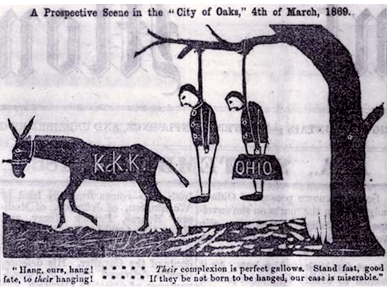
  2. Xenophobia has a long dark history in America usually linked to groups such as the KKK who practice terrorism, torture, murder. Virginia local news recently has reported “biggest resurgence of the Klan since 1915”. The Roanoke Mayor should be investigated for his ties to these groups.

We must put any call for return to internment camps in proper historic context. Here is President Ronald Reagan’s speech on August 10th, 1988 saying America made a mistake, would apologize and make amends for internment camps. It is abundantly clear no American ever again, let alone an elected official, should try to frame the camps as positive in any way.

Speech by Ronald Reagan, as documented in the Ronald Reagan Presidential Library

Remarks on Signing the Bill Providing Restitution for the Wartime Internment of Japanese-American Civilians

August 10, 1988

The Members of Congress and distinguished guests, my fellow Americans, we gather here today to right a grave wrong. More than 40 years ago, shortly after the bombing of Pearl Harbor, 120,000 persons of Japanese ancestry living in the United States were forcibly removed from their homes and placed in makeshift internment camps. This action was taken without trial, without jury. It was based solely on race, for these 120,000 were Americans of Japanese descent.

Yes, the Nation was then at war, struggling for its survival and it’s not for us today to pass judgment upon those who may have made mistakes while engaged in that great struggle. Yet we must recognize that the internment of Japanese-Americans was just that: a mistake. For throughout the war, Japanese-Americans in the tens of thousands remained utterly loyal to the United States. Indeed, scores of Japanese-Americans volunteered for our Armed Forces, many stepping forward in the internment camps themselves. The 442d Regimental Combat Team, made up entirely of Japanese-Americans, served with immense distinction to defend this nation, their nation. Yet back at home, the soldier’s families were being denied the very freedom for which so many of the soldiers themselves were laying down their lives.

Congressman Norman Mineta, with us today, was 10 years old when his family was interned. In the Congressman’s words: ”My own family was sent first to Santa Anita Racetrack. We showered in the horse paddocks. Some families lived in converted stables, others in hastily thrown together barracks. We were then moved to Heart Mountain, Wyoming, where our entire family lived in one small room of a rude tar paper barrack.” Like so many tens of thousands of others, the members of the Mineta family lived in those conditions not for a matter of weeks or months but for 3 long years.

The legislation that I am about to sign provides for a restitution payment to each of the 60,000 surviving Japanese-Americans of the 120,000 who were relocated or detained. Yet no payment can make up for those lost years. So, what is most important in this bill has less to do with property than with honor. For here we admit a wrong; here we reaffirm our commitment as a nation to equal justice under the law.

I’d like to note that the bill I’m about to sign also provides funds for members of the Aleut community who were evacuated from the Aleutian and Pribilof Islands after a Japanese attack in 1942. This action was taken for the Aleuts’ own protection, but property was lost or damaged that has never been replaced.

And now in closing, I wonder whether you’d permit me one personal reminiscence, one prompted by an old newspaper report sent to me by Rose Ochi, a former internee. The clipping comes from the Pacific Citizen and is dated December 1945.

“Arriving by plane from Washington,” the article begins, “General Joseph W. Stilwell pinned the Distinguished Service Cross on Mary Masuda in a simple ceremony on the porch of her small frame shack near Talbert, Orange County. She was one of the first Americans of Japanese ancestry to return from relocation centers to California’s farmlands.” “Vinegar Joe” Stilwell was there that day to honor Kazuo Masuda, Mary’s brother. You see, while Mary and her parents were in an internment camp, Kazuo served as staff sergeant to the 442d Regimental Combat Team. In one action, Kazuo ordered his men back and advanced through heavy fire, hauling a mortar. For 12 hours, he engaged in a singlehanded barrage of Nazi positions. Several weeks later at Cassino, Kazuo staged another lone advance. This time it cost him his life.

The newspaper clipping notes that her two surviving brothers were with Mary and her parents on the little porch that morning. These two brothers, like the heroic Kazuo, had served in the United States Army. After General Stilwell made the award, the motion picture actress Louise Allbritton, a Texas girl, told how a Texas battalion had been saved by the 442d. Other show business personalities paid tribute–Robert Young, Will Rogers, Jr. And one young actor said: “Blood that has soaked into the sands of a beach is all of one color. America stands unique in the world: the only country not founded on race but on a way, an ideal. Not in spite of but because of our polyglot background, we have had all the strength in the world. That is the American way.” The name of that young actor–I hope I pronounce this right–was Ronald Reagan. And, yes, the ideal of liberty and justice for all–that is still the American way.

Thank you, and God bless you. And now let me sign H.R. 442, so fittingly named in honor of the 442d.

Thank you all again, and God bless you all. I think this is a fine day.

Note: The President spoke at 2:33 p.m. in Room 450 of the Old Executive Office Building. H.R. 442, approved August 10, was assigned Public Law No. 100-383.