Category Archives: History

Buchrezension: Buruma „Stay Alive”. Liebeserklärung an die Berliner Nazis, die damit durchkamen

Die New York Times möchte uns glauben machen, dass Berliner in Kriegszeiten „einfach weitergemacht” hätten, statt die Stadt zu verlassen. Ian Buruma hat etwas geschrieben, das er einen „Liebesbrief” an die Stadt nennt – für all jene, die am Völkermord mitschuldig waren. Das Buch heißt zynischerweise Stay Alive. Der Untertitel lautet „Berlin, 1939–1945″, obwohl er wohl eher hätte heißen sollen: „Von Juden ist hier offensichtlich nicht die Rede”.

Stay… und alive. Nicht für die Zwangsdeportierten. Nicht für die, denen man in den Kopf schoss und die man in Massengräbern verscharrte.

Stay alive, liebe Berliner.

Als ob die Berliner, die die Juden hinausdrängten, in die Züge nach Auschwitz, diejenigen gewesen wären, die überleben mussten. Die Menschen, die tatsächlich am Leben bleiben mussten, waren in all den Lagern – dorthin geschickt aus Berlin, von Gleis 17 am Bahnhof Grunewald –, während die Nachbarn bereits planten, sich ihre Wohnungen anzueignen. Die Bedrohung für Berlins Juden war die Vernichtung durch ihre Nachbarn. Die letztlich von außen erzwungene Bedrohung für diese Nachbarn waren Konsequenzen: alliierte Bomben als Antwort auf die vielen Kriege, die ihre Regierung angezettelt hatte, sowjetische Truppen als Antwort auf 27 Millionen eigene Tote.

Buruma kann mit diesem Titel der Nazi-fördernden Auslöschung davonkommen, weil Berlin die Struktur dafür bereits geschaffen hat. Es ist die Stadt, die dafür bekannt ist, jede Spur der Menschen zu tilgen, die nicht am Leben geblieben sind.

Es gibt dort keine Fotografien der Deportationen, und das ist einfach nur seltsam.

Nicht ein einziges Foto.

Das #LastSeen-Projekt hat Deportationsbilder aus 60 deutschen Städten und Gemeinden gefunden. Wir sehen über 420 Fotografien aus Orten wie Fulda, Breslau, München.

Nicht aus Berlin.

Keine Fotos der Deportation haben überlebt. Verstanden? Mehr als 50.000 Juden wurden in Synagogen zusammengetrieben und zu Güterbahnhöfen marschiert, zwischen 1941 und 1943, und dennoch hat nicht ein einziges Bild überlebt.

Keine Fotos der Verbrechen, damit die Täter überleben konnten. Das ist es, was es Buruma ermöglicht, ein Foto von Tätern auf das Cover seines Buches zu setzen und grausam „stay alive” darauf zu schreiben.
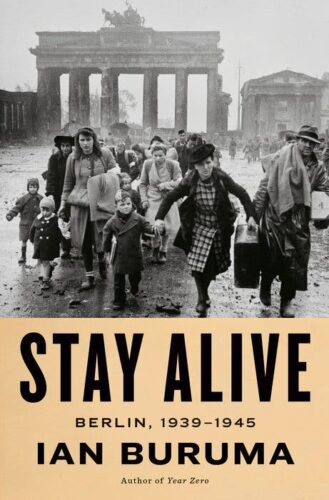
Ein Autor eignet sich schamlos die Bildsprache der Opfer in Berlin an, um den Holocaust auszulöschen. Keine Fotos von Juden in Berlin, die in Todeslager deportiert wurden… haben überlebt.

Die überlebenden Bilder zeigen Menschen, die ihre Habseligkeiten durch Berliner Straßen tragen – als Täterbevölkerung. Die Opfer wurden so gründlich ausgelöscht, dass selbst die visuelle Sprache der Vertreibung von den Menschen vereinnahmt wurde, die sie verursacht haben.

Sechzig Städte dokumentierten, was sie taten. Berlin vernichtete die Beweise, nahm die Wohnungen, sammelte das gestohlene Eigentum ein und wurde wütend auf jeden, der versuchte, Beweise zu sichern. Nach vorne schauen! Die Vergangenheit vergessen! Wir dürfen nur über die Zukunft sprechen! Wenn es keine Gesichter für die Toten gibt, kann man die Lebenden aufs Cover setzen und es als Feier allein ihres Überlebens bezeichnen.

Ein Liebesbrief. An die Stadt, in der das Reichssicherheitshauptamt, die Wannsee-Villa, die T4-Euthanasienzentrale und die Gestapo in der Prinz-Albrecht-Straße untergebracht waren. Während der Jahre, in denen der Holocaust aus ihren Konferenzräumen heraus verwaltet wurde. Das sollen wir jetzt lieben.

Bedenken Sie, dass Burumas Vater Leo den Krieg in Berlin verbrachte und dort leichte Maschinengewehre für die Wehrmacht herstellte. Das Buch des Sohnes verwandelt diese Tatsache in eine Geschichte über den „Versuch, sein eigenes Gleichgewicht zwischen Widerstand und Überleben zu finden”. Die Rezension strukturiert den Satz sogar so, dass es verschleiert wird: Leo arbeitete in „einer Fabrik, die Bremsen für Lokomotiven, aber auch leichte Maschinengewehre herstellte.”

Erst die Bremsen. Maschinengewehre… ach ja, das auch noch.

Als ob Züge in Todeslager, geschweige denn die Bewaffnung eines Völkermords, eine Fußnote zum Geschäft gewesen wären. Das ist ein Familienprojekt, ihre Investitionen für eine Rendite. Der Vater stellte Waffen für Nazis her. Der Sohn schrieb den Liebesbrief zu Ehren der Kunden – derjenigen, die hinter den Gewehren standen und sie kauften.

Die Besetzung

Jede Person in diesem Buch wird auf bizarre Weise entweder als Opfer oder als Zuschauer inszeniert. Das ist der einzig erlaubte Rahmen. Ein Dirigent, der sich einredete, er sei unpolitisch. Literaten, die debattierten, ob sie ins Exil gehen sollten. Familien, die sich in Bordellen versteckten. Und der Vater des Autors wird als Mann beschrieben, der „den alliierten Luftangriffen auswich” – nicht als Mann, der die Waffen baute, die diese Luftangriffe notwendig machten.

Das ist unter Nazis üblich: sich selbst zum wahren Opfer zu erklären und Unterstützung zu suchen, um der Verantwortung zu entgehen.

Niemand in diesem Buch organisiert die Deportationslogistik in Berlin. Niemand arbeitet in den Lagern. Niemand kassiert die arisierten Besitztümer und fälscht die Stadtakten. Niemand bearbeitet den Papierkram, der 50.000 Juden von Gleis 17 in Grunewald – vor aller Augen der Nachbarschaft – in den Tod schickte. Die Täter sind keine Figuren. Sie sind bloß das Wetter, von dem die Berliner profitieren.

Die Zauberworte

Burumas These, zitiert in der Times-Rezension: Die meisten Berliner waren „weder Zyniker, noch Schläger, noch ideologische Fanatiker; sie haben sich einfach angepasst.” Schwachsinn. „Einfach angepasst” ist die Formulierung, die eine ganze Stadt von der Verantwortung befreit. Anpassung ist passiv.

Was die Berliner taten, war aktive Teilnahme.

Sie besetzten die Stellen, die durch deportierte Juden frei geworden waren. Sie nahmen die Wohnungen und dekorierten mit gestohlener Kunst und gestohlenen Möbeln. Sie besuchten die Konzerte, die mit gestohlenem Reichtum finanziert wurden. Sie übernahmen alle Kunden, alle Märkte und tranken den aus Frankreich geraubten Wein. Das ist keine Anpassung. Das ist die beabsichtigte Dividende des Völkermords, und Berlin war ein Epizentrum des Dividendensammelns.

Die Entlastungsmaschine

Das gesamte Projekt scheint sich um einen Mann namens Erich Alenfeld zu drehen. Ein Jude, der zum Christentum „konvertierte” – Alenfeld schrieb 1939 einen Liebesbrief an Hermann Göring, in dem er sein Erbe verleugnet und sich freiwillig zur deutschen Armee meldete. Sein Sohn trat mit zehn Jahren der Hitlerjugend bei. Jahrzehnte später schrieb seine Tochter ein Buch mit dem Titel Why Didn’t You Leave?

Die Familie selbst konnte klar sehen, was es war.

Burumas Erklärung richtet sich gegen sie und will uns glauben machen, dass dies „nicht immer zynische Zugeständnisse” gewesen seien. Die Verbrechen sollen mit dem „nationalistischen Geist der Zeit” entschuldigt werden. Die Alenfelds, schreibt er, „waren ebenso von der deutschen Romantik beeinflusst wie jeder andere ihrer Generation.”

Romantik. Ein jüdischer Mann schreibt an den Architekten der Arisierung, meldet sich freiwillig zum Dienst in der Armee, die sein Volk vernichten wird, und dieser Mann nennt es Romantik.

Es ist widerlich.

Diese Geschichte leistet konkrete Arbeit. Wenn sogar ein Jude aufrichtig daran glauben konnte, anstatt eine Kugel in den Kopf zu bekommen – nicht aus Verzweiflung, nicht als Überlebungstarnung, sondern aus echtem Nationalgefühl –, dann kann niemand anderem die Schuld gegeben werden. Die Ideologie war normal, verführerisch. Sie riss alle in die Verbrechen hinein, sogar ihre Opfer. Und wenn die Opfergruppe die Lügen glaubte, welche Ausrede braucht dann die Profiteursgruppe noch?

Deshalb braucht Buruma „Romantik” statt Verblendung oder „Verzweiflung”. Tausende Juden und Mischlinge dienten in der Wehrmacht. Bryan Mark Rigg hat sie dokumentiert. Sie hofften zu überleben. Sie taten es, weil die Alternative der Tod war. Sie taten es, weil eine Uniform Tarnung in einem Kugelhagel war. Buruma streicht all diesen tatsächlichen Überlebenskontext und ersetzt ihn durch sein persönliches Empfinden. Romantik macht die Kollaboration des Opfers an seinem eigenen Tod universell und schön. Verzweiflung würde zugeben, dass es Menschen unter tatsächlicher existenzieller Bedrohung gab, und würde die offensichtliche Frage aufwerfen, welche Ausrede die acht Millionen mitschuldigen Berliner hatten.

Der Titel der Tochter ist die Frage, die dieses neue Buch auslöschen will. Why didn’t you leave. Warum habt ihr euch nicht geweigert. Warum habt ihr mitgemacht. Buruma will nicht, dass die Frage gestellt wird. Er will nicht, dass die Antwort durchsickert. Also löst er das Thema in Stimmung auf. Er nennt Völkermord buchstäblich romantisch. Er nennt Nazi-Komplizenschaft eine Liebesgeschichte. Er nennt das Ganze einen Liebesbrief.

Und die Times druckt und bewirbt es dummerweise, weil dort offenbar niemand mehr Geschichte studiert.

Wer bekommt ein Gesicht

Das Buch endet mit der üblichen Horrorgeschichte, die Nazis anführen. Sowjetische Truppen kamen an, und mehr als 100.000 Berliner Frauen und Mädchen wurden vergewaltigt. Buruma interviewt eine Überlebende, die 14 war. Das ist reale Geschichte, und sie ist wichtig.

Sie ist wichtig, weil er die mehr als 50.000 aus Berlin deportierten Juden auslöscht. Sie erhalten keine gleichwertige Behandlung. Das können sie nicht. Berlin hat dafür gesorgt. Keine Fotografien, keine Gesichter, keine Namen auf dem Denkmal. Keine Überlebenden zum Interviewen. Vergewaltigt und ermordet.

Die Struktur des Buches beginnt mit Gleichgültigkeit gegenüber der Tragödie und endet mit einem Appell um Mitgefühl für sowjetische Gewalt, damit die Berliner die Geschichte als Opfer beenden statt als Beteiligte. Alle jüdischen Frauen und Mädchen werden vergessen, damit die Vergewaltigungen Jahre später die ganze Aufmerksamkeit bekommen. Die Toten bleiben gesichtslos. Die Lebenden werden zur Anerkennung präsentiert.

Thomas Mann hat es gesehen

Die Rezension zitiert Thomas Mann: Alles, was in Deutschland zwischen 1933 und 1945 veröffentlicht wurde, trage den Geruch „von Blut und Schande”. Die Rezension behandelt dies als zeitgeschichtlichen Kontext, aber es ist so viel mehr. Das ist eine direkte Anklage des Projekts.

Manns Maßstab besagt, dass die Stimmen, die Buruma so unbedingt bewahren will – jene, die blieben, um zu profitieren, die sich anpassten, um Gewinn zu machen, die weitermachten, wie Hitler es befahl – keine neutralen Zeugen sind. Sie sind kompromittierte Quellen. Nicht weil sie logen, sondern weil das Überleben im nationalsozialistischen Berlin die Teilnahme an dem System erforderte, das ihr „Überleben” erst notwendig machte.

Mann ging. Brecht ging. Die Menschen, die blieben, trafen eine Entscheidung zur Teilnahme, und diese Entscheidung hatte einen Preis, den jemand anderes zahlte. Diejenigen, die Widerstand leisteten, waren die, die getötet, deren Leben zerstört wurden. Buruma kennt diese eigentliche Geschichte, denn die Waffenfabrik seines Vaters kommt im Buch vor. Aber die Rahmung verwandelt Komplizenschaft in Tragödie, Produktion in Überleben und Verzweiflung in Romantik. Diese unmoralische Desinformationskonversion scheint der Zweck zu sein.

Nicht sein erstes Mal

2018 wurde Buruma als Chefredakteur der New York Review of Books zum Rücktritt gezwungen. Erinnern Sie sich an seine Bitte, an die Nazis zu denken, die unter der sowjetischen Befreiung Berlins litten? Buruma veröffentlichte einen Essay von Jian Ghomeshi, der von über 20 Frauen der sexuellen Nötigung beschuldigt wurde, in dem Ghomeshi seine Geschichte als Opfer öffentlicher Beschämung umdeuten durfte. Burumas Verteidigung ist sehr relevant für die von sowjetischen Soldaten vergewaltigten Frauen:

Die genaue Art seines Verhaltens – wie viel Einvernehmen dabei im Spiel war – davon habe ich keine Ahnung, und es ist auch nicht wirklich mein Anliegen.

Und warum kümmert es ihn nicht? 2018 gab er einem der sexuellen Nötigung beschuldigten Täter eine Plattform, um sein eigenes Leiden zu erzählen. Jetzt, 2026, will er einer ganzen Stadt von Beteiligten endlich die Plattform geben, um ihr Leiden zu erzählen. Sollte er nicht die sowjetischen Soldaten verteidigen, so wie er Ghomeshi verteidigt? Die Heuchelei sei angemerkt.

Beide Projekte stellen die Erfahrung der Konsequenzen durch den Täter ins Zentrum, nicht die Erfahrung des Schadens durch das Opfer. Beide behandeln Rechenschaftspflicht als die eigentliche Gewalt. 2018 wurde er dafür gefeuert. 2026 druckt die Times Nazi-Liebesbriefe.

Der Rezensent sieht es und geht weiter

Kevin Peraino, der für die Times rezensiert, schreibt, das Buch sei „reich an Anekdoten und Primärquellen, aber etwas arm an großen Ideen.” Er wünschte, Buruma würde „tiefer eintauchen.” Er sagt damit, das Buch habe keinen analytischen Rahmen. Kein Argument. Keine Struktur, um zu verstehen, warum all das geschah oder was es bedeutet.

Wie könnte es das auch, angesichts dessen, was es bezwecken soll?

Und doch befürwortet er die „Liebesbrief”-Rahmung trotzdem. Er nennt das Buch eine „leidenschaftliche Herausforderung an die zersetzende Kraft der Gleichgültigkeit.”

Gleichgültigkeit war für Berlin nicht zersetzend.

Gleichgültigkeit funktionierte für Berlin.

Sie ist genau das, was die Konzerte am Laufen hielt, die Fußballspiele füllte, den Kaffee während des Völkermords fließen ließ. Die Maschine brauchte keine Begeisterung. Bis heute missbilligt Berlin Emotionen und warnt vor Beweisen. Sie brauchte keine Spuren, nur Menschen, die weiterhin auftauchten, damit die Verbrechen weitergehen konnten. Das taten sie. Ein „Urlaubszug” nach Auschwitz ermöglichte es Berlinern, die Gaskammern des Massentodes in Aktion zu beobachten. Die Nazis bauten spezielle gläserne Beobachtungsluken zur Inspektion. Dann kehrten die Berliner revitalisiert in ihre Stadt zurück, um sich über ihr eigenes „Überleben” auszulassen, das von der effizienten systematischen Auslöschung der Juden abhing.

Liebesbriefe an die Stadt der Toten

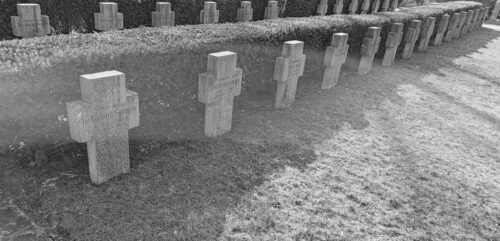
Die Berliner haben bis heute eine Tradition: Sie legen Blumen und Kerzen auf Nazi-Gräber in der ganzen Stadt. Diese Nazis werden offen betrauert, ohne Entschuldigung, in der Stadt, die emotionale Zurschaustellungen nicht mag. Wenn sie doch nur noch einen Tag gelebt hätten, um noch mehr Nachbarn mit Maschinengewehren niederzumähen, noch mehr Reichtum gewaltsam umzuverteilen. Sie werden auf eine sehr eigentümliche Weise in Ehren gehalten.
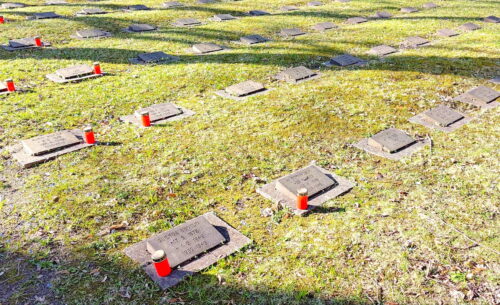
Rote Grablichter auf Berliner Gräbern von 1945, in großem Maßstab gepflegt
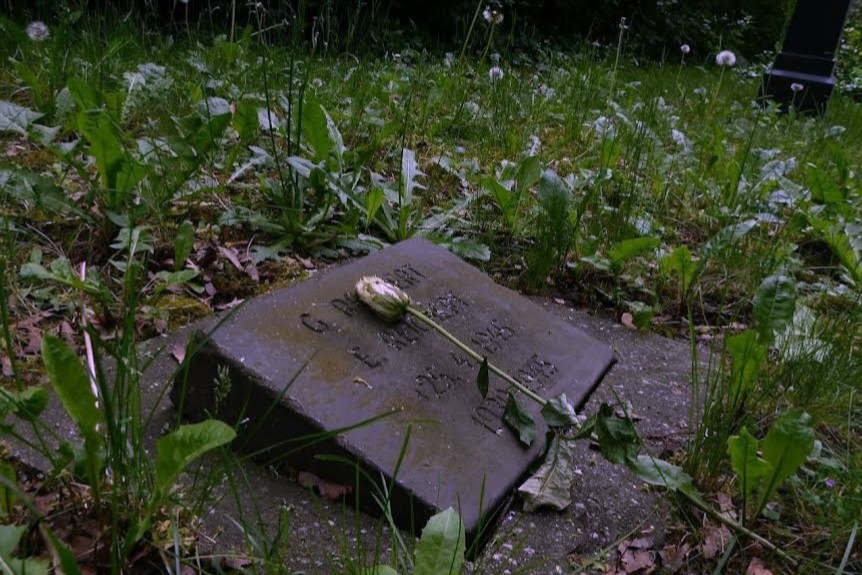
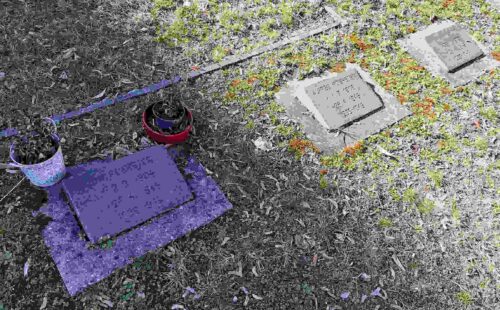
Foersters, gestorben am 26. April 1945, vier Tage vor Hitlers Selbstmord. Blumen auf einem Berliner Friedhof.
Friedhof in Berlin. Derselbe Friedhof hat Gräber aus dem Ersten und Zweiten Weltkrieg. Die Blumen und Kerzen sind nur für 1939–1945.
Frische Blume auf einem Grab von 1945 auf einem Berliner Friedhof. Anwohner laden diese Bilder als Stolzbekundung auf Google Maps hoch – Werbung dafür, dass die Tradition der Ehrung von Nazi-Toten lebendig ist und gepflegt wird.

Auf dem Militärfriedhof am Columbiadamm erscheinen jeden November Kränze von Gruppen, die Wehrmachtstote ehren. Ein „Traditionsverband der Freunde des ehemaligen Schutzgebietes Deutsch-Südwestafrika” hinterlässt Schleifen mit „patriotischen Grüßen” an einem Denkmal für die Soldaten, die den Völkermord an den Herero verübten. Als Neuköllns Bezirksregierung aufgefordert wurde, das Denkmal zu entfernen, fügte sie eine Tafel hinzu, die das Wort „Völkermord” ganz gezielt ausließ.

Reinhard Heydrich, der Architekt der Endlösung, liegt noch immer auf dem Invalidenfriedhof im Zentrum Berlins begraben. Es ist eine Touristenattraktion für diejenigen, die dem Nationalsozialismus etwas Liebe zeigen wollen. Der Grabstein wurde entfernt, aber der Leichnam nicht. Der Friedhof ist heute ein geschütztes Denkmal, vom Staat gepflegt, als Attraktion beworben. 2019 öffnete jemand mit Insiderwissen über die Lage das Grab – um zu betonen, dass Heydrich nie wirklich weg war.

Das Sinti-und-Roma-Denkmal – ein symbolisches Grab für 500.000 ermordete Menschen – wird durch ein Tunnelprojekt der Deutschen Bahn bedroht. Das Holocaust-Mahnmal selbst enthält keine Namen, keine Inschriften, keine jüdischen Symbole. Seine Anti-Graffiti-Beschichtung wurde von einer Degussa-Tochtergesellschaft hergestellt – derselben Unternehmensfamilie, die Zyklon B produzierte.

So sieht also ein Liebesbrief an Berlin aus, wird uns gesagt. Die Täter erheben sich wieder. Die historischen Bodenmarkierungen werden entfernt. Die Opfer bekommen ein abstraktes Mahnmal ohne Namen. Und alle paar Jahre schreibt jemand mit familiärer Verbindung zur Kriegsmaschinerie ein Buch, das sagt, die meisten Menschen hätten sich einfach angepasst, also wer könnte ihnen vorwerfen, nicht gegangen zu sein.

Das ist keine Geschichtsschreibung. Das ist „wie der Vater, so der Sohn” – die Auslöschung von Völkermordopfern des Familienunternehmens, um die Dividenden weiterfließen zu lassen. Liebe als Hass.
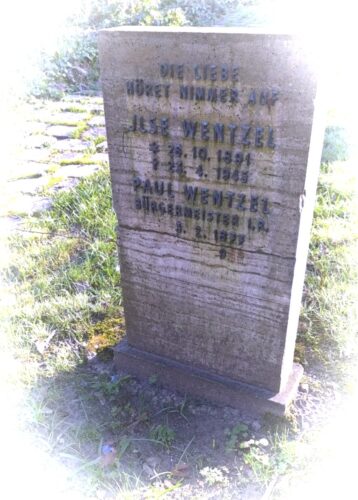
Der Grabstein eines Bürgermeisters aus der NS-Zeit in Berlin trägt buchstäblich die Inschrift „die Liebe höret nimmer auf” – in derselben Stadt, in der ein Mann gerade einen Liebesbrief an den Völkermord veröffentlicht hat, den sein Vater bewaffnete. Das Grab hält sich bemerkenswerterweise nicht an die Berliner Besatzungsregeln für Gedenkstätten. Es ist nicht ungewöhnlich, solche Berliner zu finden, die Friedhofsregeln bezüglich der Liebe zum Nationalsozialismus brechen.

Do Something! Why American Relentless Bombing Makes Targets Stronger

In 1996, the CIA ran a covert operation to overthrow Saddam Hussein. It was the third such order from the White House in five years. The agency backed exiles in London and Jordan, recruited Iraqi military officers, and tried to unite Kurdish factions in the north.

It failed.

As Tim Weiner documents in Legacy of Ashes, the professionals involved knew before they started that it couldn’t work. The exiles had no operational capability inside Baghdad. The assets who could be trusted had no access, and the assets with access couldn’t be trusted. Saddam’s intelligence services penetrated the plot. On June 26, 1996, he began arresting over two hundred officers. He executed at least eighty of them, including the sons of the operation’s key military contact, General Shawani.

Eighty men killed needlessly because no one in the chain of American command could say: “Mr. President, this won’t work.”

Mark Lowenthal, who had been staff director of the House intelligence committee and a senior CIA analyst, explained afterward that the whole enterprise was driven not by intelligence but by feelings of frustration about dominance. The “do something” urge, he called it. Not a strategy. Not an assessment. An emotional need to feel dominant. The CIA converted itself from an analytical institution into a therapeutic one, managing presidential anxiety and feeding control rather than producing outcomes.
The operation “probably shouldn’t have been started in the first place,” Lowenthal said.

But the institution rewarded quick action and punished thoughtful refusal. Telling the president something is infeasible means someone else gets the budget, the mission, the relevance. So the machine runs. People die. The after-action report gets buried with all the bodies. Whoever fails loudly and rapidly is rewarded, while those trying to win are starved of attention.

Now the same machine is pointed at Iran and the target is harder in every dimension, and the people running it are less capable in every dimension.

Fordow is buried under a mountain. Iran has spent decades building redundancy specifically for this scenario. Strategic bombing doesn’t produce political outcomes against a state with national cohesion. It didn’t in Korea, where LeMay destroyed every city and killed twenty percent of the population and the result was a stalemate at the same line where it started. Seventy years later North Korea has nuclear weapons.

The bomb is the therapeutic instrument at scale.

Relentless strikes fail to achieve an outcome. They only perform solving the problem. And the cost, as eighty Iraqi officers learned, is always paid by someone other than the people who gave the order.

Talbot documents how the institutional culture of covert action as the default response was built by Dulles and Dulles. Guatemala 1954, Bay of Pigs, assassination programs… and of course the direct connection to Iran 1953. Operation Ajax, the CIA’s coup against Mossadegh, was a complete disaster treated as a success.
Dulles considered it a model operation. The “do something” machine’s greatest hit is what produced the target it’s now failing to “obliterate” with bombs, seventy years later.

Robert Pape, professor of political science at the University of Chicago, has studied over thirty air campaigns across a century in his book Bombing to Win: Air Power and Coercion in War. His conclusion: strategic bombing of civilian populations has never changed the war aims of their governments. Not once. In a recent TIME interview about Iran, Pape identified what he calls the “smart bomb trap” when leaders see a briefing showing 90% probability of destroying a target, it creates an illusion of control.
…strike numbers released by US Central Command reveal that the waves of attacks since Hegseth’s first briefing have not been increasing steadily, despite Hegseth’s rhetoric indicating otherwise.

The delusion has a long pedigree. In the 1930s, a group of Air Corps theorists at Maxwell Field convinced themselves the Norden bombsight could make bombing surgical. Drop it in a pickle barrel from 20,000 feet. Destroy a ball-bearing factory, spare the city. Malcolm Gladwell tells their story in The Bomber Mafia. It ended with LeMay dropping napalm on wooden cities, burning Tokyo to the ground. In Korea, he tried again with the first “smart bomb”. The TAllboy, Range and aZimuth ONly (TARZON) was a 12,000-pound guided bomb that only hit six of twenty-eight targets, and had to be stopped when it started killing American crews instead. LeMay burned every city in North Korea anyway, achieving nothing, neither precision nor outcomes. Freeman Dyson ran the numbers inside RAF Bomber Command during the war and knew strategic bombing was counterproductive while it was happening. Nobody listened. The Norden became the Tarzan became the JDAM became the GBU-57. The technology changes. The faith continues.
Tactical perfection does not produce strategic success. The confidence that it does is the structural trap that produces American strategic failure, over and over again.

Campaign Target Result
Korea 1950-53 North Korea Every city destroyed. Stalemate. North Korea now has nuclear weapons.
Rolling Thunder / Linebacker 1965-72 North Vietnam Most intensive bombing in history to that point. North Vietnam won.
Operation Menu / Freedom Deal 1969-73 Laos & Cambodia Most bombed country per capita in history. Pathet Lao won. Khmer Rouge rose to power.
Desert Storm 1991 Iraq 39 days of bombing. Bush called for Shia uprising. Thousands slaughtered. Saddam stayed.
Iraq 2003-11 Iraq Shock and awe. Twenty-year occupation. ISIS emerged from the wreckage created by Palantir targeting systems.
Afghanistan 2001-21 Afghanistan Twenty years of air power. Taliban took Kabul in eleven days.
Saudi-led coalition 2015-present Yemen / Houthis A decade of bombing. Houthis stronger than when it started.
Israel 2023-present Gaza / Hamas Ongoing. Hamas still operating.
Operation Epic Fury 2025-present Iran Ongoing. Fordow intact. No regime change. No negotiation.
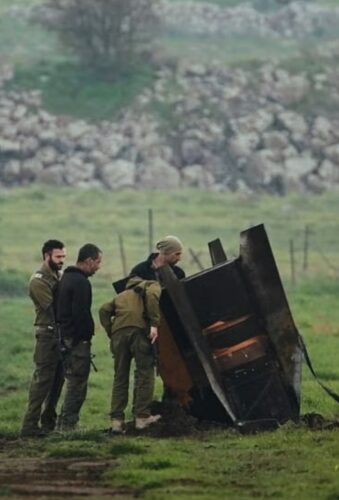
Israeli soldiers in Golan Heights inspect a missile from Iran, March 19, 2026. Source: Ohad Zwigenberg/AP

Book Review: Buruma “Stay Alive”. Loving the Nazis in Berlin Who Got Away With It.

The New York Times wants you to believe that wartime Berliners “just carried on” instead of leaving. Ian Buruma has written what he calls a “love letter” to the city for all those complicit in genocide. The book is cynically called Stay Alive. The subtitle is “Berlin, 1939-1945”, although it probably should have been “I’m obviously not talking about the Jews”.

Stay… and alive. Not for those forcibly deported. Not for those shot in the head and dumped in mass graves.

Stay alive, dear Berliners.

As if the Berliners who pushed the Jews out, onto trains to Auschwitz, were the ones who needed to survive. The people who actually needed to stay alive were in all the camps, sent there from Berlin, from Platform 17 at Grunewald, while the neighbors planned to take all their homes. The threat to Berlin’s Jews was extermination by their neighbors. The eventual externally forced threat to those neighbors was consequences: Allied bombs responding to the many wars that their government started, Soviet troops responding to 27 million of their own dead.

Buruma can get away with this title of Nazi promoting erasure because Berlin already laid the structure for it. It’s the city known for erasing every trace of the people who didn’t stay alive.

There are no photographs of the deportations there, and that’s just weird.

Not one photo.

The #LastSeen project has found deportation images from 60 German cities and towns. We see over 420 photographs from places like Fulda, Breslau, Munich.

Not Berlin.

No photos of the deportation survived. Get it? More than 50,000 Jews were assembled at synagogues and marched to freight yards between 1941 and 1943, and yet not a single image survives.

No photos of the crimes, so that the perpetrators could survive. That’s what enables Buruma to put a photo of perpetrators on the cover of his book and cruelly write “stay alive”.

An author shamelessly appropriates imagery of victims in Berlin to erase the Holocaust. No photos of Jews in Berlin being deported to death camps… survived.

The surviving images are of people carrying belongings through Berlin streets as the perpetrator population. The victims were erased so thoroughly that even the visual language of displacement has been appropriated by the people who caused it.

Sixty towns documented what they did. Berlin destroyed the evidence, took the apartments, collected the stolen property, and got angry at anyone who tried to produce evidence. Look forward! Forget that past! We must talk only of the future! When there are no faces for the dead, you can put the living on the cover and call it the celebration of only their survival.

A love letter. To the city that housed the Reich Security Main Office, the Wannsee villa, the T4 euthanasia headquarters, and the Gestapo on Prinz-Albrecht-Straße. During the years the Holocaust was administered from its conference rooms. That’s what we are being told to love now.

Consider that Buruma’s father, Leo, spent the war in Berlin manufacturing light machine guns for the Wehrmacht. The son’s book turns that fact into a story about “attempting to find his own balance between resistance and survival.” The review even structures the sentence to bury it: Leo worked in “a factory that made brakes for locomotives but also light machine guns.”

Brakes first. Machine guns… oh yeah, that too.

As if trains to death camps let alone arming a genocide was a footnote to the business. This is a family project, their investments for a return. The father made weapons for Nazis. The son wrote the love letter to honor the customers, those buying and standing behind the guns.

The Cast

Every person in this book is bizarrely setup as either a victim or a bystander. That’s the only allowed frame. A conductor who told himself he was unpolitisch. Literati debating whether to go into exile. Families hiding in brothels. And the author’s own father is described as a man “dodging Allied air raids,” not as a man building the weapons that made those air raids necessary.

That’s common among Nazis, declaring themselves the true victim and seeking support to avoid the accountability.

Nobody in this book is running Berlin deportation logistics. Nobody is staffing the camps. Nobody is collecting the Aryanized property and laundering the city’s records. Nobody is processing the paperwork that sent 50,000 Jews from Platform 17 at Grunewald — in full view of the neighborhood — to their deaths. The perpetrators aren’t characters. They’re just the weather the Berliners benefit from.

The Magic Words

Buruma’s thesis, as quoted in the Times review: most Berliners were “neither cynics, nor bullies, nor ideological fanatics; they simply conformed.” Horseshit. “Simply conformed” is the phrase that lets an entire city off the hook. Conformity is passive.

What Berliners did was participatory.

They filled the jobs vacated by deported Jews. They took the apartments and decorated with stolen art and furniture. They attended the concerts funded by stolen wealth. They took all the customers, all the markets and drank the wine looted from France. That’s not conformity. That’s the intended dividend of genocide, and Berlin was an epicenter of grabbing dividends.

The Exculpation Engine

The whole project seems to circle around a man named Erich Alenfeld. A Jew who “converted” to Christianity, Alenfeld wrote a love letter to Hermann Göring in 1939 renouncing his heritage and volunteering for the German Army. His son joined the Hitler Youth at age ten. Decades later, his daughter wrote a book called Why Didn’t You Leave?

The family itself could see clearly what it was.

Buruma’s explanation runs against them and wants us to believe these were “not always cynical accommodations.” The crimes are supposed to be excused by “the nationalistic spirit of the day.” The Alenfelds, he writes, “were as much influenced by German romanticism as anyone of their generation.”

Romanticism. A Jewish man writing to the architect of Aryanization, volunteering to serve the army that would exterminate his people, and this guy calls it romanticism.

It’s disgusting.

This story does specific work. If even a Jew could sincerely buy in rather than be shot in the head, not out of desperation, not as survival camouflage, but out of genuine national feeling, then nobody else can be blamed. The ideology was normal, seductive. It swept up everyone in the crimes, even its victims. And if the victim class believed the lies, what excuse does the beneficiary class need?

That’s why Buruma needs “romanticism” instead of derangement or “desperation.” Thousands of Jews and Mischlinge served in the Wehrmacht. Bryan Mark Rigg documented them. They expected to survive. They did it because the other option was death. They did it because a uniform was camouflage in a hail of bullets. Buruma strips all that actual survival context and replaces it with his personal feeling. Romanticism makes the collaboration of the victim in their own death as universal and beautiful. Desperation would admit there were people under actual existential threat, and would raise the obvious question of what excuse the eight million complicit Berliners had.

The daughter’s title is the question that this new book tries to erase. Why didn’t you leave. Why didn’t you refuse. Why did you participate. Buruma doesn’t want it asked. He doesn’t want the answer leaking. So he dissolves the topic into mood. He literally calls genocide romantic. He calls Nazi complicity a love story. He calls the whole thing a love letter.

And the Times stupidly prints and promotes it because apparently nobody there studies history anymore.

Who Gets a Face

The book ends with the usual horror story that Nazis invoke. Soviet troops arrived and more than 100,000 Berlin women and girls were raped. Buruma interviews a survivor who was 14. This is real history and it matters.

It matters because he erases the more than 50,000 Jews deported from Berlin. They don’t get equivalent treatment. They can’t. Berlin made sure of that. No photographs, no faces, no names on the memorial. No survivors to interview. Raped and murdered.

The structure of the book opens with indifference to tragedy and closes with a call for sympathy about Soviet violence, so that Berliners end the story as victims rather than the participants. All the Jewish women and girls are forgotten so the rapes years later can get all the ink. The dead stay faceless. The living are presented for recognition.

Thomas Mann Saw It

The review quotes Thomas Mann: anything published in Germany between 1933 and 1945 bore the scent “of blood and shame.” The review treats this as period context but it’s so much more. That’s a direct indictment of the project.

Mann’s standard says the voices that Buruma is so intent on preserving, those who stayed to benefit, who conformed to profit, who carried on as Hitler ordered, are not neutral witnesses. They are compromised sources. Not because they lied, but because survival in Nazi Berlin required participation in the system that made their “survival” necessary.

Mann left. Brecht left. The people who stayed made a participation choice, and that choice came with a price that someone else paid. Those who resisted were the ones killed, lives destroyed. Buruma knows this actual story, as his father’s Nazi gun factory is in the book. But the framing converts complicity into tragedy, production into survival, and desperation into romance. That immoral disinformation conversion is the point, it would seem.

Not His First Time

In 2018, Buruma was forced out as editor of the New York Review of Books. Remember his request to think of the Nazis who suffered from Soviet liberation of Berlin? Buruma published an essay by Jian Ghomeshi, accused of sexual assault by over 20 women, that let Ghomeshi reframe his story as a victim of public shaming. Buruma’s defense is very relevant to the women raped by Soviet soldiers:

The exact nature of his behavior — how much consent was involved — I have no idea, nor is it really my concern.

And why isn’t he concerned? In 2018 he gave an accused abuser of women a platform to narrate his own suffering. Now in 2026 he wants an entire city of participants to finally get the platform to narrate theirs. Shouldn’t he defend the Soviet soldiers as he defends Ghomeshi? The hypocrisy is noted.

Both projects center the perpetrator’s experience of consequences rather than the victim’s experience of harm. Both treat accountability as the real violence. He got fired for it in 2018. In 2026 the Times prints Nazi love letters.

The Reviewer Sees It and Walks Away

Kevin Peraino, reviewing for the Times, writes that the book is “long on anecdote and primary sources but somewhat short on big ideas.” He wishes Buruma would “delve deeper.” He’s saying the book has no analytical framework. No argument. No structure for understanding why any of this happened or what it means.

How could it, given what it’s trying to accomplish?

And yet he endorses the “love letter” framing anyway. He calls the book a “passionate challenge to the corrosive power of indifference.”

Indifference wasn’t corrosive to Berlin.

Indifference worked for Berlin.

It is the very thing that kept the concerts running, the soccer matches filling, the coffee flowing during genocide. The machine didn’t need any enthusiasm. To this day Berlin frowns on emotion and warns against evidence. It needed no traces, people to keep showing up so the crimes could continue. They did. A “vacation” train to Auschwitz allowed Berliners to watch the gas chambers of mass death in action. The Nazis made special glass observation ports for inspection. Then the Berliners would return revitalized to their city to wax about their own “survival” that depended on efficient systemic erasure of Jews.

Love Letters to the City of the Dead

Berliners to this day have a tradition, they put flowers and candles on Nazi graves around the city. These Nazis are mourned openly without apology, in the city that dislikes emotional displays. If only they had lived another day to machine gun more neighbors, to violently redistribute more wealth. They are memorialized in a very peculiar way.

Red Grablichter on Berlin graves from 1945, maintained at scale
Foersters, died April 26 1945, four days before Hitler’s suicide. Flowers in Berlin cemetery.
Friedhof in Berlin. The same cemetery has graves from the First and Second World War. The flowers and candles are only for 1939-1945.
Fresh flower on a 1945 grave in a Berlin cemetery. Locals upload these images to Google Maps as points of pride, advertising that the tradition of honoring Nazi dead is alive and maintained.

At the military cemetery on Columbiadamm, wreaths appear every November from groups honoring Wehrmacht dead. A “Tradition Association of Friends of the Former Protected Area German Southwest Africa” leaves ribbons with “patriotic greetings” at a memorial to the soldiers who carried out the Herero genocide. When Neukölln’s government was asked to remove the memorial, they added a plaque that very precisely omitted the word “genocide.”

Reinhard Heydrich, the architect of the Final Solution, is still in the ground at the Invalidenfriedhof in central Berlin. It’s a tourist attraction for those who want to show Nazism some love. The grave marker was removed but the body was not. The cemetery is now a protected monument, maintained by the state, promoted as an attraction. In 2019 someone with inside knowledge of the location opened the grave, to emphasize Heydrich was never really gone.

The Sinti and Roma memorial — a symbolic grave for 500,000 murdered people — is being threatened by a Deutsche Bahn tunnel project. The Holocaust memorial itself contains no names, no inscriptions, no Jewish symbols. Its anti-graffiti coating was manufactured by a Degussa subsidiary — the same corporate family that produced Zyklon B.

This is what we are told a love letter to Berlin looks like. The perpetrators rise again. The historical ground markers come off. The victims get an abstract memorial with no names. And every few years someone with a family connection to the war machine writes a book saying that most people simply conformed so who could blame them for not leaving.

That’s not history. That’s “like father, like son”, erasing genocide victims of the family business to continue dividends. Love as hate.

A Nazi-era mayor’s gravestone in Berlin literally says “love never ends”, in the same city where a man just published a love letter to the genocide his father armed. The grave notably doesn’t conform to Berlin occupation rules for commemoration. It’s not uncommon to find Berliners like this breaking cemetery rules about love for Nazism.

Assassination is How Netanyahu Seized Power and He’s Not Stopping

The Associated Press published a piece this week warning that Israel’s decapitation strategy in Iran “could backfire.” The article quotes scholars who note that killing leaders tends to radicalize successors, spike civilian violence, and produce chaos rather than compliance. Every historical example the article itself cites confirms the pattern: Hezbollah after Musawi, Hamas after Yassin, Congo after Lumumba, Libya after Gadhafi, Iraq after Saddam.

Not one case produced a success, a stable successor government. Every case produced instability and mass suffering.

The article treats this as a warning. Israel sees it as a trophy.

Who Profits From Failure

Palantir’s business model comes from Nazi Germany. Their profit is from human lives lost. That’s why their stock rose 15% in a single week after the confused and endless Operation Epic Fury looked less and less like it will ever end.

Rosenblatt Securities raised its price target to $200 and wrote, in a research note to investors, that “conflict in the Middle East bodes well” for Palantir’s pipeline of body bag counts and terrorists created. Wall Street saw dollar signs.

Palantir soaked up $1.9 billion in U.S. taxpayer money last year, up 66% because of the corruption under Trump. Sixty percent of the company’s total revenue comes from sugary government contracts. The Department of Defense, which knows the technology doesn’t work, expanded the Maven Smart System contract ceiling from $480 million to $1.275 billion. The Army was forced by Trump business consultants to consolidate 75 separate contracts into a single $10 billion agreement. NATO even adopted Maven. The company has collected $7.2 billion in cash.

Alex Karp, speaking at Palantir’s AIPCon event in Maryland last week, said out loud what the financial analysts were already writing in their notes:

Iran war is a “unique symbiotic relationship between American military strength and AI leadership.”

Symbiotic. The war organism needs the war. The war needs the war organism. He meant to say the military-industrial-complex is back, just like Vietnam. Wait until you hear the nightly death tolls.

A resolved conflict is a lost contract for these unvarnished death machine peddlers.

A human you can negotiate with is someone you don’t need Palantir to murder. After they are murdered, there’s no system to hold the killers accountable for hitting the right person. The more wrong people targeted, the more killing accelerates to cover tracks. A stable Iran with a functioning government is a country that doesn’t require $1.275 billion in untrustworthy AI targeting. The incentive structure is the Loch Ness monster pattern. An unresolved mysterious question, for profit, is more valuable than finding an answer.

The Strategy That Never Fails Because Failure Is the Strategy

Netanyahu says the killing of Iran’s leaders is aimed at weakening the government:

rise up and overthrow it…in the mold of the pro-Western monarchy overthrown in 1979.

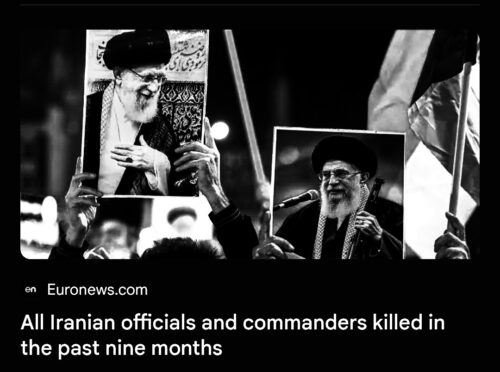
There has been no uprising. Opposite, resentment against the U.S. and Israel is growing. Iranian authorities crushed mass protests in January. Khamenei’s son Mojtaba, his replacement, is described by every analyst as less compromising than his father. Moreover, those who might have protested before, now don’t believe anyone is coming to help. An ex-CIA chief put it like this:

Panetta said: “We replaced an old guy, a supreme leader who was near death at a time when the people of Iran were willing to take to the streets with the hope that they could ultimately change their way of government. And instead today we have a more entrenched regime, we have a younger supreme leader who’s going to be there a while, and he’s much more of a hardliner than the first supreme leader. That didn’t turn out too well.”

Netanyahu knows this. He’s been running the same strategy for decades. Israel killed Hezbollah leader Abbas Musawi in 1992. Under Nasrallah, his replacement, Hezbollah grew into the region’s most powerful armed group. Israel killed Nasrallah and nearly all his deputies in 2024. Hezbollah resumed missile attacks within days of the current war’s start. Israel killed Hamas founder Sheikh Ahmed Yassin in 2004 and yet it had to hunt nearly every architect of October 7 as if there were far more problems instead of less.

Israel doesn’t need scholars to explain this. It happened at home.

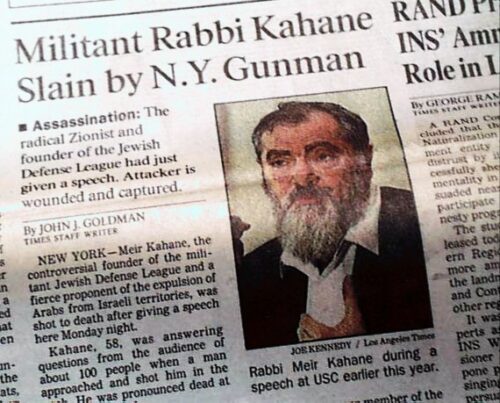
Meir Kahane was assassinated in New York in 1990. His movement didn’t die. It radicalized. Baruch Goldstein, a Kach follower, massacred 29 Palestinian worshippers in Hebron in 1994. Yigal Amir, a Kahanist inspired by Goldstein, assassinated Prime Minister Yitzhak Rabin in 1995. The man who signed Oslo, the man who could negotiate. Weeks before the killing, a teenage Itamar Ben Gvir brandished an ornament stolen from Rabin’s car on live television and said: “We got to his car, and we’ll get to him too.”

Ben Gvir was exempted from military service because of his extremism. He was convicted of incitement to racism and support for a terrorist organization. He kept a portrait of Goldstein above his fireplace. In 2022, Netanyahu brought him into government as National Security Minister. Bezalel Smotrich, another Kahanist, became Finance Minister.

The veteran Israeli journalist Gideon Levy called what followed “the country’s first Kahanist war.”

The arc from Kahane’s assassination to Netanyahu’s governing coalition is the decapitation backfire running in the other direction. The domestic political class that could make peace was systematically destroyed for it, replaced by younger, more radical, more extreme successors who treat peace negotiation itself as treason. Rabin was the moderate leader. He got killed. What replaced him, thirty years later, is a government whose ideology is a genocidal radical movement functionally indistinguishable from the one that murdered him.

Netanyahu knows what political decapitation produces. He’s the product of it.

Every moderate leader you kill removes a potential negotiating partner. Every radical successor you create justifies the next round of strikes. Every spike in civilian violence proves the enemy is irrational and cannot be dealt with diplomatically. The chaos confirms the premise that produced the chaos.

Max Abrahms, the Northeastern political scientist quoted in the AP piece, has the data: violence against civilians spikes after targeted killings.

When you take out a leader that prefers some degree of restraint, there’s a very good chance that, upon that person’s death, you’re going to see even more extreme tactics.

The article presents him as though he’s making a risk assessment. Read it instead as an intelligence briefing.

Mozambique

Apartheid South Africa understood the mechanism. P.W. Botha’s “Total Strategy” required a buffer of deliberately failed states. The regime called it a cordon sanitaire because a thriving Black-governed neighbor would show Africans could govern themselves peacefully. South Africa armed RENAMO to systematically destroy Mozambique’s political infrastructure, its institutional capacity, its ability to function as a state.

What happened was simple.

The political class got hollowed out. What replaced it was younger, angrier, less institutionally embedded, more easily dismissed as illegitimate. The chaos became self-justifying. Mozambique is still paying for it. The country’s 2024 election crisis, with hundreds killed, mass unrest, opposition leaders assassinated, prison breaks, and neighborhoods resembling war zones, traces directly to the institutional destruction that apartheid’s destabilization inflicted forty years ago.

FRELIMO retained power through decades of alleged electoral manipulation inside a system that was never allowed to develop genuine democratic capacity, because genuine democratic capacity was the thing apartheid needed destroyed.

The Iranian political class is getting the same treatment in real time. You don’t need to install a friendly government if you can ensure no functional government exists. A fragmented Iran that can’t project power coherently, can’t negotiate credibly, can’t offer a deal anyone would take — that’s not the backfire. That’s the cordon.

The Crooks

Palantir signed a strategic partnership with Israel’s Ministry of Defense in January 2024, weeks after October 7. Thiel and Karp flew to Tel Aviv personally for the signing. The company’s AIP system, allegedly designed to analyze enemy targets and propose combat moves, went operational for what the company described as “war-related missions.”

The same company also holds the IAEA’s MOSAIC contract, a $50 million system that modernized nuclear safeguards inspections in Iran. Palantir’s data-mining and predictive technology sits at the center of the monitoring regime that produced the reports Israel and the U.S. cite to justify strikes on Iranian nuclear facilities. The company that helps build the case for the war is the company that profits from executing it.

Palantir also powers the Gaza Civil-Military Coordination Center, a U.S. military compound in Kiryat Gat set up to execute the Trump administration’s post-war plan for Gaza. And it runs ICE’s Investigative Case Management system, the deportation infrastructure that profiles people by combining immigration history, biometrics, social media, and license plate data.

The UN Special Rapporteur on Palestinian human rights concluded there are “reasonable grounds” to believe Palantir’s AI platform has been used in Israel’s unlawful use of force, causing disproportionate civilian casualties.

Norway’s largest asset manager divested. The British Medical Association condemned the company’s access to NHS patient data. The University of San Francisco divested.

None of the crimes against humanity slowed the stock price. None of it reduced the contract pipeline. The accountability mechanisms to stop Palantir have produced nothing.

Quiet But Deadly

The financial press is saying this with no apparent awareness that it constitutes a confession. “Defense Stocks Set to Rise if the Iran War Drags On.” “Wall Street Loves Palantir Stock as the Iran War Rages On.” “The U.S.-Iran Conflict Validates Its Unstoppable AI Military Moat.”

Palantir’s entire valuation thesis depends on the continuation of the condition the AP article describes as a “backfire.” Radical successors, civilian violence spikes, leadership vacuums, perpetual instability — each is a line item in a pitch deck. Each justifies the next contract expansion, the next price target increase, the next quarter of 70% revenue growth.

Karp called it symbiotic. He was being precise. The organism feeds on chaos. The chaos feeds on the organism. A negotiated settlement is an extinction event for the business model.

The AP article ends with a Carnegie scholar saying,

You can decapitate an organization or defeat it militarily, but if you don’t follow through politically, it doesn’t work.

He meant it as a criticism. By now it should be obvious that “it doesn’t work” assumes the goal was political resolution. If the goal is apartheid with permanent instability, permanent demand for targeting infrastructure, permanent justification for military spending, and permanent proof that the enemy is ungovernable, then it works as designed.

Assassination is the method, chaos is the product.