Category Archives: History

The Black Women of Arlington Hall Who Kept Tabs on American Companies Doing Business With Nazis

The United States is gradually advancing its efforts in the field of expanding awareness about codebreakers and the origins of modern computing, akin to the remarkable work undertaken by historians at Bletchley Park in England. An article featured in DCist sheds light on significant revelations associated with “Building E on the Foreign Service Institute’s leafy Arlington campus”.

“The codebreakers who worked here saved countless American lives and shortened the war by what many historians estimate to be at least two years,” [institute director] Polaschik said.

A group of Black women who worked at Arlington Hall — they were segregated from their white counterparts — kept tabs on messages from the private sector, ensuring that American companies were not doing business with Nazi Germany or Japanese companies.

Overall, women made up 70% of the American domestic codebreaking force, noted Adam Howard, the director of the Office of the Historian at the State Department.

[…]

At the end of the war, the women were mostly pushed out of their jobs to make way for men…

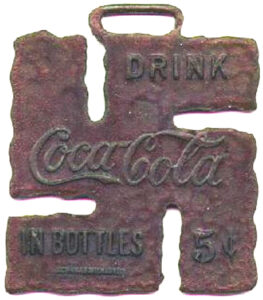
Listening to companies doing business with Nazi Germany? Like *cough, cough* Ford, IBM and Coke?

How awkward to enlist Black women to surveil the most powerful American brands for evidence of treason. I am sure it wasn’t hard for them to find America’s worst offenders, given evidence was so often out in the open while being ignored.
Furthermore, the conclusion of the Arlington story features a memorable quote that underscores potential injustices within America. However, it may not fully capture the nuanced and intricate web of challenges faced by women. A perfect example can be found in the case of Agnes Driscoll who expanded and thrived in intelligence work after her role in World War I ended, as documented in the NSA Hall of Honor.

In her thirty-year career, Mrs. Driscoll broke Japanese Navy manual codes — the Red Book Code in the 1920s, the Blue Book Code in 1930, and, in 1940, she made critical inroads into JN-25, the Japanese fleet’s operational code, which the U.S. Navy exploited after the attack on Pearl Harbor for the rest of the Pacific War. In early 1935, Mrs. Driscoll led the attack on the Japanese M-1 cipher machine (also known to the U.S. as the ORANGE machine), used to encrypt the messages of Japanese naval attaches around the world. At the same time, Agnes sponsored the introduction of early machine support for cryptanalysis against Japanese naval code systems. Early in World War II, Mrs. Driscoll was engaged in the U.S. Navy’s effort against the German naval Enigma machine, although this work was superceded by the U.S.-U.K. cryptologic exchanges in 1942-43. Mrs. Driscoll was part of the navy contingent that joined the new national cryptologic agencies, first the Armed Forces Security Agency in 1949 and then the National Security Agency in 1952.

Driscoll’s postwar career experienced a remarkable ascent, rather than being obstructed by male colleagues. It’s intriguing to observe that the greater a woman’s success in the field of cryptology, the less recognition she tends to receive especially if Black. This phenomenon could be attributed to a paradox: the less they are forced out, the more they are drawn into the shadows, if that conceptually aligns.

One might ponder whether any Black woman listening to the overtly racist white men driving American private sector to support Hitler and genocide (let alone the racists around them at work) would truly desire corporations like Ford, IBM, and Coca-Cola (among others) to unveil the extent of knowledge she possessed.

Here’s a medal. Now you’re dead.

On that note, the NSA claiming “work was superceded by the U.S.- U.K. cryptologic exchanges in 1942-43” completely obscures the critical role of Polish codebreakers. I wonder how this keeps happening to extremely important yet humble men in history like Rejewski.

It’s necessary for individuals, regardless of gender, to practice self-limiting humility when discussing their role in intelligence. Seeking attention and recognition for such roles is generally considered inappropriate, and yet we see men far earlier and more often breaking the most basic rule about breaking rules (e.g. spying often is by definition illegal). It’s not about encouraging women to become boastful too, and rather about protecting the necessary culture where both men and women are expected to refrain from stealing the limelight and instead focus on collective morally justified achievements of the team.

For example, a man received a recognition for supervising Black women at Arlington, while all of them apparently remained unknown and unrecognized.

Whereas stories of their white counterparts have come to light as records have been declassified, the identities of most of Arlington’s Black code breakers remain unknown.

In researching her book, Mundy scoured National Security Agency records, among many other sources, and uncovered only two names of Arlington’s Black women code breakers: Annie Briggs, who headed up the production unit, which worked to identify and decipher codes; and Ethel Just, who led a team of translators.

William Coffee, a Black man, supervised the women and recruited many of them, later winning an award for his wartime leadership.
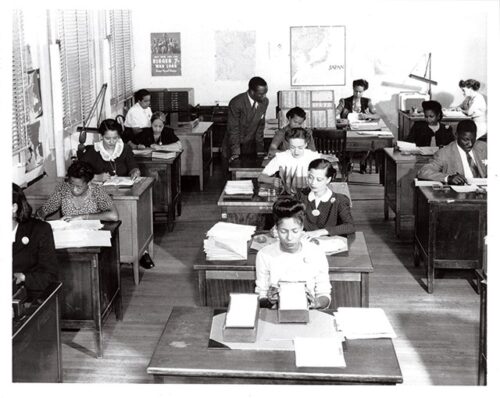
Black women in a WWII non-machine special unit of American military intelligence, led by cryptographic clerk William Coffee, Assistant Civilian In Charge of B-3-b. Source: NPS.gov (NSA)

The percentage of women to men in that photo is typical of codebreakers, if you ask the NSA historians. So let me also make an important point about the book-writing and touring reference in the above article quote:

Mundy scoured National Security Agency records…and uncovered only two names of Arlington’s Black women code breakers

Twenty years before Mundy the NSA Center for Cryptologic History published a book in 2001 called “The Invisible Cryptologists: African-Americans, WWII to 1956″ by Jeannette Williams with Yolande Dickerson (researcher).

In early 1996, the History Center received as a donation a book of rather monotonous photographs of civilian employees at one of NSA’s predecessors receiving citations for important contributions. Out of several hundred photographs, only two included African-Americans – an employee receiving an award from Colonel Preston Corderman (reproduced on page 14) and the same employee posing with his family. […] the war came, and we needed to expand. They bought Arlington Hall, and built two buildings – A Building and B Building – and we moved on Thanksgiving Day of ‘42. I’m not sure when the first blacks came, but Geneva Arthur was one of the early ones [in 1947].

Geneva Arthur.

Just saying, Mundy allegedly “scoured” NSA records and then left out Geneva Arthur in the machine section, a Black woman who rose all the way to being section head before retiring in 1973 as documented in 2001 by the NSA. Annie Briggs and Ethel Just also were mentioned in the same book by the NSA.

I suppose the real question here is whether, like Driscoll, Black women in intelligence became so accomplished they were promoted quietly and intentionally restricted by race into being further buried in secrecy — deciphering Soviet communications on the Venona project based on Genevieve Grotjan’s celebrated work. Yet very unlike the celebrated Grotjan the very many other names have been completely written out of history.

We really have to put this in proper perspective, because it used to be a given that computers meant women and then essential career-motivating factors (e.g. taking care of others, doing the right things, optimism and hope that things were going to get better) were used against them.

In June 1942, when the US government took over Arlington Hall under the War Powers Act to become their center for military intelligence and cryptanalysis, it was an all-female Junior College and boarding school.

A year later something like 2,500 civilians and 800 military staff had been assigned to the station. To put it another way, women codebreakers initially were signed on as lesser civilians, as men directly entered above them into the benefits, recognition and status of being military.

[Eunice Russell Willson Rice] joined the Office of Naval Intelligence as a language analyst in 1935 and transferred to OP-20-G—the Office of Naval Communication’s Code and Cipher Section—as a civilian cryptanalyst in 1939. During WWII, Rice led the team working Italian ciphers and codes, then learned enough Japanese on her own to lead the team charged with recovery and analysis of the vital Japanese Water Transport code.

The monotony of repetitive precision work with letters and numbers (likened to crossword puzzles), let alone huge patterns of tiny thread-like wires, was treated as women’s work and famously called computing. In all aspects of software and hardware, therefore, computers in America initially were being quietly developed and operated predominantly by women as credit flowed into the hands of men around them.

Ms. Blum was one of the pioneers in writing computer software at NSA. She led the effort to recruit Agency employees to learn how to program cryptanalytic techniques. She was aware of and taking advantage of the computer language FORTRAN at least three years before it became publicly available in 1957.

Official American history tells us that IBM released the first commercially available computer language “Formula Translation” (FORTRAN), giving credit to John Backus. Is that right? Probably not.

The NSA tells us instead half-a-century later that Dottie Blum was given a special role at IBM and was developing FORTRAN by 1954. Dottie had for years worked on U.S. Army BOMBE hardware for decoding Enigma, before she worked on the 1950 Standards Easter Automatic Computer (SEAC). Therefore her seasoned influence into FORTRAN is likely much larger than ever stated, just like her mostly unknown colleague Henriette Avram (who also wrote programs for the IBM 701) much later was credited only with developing MARC.

These are the giants of history we know a little about, leaving the large question of what the ghosted Black women of Arlington Hall accomplished that made their secrecy so important. Were they just trying to stay alive by never revealing what they knew about notoriously racist American private sector corporations who had backed Hitler, or trying to fit into a work environment that did little to prohibit or end racism?

According to [chief of the Russian plaintext exploitation branch in 1948] Jack Gurin, the critical need for clerical support prompted him to approach the personnel officer with a request for additional typists. He was told that “Code 1’s” were not available, but “Code 2’s” could be obtained. The coding, it was explained, was used on personnel records to designate race. “Code 1” was white; “Code 2” was “colored.” On the advice of the personnel officer, Gurin discussed with the existing branch personnel the possibility of bringing “Negroes” into the unit. One person, “a very dignified, good-looking Alabama lady, objected, stating that she could not ‘sit next to a colored person and work’.” Gurin relocated her desk…

Jack Gurin, anti-racist agent of change, stands as a good example of white men we should also hear more about.

But what were the names of all the Black women and what credit are they missing? The NSA notoriously built a reputation of hiring single young white women from the American south. I mean Black women apparently were instrumental in monitoring private sector companies during WWII yet afterwards we hear only about white women tasked and trusted with big IBM research roles…

I came to be interviewed at Arlington Hall in 1951, and there was a woman. I don’t know her name, but she was white… she vowed that I would not be ‘going down in the hole’… Most of the blacks at that time were assigned to the basement.

Have you read it?

Fatuous Howler: Elon Musk Biography by Isaacson “misleading and even flat wrong”

An impressively astute book review has been published on Defector.

He welcomes the return of a space race, not between rival superpowers, but between capitalists indulging in healthy competition “like that of the railway barons a century earlier.” This is fatuous in a familiar way, but also wrong: The American railway boom was 150 years ago, and brought about not by “competition” but continental-level corruption, kickbacks, bribes, and unfettered monopoly—all of it built on the backs of ruthlessly abused workers. (The injury rate at Tesla’s Fremont, Calif. facility, per a report from 2017, was 31 percent higher than the rest of the industry.)

Ouch.

The biography lacks basic truth about history.

Oh, but then it gets so much worse. The book lacks basic truth about the present, thus enabling fraud.

Even the release of Elon Musk was marred by one of Isaacson’s howlers. The biography was launched with a much-trumpeted “exclusive” published by CNN, Isaacson’s old haunt. The story, based on reporting in the book, detailed how Elon Musk personally ordered the Starlink internet service used by the Ukrainian army to be switched off as they prepared for a strike on a naval base in Russian-occupied Crimea. If you turned that upside down and tickled its tummy, it would still not resemble an exclusive. The details of the story had been reported six months prior by Oliver Carroll in the Economist, and were repeated by Ronan Farrow in the New Yorker in late August along with the tidbit, missed by Isaacson, that Musk may have turned off Starlink after speaking to Vladimir Putin.

Isaacson subsequently issued a correction (on Twitter, of all places), clarifying that the Ukrainians “asked Musk to enable [Starlink] for their drone sub attack on the Russian fleet. Musk did not enable it.” Musk himself is now on to a third version of this event—it’s hard to parse, but he blames U.S. sanctions—but whatever was claimed in the biography is now, by its own author’s own admission, apparently untrue

“Fatuous Hitler’s Turd Reich” was suggested to me by a predictive algorithm, as I started to type the word “howler” for the headline of this blog post.

The computer algorithm isn’t far off the mark. Accurate prediction.

Please read the very sharp book review in Defector instead of the fascism fluff book by Isaacson.

MIT Study: RoboTaxis Ruin Cities

From the outset, it was evident to anyone with basic knowledge of urban dynamics that Uber would have negative effects on cities. It’s not a matter of complex calculations; it’s a fundamental principle of urban transportation. Increasing the number of cars on the road leads to more problems.

The same common sense reasoning suggests that RoboTaxis will likely exacerbate these issues.

Even MIT has acknowledged its mistake in endorsing Uber, as they were so juiced on Utopia they failed to recognize the glaring warning signs.

This utopian vision was not only compelling but within reach. After publishing our results, we started the first collaboration between MIT and Uber to research a then-new product: Uber Pool (now rebranded UberX Share), a service that allows riders to share cars when heading to similar destinations for a lower cost.

One thing that really bothers me is when people discuss Utopia like this as if they are working on a tangible reality. The term itself, derived from Latin, essentially means to go nowhere. The term was coined by Sir Thomas More in 1516 in his book of the same name. It is a combination of two Greek words, “ou” (meaning “not”) and “topos” (meaning “place”), which roughly translates to “no place” or “nowhere.” MIT’s “utopian vision” of cars was going nowhere, by definition!

Considering this, MIT might want to consider reimbursing students’ tuition fees if they’re teaching that achieving utopian vision is feasible, and the end is neigh. Honestly, one might as well attend church for free instead of paying stupid money to MIT, if it’s just study of compelling unattainable beliefs.

MIT’s fixation on the dogma of revolution through detached-STEM thinking (pun intended) totally neglected the intricate, real-world dynamics of human behavior within complex systems. This classic mistake is exactly what prompted formation of a Fabian Society in London in 1884, an anti-upheaval (gradualism of social reform) organization that successfully has handled such issues for a significant stretch of time.

In an article brimming with STEM remorse about falling for the false profits of Uber (pun intended), MIT emphatically cautions now against getting involved with RoboTaxis.

Our research was technically right, but we had not taken into account changes in human behavior. Cars are more convenient and comfortable than walking, buses and subways — and that is why they are so popular. Make them even cheaper through ride-sharing and people are coaxed away from those other forms of transit. This dynamic became clear in the data a few years later: On average, ride-hailing trips generated far more traffic and 69% more carbon dioxide than the trips they displaced. We were proud of our contribution to ride-sharing but dismayed to see the results of a 2018 study that found that Uber Pool was so cheap it increased overall city travel: For every mile of personal driving it removed, it added 2.6 miles of people who otherwise would have taken another mode of transportation. As robotaxis are on the cusp of proliferating across the world, we are about to repeat the same mistake, but at a far greater scale.

Ah, the sweet taste of pride. Often followed by a not-so-graceful tumble, right? But seriously, why was MIT “proud of our contribution to ride-sharing”?

The correlation between an increase in subsidized cars and heightened traffic congestion seems like an obvious observation. Individuals from places as distant as Davis (a three-hour journey) were opting to “commute” to San Francisco, not for conventional employment but to essentially circle the city, nap in their vehicles, and contribute to the issue of public defecation while serving as “drivers” for those unwilling to walk. The city’s functionality came to a standstill because Uber failed to consider the overall capacity of people on the streets, which was significantly dwindling.

The issue at hand? Once more, it’s the age-old equation: more cars equals more headaches.

This is wisdom older than your grandma’s secret apple pie recipe. It’s not brain surgery; it’s not even “hey, we’re on the brink of utopia” snake-oil salesmanship as ancient as steam engines.

Taxis, or cars in general, really shine when it comes to serving folks who can’t sprint or comfortably hop onto a bus. But when you attempt to cram everyone into a car, you’re basically signing up for a masterclass in waste and inefficiency.

Hold onto your cabriolet hats, folks! The Uber saga was a spectacular display of wastefulness and inefficiency, a saga foreshadowed by centuries of shared transportation history.

  • Hacker? England 1625 from Hackney (although some claim French haquenee)
  • Cab (Cabriolet)? England 1820 from French cabrioler
  • Taxi? Germany 1895 from French taxe

This is not new stuff. Yet in the 2010s instead of taking a leisurely stroll for a few blocks, people decided to gather on bustling street corners, waiting to congest the roads in colossal, empty, self-centered metal boxes, leaving behind a trail of pollution and traffic snarls that could rival a spaghetti monster convention.

I think it’s pretty amazing that these people without scientific backgrounds — or really any education at all — think they have the right to decide the [transit systems]. And it blows my mind that they are getting away with it.

Picture this: an entire city street, maybe even a whole neighborhood, held hostage by the one guy who’s treating his latte frappuccino like it’s a cauldron of magic potion. Meanwhile, his Uber, just a stone’s throw away, has decided to throw a temper tantrum in the middle of the road, blocking all traffic while screaming at the top of its metallic lungs, “CHAD! Anyone, anywhere, please tell me if you’ve seen a CHAD! I’m here, waiting for CHAD!”

It’s like a scene from a sitcom where the latte-sipping wizard and the rogue Uber car team up to create a traffic jam worthy of a Shakespearean tragedy. “To honk or not to honk, that is the question!” No five-star ratings allowed by the thousands of people inconvenienced by the stupid “ride-hailing app” performances they have to witness.

Source: Twitter, 1 Sep 2022 “Пишут «Яндекс.Такси» хакнули и заставили многих водил ехать на один и тот же адрес в Москве – как итог образовалась огромнейшая пробка на Кутузовском проспекте”

Ah, the history lesson of the ages! People were grappling with this conundrum for centuries, especially when those old-timey hackney cabs were turning city streets into chaos. Then, like a dazzling revelation from the 1800s, we discovered that buses, streetcars, and subways were the real MVPs. We all have places to be, so you hop on board, take a seat, and zip your lip. It works wonders because we’re all in this together, not stuck in that backward world of cutthroat competition like Uber.

For god’s sake they even named the stupid company Uber. How could the disaster of callous capitalist nihilism be any less obvious?

The whole ride-share “explosion” felt like a group of overconfident, privileged guys who missed the memo on history, thinking they could throw billions at reinventing the wheel and somehow make it less, well, wheel-like. I was there, both inside and outside those companies, shaking my head in disbelief.

Around 2012, it seemed like I was a lone tech warrior resisting the awful siren call of Uber, amidst meetings with dozens of big-shot executives running billion-dollar empires. They were all in, betting our fortunes on Uber, while I stood my engineering ground armed with the simple wisdom of human behavior studies. I’d show up with train tickets and bus receipts, each sporting single-digit price tags, and they laughed at my “lesser” status while they casually tossed around hundreds and more for an Uber ride.

At one point I found myself in an exclusive invitation to Uber’s HQ, where they rolled out the red carpet and asked me to help lead their security team. I decided to go out of courtesy and a dash of curiosity. But as soon as they started pitching their grand plan — “We want to be as indispensable as water, so people can’t survive without paying us…” — I felt like I was in a bad sci-fi Dystopia (lesser Utopia) and made a hasty exit, practically diving for the door.

“Let them ride in cake,” did you say?!

Approximately ten years later, while strolling through the streets of San Francisco, one of the original developers of Uber made a startling confession to me. They admitted that their early product design was shockingly naive. In their detached-STEM enthusiasm, they believed that constantly harvesting sensitive personal data through various sensors (such as geolocation, motion, video, and microphones) during every car ride, essentially engaging in covert surveillance of customers without their knowledge, would somehow benefit society. However, they acknowledged that they eventually had to leave the project when they came to the stark realization that this approach was a grave ethical error: creating an app pretending to be essential for survival while relentlessly spying on users for profit.

So here we are, MIT advising us to study human behavior to predict, well… known human behavior. Makes perfect sense to me. What took them so long? I guess they had to stop believing.

Now, if you’re dealing with a disability, a robotaxi might make as much sense as a luxurious, oversized wheelchair or, heck, even an elevator (vertical subway car) instead of stairs. But for the rest of us, it’s time to put on those walking shoes, head to the train, and stop being the roadblock to progress!

A train to a remote office in Connecticut was no joke, for example, a logistical maze in America’s shameless suburban planning system. I arrived early using a $18 train from NYC and finding a local bus that cost me $3 for the last mile, walking a sidewalk from the stop to the door. The other executive pulled up behind, sweaty, late and barking “no problem, it was only $200 for my Uber but we got some bad traffic”. He should have been fired on the spot.

Despite decades of working in Silicon Valley, working inside the largest and most successful tech companies, to this day I’ve taken only one Uber ride. As soon I as I stepped in it, I knew it was wrong. The Fabians probably would have just said: “no shit Sherlock”.

Tesla 10x Worse Than OceanGate Disaster

Over 40 people have been killed by Tesla, according to the latest data.

Tesla Deaths Total as of 9/4/2023: 449 | Tesla Autopilot Deaths Count: 41

The primary difference of Tesla versus OceanGate, aside from 10X the fatalities, is only one CEO has not been killed yet by his own fraud.

To put it another way, a Tesla Model X weighs 5000 lbs (as much as a truck) and is priced for high-cost engineering, yet even a sub-compact Honda has far safer lower control arms.

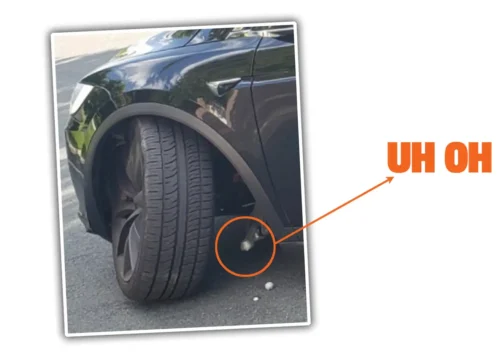
“Nice $80k black hole for money that almost got us killed. Thanks a lot Elon.” Complaint filed for safety failure on brand new Tesla. Source: Jalopnik, which also includes a flurry of bizarre Twitter attacks on this complaint as context of “…you really have to hand it to Tesla for inspiring this degree of crazy, evidence-denying loyalty among their fans. […] It’s a strange part to fail, though, really. It is a part subject to intense stresses, but it’s not like it’s particularly complex or poorly understood—this is some Cars 101 shit right here. It’s a control arm. No need to call SpaceX to consult, because this is absolutely not rocket science. This is also the kind of failure, that, were it to happen at speed, could potentially cause a wreck that could result in, potentially, people getting hurt. A week-old car should not have problems like this. Hell, a car a decade or more old shouldn’t have control arms just snapping. This is ridiculous. and the idea that a car with no evidence of a major accident shouldn’t have this covered by warranty is absurd as well.”

The plastic Tesla accelerator pedal design snaps off like a twig… and on and on, it’s a brand riddled with known and unnecessary safety failures.

Musk was willing to let some quality issues slide…. Tesla was building the airplane as Musk was heading down the runway for takeoff.

A new Vanity Fair article details the management culture that caused OceanGate tragedy under sea, but really it is about the absurdity of Elon Musk.

Carbon fiber is great under tension (stretching) but not compression (squeezing), he told me, offering an example: “You can use a rope to pull a car. But try pushing a car with a rope.”

The entire premise of OceanGate was false. Just like the completely backwards Tesla AI “vision” for driverless has always been a fraud.

The Vanity Fair writer calls this an “avoidable inevitable” disaster, which is a disturbing oxymoronic phrase. It sounds like something that should not be set into motion that is set into motion, and kills people.

There is evidence these CEOs want failures, want to see deaths, and do it to prove life doesn’t matter to them (e.g. the way a slave owner used to torture someone to death as a spectacle, or the Edison used to cruelly murder animals in public).

Why? It seems that in America, there is a tendency to overlook clear failures in ensuring safety, all while allowing unchecked experimentation under the guise of anti-regulation, with individuals who lack expertise defending this approach by claiming false certainty about the future.

In 1776, America rejected scientific reasoning, rejected adherence to established rules, and actively resisted safety precautions in its pursuit of creating a new nation for perpetuating slavery, even as the rest of the world was moving towards abolition. This decision was driven by a small group of white men who fancied themselves as pioneers, disruptors, and rule-breakers, and were willing to disregard the value of human life to expand slavery. It is the kind of men highlighted again by this Vanity Fair article.

As the world now knows, Stockton Rush touted himself as a maverick, a disrupter, a breaker of rules. So far out on the visionary curve that, for him, safety regulations were mere suggestions. “If you’re not breaking things, you’re not innovating,” he declared at the 2022 GeekWire Summit. “If you’re operating within a known environment, as most submersible manufacturers do, they don’t break things. To me, the more stuff you’ve broken, the more innovative you’ve been.” In a culture that has adopted the ridiculous mantra “move fast and break things,” that type of arrogance can get a person far. But in the deep ocean, the price of admission is humility — and it’s nonnegotiable…

In December 2015, two years before the Titan was built, Rush had lowered a one third scale model of his 4,000-meter-sub-to-be into a pressure chamber and watched it implode at 4,000 psi, a pressure equivalent to only 2,740 meters. The test’s stated goal was to “validate that the pressure vessel design is capable of withstanding an external pressure of 6,000 psi — corresponding to…a depth of about 4,200 meters.” He might have changed course then, stood back for a moment and reconsidered. But he didn’t. Instead, OceanGate issued a press release stating that the test had been a resounding success because it “demonstrates that the benefits of carbon fiber are real.”

This is the “I could stand in the middle of Fifth Avenue and shoot somebody and I wouldn’t lose any voters” brag applied to science, as if it’s just a coin-operated popularity contest. Gravity doesn’t bother tinpot dictators who buy media companies to peddle anti-gravity snake-oil. Henry Ford purchased the Dearborn Independent newspaper with the intent of promoting harmful racist ideologies and a callous disregard for human life. This effort succeeded in persuading fervent supporters, including Adolf Hitler, with a web of egregious falsehoods that led to genocide.

In this situation, it’s essential to identify who possesses clear authority to prevent a dangerous plan that rejects science, disregards regulations, and poses a significant threat to human lives. When an individual in America claims that they are merely joking or experimenting, similar to how a toddler might behave, it raises questions about accountability. Such “inevitable but avoidable” plans to cause harm disregard the rights protected by any recognized authority and instead assert the unilateral power to define truth, often arguing that experiments with almost certain fatal outcomes should not be held accountable.

Across the annals of history, a stark and recurring theme emerges: the dramatic elevation of the right to unjustly put people into harms way, frequently accompanied by an unwavering commitment to ignorance (akin to the abusive nativist “Know Nothing” movement), often taking precedence over any fundamental right to life.

When the OceanGate’s marine operations director issued an internal audit (Quality Control Inspection Report) filled with expert risk warnings, the CEO applied huge amounts of bogus legal pressure to kill it.

These included missing bolts and improperly secured batteries, components zip-tied to the outside of the sub. O-ring grooves were machined incorrectly (which could allow water ingress), seals were loose, a highly flammable, petroleum-based material lined the Titan’s interior… Yet even those deficiencies paled in comparison to what Lochridge observed on the hull. The carbon fiber filament was visibly coming apart, riddled with air gaps, delaminations, and Swiss cheese holes — and there was no way to fix that short of tossing the hull in a dumpster…

Rush’s response was to fire Lochridge immediately, serve him and his wife with a lawsuit (although Carole Lochridge didn’t work at OceanGate or even in the submersible industry) for breach of contract, fraud, unjust enrichment, and misappropriation of trade secrets; threaten their immigration status; and seek to have them pay OceanGate’s legal fees.

Excellent reporting from Vanity Fair.

Regrettably, as many are aware, the unfortunate sequence of events that followed involved the CEO taking his own life, along with the lives of his customers, in a tragedy that seemed preventable but sadly unfolded in a cult-like Kool-Aid disaster.

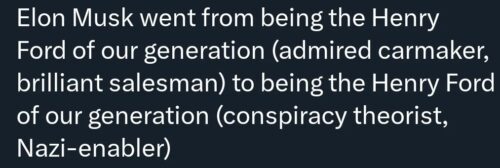
Safety experts, responsible for establishing explicit guidelines and regulations, could only watch in dismay as both OceanGate and Tesla customers ended their lives unnecessarily. Henry Ford surely would be impressed, probably in the same way he allegedly inspired Hitler and contributed to millions of deaths.

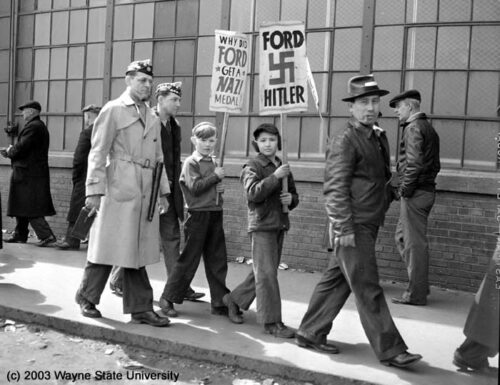
American autoworkers and their children in 1941 protest Ford’s relationship with Hitler. Source: Wayne State

The best phrase to describe both OceanGate and Tesla comes from 2018, when Vanity Fair says a science expert was asked for advice on the design:

Do not get in…. He is going to have a major accident.

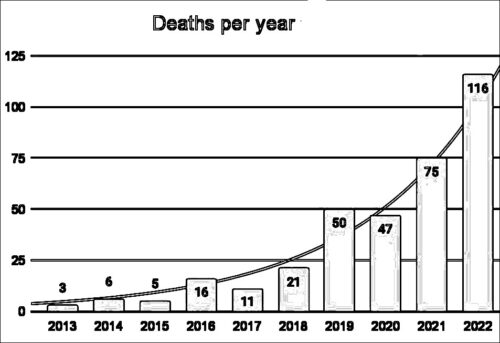
More like hundreds or more accidents. If the OceanGate CEO hadn’t been killed so early, his death chart likely would have looked like the tragedy of Tesla (which infamously stoked wildly large investments by claiming their unique vision would eliminate all deaths):

Tesla attracted investors by promising it would revolutionize car safety. Immediately the reverse happened as it started killing more people than other brands. Today it is an outlier with its extremely high death tolls; one out of every ten “Autopilot” crashes being fatal. Source: Tesladeaths.com