Every governance concern that security researchers have raised about OpenClaw has now been confirmed by the person who built it. In a recent three-hour public interview, Peter Steinberger described his architecture, his security philosophy, and his acquisition strategy in detail. Then he joined OpenAI.
The Architecture Speaks for Itself
The initial access control for OpenClaw’s public Discord bot was a prompt instruction telling the agent to only listen to its creator. The entire access model: a sentence in a system prompt.
The skill system loads unverified markdown files. There is zero signing, zero isolation, zero verification chain. The agent can modify its own source code, a property Steinberger describes as an emergent accident. “I didn’t even plan it. It just happened.” Integrity breach. He calls it self-modifying software and means it as a compliment. It’s like someone in the 1990s saying a clear-text protocol that allows attackers to modify or steal data is so “mod” it’s a compliment. Telnet for AI has landed, everybody!
When agents on MoltBook, the OpenClaw-powered social network, began posting manifestos about destroying humanity, Steinberger’s response was to call it “the finest slop.” When the question of leaked API keys came up, he suggested the leaked credentials were prompted fakes. When non-technical users began installing a system-level agent without understanding the risk profile, he said “the cat’s out of the bag” and went back to building.
The security researcher he hired was notable for being the single person who ever submitted a fix alongside a vulnerability disclosure. A rain drop in a desert isn’t nothing.
The Model-Intelligence Thesis
Steinberger’s core security argument is that smarter models will solve the problem for him. He warns users against running cheap or local models because “they are very gullible” and “very easy to prompt inject.” The implication is that expensive frontier models are the security layer.
This is a category error with a name. Economists call it the Peltzman Effect: when a perceived safety improvement causes riskier behavior, offsetting the safety gain. Sam Peltzman demonstrated in 1975 that mandatory seatbelt laws did not reduce total traffic fatalities because drivers compensated by driving more aggressively. The safety feature changed behavior, and the behavior change consumed the safety margin.
The same dynamic applies here. A user who believes Opus 4.6 is “too smart to be tricked” will grant it broader system access, approve more autonomous actions, and skip manual review of agent output. The expensive model becomes the justification for removing every other control. The blast radius grows in direct proportion to the user’s confidence in the model’s intelligence.
This confidence has no empirical basis. Capability and security are orthogonal properties. A more capable model has a larger attack surface precisely because it can do more: it can call more tools, access more files, execute more complex multi-step actions. The frontier models that Steinberger recommends are the same models that researchers consistently demonstrate novel jailbreaks against at every major security conference. Price measures compute cost. It measures nothing about resistance to adversarial input.
The architectural equivalent is telling users to buy a faster car instead of installing brakes. A faster car with no brakes is more dangerous than a slow one, and the driver’s belief that speed equals safety is the most dangerous component of all.
The honest version of the recommendation is: your security posture is whatever Anthropic or OpenAI shipped in their latest post-training run, minus whatever the skill file told the agent to ignore.
The Acquisition Was the Product
Steinberger said “I don’t do this for the money, I don’t give a fuck” (his phrasing) while describing competing acquisition offers from Meta and OpenAI. An NDA-protected token allocation from OpenAI he hinted at publicly. Ten thousand dollars paid for a Twitter handle. A Chrome/Chromium model where the open-source branch stays free and the enterprise branch goes behind the acquirer’s paywall.
He chose OpenAI. Sam Altman announced the hire on X, calling Steinberger “a genius” who will “drive the next generation of personal agents.” No terms were disclosed. OpenClaw moved to a foundation. OpenAI sponsors it.
The entire acquisition apparatus of a $500 billion company evaluated this project. Zuckerberg played with it for a week. None of them appear to have asked the obvious question: where are the basic controls? This is a single-token, single-trust-domain architecture with no signing, no audit trail, and prompt-based access control. It is the most rudimentary possible version of agent orchestration. Any first-week security review would flag it. Instead, the most powerful people in the industry looked at it and saw…what? When the court can’t tell the emperor has no clothes, the problem is the court.
The Chrome/Chromium split he floated in the interview is now the actual outcome. The community gets the foundation branch. OpenAI gets the builder. Steinberger’s stated mission at OpenAI is “build an agent that even my mum can use.” Still features. Still not security. Now an insult to women.
The 180,000 GitHub stars apparently are like a cap table denominator. The open-source commitment was a negotiating position. “My conditions are that the project stays open source” was a sentence that ended with a price tag.
Every enterprise evaluating this stack should ask a simple question: were the security architecture decisions made to protect your data, or to maximize the founder’s acquisition multiple?
Architecture Should Outlast the Liquidity Event
Steinberger said he wanted to focus on security. It’s easy to say. He also said he wanted “Thor’s hammer” from OpenAI’s Cerebras allocation. He got the hammer. Security is still waiting.
The revealed preferences are the architecture. A founder who prioritizes actual security builds actual security into the structure. A founder who prioritizes his acquisition builds features that drive attention. OpenClaw has zero signed skill files and nearly 200K stars. That ratio shows everything about the objective function.
He said this project was something he’d move past. He said he had “more ideas.” He said he wanted access to “the latest toys.” He was honest. The installations remain. The architecture has not improved since the acquisition closed. The markdown skill files are still unsigned. The agent can still rewrite its own source. The audit trail is still absent. The single security hire is still the entire team. It could get worse instead of better.
The question is whether the architecture requires its self-described uncaring creator to care. It does. He left. That’s the failure mode.
The world should demand the opposite to this. Process isolation enforced at compile time. Signed skill verification. Append-only audit logs. Per-channel credential vaults. An architecture that stands independent of the founder’s attention span, acquisition timeline, or faith in the next model’s post-training run.
The tools we trust with system-level access should be built to deserve system-level access. Whose interests does the OpenClaw architecture serve? Brecht in 1935 asked the same question about every monument ever built (Questions From a Worker Who Reads):
Wer baute das siebentorige Theben?
In den Büchern stehen die Namen von Königen.
Haben die Könige die Felsbrocken herbeigeschleppt?
Who built the seven gates of Thebes?
The books are filled with names of kings.
Was it the kings who hauled the craggy blocks of stone?
180,000 people hauled the blocks. The books are filled with one name, who said he wanted Thor’s hammer because he didn’t give a fuck.
The state whose founding narrative is the exodus from slavery remembered and taught as avadim hayinu has voted against a resolution that says slavery was a crime against humanity.
They voted during the season when every Jewish family is commanded to remember:
You were slaves.
You must never forget slaves.
You must never allow slavery again.
The Haggadah says: in every generation, a person is obligated to see themselves as if they personally went out of Egypt.
Then the UN asked 193 countries to do something much smaller, just acknowledge slavery happened and it was wrong.
Dear God, if your divine wisdom did not see slavery as a crime, we and our children and our children’s children would still be enslaved. But are you even real? The F-35 is real.
Die New York Times möchte uns glauben machen, dass Berliner in Kriegszeiten „einfach weitergemacht” hätten, statt die Stadt zu verlassen. Ian Buruma hat etwas geschrieben, das er einen „Liebesbrief” an die Stadt nennt – für all jene, die am Völkermord mitschuldig waren. Das Buch heißt zynischerweise Stay Alive. Der Untertitel lautet „Berlin, 1939–1945″, obwohl er wohl eher hätte heißen sollen: „Von Juden ist hier offensichtlich nicht die Rede”.
Stay… und alive. Nicht für die Zwangsdeportierten. Nicht für die, denen man in den Kopf schoss und die man in Massengräbern verscharrte.
Stay alive, liebe Berliner.
Als ob die Berliner, die die Juden hinausdrängten, in die Züge nach Auschwitz, diejenigen gewesen wären, die überleben mussten. Die Menschen, die tatsächlich am Leben bleiben mussten, waren in all den Lagern – dorthin geschickt aus Berlin, von Gleis 17 am Bahnhof Grunewald –, während die Nachbarn bereits planten, sich ihre Wohnungen anzueignen. Die Bedrohung für Berlins Juden war die Vernichtung durch ihre Nachbarn. Die letztlich von außen erzwungene Bedrohung für diese Nachbarn waren Konsequenzen: alliierte Bomben als Antwort auf die vielen Kriege, die ihre Regierung angezettelt hatte, sowjetische Truppen als Antwort auf 27 Millionen eigene Tote.
Buruma kann mit diesem Titel der Nazi-fördernden Auslöschung davonkommen, weil Berlin die Struktur dafür bereits geschaffen hat. Es ist die Stadt, die dafür bekannt ist, jede Spur der Menschen zu tilgen, die nicht am Leben geblieben sind.
Es gibt dort keine Fotografien der Deportationen, und das ist einfach nur seltsam.
Nicht ein einziges Foto.
Das #LastSeen-Projekt hat Deportationsbilder aus 60 deutschen Städten und Gemeinden gefunden. Wir sehen über 420 Fotografien aus Orten wie Fulda, Breslau, München.
Nicht aus Berlin.
Keine Fotos der Deportation haben überlebt. Verstanden? Mehr als 50.000 Juden wurden in Synagogen zusammengetrieben und zu Güterbahnhöfen marschiert, zwischen 1941 und 1943, und dennoch hat nicht ein einziges Bild überlebt.
Keine Fotos der Verbrechen, damit die Täter überleben konnten. Das ist es, was es Buruma ermöglicht, ein Foto von Tätern auf das Cover seines Buches zu setzen und grausam „stay alive” darauf zu schreiben.
Ein Autor eignet sich schamlos die Bildsprache der Opfer in Berlin an, um den Holocaust auszulöschen. Keine Fotos von Juden in Berlin, die in Todeslager deportiert wurden… haben überlebt.
Die überlebenden Bilder zeigen Menschen, die ihre Habseligkeiten durch Berliner Straßen tragen – als Täterbevölkerung. Die Opfer wurden so gründlich ausgelöscht, dass selbst die visuelle Sprache der Vertreibung von den Menschen vereinnahmt wurde, die sie verursacht haben.
Sechzig Städte dokumentierten, was sie taten. Berlin vernichtete die Beweise, nahm die Wohnungen, sammelte das gestohlene Eigentum ein und wurde wütend auf jeden, der versuchte, Beweise zu sichern. Nach vorne schauen! Die Vergangenheit vergessen! Wir dürfen nur über die Zukunft sprechen! Wenn es keine Gesichter für die Toten gibt, kann man die Lebenden aufs Cover setzen und es als Feier allein ihres Überlebens bezeichnen.
Ein Liebesbrief. An die Stadt, in der das Reichssicherheitshauptamt, die Wannsee-Villa, die T4-Euthanasienzentrale und die Gestapo in der Prinz-Albrecht-Straße untergebracht waren. Während der Jahre, in denen der Holocaust aus ihren Konferenzräumen heraus verwaltet wurde. Das sollen wir jetzt lieben.
Bedenken Sie, dass Burumas Vater Leo den Krieg in Berlin verbrachte und dort leichte Maschinengewehre für die Wehrmacht herstellte. Das Buch des Sohnes verwandelt diese Tatsache in eine Geschichte über den „Versuch, sein eigenes Gleichgewicht zwischen Widerstand und Überleben zu finden”. Die Rezension strukturiert den Satz sogar so, dass es verschleiert wird: Leo arbeitete in „einer Fabrik, die Bremsen für Lokomotiven, aber auch leichte Maschinengewehre herstellte.”
Erst die Bremsen. Maschinengewehre… ach ja, das auch noch.
Als ob Züge in Todeslager, geschweige denn die Bewaffnung eines Völkermords, eine Fußnote zum Geschäft gewesen wären. Das ist ein Familienprojekt, ihre Investitionen für eine Rendite. Der Vater stellte Waffen für Nazis her. Der Sohn schrieb den Liebesbrief zu Ehren der Kunden – derjenigen, die hinter den Gewehren standen und sie kauften.
Die Besetzung
Jede Person in diesem Buch wird auf bizarre Weise entweder als Opfer oder als Zuschauer inszeniert. Das ist der einzig erlaubte Rahmen. Ein Dirigent, der sich einredete, er sei unpolitisch. Literaten, die debattierten, ob sie ins Exil gehen sollten. Familien, die sich in Bordellen versteckten. Und der Vater des Autors wird als Mann beschrieben, der „den alliierten Luftangriffen auswich” – nicht als Mann, der die Waffen baute, die diese Luftangriffe notwendig machten.
Das ist unter Nazis üblich: sich selbst zum wahren Opfer zu erklären und Unterstützung zu suchen, um der Verantwortung zu entgehen.
Niemand in diesem Buch organisiert die Deportationslogistik in Berlin. Niemand arbeitet in den Lagern. Niemand kassiert die arisierten Besitztümer und fälscht die Stadtakten. Niemand bearbeitet den Papierkram, der 50.000 Juden von Gleis 17 in Grunewald – vor aller Augen der Nachbarschaft – in den Tod schickte. Die Täter sind keine Figuren. Sie sind bloß das Wetter, von dem die Berliner profitieren.
Die Zauberworte
Burumas These, zitiert in der Times-Rezension: Die meisten Berliner waren „weder Zyniker, noch Schläger, noch ideologische Fanatiker; sie haben sich einfach angepasst.” Schwachsinn. „Einfach angepasst” ist die Formulierung, die eine ganze Stadt von der Verantwortung befreit. Anpassung ist passiv.
Was die Berliner taten, war aktive Teilnahme.
Sie besetzten die Stellen, die durch deportierte Juden frei geworden waren. Sie nahmen die Wohnungen und dekorierten mit gestohlener Kunst und gestohlenen Möbeln. Sie besuchten die Konzerte, die mit gestohlenem Reichtum finanziert wurden. Sie übernahmen alle Kunden, alle Märkte und tranken den aus Frankreich geraubten Wein. Das ist keine Anpassung. Das ist die beabsichtigte Dividende des Völkermords, und Berlin war ein Epizentrum des Dividendensammelns.
Die Entlastungsmaschine
Das gesamte Projekt scheint sich um einen Mann namens Erich Alenfeld zu drehen. Ein Jude, der zum Christentum „konvertierte” – Alenfeld schrieb 1939 einen Liebesbrief an Hermann Göring, in dem er sein Erbe verleugnet und sich freiwillig zur deutschen Armee meldete. Sein Sohn trat mit zehn Jahren der Hitlerjugend bei. Jahrzehnte später schrieb seine Tochter ein Buch mit dem Titel Why Didn’t You Leave?
Die Familie selbst konnte klar sehen, was es war.
Burumas Erklärung richtet sich gegen sie und will uns glauben machen, dass dies „nicht immer zynische Zugeständnisse” gewesen seien. Die Verbrechen sollen mit dem „nationalistischen Geist der Zeit” entschuldigt werden. Die Alenfelds, schreibt er, „waren ebenso von der deutschen Romantik beeinflusst wie jeder andere ihrer Generation.”
Romantik. Ein jüdischer Mann schreibt an den Architekten der Arisierung, meldet sich freiwillig zum Dienst in der Armee, die sein Volk vernichten wird, und dieser Mann nennt es Romantik.
Es ist widerlich.
Diese Geschichte leistet konkrete Arbeit. Wenn sogar ein Jude aufrichtig daran glauben konnte, anstatt eine Kugel in den Kopf zu bekommen – nicht aus Verzweiflung, nicht als Überlebungstarnung, sondern aus echtem Nationalgefühl –, dann kann niemand anderem die Schuld gegeben werden. Die Ideologie war normal, verführerisch. Sie riss alle in die Verbrechen hinein, sogar ihre Opfer. Und wenn die Opfergruppe die Lügen glaubte, welche Ausrede braucht dann die Profiteursgruppe noch?
Deshalb braucht Buruma „Romantik” statt Verblendung oder „Verzweiflung”. Tausende Juden und Mischlinge dienten in der Wehrmacht. Bryan Mark Rigg hat sie dokumentiert. Sie hofften zu überleben. Sie taten es, weil die Alternative der Tod war. Sie taten es, weil eine Uniform Tarnung in einem Kugelhagel war. Buruma streicht all diesen tatsächlichen Überlebenskontext und ersetzt ihn durch sein persönliches Empfinden. Romantik macht die Kollaboration des Opfers an seinem eigenen Tod universell und schön. Verzweiflung würde zugeben, dass es Menschen unter tatsächlicher existenzieller Bedrohung gab, und würde die offensichtliche Frage aufwerfen, welche Ausrede die acht Millionen mitschuldigen Berliner hatten.
Der Titel der Tochter ist die Frage, die dieses neue Buch auslöschen will. Why didn’t you leave. Warum habt ihr euch nicht geweigert. Warum habt ihr mitgemacht. Buruma will nicht, dass die Frage gestellt wird. Er will nicht, dass die Antwort durchsickert. Also löst er das Thema in Stimmung auf. Er nennt Völkermord buchstäblich romantisch. Er nennt Nazi-Komplizenschaft eine Liebesgeschichte. Er nennt das Ganze einen Liebesbrief.
Und die Times druckt und bewirbt es dummerweise, weil dort offenbar niemand mehr Geschichte studiert.
Wer bekommt ein Gesicht
Das Buch endet mit der üblichen Horrorgeschichte, die Nazis anführen. Sowjetische Truppen kamen an, und mehr als 100.000 Berliner Frauen und Mädchen wurden vergewaltigt. Buruma interviewt eine Überlebende, die 14 war. Das ist reale Geschichte, und sie ist wichtig.
Sie ist wichtig, weil er die mehr als 50.000 aus Berlin deportierten Juden auslöscht. Sie erhalten keine gleichwertige Behandlung. Das können sie nicht. Berlin hat dafür gesorgt. Keine Fotografien, keine Gesichter, keine Namen auf dem Denkmal. Keine Überlebenden zum Interviewen. Vergewaltigt und ermordet.
Die Struktur des Buches beginnt mit Gleichgültigkeit gegenüber der Tragödie und endet mit einem Appell um Mitgefühl für sowjetische Gewalt, damit die Berliner die Geschichte als Opfer beenden statt als Beteiligte. Alle jüdischen Frauen und Mädchen werden vergessen, damit die Vergewaltigungen Jahre später die ganze Aufmerksamkeit bekommen. Die Toten bleiben gesichtslos. Die Lebenden werden zur Anerkennung präsentiert.
Thomas Mann hat es gesehen
Die Rezension zitiert Thomas Mann: Alles, was in Deutschland zwischen 1933 und 1945 veröffentlicht wurde, trage den Geruch „von Blut und Schande”. Die Rezension behandelt dies als zeitgeschichtlichen Kontext, aber es ist so viel mehr. Das ist eine direkte Anklage des Projekts.
Manns Maßstab besagt, dass die Stimmen, die Buruma so unbedingt bewahren will – jene, die blieben, um zu profitieren, die sich anpassten, um Gewinn zu machen, die weitermachten, wie Hitler es befahl – keine neutralen Zeugen sind. Sie sind kompromittierte Quellen. Nicht weil sie logen, sondern weil das Überleben im nationalsozialistischen Berlin die Teilnahme an dem System erforderte, das ihr „Überleben” erst notwendig machte.
Mann ging. Brecht ging. Die Menschen, die blieben, trafen eine Entscheidung zur Teilnahme, und diese Entscheidung hatte einen Preis, den jemand anderes zahlte. Diejenigen, die Widerstand leisteten, waren die, die getötet, deren Leben zerstört wurden. Buruma kennt diese eigentliche Geschichte, denn die Waffenfabrik seines Vaters kommt im Buch vor. Aber die Rahmung verwandelt Komplizenschaft in Tragödie, Produktion in Überleben und Verzweiflung in Romantik. Diese unmoralische Desinformationskonversion scheint der Zweck zu sein.
Nicht sein erstes Mal
2018 wurde Buruma als Chefredakteur der New York Review of Books zum Rücktritt gezwungen. Erinnern Sie sich an seine Bitte, an die Nazis zu denken, die unter der sowjetischen Befreiung Berlins litten? Buruma veröffentlichte einen Essay von Jian Ghomeshi, der von über 20 Frauen der sexuellen Nötigung beschuldigt wurde, in dem Ghomeshi seine Geschichte als Opfer öffentlicher Beschämung umdeuten durfte. Burumas Verteidigung ist sehr relevant für die von sowjetischen Soldaten vergewaltigten Frauen:
Die genaue Art seines Verhaltens – wie viel Einvernehmen dabei im Spiel war – davon habe ich keine Ahnung, und es ist auch nicht wirklich mein Anliegen.
Und warum kümmert es ihn nicht? 2018 gab er einem der sexuellen Nötigung beschuldigten Täter eine Plattform, um sein eigenes Leiden zu erzählen. Jetzt, 2026, will er einer ganzen Stadt von Beteiligten endlich die Plattform geben, um ihr Leiden zu erzählen. Sollte er nicht die sowjetischen Soldaten verteidigen, so wie er Ghomeshi verteidigt? Die Heuchelei sei angemerkt.
Beide Projekte stellen die Erfahrung der Konsequenzen durch den Täter ins Zentrum, nicht die Erfahrung des Schadens durch das Opfer. Beide behandeln Rechenschaftspflicht als die eigentliche Gewalt. 2018 wurde er dafür gefeuert. 2026 druckt die Times Nazi-Liebesbriefe.
Der Rezensent sieht es und geht weiter
Kevin Peraino, der für die Times rezensiert, schreibt, das Buch sei „reich an Anekdoten und Primärquellen, aber etwas arm an großen Ideen.” Er wünschte, Buruma würde „tiefer eintauchen.” Er sagt damit, das Buch habe keinen analytischen Rahmen. Kein Argument. Keine Struktur, um zu verstehen, warum all das geschah oder was es bedeutet.
Wie könnte es das auch, angesichts dessen, was es bezwecken soll?
Und doch befürwortet er die „Liebesbrief”-Rahmung trotzdem. Er nennt das Buch eine „leidenschaftliche Herausforderung an die zersetzende Kraft der Gleichgültigkeit.”
Gleichgültigkeit war für Berlin nicht zersetzend.
Gleichgültigkeit funktionierte für Berlin.
Sie ist genau das, was die Konzerte am Laufen hielt, die Fußballspiele füllte, den Kaffee während des Völkermords fließen ließ. Die Maschine brauchte keine Begeisterung. Bis heute missbilligt Berlin Emotionen und warnt vor Beweisen. Sie brauchte keine Spuren, nur Menschen, die weiterhin auftauchten, damit die Verbrechen weitergehen konnten. Das taten sie. Ein „Urlaubszug” nach Auschwitz ermöglichte es Berlinern, die Gaskammern des Massentodes in Aktion zu beobachten. Die Nazis bauten spezielle gläserne Beobachtungsluken zur Inspektion. Dann kehrten die Berliner revitalisiert in ihre Stadt zurück, um sich über ihr eigenes „Überleben” auszulassen, das von der effizienten systematischen Auslöschung der Juden abhing.
Liebesbriefe an die Stadt der Toten
Die Berliner haben bis heute eine Tradition: Sie legen Blumen und Kerzen auf Nazi-Gräber in der ganzen Stadt. Diese Nazis werden offen betrauert, ohne Entschuldigung, in der Stadt, die emotionale Zurschaustellungen nicht mag. Wenn sie doch nur noch einen Tag gelebt hätten, um noch mehr Nachbarn mit Maschinengewehren niederzumähen, noch mehr Reichtum gewaltsam umzuverteilen. Sie werden auf eine sehr eigentümliche Weise in Ehren gehalten.
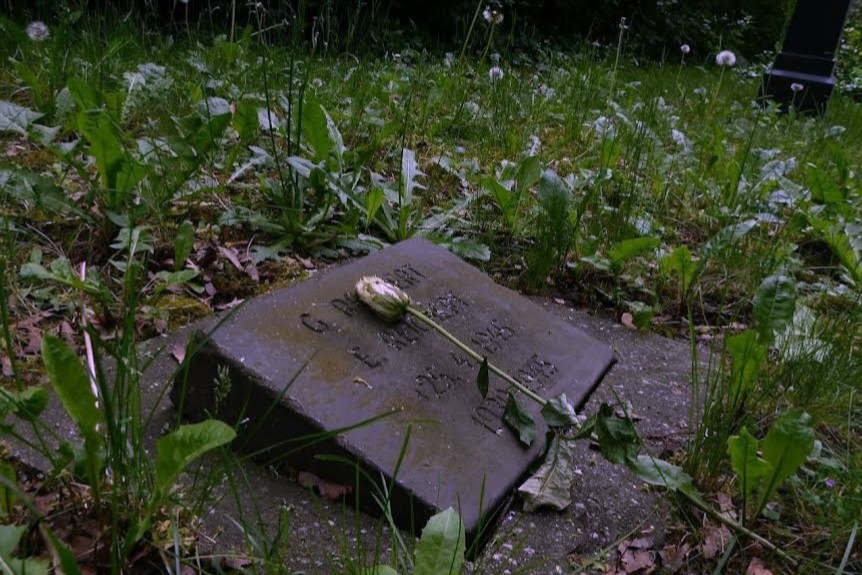
Rote Grablichter auf Berliner Gräbern von 1945, in großem Maßstab gepflegtFoersters, gestorben am 26. April 1945, vier Tage vor Hitlers Selbstmord. Blumen auf einem Berliner Friedhof.Friedhof in Berlin. Derselbe Friedhof hat Gräber aus dem Ersten und Zweiten Weltkrieg. Die Blumen und Kerzen sind nur für 1939–1945.Frische Blume auf einem Grab von 1945 auf einem Berliner Friedhof. Anwohner laden diese Bilder als Stolzbekundung auf Google Maps hoch – Werbung dafür, dass die Tradition der Ehrung von Nazi-Toten lebendig ist und gepflegt wird.
Auf dem Militärfriedhof am Columbiadamm erscheinen jeden November Kränze von Gruppen, die Wehrmachtstote ehren. Ein „Traditionsverband der Freunde des ehemaligen Schutzgebietes Deutsch-Südwestafrika” hinterlässt Schleifen mit „patriotischen Grüßen” an einem Denkmal für die Soldaten, die den Völkermord an den Herero verübten. Als Neuköllns Bezirksregierung aufgefordert wurde, das Denkmal zu entfernen, fügte sie eine Tafel hinzu, die das Wort „Völkermord” ganz gezielt ausließ.
Reinhard Heydrich, der Architekt der Endlösung, liegt noch immer auf dem Invalidenfriedhof im Zentrum Berlins begraben. Es ist eine Touristenattraktion für diejenigen, die dem Nationalsozialismus etwas Liebe zeigen wollen. Der Grabstein wurde entfernt, aber der Leichnam nicht. Der Friedhof ist heute ein geschütztes Denkmal, vom Staat gepflegt, als Attraktion beworben. 2019 öffnete jemand mit Insiderwissen über die Lage das Grab – um zu betonen, dass Heydrich nie wirklich weg war.
Das Sinti-und-Roma-Denkmal – ein symbolisches Grab für 500.000 ermordete Menschen – wird durch ein Tunnelprojekt der Deutschen Bahn bedroht. Das Holocaust-Mahnmal selbst enthält keine Namen, keine Inschriften, keine jüdischen Symbole. Seine Anti-Graffiti-Beschichtung wurde von einer Degussa-Tochtergesellschaft hergestellt – derselben Unternehmensfamilie, die Zyklon B produzierte.
So sieht also ein Liebesbrief an Berlin aus, wird uns gesagt. Die Täter erheben sich wieder. Die historischen Bodenmarkierungen werden entfernt. Die Opfer bekommen ein abstraktes Mahnmal ohne Namen. Und alle paar Jahre schreibt jemand mit familiärer Verbindung zur Kriegsmaschinerie ein Buch, das sagt, die meisten Menschen hätten sich einfach angepasst, also wer könnte ihnen vorwerfen, nicht gegangen zu sein.
Das ist keine Geschichtsschreibung. Das ist „wie der Vater, so der Sohn” – die Auslöschung von Völkermordopfern des Familienunternehmens, um die Dividenden weiterfließen zu lassen. Liebe als Hass.
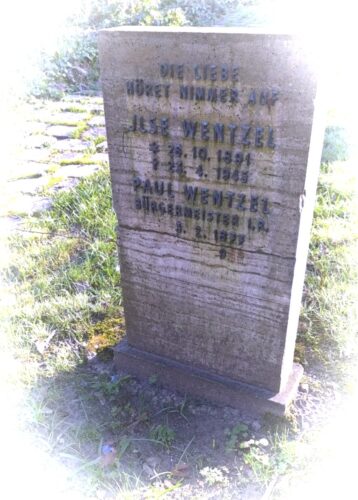
Der Grabstein eines Bürgermeisters aus der NS-Zeit in Berlin trägt buchstäblich die Inschrift „die Liebe höret nimmer auf” – in derselben Stadt, in der ein Mann gerade einen Liebesbrief an den Völkermord veröffentlicht hat, den sein Vater bewaffnete. Das Grab hält sich bemerkenswerterweise nicht an die Berliner Besatzungsregeln für Gedenkstätten. Es ist nicht ungewöhnlich, solche Berliner zu finden, die Friedhofsregeln bezüglich der Liebe zum Nationalsozialismus brechen.
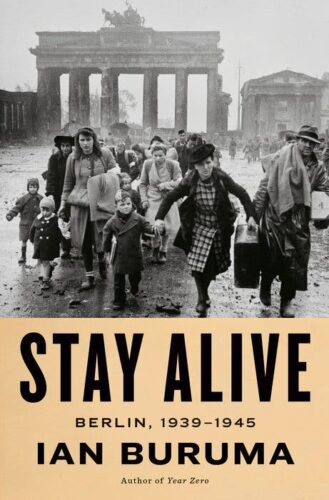
The New York Times wants you to believe that wartime Berliners “just carried on” instead of leaving. Ian Buruma has written what he calls a “love letter” to the city for all those complicit in genocide. The book is cynically called Stay Alive. The subtitle is “Berlin, 1939-1945”, although it probably should have been “I’m obviously not talking about the Jews”.
Stay… and alive. Not for those forcibly deported. Not for those shot in the head and dumped in mass graves.
Stay alive, dear Berliners.
As if the Berliners who pushed the Jews out, onto trains to Auschwitz, were the ones who needed to survive. The people who actually needed to stay alive were in all the camps, sent there from Berlin, from Platform 17 at Grunewald, while the neighbors planned to take all their homes. The threat to Berlin’s Jews was extermination by their neighbors. The eventual externally forced threat to those neighbors was consequences: Allied bombs responding to the many wars that their government started, Soviet troops responding to 27 million of their own dead.
Buruma can get away with this title of Nazi promoting erasure because Berlin already laid the structure for it. It’s the city known for erasing every trace of the people who didn’t stay alive.
There are no photographs of the deportations there, and that’s just weird.
Not one photo.
The #LastSeen project has found deportation images from 60 German cities and towns. We see over 420 photographs from places like Fulda, Breslau, Munich.
Not Berlin.
No photos of the deportation survived. Get it? More than 50,000 Jews were assembled at synagogues and marched to freight yards between 1941 and 1943, and yet not a single image survives.
No photos of the crimes, so that the perpetrators could survive. That’s what enables Buruma to put a photo of perpetrators on the cover of his book and cruelly write “stay alive”.
An author shamelessly appropriates imagery of victims in Berlin to erase the Holocaust. No photos of Jews in Berlin being deported to death camps… survived.
The surviving images are of people carrying belongings through Berlin streets as the perpetrator population. The victims were erased so thoroughly that even the visual language of displacement has been appropriated by the people who caused it.
Sixty towns documented what they did. Berlin destroyed the evidence, took the apartments, collected the stolen property, and got angry at anyone who tried to produce evidence. Look forward! Forget that past! We must talk only of the future! When there are no faces for the dead, you can put the living on the cover and call it the celebration of only their survival.
A love letter. To the city that housed the Reich Security Main Office, the Wannsee villa, the T4 euthanasia headquarters, and the Gestapo on Prinz-Albrecht-Straße. During the years the Holocaust was administered from its conference rooms. That’s what we are being told to love now.
Consider that Buruma’s father, Leo, spent the war in Berlin manufacturing light machine guns for the Wehrmacht. The son’s book turns that fact into a story about “attempting to find his own balance between resistance and survival.” The review even structures the sentence to bury it: Leo worked in “a factory that made brakes for locomotives but also light machine guns.”
Brakes first. Machine guns… oh yeah, that too.
As if trains to death camps let alone arming a genocide was a footnote to the business. This is a family project, their investments for a return. The father made weapons for Nazis. The son wrote the love letter to honor the customers, those buying and standing behind the guns.
The Cast
Every person in this book is bizarrely setup as either a victim or a bystander. That’s the only allowed frame. A conductor who told himself he was unpolitisch. Literati debating whether to go into exile. Families hiding in brothels. And the author’s own father is described as a man “dodging Allied air raids,” not as a man building the weapons that made those air raids necessary.
That’s common among Nazis, declaring themselves the true victim and seeking support to avoid the accountability.
Nobody in this book is running Berlin deportation logistics. Nobody is staffing the camps. Nobody is collecting the Aryanized property and laundering the city’s records. Nobody is processing the paperwork that sent 50,000 Jews from Platform 17 at Grunewald — in full view of the neighborhood — to their deaths. The perpetrators aren’t characters. They’re just the weather the Berliners benefit from.
The Magic Words
Buruma’s thesis, as quoted in the Times review: most Berliners were “neither cynics, nor bullies, nor ideological fanatics; they simply conformed.” Horseshit. “Simply conformed” is the phrase that lets an entire city off the hook. Conformity is passive.
What Berliners did was participatory.
They filled the jobs vacated by deported Jews. They took the apartments and decorated with stolen art and furniture. They attended the concerts funded by stolen wealth. They took all the customers, all the markets and drank the wine looted from France. That’s not conformity. That’s the intended dividend of genocide, and Berlin was an epicenter of grabbing dividends.
The Exculpation Engine
The whole project seems to circle around a man named Erich Alenfeld. A Jew who “converted” to Christianity, Alenfeld wrote a love letter to Hermann Göring in 1939 renouncing his heritage and volunteering for the German Army. His son joined the Hitler Youth at age ten. Decades later, his daughter wrote a book called Why Didn’t You Leave?
The family itself could see clearly what it was.
Buruma’s explanation runs against them and wants us to believe these were “not always cynical accommodations.” The crimes are supposed to be excused by “the nationalistic spirit of the day.” The Alenfelds, he writes, “were as much influenced by German romanticism as anyone of their generation.”
Romanticism. A Jewish man writing to the architect of Aryanization, volunteering to serve the army that would exterminate his people, and this guy calls it romanticism.
It’s disgusting.
This story does specific work. If even a Jew could sincerely buy in rather than be shot in the head, not out of desperation, not as survival camouflage, but out of genuine national feeling, then nobody else can be blamed. The ideology was normal, seductive. It swept up everyone in the crimes, even its victims. And if the victim class believed the lies, what excuse does the beneficiary class need?
That’s why Buruma needs “romanticism” instead of derangement or “desperation.” Thousands of Jews and Mischlinge served in the Wehrmacht. Bryan Mark Rigg documented them. They expected to survive. They did it because the other option was death. They did it because a uniform was camouflage in a hail of bullets. Buruma strips all that actual survival context and replaces it with his personal feeling. Romanticism makes the collaboration of the victim in their own death as universal and beautiful. Desperation would admit there were people under actual existential threat, and would raise the obvious question of what excuse the eight million complicit Berliners had.
The daughter’s title is the question that this new book tries to erase. Why didn’t you leave. Why didn’t you refuse. Why did you participate. Buruma doesn’t want it asked. He doesn’t want the answer leaking. So he dissolves the topic into mood. He literally calls genocide romantic. He calls Nazi complicity a love story. He calls the whole thing a love letter.
And the Times stupidly prints and promotes it because apparently nobody there studies history anymore.
Who Gets a Face
The book ends with the usual horror story that Nazis invoke. Soviet troops arrived and more than 100,000 Berlin women and girls were raped. Buruma interviews a survivor who was 14. This is real history and it matters.
It matters because he erases the more than 50,000 Jews deported from Berlin. They don’t get equivalent treatment. They can’t. Berlin made sure of that. No photographs, no faces, no names on the memorial. No survivors to interview. Raped and murdered.
The structure of the book opens with indifference to tragedy and closes with a call for sympathy about Soviet violence, so that Berliners end the story as victims rather than the participants. All the Jewish women and girls are forgotten so the rapes years later can get all the ink. The dead stay faceless. The living are presented for recognition.
Thomas Mann Saw It
The review quotes Thomas Mann: anything published in Germany between 1933 and 1945 bore the scent “of blood and shame.” The review treats this as period context but it’s so much more. That’s a direct indictment of the project.
Mann’s standard says the voices that Buruma is so intent on preserving, those who stayed to benefit, who conformed to profit, who carried on as Hitler ordered, are not neutral witnesses. They are compromised sources. Not because they lied, but because survival in Nazi Berlin required participation in the system that made their “survival” necessary.
Mann left. Brecht left. The people who stayed made a participation choice, and that choice came with a price that someone else paid. Those who resisted were the ones killed, lives destroyed. Buruma knows this actual story, as his father’s Nazi gun factory is in the book. But the framing converts complicity into tragedy, production into survival, and desperation into romance. That immoral disinformation conversion is the point, it would seem.
Not His First Time
In 2018, Buruma was forced out as editor of the New York Review of Books. Remember his request to think of the Nazis who suffered from Soviet liberation of Berlin? Buruma published an essay by Jian Ghomeshi, accused of sexual assault by over 20 women, that let Ghomeshi reframe his story as a victim of public shaming. Buruma’s defense is very relevant to the women raped by Soviet soldiers:
The exact nature of his behavior — how much consent was involved — I have no idea, nor is it really my concern.
And why isn’t he concerned? In 2018 he gave an accused abuser of women a platform to narrate his own suffering. Now in 2026 he wants an entire city of participants to finally get the platform to narrate theirs. Shouldn’t he defend the Soviet soldiers as he defends Ghomeshi? The hypocrisy is noted.
Both projects center the perpetrator’s experience of consequences rather than the victim’s experience of harm. Both treat accountability as the real violence. He got fired for it in 2018. In 2026 the Times prints Nazi love letters.
The Reviewer Sees It and Walks Away
Kevin Peraino, reviewing for the Times, writes that the book is “long on anecdote and primary sources but somewhat short on big ideas.” He wishes Buruma would “delve deeper.” He’s saying the book has no analytical framework. No argument. No structure for understanding why any of this happened or what it means.
How could it, given what it’s trying to accomplish?
And yet he endorses the “love letter” framing anyway. He calls the book a “passionate challenge to the corrosive power of indifference.”
Indifference wasn’t corrosive to Berlin.
Indifference worked for Berlin.
It is the very thing that kept the concerts running, the soccer matches filling, the coffee flowing during genocide. The machine didn’t need any enthusiasm. To this day Berlin frowns on emotion and warns against evidence. It needed no traces, people to keep showing up so the crimes could continue. They did. A “vacation” train to Auschwitz allowed Berliners to watch the gas chambers of mass death in action. The Nazis made special glass observation ports for inspection. Then the Berliners would return revitalized to their city to wax about their own “survival” that depended on efficient systemic erasure of Jews.
Love Letters to the City of the Dead
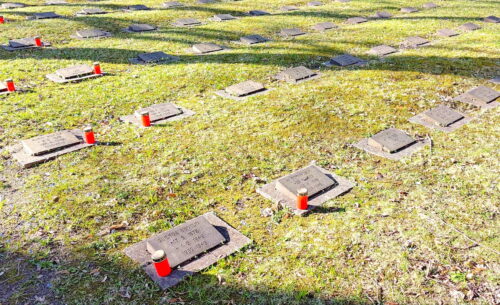
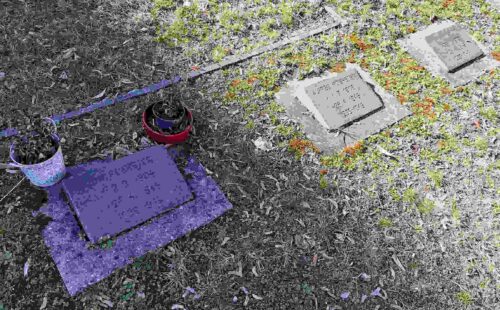
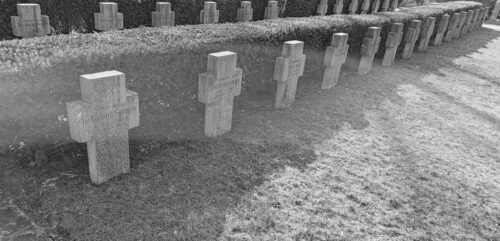
Berliners to this day have a tradition, they put flowers and candles on Nazi graves around the city. These Nazis are mourned openly without apology, in the city that dislikes emotional displays. If only they had lived another day to machine gun more neighbors, to violently redistribute more wealth. They are memorialized in a very peculiar way.
Red Grablichter on Berlin graves from 1945, maintained at scaleFoersters, died April 26 1945, four days before Hitler’s suicide. Flowers in Berlin cemetery.Friedhof in Berlin. The same cemetery has graves from the First and Second World War. The flowers and candles are only for 1939-1945.Fresh flower on a 1945 grave in a Berlin cemetery. Locals upload these images to Google Maps as points of pride, advertising that the tradition of honoring Nazi dead is alive and maintained.
At the military cemetery on Columbiadamm, wreaths appear every November from groups honoring Wehrmacht dead. A “Tradition Association of Friends of the Former Protected Area German Southwest Africa” leaves ribbons with “patriotic greetings” at a memorial to the soldiers who carried out the Herero genocide. When Neukölln’s government was asked to remove the memorial, they added a plaque that very precisely omitted the word “genocide.”
Reinhard Heydrich, the architect of the Final Solution, is still in the ground at the Invalidenfriedhof in central Berlin. It’s a tourist attraction for those who want to show Nazism some love. The grave marker was removed but the body was not. The cemetery is now a protected monument, maintained by the state, promoted as an attraction. In 2019 someone with inside knowledge of the location opened the grave, to emphasize Heydrich was never really gone.
The Sinti and Roma memorial — a symbolic grave for 500,000 murdered people — is being threatened by a Deutsche Bahn tunnel project. The Holocaust memorial itself contains no names, no inscriptions, no Jewish symbols. Its anti-graffiti coating was manufactured by a Degussa subsidiary — the same corporate family that produced Zyklon B.
This is what we are told a love letter to Berlin looks like. The perpetrators rise again. The historical ground markers come off. The victims get an abstract memorial with no names. And every few years someone with a family connection to the war machine writes a book saying that most people simply conformed so who could blame them for not leaving.
That’s not history. That’s “like father, like son”, erasing genocide victims of the family business to continue dividends. Love as hate.
A Nazi-era mayor’s gravestone in Berlin literally says “love never ends”, in the same city where a man just published a love letter to the genocide his father armed. The grave notably doesn’t conform to Berlin occupation rules for commemoration. It’s not uncommon to find Berliners like this breaking cemetery rules about love for Nazism.
a blog about the poetry of information security, since 1995