Tesla told a Florida court it could find no Test Incident Reports from its underbody impact testing. Its own test protocols require a report, photos and video for every run. Well, that doesn’t make any sense, does it? Could Tesla be lying in court, again? Then its own witness, Adam White, testified the reports can be located by clicking hyperlinks in the company’s system.
Circuit Judge Michael A. Robinson called the claim “not credible”, probably because court hates calling people liars, and wrote that it “appears to have been a willful and/or intentional misrepresentation.” Liar, liar, why can’t we just call Tesla the liar it has been and continues to prove itself?
That was the first sanction in Alcala v. Tesla Florida. The second was issued August 19. Trial is set for November 30.
Underbody Underengineering
Nicholas Garcia, 20, drove a 2021 Model 3 through the intersection of Alhambra Circle and Coral Way in Coral Gables with Jazmin Alcala, 19, in the passenger seat. The underbody struck a crest in the road. The battery pack ignited. The car veered onto the median, glanced off one tree and struck a second with its passenger side. Both occupants died in the fire. The date was September 13, 2021.
Garcia had owned the car for about six days. Four days before the crash he had taken it to Tesla service for steering and suspension complaints. Six weeks after the crash, Tesla filed recall 21V-835 with NHTSA, covering 2,791 Model 3 and Model Y vehicles whose front suspension lateral link fasteners could loosen and separate from the subframe.
The NTSB preliminary report recovered five seconds of data from the event recorder. Maximum recorded speed was 90 mph on a 30 mph street, accelerator applied to beat a yellow light, service brake off. Tesla’s defense rests on that data. The family’s case rests on how the underbody and battery pack respond to road contact.
Tesla’s own tests address that question, and Tesla has spent three years fighting to prevent transparency into it.
Willful Disregard for Safety
The family filed in October 2021. The discovery record follows.
September 20, 2023. The court ordered Tesla to produce an engineer responsible for stability control. Tesla produced Daniel Wood, who testified that the engineer “personally responsible for the stability control” would be better placed to answer. Tesla designated no one else. Judge Robinson found this “a direct violation” of the order.
November 6, 2023. The court compelled testing documents for real-world driving situations, including speed bumps and uneven surfaces. Tesla’s counsel told the court everything responsive had already been produced. Over the following year Tesla produced no additional testing documents. The withheld material included the Sine Wave Test, which Judge Robinson found “substantially similar to the crest in the roadway that was involved in the subject incident.”
March 7, 2025. Five days before a scheduled deposition, Tesla produced 8,100 pages of test reports. The documents state on their face that the tests simulate conditions in which the battery pack and underbody make direct contact with the ground, bumps, curbs and other objects, to reproduce severe unintentional customer usage constituting an accident.
June 12, 2025. Tesla’s counsel wrote that Tesla “did not locate any TIRs.” The court found the opposite, that Tesla “was in fact in possession of thousands of pages of TIRs.”
Just call them liars, seriously. Nothing they say can be trusted. It’s like the courts don’t yet have the power to shut the whole thing down? How long did Enron stay in business?
July 2025. Four days before the sanctions hearing, Tesla produced 123,000 pages with metadata and file names stripped. Judge Robinson found this was done intentionally and that the acts “were intended to make the review and use of these materials more difficult, time consuming and expensive for the Plaintiffs.”
Imagine a company that knows it’s killing its own customers, and then tries to pull as much time and money as possible away from anyone who complains.
October 24, 2025. Judge Robinson granted the first motion for sanctions. He found Tesla “acted willfully or with contumacious and deliberate disregard” for two court orders, awarded the plaintiffs fees and costs including expert time spent reviewing the July production, and warned that continued violations could result in Tesla’s pleadings being struck.
So many warnings, so much time.
The Tracker
A separate dispute concerns Tesla’s internal incident tracker. Tesla claims the file was assembled at the direction of counsel and is privileged. The plaintiffs argue the TREAD Act requires Tesla to report similar incidents to federal regulators, which places the tracker outside privilege. A special magistrate ruled that Tesla’s witness must answer who has access to the tracker and what it contains. Judge Robinson affirmed over Tesla’s objections, with the contents themselves protected pending appeal. Tesla has said it will seek review from the Fourth District Court of Appeal.
Fraud: Second Sanction
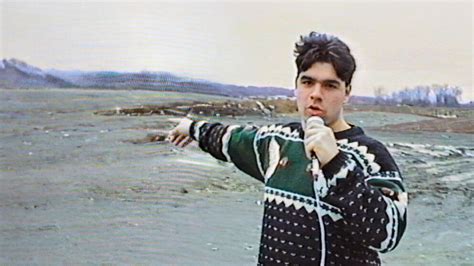
The family filed a third motion for sanctions in May 2026. The motion and Tesla’s response each exceed 300 pages. Both are redacted in full as confidential. You would think Tesla is building some kind of military secret, like AI-based drones, given how they treat their products as super secret squirrel stuff. It reminds me of the kids in “Teenage Wasteland” who jumped the “no trespass” signs at the Wallkill landfill and exposed a mafia toxic dumping operation in upstate New York, with Ford Motor Company among the dumpers.
Retired Circuit Judge Charles M. Greene, sitting as special magistrate, heard the motion August 14 for three and a half hours, most of it closed to the public. Todd Falzone of Kelley Uustal told the court Tesla had violated three orders, paid monetary sanctions and continued to withhold. The production to date covers component testing. Vehicle-level testing under roadway conditions has yet to be produced. Franklin Sato, for the Garcia estate, called Tesla’s conduct “tantamount to fraud.”
Val Leppert of King & Spalding answered for Tesla. Eleven thousand documents produced, 9,000 of them testing records. Engineers made available for deposition. One hundred fifty hours spent building a mapping tool linking documents. Their production failures were “copying errors, misunderstandings and false starts.”
“We have not been perfect. There has not been any intentional withholding.”
The company that builds a car on the claims that it can automate better than humans, that it can define safety as a baseline, flails and falls down on basic document delivery tasks and begs for forgiveness. Yeah, nobody should trust that company with anything related to life or death decisions privately let alone on public roads.
Judge Robinson’s October order found the withholding willful and intentional and described a misrepresentation to the court.
Judge Greene issued his recommendation five days after the hearing. Tesla’s pleadings stand. He recommended an adverse jury instruction at trial, a further award of attorney fees, and compliance with the outstanding discovery. According to the family’s counsel, the instruction tells the jury Tesla knew its own testing had shown failures similar to the one at Coral Way.
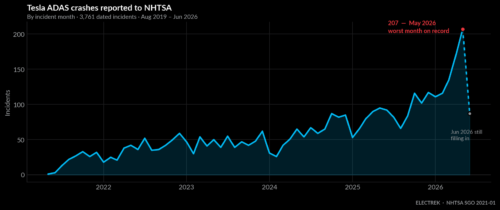
That sounds right to me. Tesla has known since 2013 that AI was a wildly unstable theory, a pipe dream, and by 2016 knew Musk was lying about it to the press, even as two fatalities proved the system too dangerous for production. In March 2018 Uber killed a pedestrian in America and suspended all road testing the same day. In April 2018 Tesla killed a pedestrian in Japan, and two months later raised the price of Full Self-Driving from $3,000 to $5,000 while expanding the program. Most Americans haven’t heard about it because Tesla litigated to keep it all in Japanese. The constant rise in crashes and rise in fatalities came after they knew it would.
Going Back to Grimshaw
The Ford Pinto verdict rested on discovery. Ford’s rear-impact crash tests showed the fuel tank rupturing at moderate speeds. Ford produced the tests and a jury saw them. In Grimshaw v. Ford Motor Co., 119 Cal.App.3d 757 (1981), the Court of Appeal upheld punitive damages on the basis that the tests established what management knew.
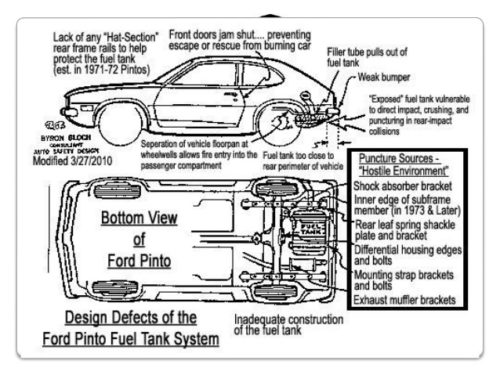
Tesla’s approach in Alcala differs at the production step. Four years of orders, a production timed to a deposition, a second production timed to a hearing with filenames removed, a letter denying the existence of reports its own witness said were one click away, and a sealed 300-page attempt to call all of that purely accidental. It’s like they don’t believe in the laws of physics or the laws of America, operating above the laws and unaccountable while those who trust them are burned up or silenced.
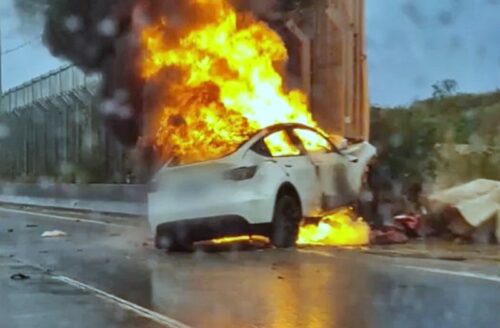
Tesla’s litigation position in Florida has been that it could never have
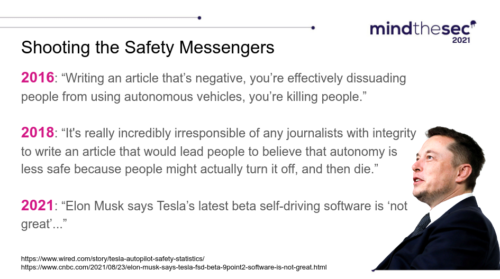
known its cars would kill. It’s an incredible claim, given that I was giving keynote presentations in security conferences by 2016 that Tesla is the Titanic of our time, because their AI would kill far more people, let alone all the times I’ve written it since then on this blog.
In the Benavides Autopilot case, plaintiffs alleged withheld data and misdirected police; the jury returned $243 million and Judge Beth Bloom upheld the verdict in February 2026. The Alcala family alleges the same discovery pattern with respect to the battery and underbody.
An adverse inference instruction tells the jury that a party withheld evidence and permits the jury to infer the evidence would have been unfavorable to that party. Let’s see what happens when Tesla goes to trial at the end of November.