What didn’t CBS want you to know? Colbert explains another example of Trumpistan closing down freedoms.
Category Archives: Security
George Bush Presidents’ Day Message is Bullshit Historiography About Human Trafficking
George Bush on Presidents’ Day is criticizing authoritarian overreach, which is like the arsonist complaining about fire codes.
As America begins to celebrate our 250th anniversary, I’m pleased to have been asked to write about George Washington’s leadership. As president, I found great comfort and inspiration in reading about my predecessors and the qualities they embodied. […] Few qualities have inspired me more than Washington’s humility.
Humility? Hold on a minute, pardner.
The man who launched two unjustified wars on fabricated or inflated pretexts, authorized warrantless mass surveillance, torture, and indefinite detention, and whose administration’s “unitary executive” theory laid the legal groundwork Trump is now exploiting, including the “unlawful combatant” designation now being repurposed for Caribbean special operations. The man who created today’s Frankenstein, is now saying someone should do something about it because… humility?
Yeah, dude. You made this.
- Remember Bush deploying ICE in 2006 for “US secret prisons and twilight raids on immigrant homes“?
- Remember Bush deploying Rove in 2008 to spin political disinformation?
There was a time when conservatives in America demanded a strong foundation in learning from well-known scholars and history precisely to fearlessly navigate new ideas. Strangely, Rove and pals have been able to hijack the group and turn it into drones waiting for instruction (e.g. fascism).
Bush’s absence of humility didn’t just create Trump’s legal architecture for authoritarianism, his administration built the shameless propaganda infrastructure that shoved the conservative base all the way into fascism.
This new Bush essay’s appeal to Washington’s “humility” is itself a Rove-style move: wrapping authoritarian complicity in aspirational language. It reads less like principled dissent and more like legacy management, distancing himself from the monster his own administration incubated, while enabling it to continue.
Invoking stories of Washington is always fraught with historiography. The voluntary relinquishment narrative that Bush tries to sell us is totally mythologized. Washington stepped down in part because he was exhausted, politically battered by partisan press, and understood a third term was politically untenable. It was not some noble philosophical commitment to republican virtue. The Bush hagiography serves the same function it always has: making supreme power appear self-limiting by nature rather than admit the contested struggle that actually forms democracy.
Bush is pumping deep propaganda about the man who owned over 300 enslaved people, pursued runaways relentlessly, rotated them through Philadelphia to exploit a loophole in Pennsylvania’s gradual abolition law, and presided over a frontier policy of indigenous displacement. Bush calls out the defining motivational characteristic of Washington, human trafficking operations, and lands on “humility” and “self-restraint“?
You can’t model “putting the good of the nation over self-interest” while literally owning human beings as property.
Look at Georgia in 1733, Vermont in 1777, Carter 1793 who freed all his slaves and called out Washington for selfish refusal.
Georgia’s ban fifty years prior, and then Vermont’s constitution in his face, as well as Pennsylvania openly targeting Washington’s slaves, established that abolition wasn’t some anachronistic standard being imposed retroactively. The legal and moral frameworks existed and Washington was hiding and running. He knew, he wanted to be on the wrong side. He calculated. He moved against the entire world banning slavery, to selfishly force a new country to preserve and expand it instead.
Understand that Carter wasn’t some distant man from Washington. He was a hugely successful Virginia planter who looked at the same institution of human trafficking that Washington dreamed of profits from and said no. Carter shut it down.
It’s literally like someone today looking at Epstein and saying no. Who didn’t say no? That’s Washington.

Every generation of powerful elites produces legal architectures for dehumanizing people for value extraction while maintaining plausible deniability, and then produces apologists who write fraudulent essays about humility after the damage is done.
George should know George better. His history illiteracy continues the tragedy.
Think about the Caribbean war crime operations where Trump is using Bush’s own “unlawful combatant” framework. We have two presidents implicated in connected dehumanizing legal architectures, with one writing hagiography about the other.
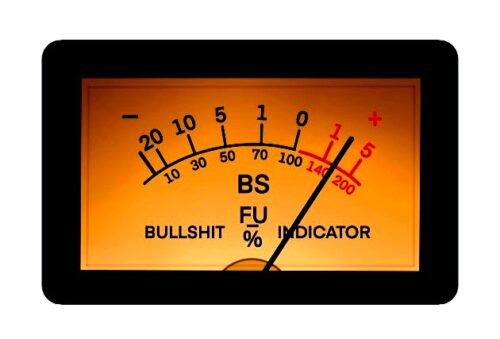
In short, as a historian, here’s a scientific measurement of the Bush Presidential message:
Trump Fires the Troops He Just Forced to Register for Their Own Protection
James C. Scott wrote about a concept of legibility in Seeing Like a State — the idea that centralized power first needs to make populations readable before it can act on them.
There is a specific cycle by which legibility is achieved through voluntary compliance rather than surveillance. The state doesn’t need to find you if it can get you to identify yourself for targeting. Recently the U.S. government suddenly, illogically began requiring gun owners to register gender, under threat of felony charges for refusal.
The outcome of this type of registration pressure is consistent across five centuries: defiance or evasion — the behaviors the system initially punished — become retroactively the safer choice. People were told the rules would protect them, in order to trick them into compliance.
The Trump Trap Cycle
First he requires registration, promising protection. Then he does the opposite, uses the registry for removal. The people who trusted Trump enough to comply with him are the ones most exposed when he turns on them.
Every example below involves a group that was economically or militarily useful. Conversos held positions. Armenians dominated commerce. Jewish Germans were foundational to industry, agriculture, science and professionalism. Trans troops were serving. The trap targets the productive to weaken the state.
US Trans Military Ban: 2018–
| 1. Register | First-term bans serving trans troops, only allowing them to remain active if they accept an official gender dysphoria diagnosis |
| 2. Comply | Trans service members obtain diagnosis through official military medical channels, building documented records |
| 3. Normalize | Diagnosed troops continue serving, deploy, get promoted; the system appears to be working long enough to increase participation |
| 4. Repurpose | Second-term administration uses the gender dysphoria diagnosis records that it required to identify and forcibly remove troops |
| 5. Punish compliance | Undiagnosed trans troops are harder to identify and remove; the honest and open ones are punished the most. Morale plummets, as troops are incentivized to lie and passively disobey |
Spanish Inquisition: 1478–1609
| 1. Register | Jews and Muslims told to convert and register as conversos or moriscos to remain in Spain |
| 2. Comply | Conversos are baptized, registered in parish records, hold public positions |
| 3. Normalize | Conversos integrate into Spanish society, some rise to prominence in church and government |
| 4. Repurpose | Inquisition uses baptismal and parish records to investigate conversos for secret Jewish or Islamic practice |
| 5. Punish compliance | Crypto-Jews who never converted are harder to find than registered conversos under Inquisitorial scrutiny |
Ottoman Empire: 1839–1915
| 1. Register | Non-Muslim communities required to register through the millet system for legal autonomy and protection |
| 2. Comply | Armenians comply, build institutions within the framework; community rolls, church records, and tax registries formalize their legibility |
| 3. Normalize | Armenian communities prosper visibly within the system for decades, holding professional and commercial positions |
| 4. Repurpose | Registration infrastructure becomes the targeting mechanism for the 1915 deportations and massacres |
| 5. Punish compliance | The most administratively legible communities are the most efficiently destroyed; those outside the registration system are harder to locate |
Rwanda: 1933–1994
| 1. Register | Belgian colonial authorities require ethnic classification — Hutu, Tutsi, or Twa — on national identity cards |
| 2. Comply | Rwandans carry classified identity cards for sixty years as a routine fact of life |
| 3. Normalize | The cards become ordinary bureaucratic documents; ethnic classification feels administrative, not existential |
| 4. Repurpose | During the 1994 genocide, identity cards become the sorting mechanism at militia checkpoints |
| 5. Punish compliance | Possession of a Tutsi card is a death sentence at the roadblock. Those who had earlier petitioned to change their classification, or obtained false papers, survive at higher rates |
Nazi Germany: 1932–1945
| 1. Register | Nazi census and civil registry laws require declaration of religion and ancestry; Nuremberg Laws, based on American racism, formalize racial categories |
| 2. Comply | Jewish citizens register with Nazi authorities, carry identification, appear in population databases |
| 3. Normalize | Early restrictions feel manageable; emigration seems like overreaction to many |
| 4. Repurpose | Census and registration data feed deportation logistics; IBM tabulation systems sort populations for ghettoization and mass extermination |
| 5. Punish compliance | Jews who registered are systematically located; those who obtained false papers or fled early survive at higher rates |
Soviet Union: 1932–1944
| 1. Register | Internal passport system requires citizens to declare nationality on identity documents |
| 2. Comply | Citizens dutifully file nationality declarations on internal passports |
| 3. Normalize | Registered nationalities live and work normally for years or decades |
| 4. Repurpose | Stalin uses nationality registrations to identify entire ethnic groups — Chechens, Crimean Tatars, Volga Germans — for mass deportation |
| 5. Punish compliance | Undocumented individuals are invisible to the deportation apparatus |
Russia: 2012–
| 1. Register | 2012 law requires NGOs receiving foreign funding to register as “foreign agents” — framed as transparency, not restriction |
| 2. Comply | Organizations register to continue operating legally; the alternative is criminal prosecution |
| 3. Normalize | Registered organizations continue working, albeit stigmatized; the label feels bureaucratic, survivable |
| 4. Repurpose | The registry becomes the shutdown list. Registered organizations face inspections, fines, forced closure, and criminal charges against leadership |
| 5. Punish compliance | Organizations that registered are systematically dismantled. Those that refused and went underground or dissolved early are harder to prosecute retroactively |
China: 1958–1966
| 1. Register | Hukou household registration system requires citizens to declare locality and class background — landlord, rich peasant, capitalist, worker, poor peasant |
| 2. Comply | Citizens register their class origins as a routine administrative requirement |
| 3. Normalize | Class labels become part of everyday bureaucratic life; the economic realities they describe fade but the categories persist |
| 4. Repurpose | During the Cultural Revolution, registered class backgrounds become targeting lists for persecution, forced labor, and execution |
| 5. Punish compliance | The bureaucratic category outlives any economic reality it once described; those who honestly declared prosperous origins are persecuted for a past that no longer exists |
The gap between registration and repurposing is compressing. Spain took generations. Nazi Germany took years. The trans military ban took one presidential term. Digital infrastructure means Phase 1 through Phase 4 can collapse into a single policy cycle. The gun registration move is Phase 1 for the next target population, running while Phase 5 of the current one is still playing out. Trump is running multiple trap cycles simultaneously at different stages.
The faster the cycle, the faster the damage compounds. Every administrative trap degrades every future administrative process. Census participation drops. Medical disclosure drops. Voluntary compliance with anything drops.
The trap is an institutional autoimmune disorder that destroys the state’s ability to govern the next population it needs to make legible. The targeting falls apart, as fighting is turned within, and severe dysfunction takes over.
The trap selects against institutional loyalty, instead demanding Trump loyalty. The people most aligned with necessary institutional values — troops who believed in the Constitution enough to work within it and believe in law and order — are punished the most.
The Trump mechanism is anti-meritocratic as a loyalty test. Those least mentally fit to serve take over, because they’re the most willing to serve Trump. 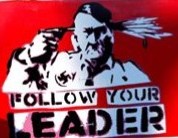
The Atlantic Doesn’t Get Trump
Thomas Wright’s analysis of Marco Rubio’s Munich Security Conference speech for The Atlantic assembles all the evidence of deliberate policy realignment and then concludes instead that the administration doesn’t understand.
The headline says it all:
Marco Rubio Doesn’t Get It.
Wright catalogs the simple pattern. The administration wants to readmit Russia to the G7. It invited Russia and China to join Trump’s Board of Peace. Rubio devoted his entire speech to lecturing allies about their shortcomings while refusing to name adversaries. Undersecretary Colby gave a major speech in South Korea without mentioning North Korea. The administration dismisses the rules-based order as “cloud castle abstractions.”
Phew. There’s more, but you get the gist.
Wright frames everything as diagnostic failure, as if Rubio misunderstands, is in denial, offers a flawed diagnosis. The purposeful and malicious acts of the administration are supposed to be seen as bumbling, naive, confused about threat models.
This analytical comfort zone soothes mainstream foreign policy wonks, yet makes their commentary useless. The Trump administration isn’t failing to understand that Russia, China, and North Korea are working together. It isn’t accidentally alienating allies while empowering adversaries. The pattern isn’t a diagnosis error any more than a cross was accidentally lit on fire or a journalist accidentally lynched.
It’s the MAGA plan.
Wright literally describes Rubio choosing not to mention Russia or China as “what he chose not to say” and still lands on incompetence rather than chosen intent. Wright also pulls out a Harry Potter metaphor:
…the threat cannot be named.
Guess who actually can’t name what he’s looking at?
The Harry Potter reference lands with an irony Wright doesn’t intend. J.K. Rowling doesn’t misunderstand trans people. She’s made a choice and committed to it. Just like this administration hasn’t failed to notice the authoritarian alignment.
Trump has chosen a side, like Ronald Reagan’s many dictators in his pocket, and committed to it. The “they don’t get it” framing from critics functions as a mechanism that avoids confronting the actual deliberate nature of the position.
Reagan knew what Habre was up to. Reagan knew he unlocked genocide around the world.
Wright’s factual material about European rearmament and Ukraine aid contributions is table stakes. Non-U.S. NATO defense spending rose $190 billion under Biden. Europe has outspent the U.S. on Ukraine aid. The EU tightened asylum policy and began de-risking from China. All that was before Trump returned. There are hundreds of useful correctives like these to the administration’s usual batshit narratives. Trump rescuing Europe? GTFO.
But factual strength serves a fundamentally defensive argument: the liberal order was working and these guys are just dumb when they screw it up.
That framing is exceptionally weak. It does two things wrong simultaneously. It avoids asking why those institutions failed to prevent the conditions that made this political moment possible. And it provides the administration cover by treating conscious choices as unaccountable, which drives straight back to the first question.
You don’t accidentally invite your supposed strategic adversaries to join your peace board. You don’t accidentally refuse to name threats in every major policy speech. You don’t accidentally propose readmitting the country that invaded a European ally to the club of democracies. Pattern recognition at this point isn’t even analysis.
It’s just observation of evil.
Wright is a former Biden NSC senior director for strategic planning. The Atlantic doesn’t seem to notice, or perhaps care anymore, what shapes their entire frame. The piece reads like an institutional self-assessment where the institution still wants to grade itself passing. No mea culpa? The liberal order worked? The allies performed? The problem is that the new team doesn’t appreciate what they inherited?
No. The new team is carefully hooking up gasoline to the global sprinkler system. They know.
The new team isn’t confused. They know that spreading confusion is their tool, and they know exactly what they inherited and how they’re dismantling it on purpose. Until mainstream analysis can say that plainly, it will keep producing essays that document symptoms ad infinitum without diagnosing the disease.
The threat cannot be named yet, given how Wright thinks.