Category Archives: Security

“Quitting” When Unready: A Curious Case of Sleep Loss

The Air Force is having a moment regarding a decision to abort an exercise due to sleep loss.

“If it was a real world sortie, I can guarantee that those crews would get their energy drinks of choice, roll out to the plane, and fly to defend our nation,” he said. “I don’t know of any E3 member that would deny a flight if the Russians were coming no matter their state of rest. So in wartime, our asses would be flying and we would gladly do it. But this wasn’t real world. It was an exercise. You can’t replace the lives that would be lost if a plane went down.”

Smart move to cancel the exercise, I have no doubt from the details revealed so far… and this reminded me of two things.

First, recent neuroscience studies of mental and physical well-being showing clear degradation from sleep loss.

Three consecutive nights of sleep loss can have a negative impact on both mental and physical health. Sleep deprivation can lead to an increase in anger, frustration, and anxiety. Additionally, those who experienced sleep loss reported a change in physical wellbeing, including gastrointestinal and respiratory problems.

Second, I keep seeing leaders who accommodate rest and recuperation get criticized as “quitting”, which seems totally counter-intuitive.

If you don’t “quit” to eat and drink, the body risks even bigger shutdown. If you don’t “quit” to heal from injury you may fail to heal and cause wider injury. If you don’t “quit” to sleep… disaster.

Knowing when to not do something could be as important as knowing when to do it.

Somehow a blind and unthinking version of “don’t quit” (urging people to damage themselves in ways they can not continue anyway) is growing out of control to a point where people are using social media platforms to push others off cliffs instead of stopping/quitting to consider obvious consequences of such a predictable failure.

Even more complicated than sleep loss are the “twisties” as noted recently in Olympic gymnastics:

“We also do a lot of work to teach them how to listen to their bodies’ warning signs that they are heading down the wrong path,” he continued. Andrews noted that Biles had more stressors than most, being forced to represent USA Gymnastics, the institution that enabled her sexual abuse by Larry Nassar, because it’s the only pathway to the Games. …getting past the twisties can take time, sometimes days, weeks or even months to resolve. “This isn’t as easy to fix as just sleeping it off and hoping for a better day tomorrow,” one former gymnast and diver pointed out on Twitter. […] The worst case scenario isn’t a lost competition or even a serious injury, like a ruptured Achilles. In gymnastics, it can result in paralysis, or even death.

Getting well to avoid death is a form of “quitting” only in the sense it’s taking a very wise step to ensure survival and thus continuation. The case of Biles is especially telling because it is about a black woman who had been forced into sexual abuse.

Biles clearly has declared self-control over her own body in a multitude of ways. This latest demonstration is surely inspiring others to think about mental as well as physical success. Her stepping aside allows her also to be in a better place to help/support her team to succeed than if she experienced catastrophic failure. It’s a very wise choice demonstrating excellent leadership qualities, and something I expect any special operations team would recognize.

From that a number of white men seem to be upset and hyperventilating publicly about her “quitting”; issuing completely tone-deaf comments that a black woman be forced to do what they want instead.

So I encourage people to read about the USAF and then the Olympics to think about the parallels. Did they quit, or did they refuse to quit by taking a safety break?

Simon Sinek says we should start calling it “falling” instead of “failing” (let alone quitting) because it implies we get up again:

Porsche “Adaptive Cruise” Safety Model

A new graphic from the Porsche newsroom is an excellent example of what I’ve been calling the gap between the ERM (easy, routine, minimal judgment) and ISEA (identify, store, evaluate, adapt) functions for every form of “intelligence”.

Source: Porsche

Data on “infrequent maneuvers” caught my eye in particular. I find it misleading to try and frame observations in the loop by frequency.

We might stop infrequently on every road (even city blocks tend to give more time rolling than stopping) yet stopping is due to the events that matter most to our survival (e.g. intersections, obstacles).

In fact, if you look at Dan Ford’s dissertation about John Boyd (inventor of the famous OODA loop — observe, orient, decide, act) we’re reminded “infrequent maneuvers” might be best framed as our constant reality (Page 50):

As Antoine Bousquet summarizes John Boyd’s thinking in The Scientific Way of Warfare, “Boyd believes in a perpetually renewed world that is ‘uncertain, ever-changing, unpredictable’ and thus requires continually revising, adapting, destroying and recreating our theories and systems to deal with it.” Grant Hammond expresses it this way: “Ambiguity is central to Boy’d vision … not something to be feared but something that is a given…. We never have complete and perfect information. We are never completely sure of the consequences of our actions…. The best way to success … is to revel in ambiguity.”

There’s of course an extremely high cost of revelation in ambiguity, versus the low-cost of routines. But the point should still could be taken that framing an expected risk as an infrequent one is a dangerous game to play.

Back to the Porsche newsroom, my favorite image is actually this one:

Source: Porsche

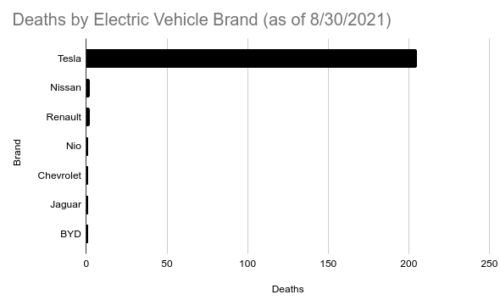
The detection illustrated here is exactly the same as I documented extensively and presented in 2016 with regard to Tesla sensor and learning failures (a tragic foreshadowing of Brown’s death just weeks after his lane change incident).

New Coyote Anti-Swarm Missile Straight Out of 1953

The first operational anti-aircraft missile system, the Nike Ajax, was launched by the United States in 1953.

A new guided missile system was needed which could destroy entire formations of high-altitude, high-speed aircraft at a greater ranges with a single missile. After extensive studies, it was determined that this new system would require the use of a nuclear warhead in a new missile having greater range and speed than the Nike-Ajax missile.

Fast-forward to today and Raytheon PR announces an anti-swarm missile system, the Block 3 Coyote, has “aced” a military test.

Block 3 utilizes a non-kinetic warhead to neutralize enemy drones, reducing potential collateral damage.

To be fair, Raytheon distinguishes the Block 3 as a reusable model, unlike the Block 2.

Unlike its expendable counterpart, the non-kinetic variant can be recovered, refurbished and reused without leaving the battlefield.

It’s interesting to differentiate it in the PR as non-kinetic, given how it probably has a kinetic effect (e.g. waves of power destroying or disabling electronics).

Also it’s not really fair to say a kinetic platform can’t be reusable, since that’s a design decision (e.g. explosive warhead could be launched like planes do with missiles).

I suspect someone demanded a lower-cost profile on the Coyote and marketing came up with the language to make a false distinction from the earlier design.

Ace of Spades: Assassination of UN Secretary-General Dag Hammarskjöld

A new podcast with journalist Ravi Somaiya, to promote his book “Golden Thread“, discusses some of the latest thinking on a 1961 assassination of the UN Secretary-General:

Dag Hammarskjöld was called ‘the greatest statesman of our century’ by John F. Kennedy, but he was found dead with an Ace of Spades mysteriously placed on his body. […] In this episode, Dan was joined by award-winning investigative journalist, Ravi Somaiya, who takes him into the depths of this event and the remarkable consequences across the globe.

It’s a good listen on one of my favorite topics in history, but to be honest Ravi spoils it a bit by claiming he only did it because he was bored while working nights in boring New York.

Anyway, accountability for this incident has long been a sore and unresolved topic of white supremacists controlling African liberation from colonialism.

The U.S. refuses to declassify its intelligence files even today, so that gives this particular incident even more of a flair towards conspiracy.

What on earth is going on? Those (UN investigators) who investigate the death of Dag Hammarskjöld do not want to know about Crypto AG and those who report on Crypto AG (The Washington Post) do not mention once the United Nations scandal. We know that the US hold important undisclosed information regarding the Hammarskjöld case and we know that they refuse to share this information with the UN investigators. Why do you think the US has been withholding this information?

See also: Daily Briefing (25 October 2017) DEATH OF DAG HAMMARSKJÖLD: SECRETARY-GENERAL ASKS COUNTRIES TO MAKE ADDITIONAL INFORMATION AVAILABLE

A film recently was released by another journalist, and similar to the Ravi Somaiya book (spoiler alert) he focuses viewers on the narrative of racism.

It seems “white corporate interests exploiting black people” had so much influence over British and American foreign policy that assassination was used on some leaders who tried to get involved in African independence.

With the case still unsolved 50-plus years later, Danish journalist, filmmaker, and provocateur Mads Brügger (The Red Chapel, The Ambassador) leads us down an investigative rabbit hole to unearth the truth. He, his Swedish private-investigator sidekick, and a host of co-conspirators tirelessly pursue a winding trail of clues, but they turn up more mysteries than revelations. Scores of false starts, dead ends, and elusive interviews later, they begin to sniff out something more monumental than anything they’d initially imagined.

Dag Hammarskjöld wrote amazing poetry in the 1960s, but it was the British band Motörhead formed in 1975 who penned the lines…

Pushing up the ante, I know you got to see me,

Read ’em and weep, the dead man’s hand again,

I see it in your eyes, take one look and die,

The only thing you see, you know it’s gonna be,

The Ace Of Spades

The Ace of Spades.

It became a well known implement of psychological warfare, a particular signature promoted by American soldiers in the Vietnam War five years after assassination of Hammarskjold.