Tour Amazon’s dream home, where every appliance is also a spy: A visual guide to what Amazon learns about you through Alexa, Echo speakers, Fire TVs, Ring doorbells, Roombas and more.
In a similar vein, a very long time ago I was working in a group that had joked about sprinkler heads being listening devices in a large high-security technology bunker underground.
The joke was actually a terrible joke, playing off a cynical premise that things presented for your safety might be doing something else.
It leaked (pun not intended) in the worst way, being overheard by someone who thought sprinkler-head-spying was being discussed as something real.
Those were the days when outrage was the normal response to Admiral Poindexter-like centralized gathering of data (TIA, if you remember).
We shortly thereafter were brought into a bunker room and told in very direct language that immediately we must convince everyone of the truth — sprinkler heads were there only to give (dump water to stop fires and saves lives) and had no special ability to “take” (sense: smell, hear or see) except narrow and specific fire indicators.
Who dreams of really putting spies in your home?
And that begs an obvious question of what history is Amazon ignoring in their dystopian dreams?
As I started my career in computer security in the 1990s I felt like I was quite late to the party; had to catch up to the many experts who brought deep experience over decades of practice.
Instead I’ve realized over time that showing up late doesn’t mean that you aren’t also, at the same time, relatively… early.
It’s thus a bit surreal to have been in the field of misinformation (and disinformation) for so long because I keep hearing that it’s a *new* problem.
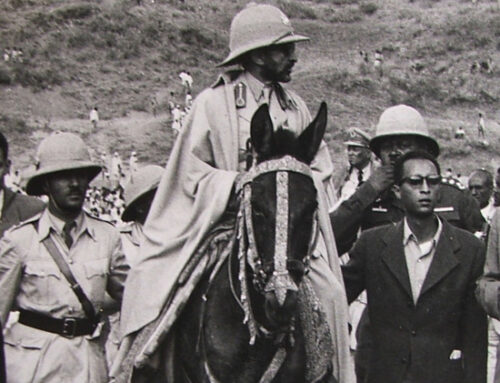
Ethiopian Emperor Haile Selassie in the late 1960s, known for “brilliance and cunning” such as tricking national war hero Belay Zeleke into being imprisoned and then hanged
“It’s always a good time to invest in a good thing” as a U.S. Green Beret trained to blow up bridges in Ethiopia once told me.
With that in mind, here are some thoughts about data integrity when looking back, which maybe will help others who just now are looking forwards at misinformation.
Relatives and relativity
Relativity is fundamental to understanding integrity of information. Absolutism is not incompatible, however, with relativity. “We can be in different time zones yet still share the same concept of time” as my father once told me.
Indeed, what we believe often derives from our family. This is why racism (one of the most insidious forms of disinformation) tends to be something taught by parents. For example, naming a child Jefferson Beauregard Sessions III (after treasonous pro-slavery leaders) or even the awful Robert Lee shows how American families still openly spread false beliefs (racism) and refuse to stop disinformation.
A recent study highlights that fear tends to correlate to susceptibility to misinformation, which helps show why racist groups troubled by their own “survival” are so naturally oriented towards the stuff.
…words related to existentially-based needs (i.e., discussing death and religion frequently) is useful to distinguish who will eventually share fake-news…
Back in 2008 I wrote another simple explanation that has stuck with me ever since.
…they actually become more convinced they are in the right when evidence starts to challenge them…
Studying political science really helps tease apart the complexity of such an information integrity problem, as it demystifies power relationships that influence fear. Labels like “terrorist” get measured as relative as well as absolute terms, because beliefs originate in many varied perspectives.
“Havens of terror” for one group might be thought of as safe-houses (where freedom fighters gather to help end racism) for another group. I’ve written about this here before, using encrypted communications of an anti-apartheid movement as an example.
I’m reminded of such complexity every time I sip a glass of Knut Hansen.
They asked London. London said immediately, ‘Sink it.’ And they did what they were told. It would be like asking me to blow up the 8:45 train to London. I’d be absolutely certain there’d be friends, maybe even relatives of mine on that train, but if there’s any chance that Hitler’s going to get an atomic bomb, what else can you do?
A gin brand from Hamburg, Germany subtly serves up anti-fascism. Cheers to Norwegian resistance fighter Knut Lier-Hansen who in 1944 helped sink the SF Hydro on Lake Tinn in Telemark
Complexity and expertise
Rarely, if ever, do topics get boiled down into things that are easy, routine and have minimal judgment (ERM). Even the simple aspirin, as an ERM exercise in taking a pill, comes with complex warnings and dangers.
Thus people must turn to experts who can identify, store data, evaluate and adapt or analyze (ISEA) to make recommendations. Who is an expert? Why should we trust one person skilled with ISEA over another?
One of the best examples of this problem is Google. The founders took an old Beowulf cluster concept of inexpensive distributed computing (lots of power for little money), dumped every web page onto this cluster, then mixed in an ancient academic peer review (an open market of expertise) as a way to provide value.
In theory all the ideas on the web were meant to be filtered for integrity, such that “relevant” or “best” results would come from a simple word query (search).
This is obviously not how things turned out at all.
Google’s engine was immediately rife with horribly toxic misinformation. Human expertise was injected as a correction. With relativity in mind (see the first point above) a bunch of privileged white guys in fact made matters even worse.
My first encounter with racism in search was in 2009 when I was talking to a friend who causally mentioned one day, “You should see what happens when you Google ‘black girls.'” I did and was stunned.
Google capitalized on complexity with false representations of expertise. Powerful elites generated huge profits despite obvious failures in integrity because, when you really look into it… that’s the history of Stanford.
Did you know? I mean seriously, did you have any idea how horrible a human Stanford was?
Decisions and decisions
We all know how ERM feels far better than an ISEA when trying to figure out what to do.
Think of it as “should I take an aspirin, yes or no” versus “given this long list of symptoms and collection of samples from my body what are my best options for feeling better”.
Has anyone ever gotten frustrated with you when you lay out the details and they cut you off and say “get to the point” or “just tell me what to do”?
In real everyday terms people prefer moving ahead on known paths because they are under all kinds of pressure and distractions. Those who go about making decisions tend to be in a completely different mindset than those who are doing deep study and investigation of integrity and truth.
Engineering teams run into this problem all the time as those closest to a problem may struggle to articulate it in a simple way that decision makers can jump on. “It depends” might work for lawyers who can leave decisions to unpredictable juries, but for most people they want things boiled down to simpler and simpler options.
Yes and no questions require less effort than wading through a long list of warmer and colder ones, yet binary is a very low-integrity way to represent the world let alone handle risk.
The Shuttle disaster was a case (perhaps most famously explained by Tufte as a visualization failure) where engineers knew temperatures caused different/unknown safety for launch. They couldn’t express that in a binary enough way (DO NOT LAUNCH) to prevent disaster. NASA struggled to make ISEA into a decision that was ERM: temperatures below X will destroy everything.
Bending and breaking
There are many ERM in life and we benefit from using them all the time. Routines bring joy to life (a quick snack of good food that we recognize and like) by reducing burden. Being reliably rested, clean and fed means we are ready to expand and explore so many other areas of life.
However, routines are subject to challenge and change. Unexpected details come and turn our simple routines back into complex problems, forcing a shift from rigid to flexible thought.
A serious problem with this was discussed extensively by philosophers in the 1700s. Perhaps Mary Wollstonecraft put it best when she wrote that women would be as successful and intelligent as men if allowed a similar education. She argued successfully what ought to be was different than what is.
Her words sound true today because we have so much evidence to prove her right. However, for centuries past (let alone 1900s if we’re talking about America) men used a strain of philosophy now known as “positivism” to argue their lack of any observation (sensory experience) of women being equal to men was proof of what will be.
Confirmation bias is often how we talk about this sort of inflexibility today. People unwilling or unable to shift from ERM towards the hard work of ISEA — or be open to someone else using ISEA to deliver a new trusted ERM — opens the door to dangerous social engineering even among experts.
Trust and digital ethics
In the final paragraph of the section above I mentioned trust. It all comes down to this because data integrity is a matter of having systems that can establish and deliver trust through relationships, across boundaries and gaps.
Connectivity depends on trust. Remember that Green Beret explosives expert I mentioned earlier…? Abbay bridge, Ethiopia 1965.
Systems today are high technology and thus ethics shifts into study of digital ethics, but it’s still ethics even though more often we call it computer security (identity, authority, accountability).
When technology causes some “domain shift” (e.g. from ox and plow to diesel tractor) the ethical foundations (e.g. morality and adherence to rules) should not be discarded entirely as though trust has to be completely rebuilt every time a wheel is reinvented. Such destructive habits undermine integrity at a very significant level and the next thing you know a CEO is a serial liar and selling snake-oil to become the richest man on the planet.
The outcome of Elon Musk controlling Twitter is as obvious as Henry Ford controlling newspapers…”the hate unleashed flourishes” long into the future.
In fact changing the media doesn’t change the game at all. Old methods of misinformation (and disinformation) still work because new technology mostly speeds them up. Of course old counter-arguments remain valid as well, if we know what they are and how to achieve similar greater velocity.
Integrity of information brought decisive influence on the battle-fields of world-wars (e.g. Beersheba in 1917) all the way to more modern regional ones (Cuito Cuanavale, Angola in 1987). Take for example the lessons learned when a hot-headed sycophant Nazi General Rommel by 1942 had become an easily predictable disaster. He was fooled by disinformation campaigns, while his own attempts at propaganda became the laughing stock of the world.
I tend to weave in history like this because success in great battles of the past can and will inform success in our present and future ones, even if they don’t repeat exactly.
The best General in American history, who went on to be the best President in American history, put it something like this: if we were fighting Napolean I would trust men more who knew how to fight Napoleon. Instead Grant built trust from a constantly updating analysis of integrity threats to the country. His ability to always update and change for the better was what made him so amazing.
“Longstreet was an entirely different man [from Bragg]. He was brave, honest, intelligent, a very capable soldier…just and kind to his subordinates, but jealous of his own rights.”
Grant was spot on. General Bragg arguably was the worst strategist in the Civil War if not the worst human being (a place in history hard to achieve given it was next to the atrocious General “butcher” Lee).
Brutal slaveholder, miserable to his own troops and hated by all is Bragg’s legacy. Then what could be the explanation of how or why such an obvious odious enemy of America had his name plastered boldly over a major U.S. Army base? Disinformation.
Ask any American why Civil War losers were able to write history in such an uncontested manner.
Their answer should be that in 1918 (the second rise of the KKK as led by President Woodrow Wilson, nudge nudge) a domestic terror group came up with Fort Bragg as information warfare.
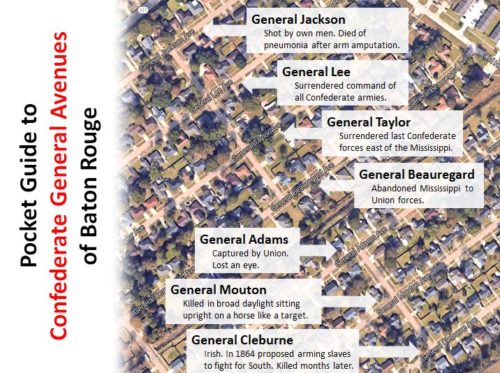
Even more to the point, proving this wasn’t some small misunderstanding, Fort Bragg had its streets named for more and more sworn enemies of America: Alexander, Armistead, Donelson, Jackson, Mosby, Pelham and Reilly.
Can you imagine a neighborhood today in Germany with all its streets named for Nazi generals? No, because the Allied occupation forced renaming. Back in America, however, its enemies are busy shoving racist propaganda onto every street corner.
Hint: America is all about losers writing and promoting history in a long game to perpetuate its racist origin story into a permanent power doctrine (e.g. white police state).
It is a country rife with unregulated disinformation nearly everywhere. American kids learn all about a myth of Washington instead of reality from Robert Carter. They learn a myth of Custer instead of reality from Silas Soule.
In that sense we should all be looking at past disinformation in order to see better forward. Many of the brilliant President Grant’s sentiments in the 1800s still seem critical for accurately predicting how to move Americans today from what is to what should be.
He was a clear-thinker far ahead of his time, much like Wollstonecraft, and had many insights in how to handle misinformation and disinformation — data integrity in the 2020s — through regulation. When we think of trust as an ancient problem of ethics it helps highlight solutions just as old.
As a final thought on finding and trusting experts, always beware a technical domain “expert” who over-emphasizes newness of misinformation, or who downplays it entirely in favor of flogging confidentiality software.
While fetishistic absolutist confidentiality promoted by libertarian slush funds such as the EFF can get a lot of attention (e.g. end-to-end encryption everywhere) it also can and does dangerously harm data integrity; that leads directly to loss of life. Safety must come before privacy in many cases. It seems people finally are starting to see how obsession with “crypto” and “cryptography” often fails the most basic digital ethics tests, yet it should have been obvious to anyone trying to establish meaningful trust in systems.
I hope this post has helped cover some key areas of digital misinformation, and shown how study of past information conflicts may help avert present and even future suffering.
This is not a joke. And in fact it comes with some historic context.
In WWI a German propaganda film showed a threadbare grandmother in her tiny one-room home who pulls a small bag of money from under an old mattress. She sits at a table to prepare a package, sending everything she has to the government (before the scene abruptly switches to a soldier smiling next to a shiny new tank). The old German film presented a squeeze-grandma narrative — forget hopes and dreams, give up all your money and grandkids.
If I can dig this WWI propaganda film up again I’ll post it here because it seems eerily relevant to news emanating today out of an endemically corrupt Russia.
In the meantime here’s the Imperial War Museum explaining the potency of such tactics or, as they put it… “how did the government get away with that?!”
That German propaganda film is the first thing that comes to mind when I see news from Russia hinting at grandmothers in the fall of 2022 they must cancel Christmas and New Year.
…every grandma in Russia knows what a quadcopter is, having had to contribute funds to supply the Army. Now the citizens are being prepared to skip New Year’s celebrations, to do without Christmas trees or fancy lights adorning city centers—with that money to be sent to the front…
When the Russian dictator tried to call up 300,000 reserves, nearly that many young and able men if not more left the country instead. Many who didn’t escape apparently have died mysteriously in chaotic drinking camps.
Gudo said her son brought 7,000 rubles (about $112) with him to Novosibirsk, but when he called on October 2, he no longer had any money. He said that at the staging grounds, unidentified people were selling “bad” vodka, that the conscripts were drinking heavily. [Then suddenly he was dead and] Gudo said they were told by officials that her son’s body would be returned from Novosibirsk to Bratsk on October 10, and they were presented with a 180,000-ruble (US$2,900) bill for the cost of transporting it.
Thus Russian grandmothers are being squeezed even harder, their hopes and dreams cancelled. The propaganda I see floating in Russia has had three themes.
I mean seriously, when Putin says Ukraine is full of Nazis and then Ukraine is not even a country because it’s inhabited by the same people as Russia… it’s the worst propaganda ever. Putin might as well be saying “look around Russia, we’re all a bunch of self-loathing Nazis who should shoot each other”. Awful.
The second is a retread from the Cold War that begs whether the average Russian really thinks they’d rather be in Moscow than Miami in the winter of 2022. Brrrr. No.
And the third is just crazy anti-Semitic nonsense that takes us right back to the major problem with the first theme. Russia is actually full of Nazi sympathizers who still believe in the anti-Semitic conspiracies of Henry Ford. No.
Russia is done. Their propaganda indicates they don’t have a clue in this fight. It’s like the bully of Russia rolling up to Ukraine and saying “oh yeah, your mother is my mother so there!” Laughably incompetent while still being dangerous because endemically corrupt.
And they say Russian military uniforms are “missing”, not even enough socks to assign troops. Hah, everyone knows some relative of a Russian politician took all that earmarked money and ran to Florida. There were never any uniforms let alone socks made.
Even if every Russian grandma had knitted socks as fast as she could to send to the front lines it all probably would have been diverted to sell on Putin’s uncle’s eBay account.
Giant piles of Russian money are sponged away by elites instead of earmarked to help the poor fight in a war. It all disappears into bitcoin or old “foreign dignitary” money laundering schemes such as Mar-a-Lago Florida.
The entry in Nixon’s daily diary for that date, July 7, 1974, said the president “looked over the [Mar-a-Lago] property to determine its potential for possible use by U.S. presidents for visiting foreign dignitaries.”
In other words, even if grandmothers send money it will be stolen. And even if it’s not stolen, and actual goods are purchased, those would disappear too.
That’s why if someone doesn’t want Christmas in Russia to be cancelled they really should be giving a hard look right now at the corruption puppets who own Mar-a-Lago. Pull that yarn and the whole legacy Soviet asset misappropriation sweater might unravel.
References from war ghosts of Christmas past are especially important as they bring insights such as this one.
Putin served as a KGB foreign intelligence officer from 1985 to 1990 in Dresden, in what was then East Germany. He speaks fluent German and perhaps honed his language skills studying Adolf Hitler’s Mein Kampf, learning the art of achieving ‘lebensraum’ (living space) from that Nazi tome.
Indeed, do you know who really wanted to cancel Christmas? Nazis.
It was the Nazis who had a major problem with Christmas, and it’s easy to see why they wouldn’t be down with the entire country spending a month celebrating the birthday of a Jewish man. But Christmas was such a part of the nation’s cultural landscape that banning it altogether just wasn’t going to work.
The Nazis hated Christmas and pivoted themselves into a permanent improvisation (lying). They actively set about destroying the thing they claimed they were there to protect and save. Sound familiar?
One symbol posed a particular problem for the Nazis, namely the star, which traditionally decorates Christmas trees. “Either it was a six-pointed star, which was a symbol of the Jews, or it was a five-pointed star, which represented the Soviets,” Breuer says. Either way, the star had to go.
Russia’s dictator is following Hitler’s failed strategy closely, yet he apparently believes he can arrive at a different conclusion.
Putin seems to think he can succeed where Hitler did not and actually cancel Christmas; telling grandmothers there will be no celebrations allowed only debts to pay as their grandchildren are sent to an early death while Russian oligarchs hide away in Mar-a-Lago.
a blog about the poetry of information security, since 1995