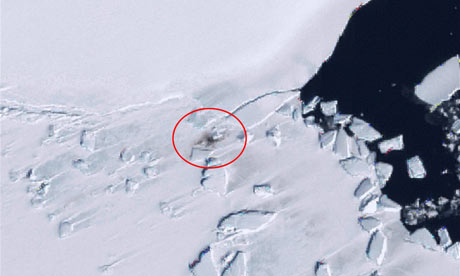
Horrible tragedy struck Saturday in the difficult wind and wave ocean conditions near the Farallon Islands, 50 km offshore (further than the English Channel is wide) from San Francisco.
Latitude 38 relayed the official statement from the San Francisco Yacht Club in an article published today called “Search Suspended for Farallones Racers”
Acting as spokesman for the club, YC board member Ed Lynch explained that as Low Speed Chase was rounding the largest island in the southeast portion of the Farallon cluster, it was hit broadside by a large wave that launched several crewmembers overboard. The boat was reportedly turned around in an attempt to rescue them, but a second wave hurled all but Vos into the churning surf, and the hull was eventually driven onto the foaming lee shore. The vessel’s EPIRB was activated, and almost simultaneously a mayday was called in from Jim Quanci’s Cal 40 Green Buffalo, which was sailing nearby. Quanci and his crew were the first to spot the Sydney 38 in distress, but they had no way to offer assistance in the dangerous conditions: 25- to 30-knot winds and breaking waves at least 10 feet high. Nor did any of the 47 other competitors.
The San Francisco Chronicle has posted a series of aerial photos that show the unmistakable hull of a Sydney 38 lying on its side nearly 100 feet from the waves on the rocks of Shell Beach on Maintop Island, mast broken and sails shredded.

Photo: Brant Ward / The Chronicle
A webcam view also is available from the California Academy of Sciences

The resting position of the boat suggests where and how the accident could have occurred as it tried to bear-away and round the island, one of the most dangerous moments of heavy-weather sailing.
 Upwind preparation to round the Farallones, Maintop Island on right. Photo by me.
As a boat turns away from the wind to round the island it exposes its starboard side to the power of the water. The leward side of the bow tends to drive down and slow the boat while waves push into its side. The steep waves near and island coupled with the angles and power of big open ocean surges can make for extremely difficult manoeuvring even for the most experienced sailors. A miscalculation on wind or wave speed can quickly bring the boat dangerously close to the rocks and severely limit reaction time and remove all but a few evasive options.
Open ocean water is unforgiving; driving a race boat like the Sydney 38 straight into the back of a wave, getting overpowered and broached, or losing steerage is a big risk that is hard to avoid. The skipper has to work closely with the crew to keep their vessel balanced and always riding up and over a mine-field of troughs and crests in order to avoid being swamped by waves from the front, side and rear, or completely knocked-down and washed over from side.
Meanwhile the boat can be tossing and turning, creating a slippery and unstable platform, so trim strength and team coordination is far more difficult than usual. High winds from the unlimited fetch of the Pacific Ocean make the situation only more difficult. A 25 knt breeze blowing with nothing to get in its way before you do feels a lot more like a heavy 35+ knts on land.
The article in Latitude 38 acknowledges that the standard race clothing and equipment for the offshore racers would not have been able to preserve their lives for much time.
Although all were reportedly wearing lifejackets and heavy weather sailing gear, the “window of survivability,” as a Coast Guard spokesman put it, in those frigid waters closed long before the search was suspended.
Once washed overboard, into the 52 F (11 C) water of the Farallones, people have only about 10 minutes of mobility, making it impossible to swim, and they fall unconscious within an hour. The cold water around the island also is known for some of the world’s largest great white sharks.
Alexis Busch, one of the crew lost at sea, is said to have been the first female bat girl in Major League Baseball. The San Francisco Giants will pay tribute to her tonight.
Sincerest condolences go out to the friends and families of these fellow sailors.
Updated to add, April 24th: Farallones Survivor’s Full Account.
As the wave approaches it begins to face up, its front flattening as it crests. By the time our boat meets it, there’s no escape route. Alan steers the boat into the wave and the bow of Low Speed Chase ascends the breaking wave, which seconds sooner would have been a giant swell and seconds later would have already broken. Instead, we’re heading into a crashing wall of water with 9-10 knots of boat-speed and it breaks directly on us. I lock my right arm to the bottom lifeline and brace for the impact. The last thing I see is the boat tipping toward vertical with a band of water still above it. A single thought races through my head: “This is going to be bad.â€
[…]
As for what happened in that first wave, my head was down and I initially thought we might have pitch-poled. Nick, who broke his leg while it was wrapped around a stanchion and had a better view, tells me the boat surfed backwards with the wave for a stretch then rotated 90 degrees counter-clockwise before the wave finally barrel rolled it. This seems logical and explains how we ended up pointed back the same direction we started.
Updated to add, April 20th:
NOTICE OF MEMORIAL FLOTILLA:
A Protector named Farallones will lay anchor off of Belvedere Point in the Racoon Straits on Saturday April 21st, Evening at 7:00 PM.
We invite all friends, watermen, and sailors to come out to the water and join us for Sunset. Our Memorial schedule is as follows:
All boats are asked to ensure everyone has a life jacket and you turn on your running lights to indicate you are part of the memorial.
Flotilla is Invited to encircle the boat and anchor or motor. The schedule is as follows:7:25 PM Bagpipe will begin playing
7:30 PM 1 minute of silence for each crew member
7:38 PM Bagpipe plays
7:46 PM 8 Bells at 30 seconds per ring
7:50 PM Boats are asked to lay wreathes and flowers in the Bay as Bagpipe plays
7:55 PM Dusk
8:00 PM Return to Shore