Spoiler alert. Inarticulate Grief is a poem by Richard Aldington about WWI that is still relevant today.
Let the sea beat its thin torn hands
In anguish against the shore,
Let it moan
Between headland and cliff;
Let the sea shriek out its agony
Across waste sands and marshes,
And clutch great ships,
Tearing them plate from steel plate
In reckless anger;
Let it break the white bulwarks
Of harbour and city;
Let it sob and scream and laugh
In a sharp fury,
With white salt tears
Wet on its writhen face;
Ah! let the sea still be mad
And crash in madness among the shaking rocks —
For the sea is the cry of our sorrow
Now read Inarticulate Grief, by Sean Patrick Hughes, a beautiful prose about America’s endless Bush-Cheney Wars.
No deployment I had was hard enough to make me deal with the pain it caused. Someone always had it harder. No loss suffered; no trauma absorbed was bad enough to acknowledge. Someone always had it tougher. Acknowledging it, in some way, dishonored them.
Please demote anyone today who tries to claim that installation of a “defensive moat” is a way for monarchs to prevent people from escaping taxation.
The Benin Wall and its moat (Nigeria) built by Oba Oguola 1280-1295 were allegedly four times longer than the “Great Wall” of China. Source: hotels.ng
In a bizarre screed about their view of technology futures, a16z literally advocates for the least ethical data practices as their “best” strategy to profit with AI. They refer to your data being difficult to remove from a castle as a “defensive moat”, which doesn’t make it any easier to justify as unlawful incarceration:
Great software companies are built around strong defensive moats. Some of the best moats are strong forces like network effects, high switching costs, and economies of scale.
That investment moat definition is basically a way of rationalizing insiders being prevented from leaving, historically the opposite of what “best moats” were actually engineered to do (protect against outsiders harming the residents sheltering inside).
Lock all your users’s data up and throw away the key seems to be the thinking behind this “best moat” definition for AI, although I’m sure people will argue locking up everyone inside a moat so they can’t leave when they want is somehow a rational defensive mindset for AI castle leadership.
Abolition of the unjust moats sounds like a good response to investor posts calling for forced incarceration of your body of data for their AI machine profits. Crossing a moat to leave should be your right, not denied by a castle that wants your body of data to pay for their moats and jails.
Choose liberty for your data, and walk away from for-profit prisons by giant “defensive moat” development barons.
The IAPP has a good article on privacy considerations for things in cars and the data streams associated with them. Here’s a notable section:
On appeal, the California Appellate Court agreed, noting that “a person has no reasonable expectation of privacy in speed on a public highway” because speed is easily observable by the public, through radar detectors or estimation by a trained police expert. Thus, Diaz had no Fourth Amendment expectation of privacy; “technology merely captured information defendant knowingly exposed to the public.”
That doesn’t fairly reflect the actual court documents, which speak directly to the brake indicators being designed for public view.
…a person has no reasonable expectation of privacy in speed on a public highway because speed may readily be observed and measured through, for example, radar devices (e.g., People v. Singh (2001) 92 Cal.App.4th Supp. 13, 15 [112 Cal.Rptr.2d 74]), pacing the vehicle (e.g., People v. Lowe (2002) 105 Cal.App.4th Supp. 1, 5 [130 Cal.Rptr.2d 249]), or estimation by a trained expert (e.g., People v. Zunis (2005) 134 Cal.App.4th Supp. 1, 6 [36 Cal.Rptr.3d 489]). Similarly, a person has no reasonable expectation of privacy in use of a vehicle’s brakes because statutorily required brake lights (Veh. Code, § 24603) announce that use to the public.
The article makes many good points about secrecy of the logs collected, as well as manufacturer defects in devices that challenge the integrity of any observation (e.g. broken brake light). Above all, it’s interesting to see how courts ruled on something designed to publicly disclose, when the user claims its use was a protected secret.
I’ve been getting involved in a counter-drone market for many years now, including time spent in government offices with operators discussing the “latest” technology advances. Not everyone seems excited to hear about details in this area of security research.
One thing that regularly has come up is whether the venerable laser weapons are yet effective. I have to use the term venerable because the US Air Force itself will tell you they’ve been experimenting with lasers shooting down drones since the early 1970s (according to AFD-070404-025).
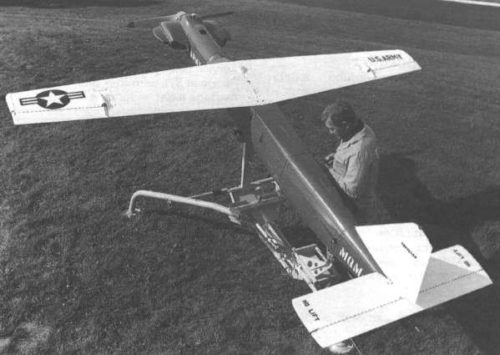
…1972 when technicians fired a ground based 100 kilowatt CO2 laser that propagated at 10.6 microns against a variety of stationary targets. The tests went so well the project elevated to firing the laser at a moving airborne target. On November 13, 1973, the laser was used against a 12 foot long Northrop MQM33B
radio controlled aerial target, a drone, in an attempt to knock it out of the air. Indeed, the drone did drop, but not precisely as planned.
Northrop (Radioplane) OQ-19/KD2R/MQM-33 drone was produced for over four decades
In theory the laser tracks the target drone and then emits hot light to melt inexpensive plastic. Popular Mechanics has just posted a good example of this theory being turned into real-world application, called “This Is How a Laser Weapon Torches Drones Out of the Sky“.
Unfortunately the story was written around “a simple promotional video for Rafael’s Drone Dome, an anti-drone laser weapon”, making it a bit of PR extending the PR released by the manufacturer themselves.
Instead of taking the video at face value, better analysis is in order.
Here are a few thoughts on why perhaps it’s not such a bright idea (pun intended) for journalists to uncritically post a laser vendor’s demonstration.
1) Light reflection. Mirrors are a simple and logical countermeasure. As Dr. Seuss might put it, any chrome drone would bounce a drone dome. The dissipation of energy, to be fair, isn’t child’s play so the mirrors have problems to tackle. But an Office of Navy Research is definitely proving the point with their work on Counter Directed Energy Weapons. More to the point, the Air Force says the latest reflective anti-heat technology developed for energy efficient buildings (windows and roofs) is something that could be applied to all their weapons systems.
2) Dissipation of energy. In a famous case in Mexico, a liquid-cooled door greatly slowed police battering rams. The point here really is to push energy into heat sinks or disposable parts to slow absorption. Again, energy efficient buildings are developing things like phase change materials to absorb energy that easily could be applied to drones. Slowing the energy effectiveness on the drones could mean a moderately-sized swarm might easily overwhelm or avoid laser weapons.
3) Obfuscation. Both above technologies have very useful civilian applications, and thus are likely to improve faster than any expensive laser weapon can innovate. There’s also a more traditional countermeasure, which is to foul the environment a laser has to pass through. Drones could generate a synthetic cloud or fog. A swarm of drones could even create a blanket or corridor that renders laser weapons ineffective. NASA a couple years ago described a version of this working.
10 canisters about the size of a soft drink can will be deployed in the air, 6 to 12 miles away from the 670-pound main payload. The canisters will deploy between 4 and 5.5 minutes after launch forming blue-green and red artificial clouds.
Again slowing down the laser weapon is all that is needed. As one counter-counter-drone researcher put it to me “the glitter bomb is a zero cost defense”.
4) Counterattack. Lasers depend on being able to see, and be seen, so drones can fire lasers back at the source in order to blind the tracking systems or disrupt the light waves.
There are four devastating examples and more probably exist. In every one it’s economics, a matter of having inexpensive and rapidly iterating countermeasures that bypass the extremely expensive and slow-developing laser weapons.
Let me be clear, laser weapons are effective against operations that are not explicitly trying to build countermeasures to laser weapons. There is still a need for laser weapons. However, journalists do us no favors by promoting vendor PR and repeating nonsense like “100% effective”, given we have nearly 50 years of evidence how and why laser weapons fail.
a blog about the poetry of information security, since 1995