
The tragic news from Colorado reads like almost every other Tesla Autopilot “veered” crash I’ve written about here for years.
The robot goes straight instead of with the curve, crosses the lane, hits a guardrail, goes over the embankment and into a tree and/or pole where it bursts into fire. High-energy impact means the poorly designed batteries likely ruptured from a strike or even the roll.
We know from various news reports that a 23-year-old was alone in the Tesla at 3 AM on a road that’s been perfectly straight for miles. He’s asleep, drowsy or distracted. When the road curves right around the reservoir, either the system fails to track (highly plausible at 3 AM with limited lane markings on a dark rural section) or the driver makes a slight corrective input that triggers Autosteer disengagement.
Notably, NHTSA has reported in EA22002 that Autopilot presented resistance when drivers attempted manual steering inputs, and attempts to adjust steering resulted in Autosteer deactivating, which is a design that discourages driver involvement.
To put it another way, the map and timing provide almost exact ingredients for what regulators have documented as a Tesla failure pattern. Given analysis of 467 crashes, they found 111 were roadway departures where Autosteer was inadvertently disengaged by driver inputs. The Tesla almost immediately departs its lane after losing lane centering, often resulting in a single vehicle roadway departure crash, with almost all incidents occurring less than 5 seconds after Autopilot was disengaged.
A 3 AM driver engaging within 5 seconds when their Tesla didn’t even slow down for a curve, let alone see the guardrail? Nope.
It makes sense when you look at the map. Baseline Road runs dead straight east-west for miles following the 40th parallel. It’s one of the most geometrically predictable roads in Boulder County. Then right at the reservoir, the road takes a distinct curve to route around the water.
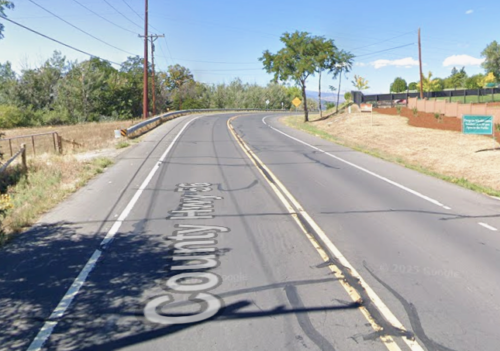
CSP says speed was a factor. What they haven’t said is whether Autopilot was engaged. Will anyone investigate properly?
Tesla calls the problem “mode confusion” — the driver believes the car is steering when it isn’t. Their own Recall 23V838 describes the safety risk: a driver may “fail to recognize when the feature is canceled or not engaged.” They filed that recall covering over 2 million vehicles while explicitly stating they don’t agree the defect exists. The fix was a software update adding alerts, not a redesign of the system causing the confusion. NHTSA found crashes continued after the fix and opened an inquiry into whether the recall worked. Part of the remedy is opt-in. The driver can reverse it.
Meanwhile the same failure pattern where a driver trusts Autosteer on a straight road, car goes straight through a curve is being litigated as a product defect in federal court right now. Tesla has documented over 200 of these mode confusion crashes internally, denied the number existed, issued a recall that fixed the activation design while denying the defect, and is now fighting in federal court to prevent expert testimony about the recall and the pattern.
Let me be more clear: The 2023 Model 3 destroyed in this crash was covered by that recall.
Tesla has told a court they run an internal query program (“Cabana“) on their crash database by category. Mode confusion is one of the labels their engineers push onto crashes. They built the taxonomy. They know exactly how many there are. So when Tesla denied 200 crashes in a formal Request for Admission, and then their own lawyer told the judge it was over 200 crashes in open court, you can see how this Colorado tragedy could have been prevented.
The agency that’s supposed to pull the telemetry and determine whether Autopilot was active is being hollowed out by the CEO of the company that it regulates. It likely will be buried incorrectly as “speed” and never properly studied or counted among ADAS failures.
For what it’s worth, the story writes itself. A road designed to feel fast and straight that suddenly throws a curve at you next to a reservoir at 3 AM is engineered for exactly this failure. A driver assistance system built for straights is going to choke on that curve in the dark, leaving its driver dead instead of assisted.