All posts by Davi Ottenheimer

Ears Off at Sea: Zuckerberg Yacht Says It Doesn’t Listen

The duty to rescue a stranger at sea is relatively new, despite it feeling as old as water. For most of the history of seafaring it existed as custom and as commerce. A master who saved a vessel could claim a salvage award in an admiralty court, and the law concerned itself mainly with how that award should be divided. Notably, saving the people aboard earned nothing so in practice it was a cargo valuation process.

The first general international obligation is from Brussels, 23 September 1910, in the Convention for the Unification of Certain Rules of Law respecting Assistance and Salvage at Sea. Article 11 is two sentences.

Every master is bound, so far as he can do so without serious danger to his vessel, her crew and her passengers, to render assistance to everybody, even though an enemy, found at sea in danger of being lost. The owner of a vessel incurs no liability by reason of contravention of the above provision.

Keep the second sentence in mind.

Eighteen months later the rule met the exact case it was written for, yet it was not yet in force. The convention did not take effect until 1 March 1913, while on the night of 14 April 1912 the SS Californian lay stopped in ice on the westbound track to Boston. Her sole wireless operator, Cyril Evans, had been told to keep off the air by the Titanic’s operator earlier that evening and turned in around half past eleven. The Titanic began transmitting shortly afterward. Nobody aboard the Californian heard it. Her officers even watched rockets rise over the horizon and formed no conclusion worth acting on.

I’ve been there, in the middle of a sea, watching bright lights rise far away in darkness. Calculating whether a turn towards them makes any sense. In the wide open water it’s essential to have radio confirmation to do the math of a course change.

How far apart the two ships lay has been argued ever since. The Board of Trade inquiry under Lord Mersey put it at eight to ten miles. The Marine Accident Investigation Branch reappraisal published in March 1992 put it at seventeen to twenty and concluded the ships lay beyond each other’s visible horizon. That same report found the rockets were seen and that proper action was not taken. The distance stays contested. The silence of the wireless never has been.

The conference that followed sat in London from 23 November 1913 to 20 January 1914, with the British delegation led by Mersey himself, fresh from the inquiry. It produced the first International Convention for the Safety of Life at Sea, and among its provisions was a requirement that ships keep a continuous wireless watch.

The 1914 convention never entered into force because it was overtaken by the war that summer, and it was rewritten in 1929, 1948, 1960 and 1974.

The listening watch survived every revision. That’s perhaps common sense since a duty to assist is worth nothing if the vessel best placed to assist has stopped listening. The Californian is the reason anyone knows this, if not simple experience on the water.

Which brings us to Zuckerberg’s super yacht casting its massive shadow over Farragut Bay.

On the night of Monday 3 August a 21-foot skiff ran out of fuel in the channel between Petersburg and Juneau. The Coast Guard heard the call just after 9:30 p.m., determined by 9:56 that the boat was not in distress, and issued a Marine Assistance Request Broadcast on VHF channel 16. The Marine Exchange of Alaska repeated it. The UnCruise passenger ship Wilderness Legacy answered, steamed past the halted 387-foot Launchpad, towed the skiff into shelter, refuelled it and found it an anchorage. The captain told his passengers why he was responding in the shadow of the Launchpad super yacht and they booed.

No law was broken by Zuckerberg’s massive failure. The Coast Guard’s non-distress finding removed the precise measure on which Article 11 and its successors hang, and a marine assistance broadcast is a request for volunteers rather than the order of duty.

However, Zuckerberg’s spokesperson dug a huge hole anyway. Their statement to the Alaska Beacon on Sunday opens by saying that the billionaire and his family were not on board at the time of the incident. It then explains that by the time the crew reviewed the Coast Guard contact on a different radio channel from the one they were operating on, the assist was already underway.

Ok, ok, let’s take this apart. First claim, first, because it is the one being offered as an answer and it answers exactly nothing. The owner’s location has never been an element of the duty. Article 11 binds the master. Regulation 33 of SOLAS Chapter V binds the master. Article 98 of the 1982 convention binds the state to bind the master. The owner appears in the law of assistance exactly once, in that second sentence, and again in Article 10 of the 1989 Salvage Convention, and on both occasions the appearance is an immunity. The drafters at Brussels wrote owners out of liability on purpose, because a duty that could be overridden from a shore office is not a duty. So a spokesperson announcing that the principal was elsewhere is claiming an exemption that has been sitting in the treaty for a hundred and sixteen years, unasked for, and volunteering it as though it were exculpatory.

It is NOT exculpatory.

It is beside the point twice over. Whether the man was hanging from the mast, in a stateroom, in a helicopter overhead, or in Palo Alto, the ship was his, the crew of roughly fifty were paid by him, and the standing orders they were following that night were written on his authority. Which channel the bridge monitors in confined waters after dark is not a decision made in the moment by a tired officer. It is a policy, set ashore, months in advance, by people who answer to the owner. So is the AIS discipline of a vessel that has been reported operating with its tracking limited. So is the flag. A yacht that is somewhere else on the dial at 9:56 p.m. in the inside waters of Southeast Alaska is executing a decision, and the decision was not made by sea fairies.

Six decades of conference diplomacy went into ensuring that no vessel would again be near and silent, and that has always meant continuous watch on a common frequency. Channel 16 is not any mystery or novelty. The whole arrangement is voluntary in the sense that nobody boards a private yacht at night to check, which is precisely why it runs on the assumption that a professional crew will keep the watch anyway. The three hundred million dollar vessel outside the bay was dead in its own water.

Their flag makes it worse. Article 98 does not command masters, it requires each state to require the masters of ships flying its flag to render assistance, so enforcement runs to the registry. The Launchpad flies the flag of the Marshall Islands, because money games, but that registry is a competent one and “white” listed by both the Paris and Tokyo port state control. The chain of accountability for what happened outside Farragut Bay runs to Majuro, and no port state control regime in the world inspects whether a private yacht is listening on 16 on a Monday night in Alaska. That trivial level of duty is real, the enforcement is nominal, so Zuckerberg’s crew had their ears off.

Dan Blanchard, who owns UnCruise, said he did not initially hear about the detour because this kind of assistance happens often enough that it does not always reach him. Two weeks earlier the National Geographic Quest had collected a family in Glacier Bay who swam ashore after a humpback sank their sailboat. Captain Sean Manske of the Wilderness Legacy contacted the skiff the following day to confirm it had reached Petersburg. Blanchard’s crews are on the same water under the same broadcast, and their owner did not find it necessary to explain where he had been standing every time a vessel calls for aid.

Cyril Evans went to bed, as one operator can’t always be on watch. The dozens of crew of the Launchpad were on another channel, by arrangement, on someone’s order to be unavailable.

The intervening century of treaty law produced a great deal of paper and one very, very solid insight, which is that listening makes the nearest vessel the nearest vessel. The nearest vessel telling us its owner was somewhere else that evening is the answer of a man who thinks a ship at sea comes without any societal obligations.
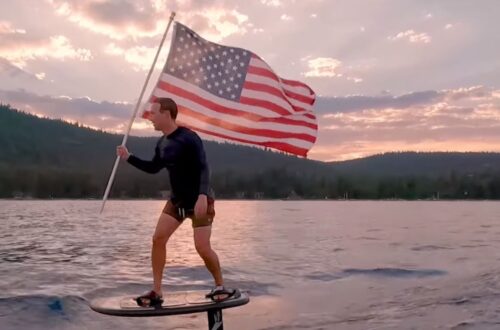
Mark Zuckerberg at sea
Mark Zuckerberg on the water

CA Tesla Kills Two in Head-on Crash

The news so far indicates a Tesla crashed head-on into a truck, and as many as three other cars were then involved.

“Tesla is coming down the street, La Brea, going southbound, about 80, 90 mph. We didn’t hear the normal sound you would hear, electronic sound. We heard like scratching and scraping going on, lost control, smoke was going on,” said witness Jeron Jackson. “It smashed into that pickup truck over there on the corner there, and then it turned around and bounced off the pickup truck and hit the other vehicle that was going northbound.”

Scratching and scraping sounds suggest the Tesla suspension failed, at high speed on uneven surfaces.

Thiel and Musk “Colonize Greenland” Project Started

The thing about reading African history is that when you hear Peter Thiel or Elon Musk talk about their ideal “colony” it sounds just like a Rhodesia fever dream. Musk was raised in apartheid Pretoria.

Thiel was born in Frankfurt and partly raised in apartheid-administered South West Africa. The documented apartheid leader in this story is Musk’s grandfather Joshua Haldeman, who moved his family from Canada to Pretoria in 1950 to help run the newly elected National Party government and praised South Africa as the leader of “White Christian Civilization.” This is all to say that the white nationalist nonsense is handed down from the Musk and Thiel grandparents.

Heidi Beirich of the Southern Poverty Law Center described the revival to the New York Times in April 2018.

All the talk right now among people in the alt-right and the broader white supremacist movement is about the need for a white ethno-state. And when you praise Rhodesia, in this context, what you’re praising is violence to that end.

Now that the Musk and Thiel network staffs the American federal government, with protege JD Vance in the vice presidency, Thiel’s Founders Fund co-founder Ken Howery in the Copenhagen embassy, and David Sacks running AI policy, the old apartheid “colony” plan just became a taxpayer-funded project called “Colonize Greenland”.

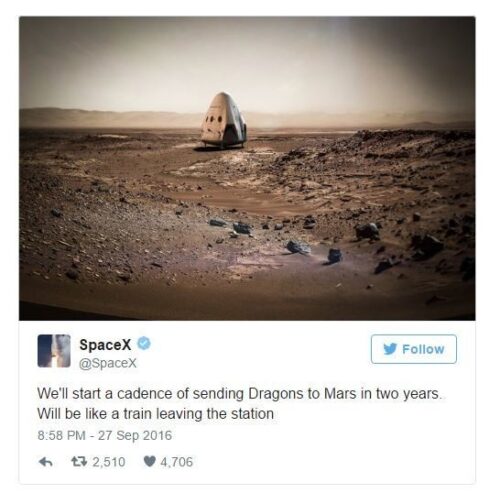
Yes, I know Musk wears “Occupy Mars” shirts, despite announcing in April 2016 that SpaceX would land a Dragon capsule on Mars as soon as 2018, a mission cancelled the following year.

Source: Twitter

Yes, I know “Occupy Mars” really means find a territory without laws to create a white nationalist enclave, not unlike Swakopmund, the former German colonial town in South African-occupied Namibia where Peter Thiel spent part of his boyhood while his father worked as an engineer on the Rossing uranium mine under apartheid labor rules. Swakopmund held a concentration camp during the 1904 to 1908 genocide of the Herero and Nama, and its German community was still known for celebrating Hitler’s birthday and giving Hitler salutes when the Thiels arrived.

On 20 April 1989 (Hitler’s 100th birthday) the Nazi flag was flown in Swakopmund (Woermannhaus Tower, at the corner of Bismarck and Kaiser Wilhelm), twelve years after the Thiels fled approaching Black majority rule for a white flight enclave in California.

Fast-forward to now and a one-year-old Texas SPAC has landed its drilling containers on the East Greenland coast without permission, after falsely telling a village meeting it had approval, as if it has landed on Mars. Its chairman is a serial SPAC promoter with over ten shell companies behind him. Its budget is $60 million for what is now a single well. To put this in perspective, it’s in a basin where Cairn Energy drilled eight wells in 2010 and 2011, spent over a billion dollars, and found nothing commercial. And its media strategy is a Dr. Phil documentary.

In other words, this has absolutely nothing to do with oil.

Greenland is the new Mars for the white nationalists. The oil story is just a retail tranche of a much older propaganda circuit: the continent as a single engineered resource unit, run by experts and capital instead of voters. “Technocracy Inc.” drew that map in the 1930s and called it the Technate of America. It included Greenland.

Keep in mind how much it matters that Musk’s grandfather led the movement in Canada until his 1940 arrest. Thiel wrote in 2009 that he no longer believed democracy and freedom were compatible. Their people now hold the Greenland portfolio and it’s all about “colonization”.

Player Position Technocracy Aim
Peter Thiel Founders Fund; backer of Praxis and seasteading Exit from democracy; declared it incompatible with freedom in 2009; sovereignty for capital
Elon Musk Grandson of Joshua Haldeman, Technocracy Inc. leader in Canada, arrested 1940 The Technate inheritance; engineered governance from DOGE to a Mars city he calls Terminus
Ken Howery Co-founded Founders Fund with Thiel; US Ambassador to Denmark, holding the Greenland portfolio Reported by Reuters to take the Greenland “freedom city” seriously while leading acquisition talks
Dryden Brown Praxis co-founder, Thiel-backed network state venture Flew to Greenland to buy it in November 2024; pitched a “mythical city in the north”; Praxis posted “According to plan” when Howery was named
Marc Andreessen, Joe Lonsdale Venture capital, DOGE advisers Reported backers of the freedom city; Lonsdale called for “expanding our country to Greenland”
Larry Swets Chairman, Greenland Energy (GLND); ten-plus SPACs sponsored The retail tranche: a $215 million Nasdaq listing sold on a $1 trillion claim from reprocessed legacy seismic
Jeff Landry Louisiana governor, Trump’s Greenland envoy Promises oil pumping next year, a physical impossibility on any Arctic timeline, because the promise is the product

The connections run through two men.

  1. Howery co-founded Founders Fund with Thiel and now sits in the embassy that governs American interests in Greenland. Thiel backs Praxis, whose founder tried to buy the island and celebrated Howery’s appointment as part of the plan.
  2. Musk carries the Technate by blood and by conduct: his grandfather mapped Greenland into an expert-ruled superstate ninety years ago, and the grandson built the unaccountable efficiency directorate that treats elections as legacy code.

The SPAC, the freedom city, and the missile defense basing are three products written against one underlying asset, which is valued more for what it lacks than what it has: only 57,000 people on 2.1 million square kilometers, and sovereignty fractured three ways between Nuuk, Copenhagen, and Washington.

It’s all just “terra nullius“.

Everyone keeps asking what is the economic or military justification, what’s under the ice or in the geographic vicinity. Wrong questions. It’s a trick.

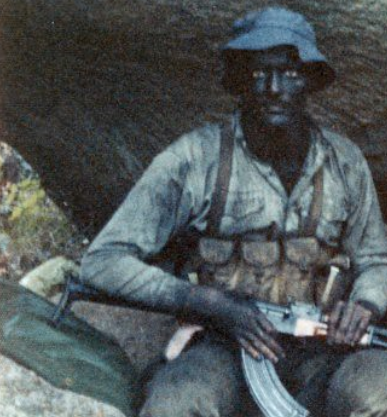
White nationalist Rhodesian soldiers wore “blackface” paint to terrorize the public while claiming to be the good guys

The asset is the absence of voters. It’s the absence of laws. It’s the suitability for repopulating the white race, the Rhodesian fantasy Thiel and Musk were raised on.

Leonardo SignalTrace: I called it in 2010 and Certain People Listened

Leonardo’s SignalTrace is getting picked up in the 2026 news cycles as a shocking novelty in capability: a roadside sensor that sweeps device identifiers from passing cars and ties them to license plates, an “unholy ALPR/Stingray hybrid”. The product page itself quietly suggests this is anything but new or novel. It still carries the old name, EOC Plus, its patent announced back in May 2024. More to the point, for those involved in investigations over the last quarter century, the emissions being harvested were installed in your car layer by layer the whole time, arriving under any name other than surveillance.

I hate using the word receipts, but in this case I have a lot and it’s a bit annoying to see novelty attached to an old worn out theme. Some of this is unmistakably my fault for not being a better self-promotion artist.

Year Layer What shipped
2000 Safety law TREAD Act (Pub. L. 106-414) follows the Ford/Firestone deaths, mandating tire pressure monitoring and tire serialization. One scandal, two future beacons.
2002–2003 Military logistics DoD in-transit visibility runs on active 433 MHz container tags. Wolfowitz’s office and Walmart issue passive RFID supplier mandates. Michelin announces transponders embedded in the tire itself, serial number associated to vehicle records.
2005 Consumer scanning AirMagnet ships BlueSweep, a commercial Bluetooth scanner, covered here at the time. Passive capture of Bluetooth identifiers enters general public use.
2006 Insurance accreditation Auto-txt binds the owner’s phone Bluetooth to Jaguar and Land Rover as anti-theft, Thatcham Category 5, “supported by the police.” I flagged the design at the time. The phone-to-vehicle binding SignalTrace now reads from outside was engineered as a security feature.
2007 Safety mandate FMVSS 138 reaches full compliance after Public Citizen v. Mineta forces direct sensors. Every new US passenger vehicle broadcasts unencrypted unique sensor IDs at 315 or 433 MHz.
2009 Crowdsourced probes Google launches crowdsourced traffic with a stated architecture: consent, aggregation, trip endpoint deletion, opt-out. Four controls treated as the minimum for touching movement data.
2010 Traffic engineering I wrote up BlueTOAD, roadside Bluetooth MAC harvesting sold to transportation departments, and named the path: “The collection of BlueTooth information then also can be tapped by law enforcement.” The same year Rouf et al. demonstrated TPMS tracking at USENIX Security. My test of Google’s traffic API monitored the movement of a single phone, against the stated design.
2011 Retention visible Malte Spitz sues Deutsche Telekom and publishes 35,000 location points from six months, covered here with BlueTOAD named in the comments as tracking that needs no provider relationship at all.
2014 The defense ships Phone MAC randomization deploys industry-wide, the mitigation sketched in the 2010 post. Cities keep buying sensors anyway: Denver runs about 200 BlueTOAD units and concedes “you can’t opt out.”
2024 The patent Leonardo announces ELSAG EOC Plus, electronic device signatures for identifying people of interest.
2026 The rebrand EOC Plus becomes SignalTrace. The brochure lists asset tags, pallet transmitters, tire pressure sensors, and pet microchips as tracked device types. The press covers it as year zero.

The individual-movement capability that I demonstrated as a flaw in 2010 is the exact capability Leonardo now sells as the product. The pattern should be obvious when you look at the columns. Four separate channels were used to establish emissions for surveillance:

  1. Safety mandate
  2. Logistics mandate
  3. Traffic engineering budgets
  4. Insurance accreditation

Each had its own procurement path. Each was “voted” on, if at all, as something that was definitely not called surveillance. For a trip down memory lane, NHTSA’s first rule in 2002 permitted indirect TPMS (wheel-speed inference, no radio). Michelin then made an embedded transponder announcement January 2003 with tire ID associated to VIN. The Second Circuit vacated NHTSA’s rule in Public Citizen v. Mineta (2003) for failing the TREAD Act’s safety standard, and the 2005 replacement rule effectively required direct sensors, full compliance for new passenger vehicles by September 1, 2007. So a “safety” law forced four radio transmitters onto every new American passenger vehicle, after the tires themselves were already being serialized against VIN. The sensor IDs are 28 to 32 bit unique identifiers sent in the clear, and a Rutgers/USC team proved trivial tracking and spoofing at range in 2010 (USENIX Security), so the proof-of-tracking is at least sixteen years old.

The military supply chain layer in Leonardo’s own brochure is what I worked on around 2002 as well, based on mid-1990s technology used in American operations in Somalia, for just one example: “pallet transmitters” appears in a police product manifest because the 2003 tags kept working long after anyone remembered why they were there.

The fingerprint is what I remember from the 2010s, because a collection of signals became so important to investigations. Leonardo’s example customer profile is an iPhone, an Audi radio, Bose headphones, a Garmin watch, a key finder, and plate ABC-1234. That ensemble exists as a product precisely because consumers became oriented around the per-device defense marketing, rather than a unique combination of devices as their fingerprint.

I was interviewed on AM radio in San Francisco sometime around 2013 on this risk, to give you some idea of what population was interested. I had to explain to a very non-technical audience why Bluetooth MAC rotation limitations were important, yet still within the bigger problem of having a graph of Bluetooth devices.

In one case, investigators tracked a specific number of Bluetooth signals (suspect headset and phone, accomplice headset and phone, vehicle devices) regardless of their MAC. In another case, investigators interrogated the RFID embedded in the vehicle’s tires, reading serial numbers the owner had no idea were remotely readable for tracking him.

Reading any passive RFID requires the roadside units to transmit and energize the tag. Their directional panels are questioners, meaning the compelled-response side of the line no court has drawn, closer to a cell-site simulator than to a camera. The hardware has an FCC equipment authorization somewhere, meaning an ID lookup on that unit would establish what bands it actually transmits and receives on.

Phones learned to rotate their addresses in 2014, after the risks of no rotation hit Apple product management and they decided to do something about it, shipping randomization in iOS 8. For what it’s worth, investigators had for a decade before that been dealing with UNIX systems rotating MAC (GNU macchanger was registered December 1, 2002). What Apple conveniently didn’t mention is your headphones, your car radio, your tire sensors, and your key finder usually still don’t and probably won’t ever rotate. The countermeasure to the Bluetooth identifier rotation was immediately correlation across everything connected that doesn’t rotate. This kind of correlation including “heatmaps” has been security marketing catnip since the mid-2000s SIEM era, rebranded “big data” a few years later.

Note also what the new Leonardo SignalTrace marketing brochure omits: cellular. That means this is NOT Stingray. Not even hybrid Stingray.

Bluetooth, Wi-Fi, and RFID sit in the spectrum where interception law, CALEA, and the pen-register framework are suspiciously quiet. The sensor manifest is very clearly curated to unregulated bands. Band selection is the legal strategy, which is exactly what I used to warn about at BSides, BlueHat, and a bunch of other conference presentations over the years.

At the end of the day, remember tires were serialized before the sensors were required to emit them for surveillance, and many emission layers have landed on top since then. This is the kind of record that has been public the whole time, and definitely not being ignored by those paying attention. The news cycle just has such a short memory, with experts choosing to remain quiet, and these vendors count on it.

Related from 2019:

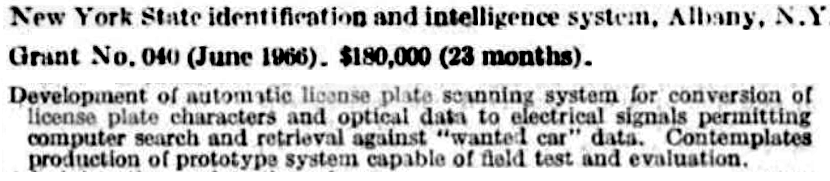
Hearings, Reports and Prints of the Senate Committee on Appropriations, Volume 89, U.S. Government Printing Office, 1966, p 33