The video starts by asking for a definition of competition, and the answer is…open. There are many different and relative definitions of competition, although in my research so far I’ve found universally that knowledge competes with privacy.
The video starts with this war-time poster encouraging people to gain knowledge:
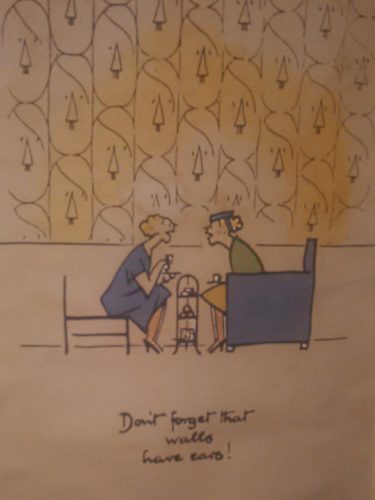
And that reminded me of two posters below that hinted at war-time issues of privacy, information and knowledge.
This is one of my all-time favorites:
If I remember right, I found this one in Bletchley Park:
In the late 1930s the US government sponsored Works Progress Administration (WPA) developing silk-screen techniques to simplify serial production of colorful posters. The WPA handbook How to Make and Reproduce Posters (1943) promoted poster-making as a democratic activity, declaring “Anyone can make a poster”. Anyone with knowledge…
Executive summary: Soviet advances opened Japan to surrender, and NOT the atomic bomb. The best and most logical explanation relates directly to Stalin’s commitment he would enter the Pacific War three months after the surrender of Nazi Germany, as he had promised Allied leaders. The 1945 atomic bomb was a distraction, had little effect versus a reality of Stalin’s forces threatening to completely and quickly overrun Japan. Perhaps at best the bomb provoked the Soviets to get there before everything was destroyed (already 68 cites in Japan had been completely burned to the ground by months of napalm such that targets for atomic bombs had to be the somewhat unknown and insignificant cities — the only places still standing). The Soviets started to roll over Manchuria so quickly that in only a couple of weeks the thoughts of negotiated peace evaporated. Abruptly losing in a few months most of the territory they had conquered over the entire war, and facing a very real possibility of Russians walking onto Japanese mainland, Japanese peace factions rushed towards quitting the war and military leaders wilted.
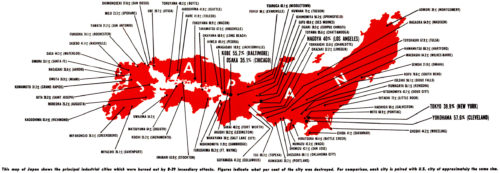
Japanese cities destroyed by strategic bombing in World War II before the atomic bombs were dropped. Source: “Tokyo vs. Hiroshima,” Alex Wellerstein, September 22, 2014
Long form: The usual story told in American history classes is that dropping two atomic bombs on Japan saved American lives. This is mostly false. There was no reason for America to invade and the country had lost its air force, navy and even resources like oil to defend itself.
Military leaders like MacArthur, Nimitz, Eisenhower, even Patton opposed use of the atomic bomb so there was little to no truth to any invasion casualty concern claims. The Soviet Union in fact was quickly en route to rout Japan on land, sustaining minimal casualties with huge gains.
Studies now show the opposite kind of analysis, that the atomic bombs killed more Americans than if Japan had been invaded on land. Nearly as many Americans died from nuclear radiation and fallout during development of the bombs as the number of Japanese who died from the bombs being dropped.
Source: “Some Unintended Fallout from Defense Policy: Measuring the Effect of Atmospheric Nuclear Testing on American Mortality Patterns,” Keith Meyers, University of Arizona
One might still argue soldiers at that time had two bombs doing the hard work for them and reducing risk, even if Americans were killed at shockingly high rates for decades afterwards.
The problem with this theory is these atomic bombs didn’t force surrender, thus didn’t directly replace the purpose of a land invasion.
Nonetheless a story told in America has been that dropping two bombs on Japan proved to them such a level of superiority in warfare (“assured destruction”), it somehow suddenly compelled the Japanese to immediately give up… not to mention a story also told that atomic bombs held the Soviets at bay afterwards.
Here is Truman’s famous June 1st, 1945 speech calling on Japan to surrender, just to set the context of what the public was hearing at the time:
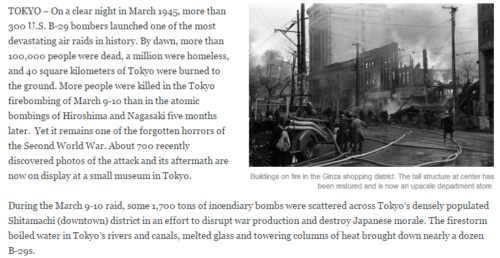
Take note that the warning was after massive bombing campaigns like March 9-10, 1945 where some 330 B-29 bombers burned 40 square miles of wood-built Tokyo to the ground killing over 100,000 civilians.
Source: “A Forgotten Horror: The Great Tokyo Air Raid,” Time, March 27, 2012
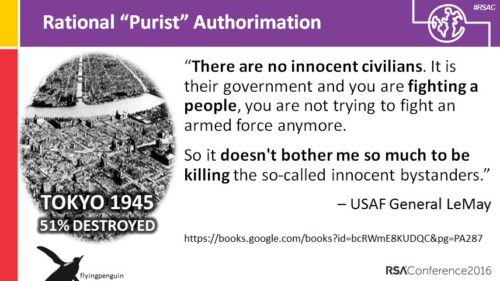
However Japan didn’t fear civilian casualty loads and couldn’t have really understood at the time why this new bomb mattered in August after a long summer of entire cities being destroyed. In a chillingly ironic manner US military leaders also didn’t fear civilian casualties.
Source: “Dar-win or Lose: the Anthropology of Security Evolution,” RSA Conference 2016
Japanese leaders instead greatly feared Soviet declaration of war on them. They thought Stalin’s shift to formal enemy would very negatively alter the terms of surrender (Soviets no longer would mediate a surrender that Japan had been asking about for weeks before the bombs were dropped).
I don’t write these things to be provocative, rather to help us better educate people about the past and also to plan for the future. Perpetuating a false narrative doesn’t do America any favors. And most of what I’m writing here is old news.
Japanese historians contended it was the USSR declaring war against Japan that convinced their Emperor and gov that surrender was the only option.
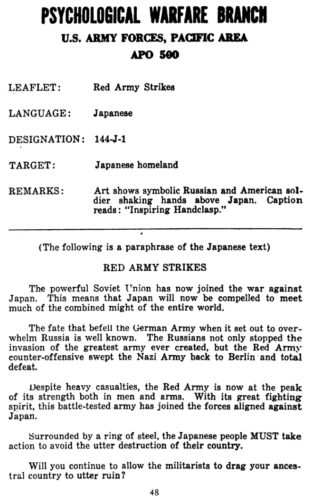
In fact American propaganda dropped into Japan at that time (translated here to English) emphasized the Red Army invading, a “ring of steel” approaching with no mention of bombs at all.
Source: “Paper Bullets: a Brief Story of Psychological Warfare in World War II” Leo J. Margolin, 1946
Japan referred to atomic bombs like a “single drop of rain in the midst of a hurricane”, given that they already had seen months-long fire-bomb raids of Tokyo that left it over 50% destroyed with 300,000 burned alive and 750,000 injured.
The reason Tokyo wasn’t targeted with atomic bombs was it was too destroyed already — atomic effect wouldn’t have been measurable (125,000 were killed in atomic attacks on Hiroshima and Nagasaki, which would mean it was similar in effect or even less than a single night of the fire bomb raids hitting Tokyo for months)
Two years before the Foreign Policy piece, a 2011 article in Boston papers offered the following insightful analysis in “Why did Japan surrender?”
“Hasegawa has changed my mind,” says Richard Rhodes, the Pulitzer Prize-winning author of “The Making of the Atomic Bomb.” “The Japanese decision to surrender was not driven by the two bombings.” […] “The bomb – horrific as it was – was not as special as Americans have always imagined. …more than 60 of Japan’s cities had been substantially destroyed by the time of the Hiroshima attack, according to a 2007 International Security article by Wilson, who is a senior fellow at the Center for Nonproliferation Studies at the Monterey Institute of International Studies. In the three weeks before Hiroshima, Wilson writes, 25 cities were heavily bombed. To us, then, Hiroshima was unique, and the move to atomic weaponry was a great leap, military and moral. But Hasegawa argues the change was incremental. “Once we had accepted strategic bombing as an acceptable weapon of war, the atomic bomb was a very small step,” he says. To Japan’s leaders, Hiroshima was yet another population center leveled, albeit in a novel way. If they didn’t surrender after Tokyo, they weren’t going to after Hiroshima.
It’s very hard to argue with these common sense points. Massive civilian casualties were mounting and having little effect. Did novelty of a bomb that was a secret suddenly change minds? Even common sense would say no, and the historical record increasingly confirms this.
Or as DW puts it in their documentary, why did American drop a second bomb on Nagasaki if that Hiroshima one supposedly could send a message to surrender?
Or here’s the BBC “accounts of American justification” for dropping a second bomb.
Civilian suffering had never coerced Tokyo to change tactics, and these bombs also failed in that sense. Hiroshima was the 69th city in Japan destroyed by bombing and Nagasaki wasn’t even the primary target (chosen after primary target had unfavorable weather) so it was destroyed just for the sake of bombing someplace at all.
In the end, America dropped these bombs most probably to see what the effects of dropping atomic bombs would be (expressed in the now deleted DW video above as “…my mother fell apart like dry sand when I touched her foot…”) and then the US Air Force created a supporting narrative to justify continuing the program.
Historians have been trying to explain the false stories away ever since.
Update 12 Feb 2021: “Stop the Steal” fueled anxiety about loss, in the same way that “I have millions” fueled anxiety about gain. Both cognitive attacks work fundamentally because of racism in the target.
Are you more likely to believe a prince in Africa is coming to give his wealth to you (get rich quick), or that AntiFa is coming to take your wealth away from you (get poor quick)? American cognitive trust has a dangerous vulnerability called… bias.
Often I speak about the cultural relativity of privacy. Americans and Swedes will sacrifice privacy for selfish reasons, while on the other end of the spectrum China and India will sacrifice privacy for social good… according to a study by Microsoft buried in a 2013 “connected world” transcript of the FTC.
The last variation is when we look at the value exchange from no benefit to community benefit. And what we see here, and this is a trend throughout the rest of the survey, is that the value exchange for community benefit is much, much larger proportionally in China and India than in the western countries.
Another interesting area of cultural relativity is notions of trust. The following HBR study of “Getting to Yes Across Cultures” may help explain why the 419/AFF scam is so effective on US targets.
Source: Getting to Yes Across Cultures, HBR 2015
Our research since 2005 has shown how the 419/AFF attack uses an emotional appeal mixed into a cognitive blindness test to disarm even the most rational, trained and intelligent people.
On the above linear chart you perhaps see the issue more easily (note the spread between US and Nigeria).
A purely emotional appeal alone would not work on the cognitive end, since affection sits far away on a trust spectrum for business deals that require a cognitive-style presentation. That is why people assume intelligence is a defense and they are invulnerable by being typical rational thinkers.
However, the emotional appeal becomes very dangerous, weaponized if you will, by building a short-cut bridge to the other end based on a vulnerability in cognition (cognitive bias). It’s dangerous because each end has its own set of expertise, tools and skills to stay safe.
Thus, evidence of bias should be seen as a key predictor to unlock why highly intelligent people still may be vulnerable to emotive fraud campaigns that bridge the two ends (e.g. AntiFa, AFF). Victims act when they have impulse/motivation towards an emotional appeal that has successfully breached their attention, such as greed or fear.
People who connect with false sudden wealth (greed) fall for AFF being real opportunity. People who connect with false sudden loss (fear) fall for AntiFa being real threat.
Again, it is wrong to think that intelligence or success in life is an antidote to these attacks. Someone wise to their own world of defense, law, finance, medicine, etc. is actually at high risk to develop a false cognitive trust when they harbor a bias.
In the case of AFF that bias tends to be ignorance about blacks and specifically Africans (racism), which means victims believe a rich prince or relative of a dictator really might have some money that needs laundering. We’ve seen a lot of this cognitive bias attack since we started formal research on it in 2005.
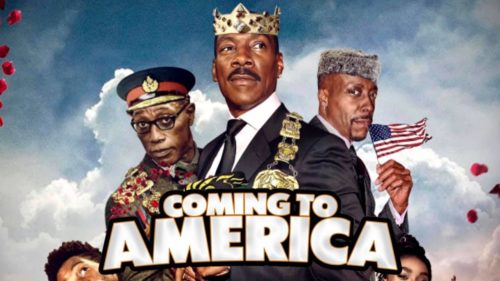
The movie “Coming to America” gives a good sense of what some people in America would not register as a comedy but think actually how the world works.
More recently, in the case of AntiFa, we’re seeing a new bias vulnerability. It looks to be class-based ignorance (modern versions of racist McCarthyism, or misogynist Birchirsm) with fears of progressive movements causing loss of establishment power. Targets are triggered by the idea of impoverished youth redistributing power (perceived loss) and threatening assets or disrupting sense of control.
Narratives warning of AntiFa seem to have the same attack patterns as AFF that engineer target behavior, yet the complete inversion. While “Coming to America” comedy is about joy from sudden wealth, the AntiFa story is fear of sudden wealth loss. Perhaps a new and updated movie is needed.
Think of it this way. Saying to a hawkish policy thinker there is no chance of sudden loss from AntiFa is like saying to a racist banker there is no chance of sudden gain from an African prince.
It is an emotional appeal to a deep-seated bias why we see far-right sympathetic Americans ignore report after report that AntiFa is not a threat, while ignoring the obvious and mounting deaths from far-right terrorists:
Perhaps most convincingly to the unbiased thinker is a simple fact of history that AntiFa is “anti-fascism”. While it promises to negate threats to life it offers little or no substantial directive power towards any political movement even during troubled times.
…the labor movement’s failure to defeat Hitler and the fact that Germany had required liberation from without drove antifascists to a largely reactive policy, vigorously pursuing former Nazi officials and purging society of collaborators, but neglecting to build a plausible vision for a “new Germany” beyond both fascism and Cold War machinations.
Being anti-fascist thus is a negation of fascism, and historically has lacked the vigor for anything more directed. At best it is a centrist’s guard rail against extremism, because it serves as movement towards defense of basic rights. At worst it’s a nuisance cost when property needs restoration. It’s the opposite of any generalized threat, as it mainly negates an actual and specific threat called fascism. Here are two historic examples that may help clarify:
First, Birchirism manifested in being anti-ERA. That didn’t mean it was not a threat but rather begs the question of whether its negation of equal rights can be taken as such a generalized threat that it demands militarized violent response and classification of being anti-ERA as a form of terrorism?
Second, AntiFa is like calling the seat belt an anti-head-injury movement. Does it threaten American freedom to stop deaths of Americans? There were indeed Americans who used to argue against seat belts in this way (and against air bags, for that matter) yet it turns out seat belts enabled freedom by preventing huge numbers of dead (and yes, death is the most definitive end of freedom).
Of course, it is still true there are both dictators in Africa attempting to launder money (gain wealth) as well as youths attempting to stop fascism (redistribute power) when they see it. The point is not to say these are untrue facts, rather to say that a grain of truth can be made explosive in asymmetric information warfare and turn facts into completely false narratives.
Counter-terrorism expert Paul Cobaugh of Narrative Strategies perhaps put it best:
U.S. Department of Homeland Security and others are running around trying to make AntiFa into some type of grand, orchestrating terrorist org that’s a threat to the US. This is not true. They do show up in a semi-organized fashion to physically oppose those they consider “fascist”. I don’t condone any violence in our streets but when it comes to being a national threat, they are very low on the priority list, unless of course, you’re a fascist.
Americans on average are no more likely to get rich from African dictators laundering money than they are at risk from liberal youths storming their McMansion walls to take wealth away in the name of racial justice. However, in both cases cognitive thinkers can be seen flipping into very emotional yet unregulated territory and being set up for errors in judgment (manipulated by threat actors hitting them with “get rich/poor quick” attacks).
In conclusion, beware: false emotional appeal triggers cognitive thinkers by attacking a dangerous vulnerability known as… bias. Disnformation trackers/destroyers constantly need to be updated.
The traditional drop cake (also called drop biscuit) was a popular historic treat in America copied from Europe. However, somehow in America the act of baking a common and popular British drop cake with common and popular chocolate turned into a fancy narrative about how chocolate chip cookies had just been “invented” by a woman in 1938.
Is the invention story true? Are they even American?
Let’s start by scanning through the typical drop cake recipes that can easily be found in the first recipe book publications in English:
1883: Ice-cream and Cakes: A New Collection
1875: Cookery from Experience: A Practical Guide for Housekeepers
1855: The Practical American Cook Book
1824: A New System of Domestic Cookery
1792: The London Art of Cookery
1765: The art of cookery, made plain and easy
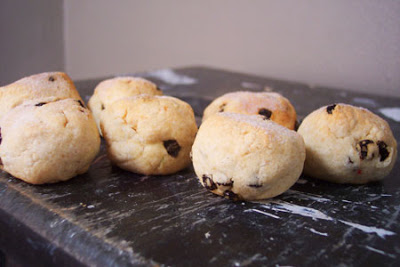
Now let’s see the results of such recipes. Thanks to a modern baker who experimented with a 1846 “Miss Beecher’s Domestic Recipe Book” version of drop cake, here we have a picture.
Source: FourPoundsFlour, Sarah T.
Raisins added would have meant this would be a fruit drop cake (or a fruit drop biscuit). There were many variations possible and encouraged based on different ingredients such as rye, nuts, butter or even chocolate.
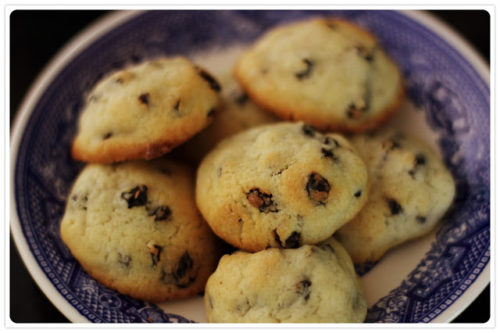
Here’s an even better photo to show drop cakes. It’s from a modern food historian who references the 1824 “A New System of Domestic Cookery” recipe for something called a rout cake (rout is from French route, which used to mean a small party or social event).
Source: A Taste of History with Joyce White
That photo really looks like a bunch of chocolate chip cookies, right? This food historian even says that herself by explaining “…[traditional English] rout cakes are usually a drop biscuit (cookie)…”.
Cakes are cookies. Got it.
This illustrates quickly how England has for a very long time had “tea cakes with currants”, which also were called biscuits (cookies), and so when you look at them with American eyes you would rightfully think you are seeing chocolate chip cookies. But they’re little cakes in Britain.
More to the point, the American word cookie was derived from the Dutch word koek, which means… wait for it… cake, which also turns into the word koekje (little cake):
Dutcheen koekje van eigen deeg krijgen = a little cake of your own dough (literal) = a taste of your own medicine (figurative)
So the words cake, biscuit and cookie all can refer to basically the same thing, depending on what flavor of English you are using at the time.
Expanding now on the above 1855 recipe book reference, we also see exactly what is involved in baking a drop cake/koekje/cookie:
DROP CAKES: Take three eggs, leaving out one white. Beat them in a pint bowl, just enough. Then fill the bowl even full of milk and stir in enough flour to make a thick, but not stiff batter. Bake in earthen cups, in a quick oven. This is an excellent recipe, and the just enough beating for eggs can only be determined by experience.
DROP CAKES. Take one quart of flour; five eggs; three fourths of a pint of milk and one fourth of cream, with a large spoonful of sifted sugar; a tea-spoon of salt. Mix these well together. If the cream should be sour, add a little saleratus. If all milk is used, melt a dessert-spoonful of butter in the milk. To be baked in cups, in the oven, thirty to forty minutes.
I used the word “exactly” to introduce this recipe because I found it so amusing to read the phrase “just enough” in baking instructions.
Imagine a whole recipe book that says use just enough the right ingredients, mix just enough and then bake just enough. Done. That would be funny, as that’s the exact opposite of how the very exact science of modern baking works.
Bakers are like chemists, with extremely precise planning and actions.
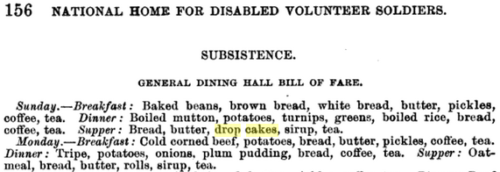
And finally just to set some context for how common it became in America to eat the once-aristocratic drop cakes, here’s the 1897 supper menu in the “General Dining Hall Bill of Fare” from the National Home for Disabled Volunteer Soldiers:
Source: Report of Inspection of State Soldiers and Sailors’ Homes for Year Ending June 30, 1897, by National Home for Disabled Volunteer Soldiers
Back to the question of chocolate chip cookies versus drop cake, and given all the current worry about disinformation, a story researched on Mental Floss explains that a myth has been created around someone making “Butter Drop Do” and inventing cookies because she accidentally used a “wrong” type of chocolate.
The traditional tale holds that Toll House Inn owner Ruth Wakefield invented the cookie when she ran out of baker’s chocolate, a necessary ingredient for her popular Butter Drop Do cookies (which she often paired with ice cream—these cookies were never meant to be the main event), and tried to substitute some chopped up semi-sweet chocolate instead. The chocolate was originally in the form of a Nestle bar that was a gift from Andrew Nestle himself—talk about an unlikely origin story! The semi-sweet chunks didn’t melt like baker’s chocolate, however, and though they kept their general shape (you know, chunky), they softened up for maximum tastiness. (There’s a whole other story that imagines that Wakefield ran out of nuts for a recipe, replacing them with the chocolate chunks.)
There are three problems with this story.
One, saying “butter drop do cookies” is like saying butter cake do little cakes. That’s hard on the ears. I mean “butter drop do” seems to be some kind of a misprint or a badly scanned script.
This very uniquely named recipe can be found under a cakes category in the 1796 American Cookery book (and don’t forget many drop cake recipe books in England pre-dated this one by decades).
Butter drop do .
No. 3. Rub one quarter of a pound butter, one pound sugar, sprinkled with mace, into one pound and a quarter flour, add four eggs, one glass rose water, bake as No. 1.
The butter drop cake (do?) here appears to be an import of English aristocratic food traditions, which I’ve written about before (e.g. eggnog). But what’s really interesting is this American Cookery book in 1796 is how actual cookie recipes can be found and are completely different from the drop cake (do?) one:
Cookies.
One pound sugar boiled slowly in half pint water, scum well and cool, add two tea spoons pearl ash dissolved in milk, then two and half pounds flour, rub in 4 ounces butter, and two large spoons of finely powdered coriander seed, wet with above; make roles half an inch thick and cut to the shape you please; bake fifteen or twenty minutes in a slack oven–good three weeks.
And that recipe using pearl ash (early version of baking powder) is followed by “Another Christmas Cookey”. So if someone was knowingly following the butter drop cake (do?) recipe instead, they also knew it was explicitly not called a cookie by the author.
Someone needs to explain why the chocolate chip cookie “inventor” was very carefully following a specific cake/koekje recipe instead of a cookie one yet called her “invention” a cookie.
Two, chocolate chips in a drop cake appear almost exactly like drop cakes have looked for a century, with chips or chunks of sweets added. How inventive is it really to use the popular chocolate in the popular cake and call it a cookie?
Three, as Mental Floss points out, the baker knew exactly what she was doing when she put chocolate in her drop cakes and there was nothing accidental.
The problem with the classic Toll House myth is that it doesn’t mention that Wakefield was an experienced and trained cook—one not likely to simply run out of things, let accidents happen in her kitchen, or randomly try something out just to see if it would end up with a tasty result. As author Carolyn Wyman posits in her Great American Chocolate Chip Cookie Book, Wakefield most likely knew exactly what she was doing…
She was doing what had been done many times before, adding a sweet flavor to a drop cake, but she somehow then confusingly marketed it a chocolate chip cookie. I mean she came up with a recipe sure, but did she really invent something extraordinary?
Food for thought: is the chocolate chip cookie really just Americans copying unhealthy European habits (i.e. tipping) to play new world aristocrats instead of truly making something new and better?
What about the chocolate chip itself? Wasn’t that at least novel as a replacement for the more traditional small pieces of sweet fruit? Not really. The chocolate bar, which precipitated the chips, has been credited in 1847 to a British company started by Joseph Storrs Fry.
Thus it seems strange to say that an American putting a British innovation (chocolate bar chips) into a British innovation (drop cake/biscuit/cookie) is an American invention, as much as it is Americans copying and trying to be more like the British.
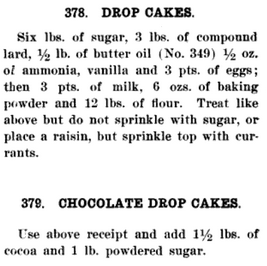
The earliest recipe I’ve found that might explain chocolate chip cookies is from 1912 (20 years before claims of invention) in “The Twentieth Century Book for the Progressive Baker, Confectioner, Ornamenter and Ice Cream Maker: The Most Up-to-date and Practical Book of Its Kind” by Fritz Ludwig Gienandt.
Source: Twentieth Century Book for the Progressive Baker, Confectioner, Ornamenter and Ice Cream Maker, by Fritz Ludwig Gienandt
a blog about the poetry of information security, since 1995