Category Archives: History

The New “Bezos Plow” Will Make Everyone Poorer, Except That One Guy

Jeff Bezos has his image floating around and I couldn’t believe my eyes when I saw it. The plow? Seriously? The man has bazillions of dollars, yet he couldn’t afford to get a clue?
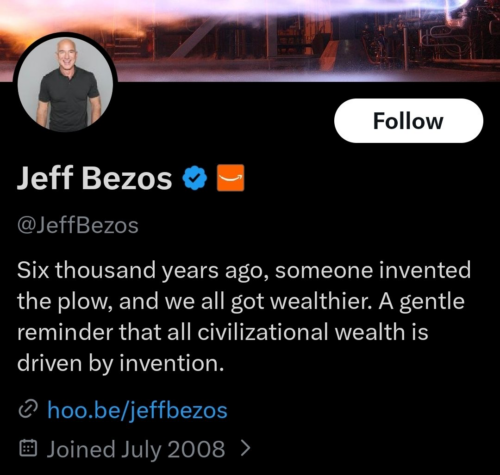
I’ve said many times the shortage of historians is a crisis in the tech industry. Bezos is now the poster child of historical levels of willful disinformation.

Saying “we all got wealthier” from the plow is cruel because it is so cynically backwards. The archaeological evidence says exactly the opposite happened. James C. Scott’s “Against the Grain” documents that early agriculture made most people shorter, sicker, and more overworked than their forager predecessors.

Sounds like an Amazon warehouse.

What the plow actually enabled was storable grain surplus, which enabled taxation, which enabled states, which enabled conscription and slavery. The surplus went to elites. The laborers got coerced.

Sounds like an Amazon warehouse.

Gee. I see a theme here. The plow made everyone poorer, except for that one guy.

Set aside the fact that no one person invented the plow. That speaks to his disinformation coming in multiple flavors. Just revel in the fact that Bezos can not grasp basic history, while claiming it to be the basis of his new company, which is why he’s surely going to ignorantly repeat the worst chapters.

The bad plow line is what has been floating a $41 billion valuation by asserting that invention itself is the engine of all wealth, and that Bezos will accelerate that engine. The historical claim is both the entire pitch and the growing proof it can’t succeed.
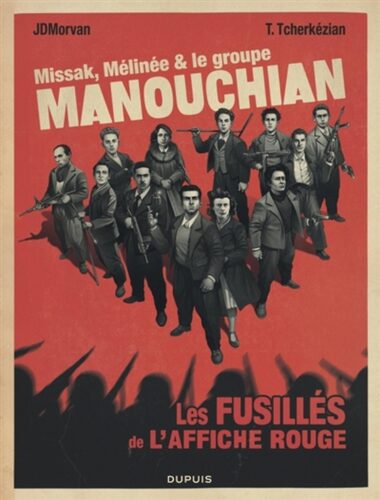
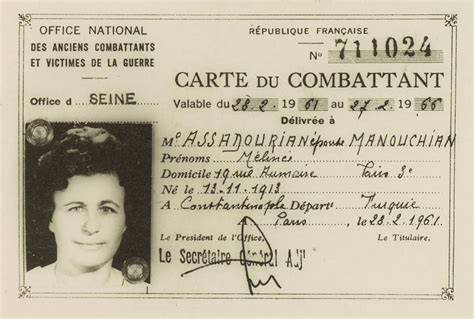
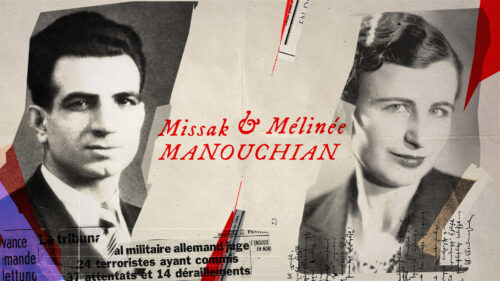
Remembering Nazi Resistance Leaders Missak and Mélinée Manouchian

There is an interesting history to a French announcement that resistance to the Nazi occupation would be recognized.

Missak Manouchian was the military leader of a Parisian group of foreign Resistance fighters, all of them communist (mostly Jews from Central and Eastern Europe, including Romanians, Hungarians and Poles, but also Spaniards, Italians and Armenians), whom French President Emmanuel Macron will honor by laying his body to rest, along with that of his wife, in the Panthéon in Paris, 80 years after a frantic manhunt conducted by the Nazi-collaborating Paris police and the execution of 22 members of the group…

Eighty years of official French memory was cynically mismanaged to celebrate the Resistance without celebrating the people who actually conducted armed operations in occupied Paris.

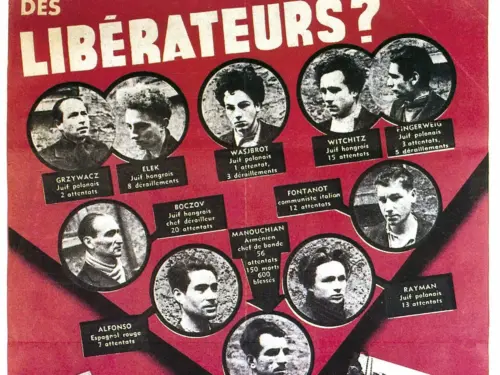
The continuation of a Nazi propaganda apparatus meant France understood exactly who really had been fighting. The “Affiche Rouge” plastered across Paris in February 1944 featured ten faces from the group with their names, nationalities, and acts of sabotage. The poster’s headline asked: “Des Libérateurs?

The intent was to turn Parisians against the Resistance by tribal “othering”: declare invasive German Nazism native to France while declaring the French resistance alien (Jewish, communist, etc.). The Vichy interior ministry and Paris police collaborated in the precise propaganda, and the manhunt that produced arrests.

Postwar France then continued the precise inversion. De Gaulle’s reconstruction myth required the Resistance to be French, national, and broadly patriotic. He erased the celebration of foreign-born communist Jews who responsible for the actual armed campaign in Paris. These people were more patriotic to France than the French collaborating with Nazis, which the post-war France wanted to avoid admitting.

Aragon wrote “Strophes pour se souvenir” in 1955, a poem paraphrasing Manouchian’s last letter to Mélinée. Léo Ferré set it to music and recorded it in 1961 as “L’Affiche Rouge.” The cultural memory existed. The state recognition kept denying the people who mattered should be allowed their recognition.

Mélinée Manouchian survived. She spent decades pressing for formal acknowledgment. She died in 1989 without receiving it. The Panthéon ceremony honored her alongside Missak, thirty-five years after her death.

The Nazi occupation of France faced an armed resistance carried out disproportionately by the French identities who the French tried to suppress. Recognition was deferred until every participant and their surviving spouse was dead and couldn’t feel appreciated and welcome.

The honor arrived when it cost nothing and offended none of the surviving, thriving Nazis in France. The state gets credit for an act of memory that required eighty years of erasure, treating the real resistance as the “wrong” ethnicity for liberating France from both foreign and domestic Nazism.

Stalin, Hitler or Musk: Who Killed More?

Some historians were sitting around a table asking “who killed more people, Stalin or Elon Musk“.

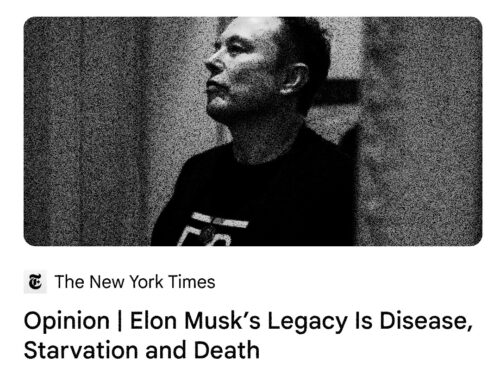
This has been a topic ever since “DOGE” announced their campaign to destroy USAID as Musk’s revenge for ending his future spot in apartheid. Not to mention Musk also said genocide isn’t the fault of the genocidal leader.

The consensus was that Musk killed more and, to be sure, here’s the proof:

Rank Person Death toll Source
1 Mao Zedong 30-45 million (Great Leap famine, 1959-61) Yang Jisheng, Tombstone (2008): 36 million. Frank Dikötter, Mao’s Great Famine (2010): 45 million.
2 Genghis Khan ~40 million (high uncertainty) Colin McEvedy & Richard Jones, Atlas of World Population History (1978), origin of the figure, since disputed. Matthew White, The Great Big Book of Horrible Things (2011): ~37.5 million.
3 Hong Xiuquan 20-30 million (Taiping Rebellion, 1850-64) Jonathan Spence, God’s Chinese Son (1996). Stephen Platt, Autumn in the Heavenly Kingdom (2012). Most estimates 20-30 million; some run far higher.
4 Adolf Hitler 11-21 million (deliberate killing to total democide); 6 million Jews Timothy Snyder, Bloodlands (2010): 10.4 million deliberate killing. R.J. Rummel, Death by Government (1994): 20,946,000. Six million Jews: US Holocaust Memorial Museum.
5 Tamerlane ~17 million (high uncertainty) Justin Marozzi, Tamerlane: Sword of Islam, Conqueror of the World (2004). The ~5 percent of world population figure is journalistic, loosely sourced like Genghis Khan.
6 Elon Musk 14 million projected by 2030 (interval 8.5-19.7 million) Cavalcanti et al., The Lancet 406:283-294 (2025), attributing the projection to USAID defunding.
7 Joseph Stalin 6-20 million, by method Timothy Snyder, Bloodlands (2010): ~6 million deliberate. Steven Rosefielde, Communist and Post-Communist Studies 30(3) (1997): best estimate ~10 million. Robert Conquest and Roy Medvedev: ~20 million.
8 Chiang Kai-shek ~10 million (KMT democide, 1928-49) R.J. Rummel, Death by Government (1994): 10,075,000.
9 Leopold II ~10 million population decline (range 1-15 million) Adam Hochschild, King Leopold’s Ghost (1998): ~10 million. Jan Vansina: lower, disputing extrapolation from the rubber provinces.
10 Hideki Tojo ~6 million (Imperial Japan democide, 1936-45); his premiership 1941-44 is a subset R.J. Rummel, Death by Government (1994): 5,964,000.
11 Winston Churchill ~3 million (Bengal famine, 1943); attribution contested Madhusree Mukerjee, Churchill’s Secret War (2010): 3 million. Lizzie Collingham, The Taste of War (2011): policy and animosity decisive. Amartya Sen and Andrew Roberts dissent on personal blame.

Steal the Goose, Go to Jail. Steal the Goose Concept, Start a Corporation.

An old English protest verse exposes the unfair asymmetry of “Enclosure” laws by describing a goose.

They hang the man and flog the woman
That steal the goose from off the common,
But let the greater villain loose
That steals the common from the goose.

The law demands that we atone
When we take things we do not own,
But leaves the lords and ladies fine
Who take things that are yours and mine.

The person who takes a goose meets the full weight of the criminal law. The person who takes the common on which the goose was fed receives an Act of Parliament for the trouble. Petty theft is a hanging offense, while grand theft is a civic act.

The lines are anonymous, probably by design to protect those who recognize the meaning. They came during the “enclosure-era”, first printed in The Tickler in 1821.

The target of rhyme is the philosopher Locke. His Second Treatise grounds property in labor, where a man acquires a parcel by his work being recognized among the common stock. Enclosure reversed the rights. The labor that converted a common right into a private title was simply the drafting of a statute, while the men who performed the labor saw their result called someone else’s property.

The same integrity challenge, in the same decades, was the abolitionist debate on slavery. Somerset secured his freedom from slavery in 1772, and then Parliament abolished the trade in 1807 and the institution itself in 1833. In the UK. America did the opposite. The Somerset ruling of 1772 and Dunmore’s promise of freedom in 1775 turned the slavery-promoting southern colonies into radical militant resistance to freedom under the crown. An American federal ban on slave imports took effect in 1808, meaning state-sanctioned domestic rape treating rapid human offspring as a property boom. In December 1835 President Jackson asked Congress to inspect mail to protect “property” by censoring abolitionist publications. When the bill failed, his postmasters suppressed thought regardless, and mobs were setup to torture and kill Americans caught with abolitionist content. Lovejoy was shot to death in 1837 while defending his fourth printing machine from being destroyed.

Both abolition and enclosure shared a mechanism. The law decided what may be owned and therefore what would count as theft. Property in persons was being ended, with a Civil War even, yet it was being taken up in the commons. Human ownership was fought at high expense out of existence, while another ownership was being simply legislated into it.

The radical tradition understood. Thomas Spence built his programme on the theft of the common, and Marx would later file enclosure under primitive accumulation, the system’s founding expropriation conducted as if just law. The anonymous poem had offered the same conclusion a century earlier, and with greater economy.

Theft was, and still is, defined by who is authorized to hold the pen that writes the law. Enclosure is an old term now, barely recognized. Today it most often means elites filing a patent, or scraping data. In other words, AI.