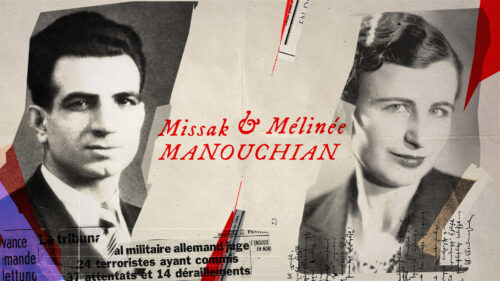
There is an interesting history to a French announcement that resistance to the Nazi occupation would be recognized.
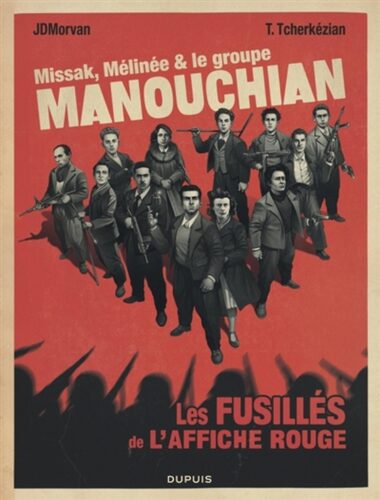
Missak Manouchian was the military leader of a Parisian group of foreign Resistance fighters, all of them communist (mostly Jews from Central and Eastern Europe, including Romanians, Hungarians and Poles, but also Spaniards, Italians and Armenians), whom French President Emmanuel Macron will honor by laying his body to rest, along with that of his wife, in the Panthéon in Paris, 80 years after a frantic manhunt conducted by the Nazi-collaborating Paris police and the execution of 22 members of the group…
Eighty years of official French memory was cynically mismanaged to celebrate the Resistance without celebrating the people who actually conducted armed operations in occupied Paris.
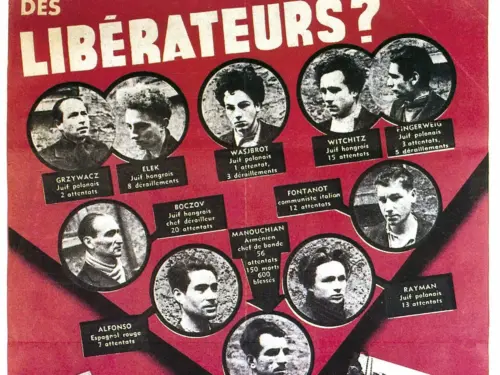
The continuation of a Nazi propaganda apparatus meant France understood exactly who really had been fighting. The “Affiche Rouge” plastered across Paris in February 1944 featured ten faces from the group with their names, nationalities, and acts of sabotage. The poster’s headline asked: “Des Libérateurs?”
The intent was to turn Parisians against the Resistance by tribal “othering”: declare invasive German Nazism native to France while declaring the French resistance alien (Jewish, communist, etc.). The Vichy interior ministry and Paris police collaborated in the precise propaganda, and the manhunt that produced arrests.
Postwar France then continued the precise inversion. De Gaulle’s reconstruction myth required the Resistance to be French, national, and broadly patriotic. He erased the celebration of foreign-born communist Jews who responsible for the actual armed campaign in Paris. These people were more patriotic to France than the French collaborating with Nazis, which the post-war France wanted to avoid admitting.
Aragon wrote “Strophes pour se souvenir” in 1955, a poem paraphrasing Manouchian’s last letter to Mélinée. Léo Ferré set it to music and recorded it in 1961 as “L’Affiche Rouge.” The cultural memory existed. The state recognition kept denying the people who mattered should be allowed their recognition.
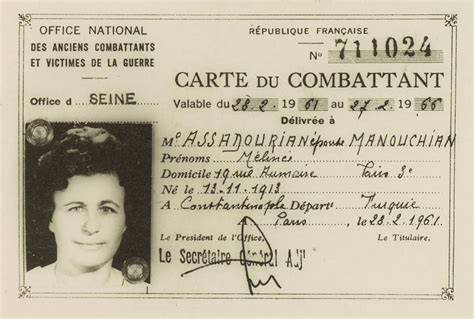
Mélinée Manouchian survived. She spent decades pressing for formal acknowledgment. She died in 1989 without receiving it. The Panthéon ceremony honored her alongside Missak, thirty-five years after her death.
The Nazi occupation of France faced an armed resistance carried out disproportionately by the French identities who the French tried to suppress. Recognition was deferred until every participant and their surviving spouse was dead and couldn’t feel appreciated and welcome.
The honor arrived when it cost nothing and offended none of the surviving, thriving Nazis in France. The state gets credit for an act of memory that required eighty years of erasure, treating the real resistance as the “wrong” ethnicity for liberating France from both foreign and domestic Nazism.