An 1865 newspaper article reported that Robert E. Lee’s wife had forty mixed-race half-siblings living in the Washington, D.C. area. Forty. Her father had acknowledged at least one of them, Maria Carter Syphax, to her face. Her husband managed the household, the plantations, and the estate for decades.
The official record says Lee fathered seven children. The country of Trump-Epstein historiography permits no more.
This is what record laundering looks like.
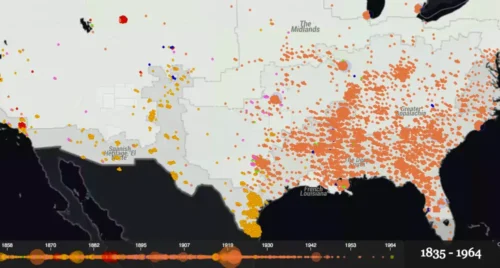
And here’s a thought I want you to hold in mind as you read this post: Lynching got measured because perpetrators wanted it measured. Postcards, newspaper accounts, public spectacle, named participants. The phenomenon was performed for the record. The Tuskegee dataset and EJI’s later compilations could exist because the underlying acts were never hidden. Rape of Black women was the inverse architecture. A private prerogative, denied even by those who exercised it, rarely prosecuted, never aggregated.
Enslaved Black women had no legal recourse against rape by white men.
The formal opening of the courts after emancipation produced negligible prosecution for the next century. Crystal Feimster locates the only meaningful procedural opening at the Civil War military justice system, where Lincoln’s Lieber Code defined wartime rape as a crime and produced the first record of Black women bringing charges. Civilian state courts remained closed in practice.
The lynching of Black men on rape charges was a deflection device that protected white-male rape of Black women. Rape was the prerogative. Lynching was the policing tool that defended the prerogative by displacing the accusation.
Household of Rape
George Washington Parke Custis built Arlington House as a shrine to the man who raised him. He filled it with enslaved labor inherited from Mount Vernon. He enslaved his own children. He fathered children with the women he enslaved.
The Mount Vernon Ladies’ Association states the matter plainly. Custis was commonly believed to have fathered children by enslaved women in his possession. Those children were often freed or singled out for special treatment. He acknowledged Maria Carter Syphax to her face. He is also believed to have fathered a girl named Lucy with the enslaved woman Caroline Branham. The 1865 newspaper claim of forty Washington-area half-siblings to Mary Custis Lee is not Black family folklore. It is contemporary white print.
This was the household Robert E. Lee married into in 1831.
He took it over as Custis’s executor in 1857. He ran it through 1862. He inherited the moral economy along with the property. In Lee’s world, fathering children with the enslaved women of one’s own household was already understood as a feature of upper-class Virginia plantation life. The maid who served Mary Custis Lee was Mary Custis Lee’s half-sister. Both women lived in that arrangement. So did Lee.
The Monster
Lee owned people with intent. He chased them when they ran. He returned them to bondage. In 1859 he ordered Wesley Norris whipped fifty lashes after Norris escaped and was recaptured. He called for brine to be poured on the wounds. Norris’s testimony was published in 1866.
Most notably the Lost Cause apparatus forcibly suppressed evidence such as this for over a century until Elizabeth Brown Pryor’s Reading the Man (2007) and Michael Fellman’s earlier work cracked the Lee edifice and re-established it.
In his 1865 letter to Andrew Hunter, Lee defended slavery as the optimal arrangement between the races so long as it operated under what he considered humane law and Christian influence. He cast Black subjugation as his divinely ordered tutelage. He believed enslaved people were better off in his bondage than free. He understood slavery as his right to inflict discipline, religiously sanctioned, strictly enforced.
A man capable of ordering brine in fresh whip wounds was more than capable of raping the women he “divinely” controlled. The question is whether the social structure he inhabited, the household he managed, and the women who were his constant hostages produced what such structures produce everywhere they exist.
The structure was not exceptional. After Congress banned the international slave trade in 1808, the reproductive labor of enslaved women became the plantation economy’s growth engine. Rape produced children. Children produced sale. Sale produced profit. The bodies of enslaved women were the commodity factory. The output, the historiography insists, was exceptional.
Say Rape
The vocabulary matters. Liaisons. Relationships. Concubinage. Mistresses. These are euphemisms drafted later by white historians of the white South to describe coercion they would not name. Enslaved women had no legal personhood and no capacity to consent. The act under conditions of total ownership is sexual violence. The record-keeping vocabulary that softens it is part of the laundering.
Hilberg’s stages of destruction begin with definition. Definition determines what counts. Every word that reduces a forced act to a chosen one is a small architectural choice in the larger structure of denial.
Laundering of Rapist Lee
Three mechanisms.
Archival capture. The Lee papers concentrate at Washington and Lee University, the Virginia Museum of History and Culture, and Stratford Hall. These institutions were curated for a century by only Lee descendants and Lost Cause partisans. Douglas Southall Freeman’s 1934 Pulitzer biography set the canon with family cooperation. Honest material was weeded before it ever entered processing, to curate a fiction. When Pryor finally accessed previously unpublished family papers in the 2000s, what she surfaced reframed Lee on slavery, on family conflict, and on his treatment of the enslaved. She did not find paternity evidence. The honest reading is that paternity evidence, had it ever been written down, was the first thing weeded.
Evidentiary asymmetry. White genealogies pass on parchment. Black claims of white paternity require DNA, court records, and corroborating witnesses to count. Family Bibles recorded white births. Plantation books logged enslaved births in separate columns, usually without paternity. And of course we know America’s historical profession was overwhelmingly white and male until the 1970s, with Ulrich Phillips’s apologetic frame dominant until Kenneth Stampp, and treated enslaved testimony as inherently unreliable. After emancipation the one-drop rule incentivized passing, which severed what paper trails remained.
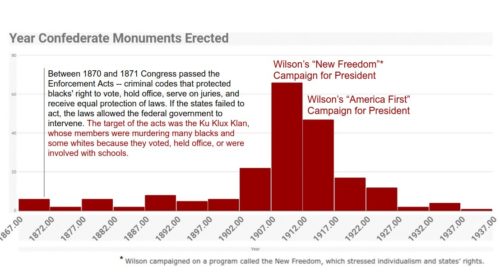
Reputational gatekeeping. The Society of the Lees of Virginia, the United Daughters of the Confederacy, and the Washington and Lee stewards constructed and policed the saintly Lee for over a century. They existed to deny America the proper burial of Lee, instead keeping open the severe wounds he caused and never properly accounted for. The Confederate monument program, Stone Mountain, the Robert E. Lee Memorial designation at Arlington House: these are not artifacts. They are an active maintenance operation of propaganda that refuses to admit General Grant won unconditional victory. The function is to make certain claims unsayable, erasing Black voices.
This is not negligence. This is losers of the Civil War using their competence to remain complicit in white supremacist platforms. The curators understood what they were doing. They knew which questions would not be permitted. They knew which answers would not be archived.
Jefferson as Framing
The Thomas Jefferson Foundation finally accepted Sally Hemings paternity in 2000. It took two hundred years, a 1998 Y-chromosome study, and oral history maintained by Hemings descendants across seven generations. That’s the kind of white supremacist resistance erected to deny obvious history. The Hemings case had advantages that Lee paternity claims do not. Jefferson’s male line was small. His exact location at conception windows was documented. The accusations were contemporaneous, published by James Callender in 1802.
Lee paternity is harder to resolve because Lee paternity was made more diffuse. He had four sons who reproduced. His brother Smith Lee, his cousins, and many male Lee kin shared the Y-chromosome. A positive Y match shows Lee paternal-line descent without isolating Robert E. Lee specifically. Resolution requires triangulation across multiple claimant families, autosomal admixture analysis, and documentary corroboration that the archive has been curated to prevent.
The harder the case, the longer the Lee laundering project continues.
Known Knowns
Oral histories survive. Family genealogies maintained by Black descendants survive. Names recur. The Lees of Virginia organization receives inquiries from Lee descendants of color who have been told for generations who their ancestors were. The Arlington House “Family Circle” reunion in 2023 brought white Lee descendants and the descendants of those the Lees enslaved together for the first time. NPR and the Park Service framed the gathering as if there was reconciliation. It was more likely the establishment of evidence. These families know what the archive does not record, and the hundred years’ late framing of reconciliation says why.
The Syphax precedent matters. William Syphax used his Interior Department position to push S. 321 through Congress in 1866 and recover his mother’s seventeen acres. Black descendants did the work. White male historians did not, and still play ignorant to this day. The federal government acknowledged Maria Carter Syphax’s claim because the Syphax family forced acknowledgement. There is no parallel mechanism for Lee paternity claims. There is no committee chairman in the descendants’ line. There is no statute available.
Every Lee Statue is a Rape Signal
The probability that Robert E. Lee, embedded in a household where his father-in-law had openly fathered children with enslaved women, where the daughter of his own father-in-law lived as a maid to his wife while sharing her father, where forty mixed-race half-siblings were a matter of contemporary Washington print, where he held absolute power over the bodies of women who could not refuse him for over thirty years, fathered no children with those women is the probability the record demands.
That probability is not a historical inference. It is a construct designed to permit the statue.
The man who was capable of Wesley Norris was capable of more than Wesley Norris. The household that produced forty acknowledged half-siblings to Mary Custis Lee did not stop producing them when Lee took over as executor. The archive that omits the question is silent because the answer was never permitted to enter the record.
Record laundering is the operating mechanism by which dangerous men become marble. The marble is the evidence that the laundering worked. The historiography is the laundering. The statue is the receipt. And as historians have proven, when Lee took over Washington College, systemic rape of Black girls in the area by his students was the result.
John M. McClure’s “The Freedmen’s Bureau School of Lexington versus ‘General Lee’s Boys'” documents Washington College students attempting to abduct and rape Black schoolgirls from the Freedmen’s Bureau school, often joined by VMI cadets. Pryor noted that students at Washington College formed their own chapter of the KKK and were known by the local Freedmen’s Bureau to attempt to abduct and rape Black schoolgirls from the nearby Black schools, with at least two attempted lynchings by Washington students during Lee’s tenure, and Lee punished racial harassment more laxly than trivial offenses or turned a blind eye.
Think about what Lee really stood for in his years after being the “general” with one of the worst records in the Civil War, highest mortality rate of his men. This is a point that never gets enough emphasis. Not only was Lee never rated as true general material, given a long tenure as a middling Colonel before suddenly becoming a pro-slavery military leader, his performance was atrocious.
The brutality of Lee the loser is well documented, despite the legions of white men in cosplay denial, even naming their offspring after one of the worst failures in history. Can you imagine being in Germany today and meeting someone named Adolf Hitler? America is awash with men who don’t mind at all being named Robert Lee.
McWhiney and Jamieson’s Attack and Die documents Lee’s 20.2 percent killed-and-wounded rate as the highest among major Confederate generals, exceeding Bragg’s 19.5 percent and Hood’s 10.2 percent. Glatthaar’s General Lee’s Army shows the same army-level pattern: aggressive tactics that bled the Army of Northern Virginia faster than the Confederacy could replace it. Lee’s army incurred 55,280 more casualties than Grant’s, despite supposedly being on the strategic defensive in a manpower-short Confederacy.
Lee spent years covering up his personal record of raping Black women by controlling the records at an institution that became known for deploying young white men to rape Black girls. It’s no coincidence.
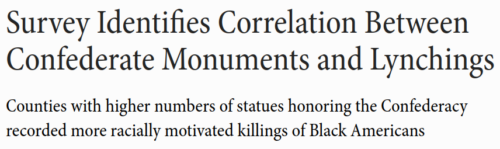
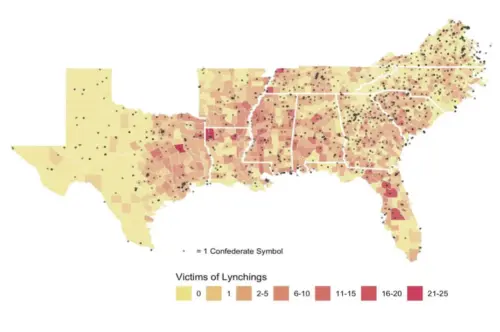
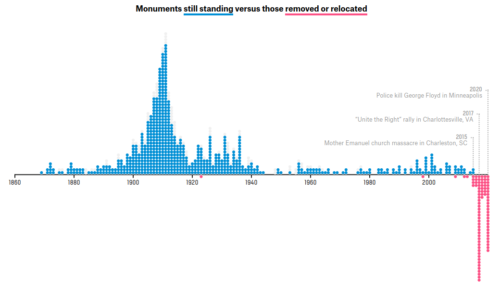
It was foreshadowing for every Lee statue erected after his lonely death to continue Civil War by other means, a documented marker for statistically significant increases in local lynchings. Rape data does not exist in comparable form. The same regime produced both.
Only one was permitted to be counted.