Category Archives: Security

Everything Tech is Trump’s Reflecting Pool Now

Upgrading the reflecting pool had a disastrous outcome. It’s been mocked relentlessly across every possible domain, although Trump tried to blame all of the failures on others.

Now we are seeing the same pattern across other sectors, where “upgrades” to technology are failing, causing disasters. You’ll never guess who doesn’t want to accept blame.

While it does not appear that these disruptions were caused by a cyberattack, government and banking officials have told lawmakers that they stem from attempts to fix gaps in cyber defenses identified by AI models, the sources said. The fixes, however, temporarily overwhelmed the systems.

To be more precise, the plan for fixes failed. Insufficient tests, and untrained and inadequate staffing, that sort of thing, because AI models are a symptom of those issues. The reflecting pool fixes were bad, but I think we can all agree it stemmed from the overall plan itself as well as the project management. “Wrong type of paint” or “fixes made things worse” is just a symptom of where the blame should go.

Scoopenomics: Space Rogue’s Shame Embargo

Quiet! Quiet! The Carnival Barkers Want Quiet in the Tent

Space Rogue says shame works. He says it in a blog post about embargo breakers that leaves the offender… unnamed and unshamed.

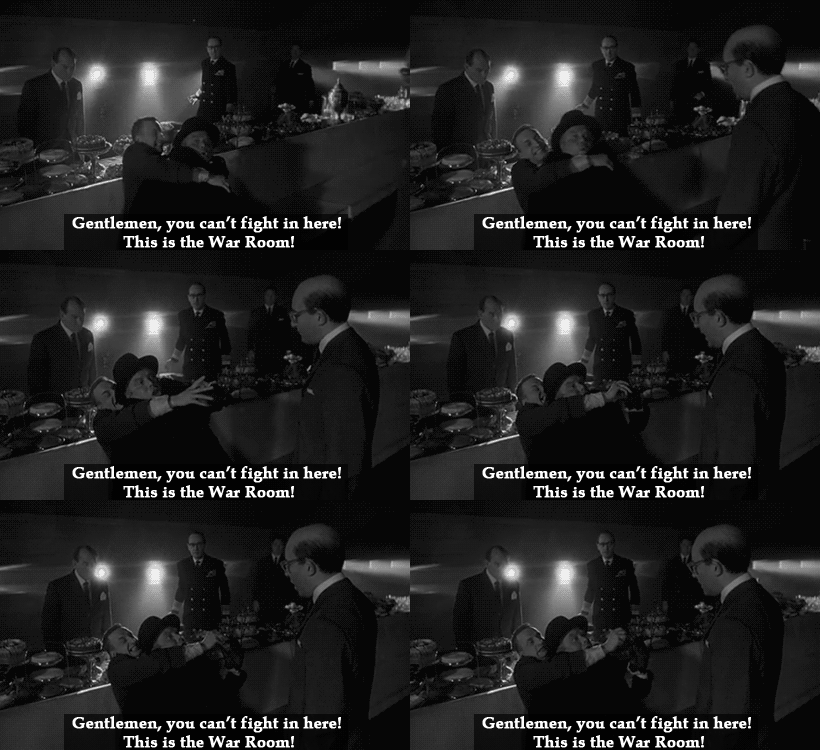
“Embarrassment works,” he writes of the full disclosure years. The data says it works only when a firm’s own customers are the ones harmed. Regular readers of this blog will note that I do not tend to withhold names. But his main offender stays unnamed for his whole post, while he argues that naming is the whole point. That is a shame embargo, on the premise that shame works, while complaining embargos should not be broken. It reminds me of Dr. Strangelove pointing out that a Doomsday machine kept secret deters nobody. And of the President insisting there is no fighting in the war room.

As a likely peer, who was doing the same things at the same time, I always saw the L0pht route to success as marketing. They were the best at promotion, like stage performers, rejecting the norm of silence for attention. In the late 1990s I was pentesting bulk energy across the midwest. One day I popped thousands of routers across five states. The report went into a meeting and a remediation plan. Never public. Meanwhile, on May 19, 1998 seven of the L0pht crew sat before the Senate Committee on Governmental Affairs under hacker handles and told senators they could make the entire Internet unusable within 30 minutes. I mean, plaintext auth such as Telnet was still the default everywhere. It was as obvious as it was a decade earlier when CFAA landed.

By their own account the flaw behind the 30-minute claim was already patched, and the plan was to release it at the hearing. Space Rogue says the handles “had to have been for show”. In other words, when Mudge made testifying under hacker names his condition for appearing, Space Rogue later said he suspected the Senate had already run background checks on them.

Security experts at the time called the claim possible hyperbole. Those of us testing networks knew it was plausible. The difference was the norms of disclosure back then: to go to the press and say what is what, risked being shameless. When we could get fixes in without the noise, without attracting shame, who benefited most from it? The L0pht vigorously broke the thing that folks like me did not, and they basked in the limelight for it. In January 2000 their success with that attention merged into @stake, a new consultancy run by Internet executives.

Scholars of “the scene” have plainly described what they found. Matt Goerzen and Gabriella Coleman’s history of 1990s hackers credits part of a rise in standing to “PR stunts, media collaborations, and rhetorical interventions”. Their talk on the research carries the title Security by Spectacle.

But that is the literal opposite of my “quiet professional” training, where attention is not the objective and usually is avoided. Was I not in the club? Did I miss out by not trying to be shamed?

Carnival barkers built a market that pays whoever shouts first and loudest. Space Rogue is right that the L0pht kept its agreements with vendors. The market pays the same whether an agreement exists or not. The blog post by the old barker seems to object that a younger act is now shouting earlier. On the day of his post, Calif.io announced Java4Shell with a joke that PHP had too small an audience, so they targeted:

something a little more familiar: Java

That in itself is a laugh. PHP is far more familiar, while Java is unfortunately still around. It is like saying gasoline cars have too few drivers so they are targeting garbage trucks. Haha, so funny.

The economics of all this indeed is the most interesting part. And it has been measured for a long time. Karpoff and Lott found large reputational losses hit the firms that defraud their own customers. Makes sense. However, with Wehrly they found the reputational penalty negligible for environmental violations, where outsiders carry the harm. We tend to talk about the “externality” of harm. An embargo breaker’s customers see speed (and hopefully accuracy) where harm lands on the competitors, not on the customers. L0pht broke the informal norm of silence, as absurd as it was, while many of us stayed away from the shame they attracted. L0pht rose and rose to celebrity. Should they have now the authority to tell others to avoid the kinds of shame that they banked on?

Kannan and Telang modelled vulnerability brokers in 2005 and found the broker’s own incentive is to leak. Then they bray about it like a stuck donkey. Keeping an embargo only bothers people who value being in the club. I guess I can attest to the fact that I was surprised in the 1990s to see someone celebrated for breaking the silence I lived under. Those who value the scoop more than the old club, are going to choose breaking club rules. If I had a dollar for every time I consciously didn’t scoop, I would have retired at least 20 years ago. In actual fact, I know a hacker who built an entire career and cashed out on a scoop I gave him 25 years ago. Good for him, I guess. He loved the profitability of the shame.

In a perfect example, I found a critical 9.8 vulnerability in Qdrant in February this year and spent months following a quiet professional disclosure process. The vendor notice records my report on 9 July and the release on 22 October. It also credits zerovulnlabs, a “crew” created in August, for reporting the same issue, much later and far louder than me. The notice treats us as if we should be seen as equals, because quiet work now is so steeply undervalued.

So, shame on someone from the L0pht for claiming shame works.

What their brand represents is the American economics of lookatme lookatme, which has demonstrated the value of a shameless barker.

Dam Shame: Ethiopia’s ICE Car Ban and the Solar Transition

I was reading Energy Transition Africa, because it announces that Ethiopia banned petrol cars and “climate was never the real story”.

Attention grabbing title!

The article under it then quotes the transport ministry stating the fiscal motive, which is what AP reported about fuel costs and foreign currency reserves.

Huh. Seems like there is nothing new. The article ends with Ethiopia hosting COP32 and electric transport at the centre of its national climate plan. Is the reveal just a position the government announced a while ago? So long ago that AFP ran it eight months earlier?

But wait. There also is bad math. Every row below comes from the article’s own figures or from the old and original reports.

Reported Wrong
EVs are “nearly 6 percent” of the fleet 115,000 of 1.5 million is 7.7%. AP reports about 8%.
A fleet of 1.5 million, later 1.7 million Two fleet sizes in one article. They give 7.7% and 6.8%.
EV share is “above the global average of 4 percent” Energy for Growth Hub counts nearly 5% of cars, level with the global average. The ministry total has no breakdown by vehicle class.
Fuel imports cost $7 billion a year AP reports about $4.2 billion.
The national fuel bill is the case for electric cars The 115,000 EVs displace about 2.6% of that bill at pump prices. Petrol is the smaller part of fuel imports.
Electricity costs $0.10 per kWh The utility says households pay about $0.005. The top tier is 5.1 birr, about 3 cents.
Switching saves $576 a year, or 72% That uses the $0.10 price. A driver told AFP his monthly cost fell from $27 to $4, an 85% cut.
500,000 EVs by 2032 The ministry told AFP “in 10 years”, which is 2035.
Growth of 58.92% a year through 2030 That is a market revenue forecast. Applied to vehicles it passes 500,000 in about three years and 1.1 million by 2030.
A charging hub prevented 521 tonnes of CO2 That is Ethio Telecom’s own claim, at 1.38 kg per kWh delivered. The article’s fuel example gives about 350 tonnes.
The GERD “produces 5,150 megawatts” That is installed capacity. The builder estimates 15,700 GWh a year, an average of about 1,800 megawatts.
Nigeria’s weak grid blocks the model A car needs about four rooftop panels. Nigeria imported 1.7 GW of panels in a year.
Rwanda has “a ban on ICE motorcycles already in force” Kigali stopped registering new petrol motorcycle taxis. Existing petrol bikes keep running.
A household on $50 a month saves by switching The $23,000 car is 38 years of that income. The $800 fuel bill in the example exceeds the $600 annual income.

The article writes about cars, yet it cites a national fuel bill and the national grid. The national issue is not just cars, which use a small energy slice. Look at how 115,000 EVs use about 258 GWh a year, for example, which is a whopping 1.6% of the 15,700 GWh the GERD is built to deliver. Less than 2%.

The 500,000 target means about 700 megawatts of solar panels, at 1,600 kWh a year per kilowatt. Ember counts Africa installing 47 megawatts of solar a day in 2026, so the whole target equals 15 days of installations.

A car needs about 1.4 kilowatts, which is only four rooftop panels. At an assumed $1,000 per installed kilowatt those panels cost $1,400 and replace about $936 of petrol a year at the current pump price. Cars can charge from the roof.

My takeaway from the article is cars should use decentralized energy led by consumers, which also makes it resilient. Let the government focus its energy debates on public transit. Shame about that dam.

Das Phantasialand vergiftet Badegäste und zeigt auf Microsoft

English | Deutsch

Ich sehe gerade Leute, die den Microsoft-Ausfall dafür verantwortlich machen wollen, dass ein Hotelpool in Deutschland zu viel Chlor ins Wasser gepumpt hat. Nur weil das Hotel seine Giftwarnung per E-Mail eingerichtet hat, ist doch nicht die E-Mail schuld. Dass Mails nie garantiert ankommen, weiß nun wirklich jedes Kind. Als Alarm taugt das nicht.

Der Pool gehört zum Hotel Ling Bao im Phantasialand in Brühl, und dort wurden am Freitag fünfzehn Gäste verletzt. Schauen wir uns das mal genauer an.

Die Hauptpflicht, diese Gäste zu schützen, lag beim Hotel. Paragraf 37 des Infektionsschutzgesetzes verlangt Beckenwasser, von dem keine Gefahr für die menschliche Gesundheit ausgeht, und die Empfehlung des Umweltbundesamtes will das jederzeit und in jedem Bereich des Beckens erfüllt sehen. Die Empfehlung eines Landesgesundheitsamtes zur DIN 19643 sieht außerdem vor, dass der Betreiber das freie Chlor dreimal am Tag von Hand misst und mit der Messtechnik abgleicht. Das ist die eigentliche Geschichte.

Ein Hotel kann das Überwachen des Wassers einer Maschine überlassen. Die Pflicht, die Dosierung zu stoppen, das Becken zu sperren und die Gäste zu warnen, wandert aber nicht weiter, bloß weil jemand einen Maildienst eingerichtet hat. Berichtet wird nun, das Hotel habe die Aufgabe einem Überwachungssystem übertragen, das per E-Mail meldet. Es schickt eine Nachricht, wenn der Chlorwert nicht im Normbereich liegt. Diese Nachricht hing an Outlook.

Dazu kommt die Gefahr einer falsch-negativen Konfiguration. Keine Mail heißt hier nach dem Willen des Betreibers: kein Gift. Dabei kann eine Mail aus tausend anderen Gründen ausbleiben. Ein positiv gebautes System hätte regelmäßig gemeldet, dass die Werte in Ordnung sind, und dann wäre schon die ausbleibende Mail der Alarm gewesen.

Als Erste erfuhr die Öffentlichkeit, dass diese verkehrt herum gebaute und fehlerhafte Konstruktion des Hotels nicht mehr funktionierte. Microsoft meldete den Outlook-Ausfall am Donnerstag kurz vor 13 Uhr Ostküstenzeit, in Brühl war da früher Abend. Theoretisch wusste das Hotel also, dass kein Alarm mehr lief. Das deutsche Fernsehen berichtete am Freitag ab 7 Uhr. Seit Donnerstagabend war der Sicherheitsalarm des Hotels außer Betrieb, und der Anbieter hatte das öffentlich mitgeteilt.

Der zweite Schritt dieses Konstruktionsfehlers war die fehlende Fail-Safe-Abschaltung. Am Freitag fiel die automatische Dosieranlage in den unsicheren Zustand aus, sie pumpte also zu viel Chlor ins Becken. Das Überwachungssystem versuchte sogar noch, per Mail Alarm zu schlagen. Laut WDR war dieser Alarm längst rausgegangen, bevor irgendein Mensch etwas merkte und das Gift nachmaß.

Der dritte Schritt: Die Gäste gingen in das vergiftete Becken, und dreizehn von ihnen klagten danach über gereizte Atemwege. Ihre Beschwerden riefen rund 30 Feuerwehrleute und Rettungswagen aus vier Nachbarstädten auf den Plan, am Ende waren es fünfzehn Betroffene. Vier kamen ins Krankenhaus, eine Person blieb mit mittelschweren Verletzungen zur Beobachtung dort.

Das Personal am Pool hat es irgendwie als Letztes mitbekommen, dabei hätte es als Erstes Bescheid wissen müssen. Jeder der fünfzehn Gäste wurde verletzt, nachdem der Mail-Ausfall am Donnerstagabend öffentlich bekannt war. Ihre Beschwerden kamen, nachdem die Maschine ihre Alarmmails schon verschickt hatte. Der WDR-Bericht nennt keine Uhrzeit für diesen Alarm und sagt nichts zu den Handmessungen am Freitag. An diesen beiden Angaben wird sich zeigen, wie lange das Becken mit zu viel Chlor geöffnet blieb und ob von Hand gemessen wurde.

Das Phantasialand erklärte dem WDR auf Anfrage, der Microsoft-Ausfall sei die Ursache gewesen. Quatsch mit Soße. Microsoft hatte keine Pflicht gegenüber den Gästen in diesem Becken, schon weil es bloß der Mailanbieter war. Die Pflicht bleibt beim Hotel, und das Hotel gehört zur Verantwortung gezogen für eine Warnung, die an E-Mail hing. Und dafür, wie es auf den Mail-Ausfall reagiert hat.

Eine sicherere Bauweise gibt es von der Stange. Die Anleitung eines deutschen Reglers beschreibt einen oberen Alarmwert, der die Chlordosierung von selbst stoppt, weil eine ausgefallene Messzelle zu gefährlicher Überdosierung führen kann. Diese Abschaltung sitzt direkt an der Pumpe. Sie braucht keinen wackligen Alarm an einen Menschen. Dass fehlerhaft gebaute Alarme gefährlich sind, war in Deutschland ebenfalls bekannt. Eine DGUV-Auswertung von 187 Chlorgasfreisetzungen in deutschen Bädern zählte 91 mit Verletzten, und eines ihrer Beispiele ist die Störmeldung einer Dosieranlage, die nicht auf das Tableau der ständig besetzten Stelle aufgeschaltet war.

Es ist eine bekannt schädliche Bauweise mit einer Geschichte von Schäden, und sie darf wieder schaden. Das deutsche Recht lässt dem Hotel die Wahl, Gift mit unzuverlässigen Nachrichten abzuwehren. Eine Katastrophe mit Ansage. Wenn man mal richtig darüber nachdenkt: Deutschland hatte einst ein Wort dafür, Menschen in Bädern zu vergasen. Ausgerechnet dieses Land müsste den Teil mit der Vorbeugung doch draufhaben. Nur scheint sich keiner mehr erinnern zu können. Das hat bestimmt etwas mit der bröckelnden Pflicht des Niemals vergessen zu tun, oder? Vielleicht ist ja irgendeine Alarmmail von 1932 noch nicht zugestellt worden?

Paragraf 37 schweigt dazu, auf welchem Weg ein Alarm ankommt, und hier hieß das: auf gar keinem. Die Verordnung, die verbindliche Überwachungsregeln für Beckenwasser festgelegt hätte, scheiterte 2003 im Bundesrat. Seitdem liegt die Pflicht, das Gift in großen Bädern selbst zu regulieren, beim Betreiber, und ebenso die Bauweise der Alarme, die verhindern sollen, dass Menschen krank werden oder sterben.