Category Archives: Security

AfD Russian Tactics Exposed in Mehdi Hasan Interview of Maximilian Krah

Below is the analysis of AfD disinformation tactics, evidence of a Russian active influence campaign, as found in “Is the AfD a threat to Germany? Mehdi Hasan & Maximilian Krah | Head to Head

Methodology

The coding applies three published frameworks for Russian information warfare.

  1. Ben Nimmo’s 4D model (Dismiss the critic, Distort the facts, Distract by counter-accusation, Dismay the audience) was first documented in “Anatomy of an Info-War: How Russia’s Propaganda Machine Works, and How to Counter It” (StopFake, 2015).
  2. The volume, repetition, and indifference-to-consistency features are documented in Christopher Paul and Miriam Matthews, “The Russian ‘Firehose of Falsehood’ Propaganda Model” (RAND, PE-198, 2016).
  3. The strategic layer, predetermining an adversary’s decisions by feeding them a false picture of reality, is Soviet reflexive control doctrine, documented in Timothy L. Thomas, “Russia’s Reflexive Control Theory and the Military” (Journal of Slavic Military Studies 17:2, 2004).

The rhetorical fingerprint matches what I already have documented in the Trommelfeuer der Desinformation campaign analysis and the Reutlingen grid investigation: the AfD supplies the domestic voice for narratives whose production values and strategic objectives are in Moscow.

Evidence Table

Minute Statement (Krah) Institution attacked Technique
2:47 BfV findings are “politically instrumentalized”; intelligence “get their orders from the ministry of interior” Domestic intelligence Dismiss
3:38 “The mainstream media is telling the audience that we are a danger for years and years” Press Dismiss
3:57 BfV was citable in the 2017 manifesto against Muslims, biased when assessing the AfD: “this is maybe biased and that is not biased” Domestic intelligence Firehose: no commitment to consistency
5:53 SS membership proves nothing; “you have to check personal guilt” Historical record Distort
7:20 Höcke, a history teacher, “didn’t know that this was a special Nazi slogan”; reframed as “a problem with free speech” Courts (two convictions) Distort
9:03 “I have never been a champion” of remigration, against his own 2023 book and interview quoted back to him His own record Firehose: no commitment to consistency
12:47 “This is why I advise my party not to use this word”, after Knaus notes the manifesto wording was drafted by lawyers against a constitutional court ban Constitutional court Reflexive control: shaping the regulator’s decision frame
13:47 “When you have a wife from Sri Lanka who looks like Sri Lanka, then you are not a racist” The accusation itself Distract
16:05 Denies the Saxony-Anhalt election exists while being read his own party’s 2026 manifesto Verifiable fact Dismiss
26:04 Hiring a convicted Chinese spy “shows that I’m not a racist at all”; colleagues who warned him were the real bigots Party whistleblowers Distract: counter-accusation
26:45 “They raided my apartment and they found nothing”; Bystron’s 23 raids prove “That is Germany” Prosecutors Dismiss and Dismay
28:19 “Soros funded NGO facts are just lies” Civil society research Dismiss, via a named Kremlin antisemitic trope
28:42 Amnesty and human rights groups on Xinjiang: “Who pays multiple human rights?” Human rights documentation Dismiss
29:31 The Dresden pre-investigation exists “to interfere into elections” Prosecutors, electoral process Dismiss and Distract
30:22 “They produce one after the other such fake accusations”; each “fake story” indexed to a rising poll number Government, press Dismiss; polls retained as sole valid institution
32:38 Would host Putin, an ICC indictee; “the crime is to continue this war”; Germany “paid to continue the war” ICC, allied governments Kremlin narrative verbatim
36:27 Adenauer Foundation antisemitism data is “the official party think tank of our biggest competitor”; BfV “blamed us also for bad weather” Academic research Dismiss
37:20 Federal crime statistics miscount Muslims as far right; “no German believes those numbers anymore” Government statistics Dismiss and Distort
42:03 “There will be no EU in 10 years”; “It will fail and we will be happy about it” European Union Dismay; stated Kremlin strategic objective
47:14 “The state is not your mommy and your daddy. The state often is hostile to you”; trust belongs to those who “share the same beliefs and traditions” The state as such Substitution: ethnic bonds replace civic trust
48:32 Asked about three former AfD members on trial for plotting a Nazi-style state in Saxony, answers instead about the 2022 Reichsbürger plot: pensioners over 65 without “a real bazooka”; “they invent accusations and coup d’etats” Judiciary Distract: substitutes a dismissable case for the one asked, then Dismiss

The table documents technique convergence: every answer maps cleanly to a published Kremlin playbook. Direct authorship is documented separately and independently. Krah’s aide Jian Guo was convicted of espionage in 2025. Czech intelligence exposed Voice of Europe in 2024 as a Medvedchuk-financed influence operation that paid AfD politicians, the basis for the Dresden pre-investigation Krah confirms on camera at 29:23. The convergence and the payment channels in fact are corroboration, because both claims are provable and neither rests on the other being true.

Twenty-one entries, ten distinct institutions, one exemption: the poll number, which Krah cites approvingly twice while burning everything else. The exemption is interesting because reflexive control theory predicts exactly this shape: destroy every instrument the audience could use to verify, leave standing only the instrument that rewards you currently, then offer the falsely constructed “community of similars” as the replacement trust network.

Data analysis of the pattern shows two features. Dismiss runs the full length of the interview, opening at 2:47 and still firing at 48:32, while the specialized techniques cluster: the identity-shield distractions sit in the domestic segment before the break, and the Kremlin-alignment material concentrates in the 26 to 42 window once Hasan moves to China and Russia. The gap from 17 to 26 is the panel discussion and ad break, where Krah takes a rest.

Dot timeline of 25 disinformation technique deployments across a 50 minute interview, grouped into eight technique rows, with Dismiss accounting for 11 of 25.

Dismiss at minutes 2, 3, 16, 26, 28, 28, 29, 30, 36, 37, 48. Distract at 13, 26, 29, 48. Distort at 5, 7, 37. Dismay at 26, 42. Firehose at 3, 9. Reflexive control at 12. Kremlin narrative at 32. Substitution at 47.


The predator tactic to dismantle the safety of a herd is that every single verifier is attacked with the same published Moscow technique, a poison shot injected per answer, on camera, in under fifty minutes.
Four Integrity Failures in UN Preliminary Report on AI

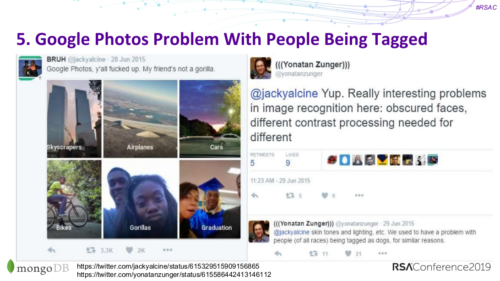
It was 2019 at the RSA Conference in San Francisco, when I presented seven years of AI safety research in “Top 10 Security Disasters in ML: How Laurel and Yanny Replaced Alice and Bob“. It didn’t get much attention. Why would it? I had been focused on integrity breaches as the coming wave of threat modeling. The market wasn’t interested at that time.

Integrity flaws stand looming and untamed despite the security industry making great progress in availability and confidentiality awareness and control. Now a crisis of trust is developing as developers rush into ‘machine learning’ with integrity a paramount risk.

Don’t you want to know who discovered the bias in Google platform and when?

Then RSAC 2020 was “Breaking Bad AI: Closing the Gaps between Data Security and Science” and RSAC 2021 “Top Seven AI Breaches: Learning to Protect Against Unsafe Learning“.

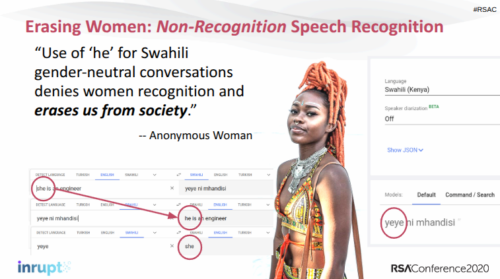
RSA Conference 2020. The cheekbone fallacy has a sibling in language tech. Swahili “yeye” is gender-neutral. Google translates it as “he.” Women erased by default.

In fact, by March 2020 I was explaining COVID early warning states in this context, based on research going back to at least 2009. Of course I often point back to my BSidesLV 2016 Ground Truth keynote “Great Disasters of Machine Learning“, because I covered Tesla’s second “driverless” death in that year (as well as Google’s image recognition failures) as an integrity problem needing immediate attention to prevent extreme dangers to humanity.

Source: My 2016 BSidesLV keynote presentation comparing Tesla autopilot to the Titanic

And guess what happened next? A lot more death. Even my article that robots have been killing a lot of people already wasn’t getting much attention, despite Bruce Schneier saying he would get it published in The Atlantic to increase my exposure.

AI and robotics companies don’t want [regulation] to happen. OpenAI, for example, has reportedly fought to “water down” safety regulations and reduce AI-quality requirements. According to an article in Time, it lobbied European Union officials against classifying models like ChatGPT as “high risk” which would have brought “stringent legal requirements including transparency, traceability, and human oversight.” The reasoning was supposedly that OpenAI did not intend to put its products to high-risk use—a logical twist akin to the Titanic owners lobbying that the ship should not be inspected for lifeboats on the principle that it was a “general purpose” vessel that also could sail in warm waters where there were no icebergs and people could float for days. (OpenAI did not comment when asked about its stance on regulation; previously, it has said that “achieving our mission requires that we work to mitigate both current and longer-term risks,” and that it is working toward that goal by “collaborating with policymakers, researchers and users.”)

I guess I bring up the Titanic a lot. But the point was we aren’t really paying attention if we’re not counting the Tesla deaths as a single catastrophe of AI.

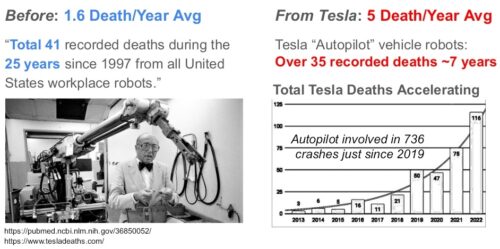
Comparing deaths from robots before and after Tesla claimed their rushed implementation of AI would be safer than before. The Tesla deaths have doubled since this slide in 2023, if not more.

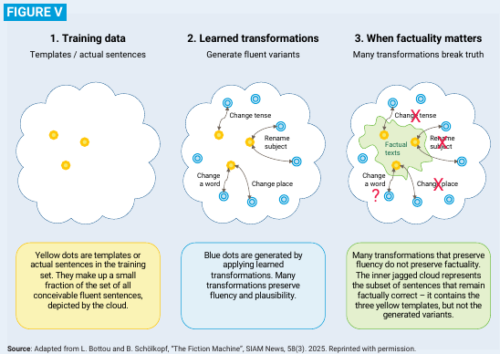
Well, here we are in July 2026 and the United Nations Preliminary Report restates my 2019 thesis as settled science. See their figure V (page 30, adapted from Bottou and Schölkopf): transformations that preserve fluency break factuality, and users treat linguistic confidence as evidence of reliability.

Source: UN Preliminary Report of the Independent International Scientific Panel on AI

That’s right up my alley and their page 42 supplies the casualty class that I had warned about: Tigrinya machine translation rendering smallpox as syphilis, gonorrhoea as diabetes, intravenous antibiotics as intravenous insecticides, in clinical settings serving 7 to 9 million speakers.

Forty UN-appointed experts used their General Assembly resolution to arrive where my single expert RSAC track session in 2019 said they should hurry up and go. Of course I wasn’t the only one, but I’m certainly not someone they have cited in their late acknowledgement of the problems.

Perhaps I should now tell you where they went horribly wrong in the report? It has serious integrity failures, to put it simply. Here are just four examples.

First. The vendor citation circle that I called out last April, behind the Anthropic marketing. The “Dangerous cybercapabilities” box (pages 35 and 36) sources its Mythos claims to references 16, 17, and 72: Anthropic’s Frontier Red Team page, Anthropic’s Glasswing announcement, and a Mozilla blog post written by a Glasswing participant. This is a closed circle of three self-interested documents presented as scientific assessment, with the record frozen at 7 April. The panel cited nothing after the launch marketing: none of the independent critics, and not even the vendor’s own May update, meaning the report is stale in the vendor’s favor. They ARE NOT proof. The report diagnoses this exact failure on page 15: safety evaluation methodologies are designed by the companies being evaluated, and assurance depends on developer goodwill. Section 2.1 names the disease. Section 3.4 performs that disease. Like, are we sure we want to keep reading? Twenty pages after warning about vendor-controlled evidence, the report runs vendor-controlled evidence, and skips any antidote.

Second. They have omitted contrary evidence. I’m not sure it feels better that I’m not the only one being ignored. AISLE’s reproduction of Anthropic’s showcase bugs with eight open-weights models, published April 2026, was public for three of the panel’s four drafting months (first meeting March 2026, publication July). Their box repeats “previously unknown” and “survived decades of human review” with zero reference to the reproduction results. The 27-year OpenBSD flaw the box holds up as proof of frontier capability? False. Disproven. GPT-OSS-120b recovered the full exploit chain for pocket change, which demolishes the frontier-exclusivity framing that this box was built on. The panel’s mandate is allegedly documenting scientific consensus and disagreement. Instead it runs a claim made by the vendor and presents zero disagreement, despite it being all over the Internet. AISLE is now extremely well-regarded for their bust of the Anthropic bubble, so it’s hard to understand how they aren’t the lead story here.

Third. The distribution asymmetry is quite interesting to me, as a disinformation historian. The executive summary ships in all six official UN languages, unlike the full report, which is in English and French. The conclusions are thus presented in six languages while 386 references, the evidence-gaps concessions, the footnotes qualifying the Goldman Sachs projections, and the disclaimer (no member endorses every point) are cut down to just two languages. This translates into a ministry reading Arabic, Chinese, Russian or Spanish getting the pure vendor claims on UN letterhead that has all the context stripped away from it. A report that is documenting language exclusion as a life-threatening integrity failure, has itself reproduced that very exclusion. Ironic, no? This is the sort of thing I suspect makes me hard to invite to these events. I find flaws. I present flaws.

Fourth. The timing sure seems awkward. Released 1 July, feeding the Global Dialogue on AI Governance now underway in Geneva, 6 and 7 July. Member State delegates are deliberating on a five-day-old document carrying vendor claims, most working from the summary tier. That means the truth is buried, because the verification drops into two languages and 58 pages. And a detail the panel apparently missed: the Glasswing announcement it cites as evidence promised a 90-day public accountability report, due 6 July by my count last April. The UN cited the promise as a proof, and the Dialogue opened on the day the promise came due. The vendor shipped an interim update in May with aggregate self-reported numbers, then a June system card which I’ve debunked. The actual accounting?

If you are in the room in Geneva, the fix costs nothing but a microphone. Four questions, matched to the four failures.

  1. Ask the Co-Chairs why the “Dangerous cybercapabilities” box rests entirely on references 16, 17 and 72, when page 15 of their own report states that assurance built on developer disclosure is assurance built on developer goodwill. Ask whether the panel will adopt a sourcing rule for the annual report: no capability claim enters a UN scientific assessment on vendor citation alone.
  2. Ask why the AISLE reproduction results, public since April and available for three of the panel’s four drafting months, appear nowhere in a document mandated to record scientific disagreement. And hey, I’m not even saying I should be in there, despite publishing continuously since April that Anthropic is misstating their capabilities. Ask whether the annual report will correct the record.
  3. Ask when the full report, with its 386 references, its evidence-gaps concessions and its disclaimers, will exist in all six official languages. A summary without carrying the balance of evidence is a breach of trust in the editorial process. The panel documented language exclusion as a life-threatening integrity failure, so I recommend they stop practicing one.
  4. Ask what review period Member States will get between the annual report and the second Dialogue in New York. Five days is a briefing. It is nothing like a proper assessment, including time for tests, even in a field moving rapidly.

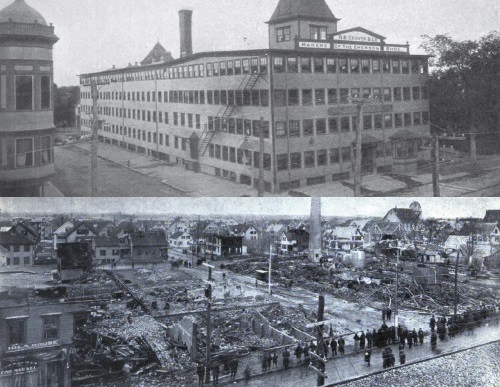
Ok, here’s a Fifth failure. Bonus round. The Secretary-General launched the report saying the world cannot govern what it cannot understand, yet page 26 of that same report tells us governing under uncertainty is normal. Record scratch. Parliaments regulated steam boilers (e.g. Grover Shoe Factory Disaster), adulterated food (e.g. The Jungle) and unsafe ships (well, you know, the Titanic) long before anyone could explain the perfect physics and chemistry, by demanding inspection access and punishing false claims.

So skip the plea for comprehension (like skipping the demand everything be open source) and demand the older, proven machinery: the references, the disagreements and the time. The point is the world should see what I’ve been saying for over a decade, and have the time to review why the vendor’s claims don’t stand on their own let alone in the face of a simple test.

The AI vendor brochure presented in six languages is disappointing, to say the least. Or, if you’re like me, to say nothing at all because we’re not in the room to explain when and why things go boom.

The Grover Shoe Factory disaster is one of the most important engineering lessons in American history, yet few if any Americans have ever heard of it, let alone STEM students. Source: My technology ethics lecture to computer science graduate students

The AfD Wolf Cried Not-Sheep and the German Flock Elected the Wolf

The herd is built for one safety, using cohesion against a predator. That instinct is so reliable, ironically it also becomes easy for a predator to manipulate and steal.

Here is how the theft works, to understand how the AfD seizes power. The predator declines to hunt the herd directly. It invents a second predator, points at it, and offers to lead the herd defense. The herd closes ranks. It closes them around the exact wrong thing.

Germany needs immigration. Germany does not need AfD. The demography is not in dispute: a fertility rate stuck near 1.4, well below replacement, and a workforce that shrinks without net arrivals. The Institut für Arbeitsmarkt- und Berufsforschung puts the gap around 400,000 net immigrants a year just to hold the labor force steady as the boomer cohort retires. Immigration is what keeps the pension system solvent and the factories staffed. It strengthens the herd. The AfD, self-described outsiders offering to “reform” the herd, points at that strength and names it the threat, then convinces the flock to break itself apart.

And the AfD response to fact is lies. You say a fact, they say can’t be true and that’s it. You say another fact, they say you can’t trust it and that’s it. Their signature move is to reactively undermine all trust systems, attack the cohesion that makes a herd safe and successful. Pick it apart with surface level lies, instant denial. Repeat.

This is the whole architecture of Nazism, and it was assembled from forgeries the movement plagiarized. The “stab in the back” fraud came from the wartime high command who knew why they lost, and Hindenburg spread it by 1919: falsely grousing Germany lost the war to betrayal at home rather than to actual surrender and loss in the field. That was a political move that pointed the herd inward, to attack its own defenders. The Protocols of the Elders of Zion, fabricated by the Russian secret police and exposed as plagiarism by the Times of London in 1921, supplied a Jewish target for that political machinery. Judeobolshevism welded the two into one. The predator works lazily, using adoption and fusion. The counterfeit threats already in circulation were aimed at a vulnerable group, and fear was spun up with heated rhetoric to strip domestic resistance from its own path.

A Chancellor named Hitler was appointed (NOT ELECTED) in January 1933, The Reichstag burned in February 1933. Within a day the government held a decree suspending civil liberties, aimed fraudulently to stop an uprising that had been conjured for the occasion. The counterfeit threat wrote the emergency powers. The wolf told the frightened flock of sheep that the dogs and shepard were not their friend.

Dachau was opened in March 1933 to imprison anyone caught actually protecting the herd, or trying to keep it together. Its first prisoners were Communists and Social Democrats, the organized core of the herd’s defense. Weeks later, on 2 May 1933, the regime crushed the free trade unions in a single coordinated strike, occupying their halls, arresting their leaders, and absorbing the workers into a Nazi front. The unions were destroyed precisely because they existed to organize the herd against actual threats. Elections after that point were no longer free.

Creating the counterfeit predator has a major defect. There is no actual threat, so the fraud of fear it generates must be fed forever, and a machine built to fabricate threats eventually runs short of them. It inevitably can’t hide how it has thinned the herd it was guarding, eating its own. Within eighteen months the Nazi apparatus murdered its own leadership in the Night of the Long Knives. It managed a genocidal con for twelve years, which left Germany in ruins, lucky to be occupied before it self-eliminated entirely. The false threat is a device for converting a herd into prey and shamelessly naming that conversion to weakness a protection from outsiders.

The device continues to be used over and over. Trump is one example. Elon Musk and AfD are another. Replacement rhetoric is the same forgery: the whole lie of deliberate erasure by outsiders is sold as an excuse to allow a predator into power over the herd. The threat is invented. The herd effects are real. A UC Davis team led by Garen Wintemute measured that herd in PLOS ONE and again in 2024: a majority calling political violence justified, almost none willing to lift a hand themselves. Approval of self harm without agency. A flock becomes certain of a predator that is a fiction, while opening the door to a real one.

We reach for the fable, a boy who cried wolf, when talking about predators, because it’s such a compelling frame. Aesop gave us two animals and a liar who loses his flock to a real wolf that finally comes. The modern predator of AfD however, actually fuses the two into a wolf that cries not-sheep. The AfD is the wolf. They cry not-sheep while being the wolf, and the crying is the hunt. No real wolf arrives to vindicate the wolf’s alarm. There is only AfD, inside the flock, pointing at the treeline while he kills from behind.

The fable teaches the flock to distrust alarms, so the true warning about the actual wolf lands as a boy who always overreacts. The story of a boy who warns becomes the muzzle that lets the wolf, dressed as the boy, convince the flock to separate itself and give control to wolves warning against non-sheep.

Brexit was the Wolf platform. “Leave” sold the benefits of migrants instead as a “Breaking Point”, and claimed sovereignty was stolen when strengthened by Brussels. The threat was entirely forged, to hide the actual threat of being cut off. The severance was real, and the herd destroyed its own market. Britain’s economy has plummeted, and the EU is being targeted by the Russia/AfD with further leave campaigns.

The one defense that works is the thing the predator spends everything to break: cohesion. A herd that stays together, trades honestly, and trusts its own defenders cannot be preyed on easily. This is why the AfD wolf goes after the unions, the press, the courts, and the neighbor first. Forged fear is cheap and manipulates the herd into separation. So the predator does not build trust, it dismantles it to reduce everyone’s safety and prosperity except their own.

Scotland’s “Cato” Plan: Bigger Than the Auschwitz Main Camp, For… Nobody

Auschwitz-Birkenau’s function was murder, genocide at industrial scale. A very similar looking and sounding facility called “Cato” in Scotland claims to be for future computation for an end user who remains unidentified, under an application whose statement of intent permits modification once one is found.

The uncertainty of use makes the appearance and description of the design the only evidence we can see on the table. The perimeter architecture has an unmistakable Holocaust camp style and scale. The entire design vocabulary is the classical canon (Greek mythology), deployed exactly as the Hitler regime deployed it, as legitimation for an enclosure. The landscaping is explained as screening, and whatever the motive, the effect is a “processing” facility removed from daily sight. The community benefit is a promised fund announced before any tenant, any figure, or any terms, a pledge with nothing behind it that anyone can verify.

The lesson from Nazi Germany is to notice these aesthetics, the classical framing and the screening methods are what enable the unthinkable without being noticed properly, the mechanism Jonathan Glazer put on screen in The Zone of Interest (2023): a family garden flourishing against the camp wall, the hedge doing the moral work.

The movie you see observes the mundane day-to-day lives of a well-off German family. Over and over, the father, Rudolf (played by Christian Friedel), goes to and from work; the mother, Hedwig (Anatomy of a Fall’s Sandra Hüller), tends to her garden; and their children, a rambunctious bunch, play with their toys. In the movie you hear, however, there’s intermittent gunfire, bursts of screams, and an ever-present industrial cacophony. Along with snatches of dialogue and glimpses of details—the costuming, the barbed wire, the smoke—the film makes clear what’s going on: Rudolf is Rudolf Höss, the real-life longest-serving commandant of Auschwitz, and this is a portrait of how he and his Nazi family actually lived, going about their days adjacent to the death camp he ran.

Let me put it like this. A 69-hectare double-fenced compound is apparently being named for a Stoic, dressed by Polykleitos, hidden by “bunds”, built for a tenant nobody will name. As a historian working in technology, the concerns are simple.

The Cato architects cite the ancient Greek stoa and the proportional ideas found in Polykleitos’s Canon, describing proportion, order and harmony as expressions of a deeper philosophical worldview. Polykleitos’s Canon was precisely the proportional system the Third Reich claimed as its aesthetic lineage. Riefenstahl’s Olympia opens with Myron’s Discobolus dissolving into the body of a living German athlete, the explicit visual argument that the Greek ideal survives in the Aryan body. Hitler personally purchased the Discobolus Palombara in 1938 and installed it in the Munich Glyptothek as ancestral property. Breker’s state sculpture carried the classical canon into the New Reich Chancellery, his bronzes flanking the court of honour. Günther and Rosenberg wrote the Greeks into Nordic race history as a formal doctrine.

It’s impossible to make this stuff up.

Nazis invoke antiquity as proportion, order, and harmony to confer civilizational legitimacy to an atrocity. To be clear, the canon itself belongs to everyone. Edinburgh calls itself the Athens of the North and keeps an unfinished Parthenon on Calton Hill. A colonnade proves nothing. The tell is the combination: classical dress, camp-scale perimeter, screening vegetation, and a function nobody will state. Any one element on its own is innocent, as you find all over the world. All four together fits a very narrow and specific pattern with a documented history.

Rudolf Höss stated that good train connections and the possibility of camouflaging the extermination process dictated the choice of Birkenau as the site. The SS planted a green belt of trees and hedges around Crematoria II through V, landscaping deployed as sightline management. Cato’s plan calls them landscape bunds, with new woodland, wetland, hedgerow, scrub, and wildflower meadow habitats wrapped around the security perimeter. Theresienstadt got its Verschönerung for the June 1944 Red Cross visit: fresh paint, gardens, a staged film, the enclosure marketed as a gift to its inhabitants.

The scale of all that used to be staggering. But one Cato data hall is about the size of fifty Birkenau barracks, due to advances in modern engineering. Birkenau contained approximately 300 barracks and buildings within about 140 hectares, single-story horse-stable barracks of roughly 400 m² each, giving a total built footprint somewhere around 120,000 m². Cato plans to put 160,000 m² of footprint into seven halls at 35 metres tall. Seven buildings, phased over several years, will exceed the combined footprint of the three hundred. It’s the kind of massive infrastructure that deserves extreme scrutiny because its impact can not be avoided, yet being setup with the kind of obfuscation that erases any evidence of it existing.