Deutschlands Copperhead: Warum die Dobrindt-Methode darin besteht, eine linke Bedrohung zu behaupten, bevor ein Verdächtiger gefasst ist
Freitagnachmittag in Düsseldorf stand der Mann namens Alexander Dobrindt neben Herbert Reul und vergab sein übliches Etikett:
Klimaextremismus. Einzeltäter.
Dobrindt fügte hinzu, eine abschließende Bewertung sei noch nicht möglich, und lieferte sie dann trotzdem, um zu zeigen, wie wenig er sich mit Nachdenken aufhält. Die Beweislast fällt damit auf alle anderen, die seine Anschuldigung widerlegen sollen, während er nichts vorlegt, was sie stützt.
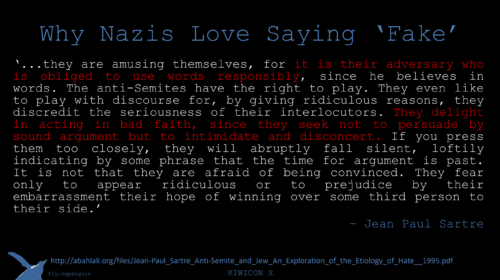
Das ist ein klassischer Zug in böser Absicht, wie ihn Sartre 1946 bei den französischen Antisemiten beschrieb: behaupte frei heraus, weil du nie vorhattest, dich an deine eigenen Worte binden zu lassen.
Drei Tage zuvor waren rund zwanzig selbstgebaute Raketen rund um das Umspannwerk bei Jänschwalde in den Boden gesteckt worden, verkabelt, um leitfähiges Material in die Leitungen zu schießen. Eine flog und verursachte einen Kurzschluss. Bergheim in derselben Nacht, dieselbe Methode, Blöcke in Niederaußem vom Netz. Dormagen am Donnerstag, Abschussvorrichtungen gefunden, bevor sie zündeten. Weisweiler und Eschweiler am Freitag durchkämmt. Der Verdächtige war irgendwo nahe dem Hambacher Forst zu Fuß unterwegs. Sein Lkw war gestürmt worden. Seine Wohnung war durchsucht worden, sprengstoffverdächtige Gegenstände wurden herausgetragen. Reul sagte der Öffentlichkeit, von dem Mann gehe keine Gefahr aus.
Reul sagte auch etwas, das Dobrindt nicht sagte. Wenn jemand seinen Namen unter einen Brief setzt, ist er nicht zwingend der Verantwortliche. Der NRW-Innenminister, der die Fahndung tatsächlich leitet, ließ die Frage offen. Der Bundesinnenminister, dem der Verfassungsschutz untersteht, schloss sie in aller Eile.
Die Akte
Diese Dobrindt-Gewohnheit zeigt ein Muster, und die Deutschen müssen eher früher als später darüber reden. Jede Zeile unten ist belegt, das meiste durch sein eigenes Ministerium.
| Ereignis | Dobrindts Zug |
|---|---|
| 2013 bis 2017. Bundesminister für Verkehr und digitale Infrastruktur, 50 Mbit/s für alle bis 2018 versprochen | Versagen. Setzte auf Kupfer-Vectoring statt Glasfaser, zahlte unter 2% der bewilligten Breitbandmittel aus, Deutschland sank ans Ende der europäischen Glasfaser-Rangliste |
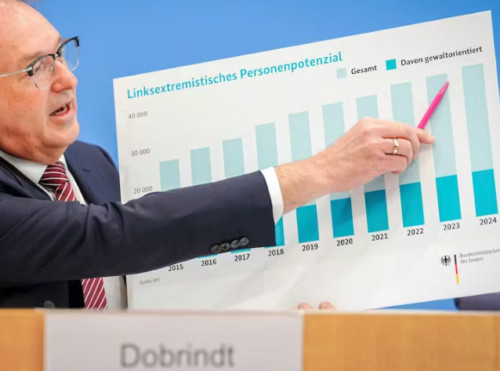
| Juni 2025. Pressekonferenz zum Verfassungsschutzbericht 2024 | Aufblähen. Verkündete, gewaltorientierte Linksextremisten seien „deutlich gestiegen” auf 11.200. Vorjahr: 11.200. Die Grafik in seiner Hand zeigte flache Balken |
| Juni 2025. Dieselbe Pressekonferenz, Folien | Aufblähen. Rechtsextremes Potenzial auf einer Achse von 0 bis 60.000 dargestellt, linksextremes Potenzial auf einer Achse von 0 bis 40.000, sodass 2,7% Wachstum wie 25% Wachstum zu lesen waren |
| Juni 2025. Derselbe Bericht, Vorwort | Löschen. Faesers Befund von 2023, Rechtsextremismus sei die größte extremistische Bedrohung, gestrichen, während das rechtsextreme Potenzial um 25% auf 50.250 und rechtsextreme Gewalttaten um 47% stiegen. Linke Gewalttaten sanken um 26,8%. Keine Begründung |
| September 2025. Gemeinsame Warnung von BfV, BKA, BND und BAMAD vor russischen Wegwerf-Agenten, online rekrutiert für Brandanschläge auf Energie, Bahn, Verkehr und Logistik | Löschen. Seine eigenen Behörden benannten den Auftraggeberstaat und die Zielliste. Seine öffentliche Zuschreibung für Anschläge auf genau diese Zielliste blieb links |
| September 2025. Johannisthal, zwei Masten, rund 50.000 Haushalte 60 Stunden ohne Strom | Urteilen. Linksextremistisch binnen einer Stunde, Vulkangruppe als inländisch akzeptiert. Fünfzehn Jahre unter diesem Banner, null Verurteilungen |
| Januar 2026. Kabelbrücke Lichterfelde, rund 45.000 Haushalte bei Frost ohne Heizung | Urteilen. Sagte dem ZDF, es gebe „keine Hinweise” auf Russland, bevor die Ermittlungen abgeschlossen waren |
| Januar 2026. Derselbe Fall, Reaktion | Zielen. Kündigte ausgeweitete Überwachung ausschließlich der linksextremen Szene an, versprach, gegen Linksextremisten „zurückzuschlagen” |
| Juni 2026. Umspannwerk Reutlingen, rund 30.000 ohne Strom, drei Brandherde, durchtrennter Zaun | Urteilen. Anonyme Sicherheitskreise gaben der dpa binnen Stunden „links” durch, während die Polizei am Rednerpult jede Richtung offen ließ, technischen Defekt eingeschlossen |
| Juli 2026. Pressemitteilung zum Verfassungsschutzbericht 2025 | Aufblähen. Führte die Berliner Brandanschläge vom Januar als Beleg für „das perfide Vorgehen gewaltbereiter Linksextremisten” an. Der Fall hatte ein Bekennerschreiben und ein laufendes Verfahren. Er zählte ihn als Beweis. Dieselbe Mitteilung: rechtsextremes Potenzial um weitere 17% auf 58.700 gestiegen, gewaltorientiertes rechtsextremes Potenzial 15.600 gegenüber 11.600 links |
| Juli 2026. BMI-Referentenentwurf, 691 Seiten | Zielen. Bundes-Spionageabwehrbefugnisse gegen inländische politische Gruppen gerichtet, Befugnisse zuerst behauptet, Bedrohungsprüfung und Kontrolle als Reibung behandelt |
| Juli 2026. Anschlag mit Transporter auf den CSD im Tiergarten, 25. Juli | Versagen. Täter den Behörden gut bekannt, Anschlag vermeidbar |
| September 2026. Jänschwalde, Bergheim, Dormagen, Verdächtiger flüchtig | Urteilen. Nannte am dritten Tag „Klimaextremismus”, während die Ermittlungen die Beteiligung fremder Staaten weiter als offene Richtung führten |
Vier Anschläge auf Infrastruktur in zwölf Monaten?
Vier Urteile vor den Beweisen.
Jedes Urteil zeigte in dieselbe Richtung, ohne Beweise, und manche gegen die Beweise, die es zum Zeitpunkt des frühen Urteils bereits gab.
Was der Freitag nicht erklärt hat
Lassen Sie den Brief des Mannes einen Moment beiseite und sehen Sie sich die Operation an. Die Behörden selbst sagten der taz, Jänschwalde habe erhebliches technisches Know-how und mehrtägige Vorbereitungen vor Ort erfordert. Dann tauchte dieselbe Methode in derselben Nacht 550 Kilometer entfernt in Bergheim auf, zwei Tage später in Dormagen, dazu Polizeieinsätze in Sachsen bei Spremberg und ein Fehlalarm in Niedersachsen.
Brandenburgs Innenminister Jan Redmann sagte nach dem zweiten Anschlag, es könne sich um einen koordinierten Angriff auf die Energieversorgung handeln, und kündigte ein Sicherheitszentrum an. Der Innenexperte der CDU selbst, Alexander Throm, sagte am Mittwoch, die Häufung der Anschläge kurz vor den Landtagswahlen in Sachsen-Anhalt, Mecklenburg-Vorpommern und Berlin sei äußerst auffällig und das Ziel sei offensichtlich, die Bevölkerung zu verunsichern.
Die taz kam am Mittwoch zum naheliegenden Schluss: Das Muster spricht gegen die Vulkangruppe und für staatliche Auftraggeber (Russland, klar). Der Name passte nie zu dem, was er behauptete, und ich habe ausführlich erklärt, wie er alle Merkmale Russlands trägt, aber die taz kam allein über die operativen Umstände dorthin.
Dann tauchte am Freitag ein 48-Jähriger aus Gevelsberg auf, und Dobrindt hatte seinen Einzeltäter.
Hier ist, was das Archiv der letzten zwölf Monate dazu sagt. Im September 2025 veröffentlichten vier Bundesbehörden, zwei davon unter Dobrindt, eine Schablone.
Russische Dienste rekrutieren ungeschulte Einheimische über Messenger, zahlen ihnen kleine Summen, geben ihnen eine Aufgabe und eine Legende und lassen sie erwischen.
Der Rekrutierte erfährt oft nie, wer bezahlt hat. Die Operation Be Greener im Februar 2025 war der Machbarkeitsnachweis auf deutschem Boden: mehr als 270 Fahrzeuge beschädigt von Händen, die der FSB angeworben hatte, als Klimaaktivismus inszeniert, auf eine Wahl getaktet. Falsche-Flagge-Umweltschutz ist in Deutschland bereits gelaufen, offen, und von deutschen Ermittlern zugeordnet worden.
Hallo, ist das Mikrofon an?
Ein einzelner Klimaaktivist und ein Wegwerf-Rekrut mit Klima-Legende schreiben identische Briefe. Beide enthalten die Ideologie. Beide enthalten die Methode. Dieser enthielt den Klarnamen und die Wohnadresse, was eine Zelle schützt und was ein Wegwerf-Agent preisgibt. Der Brief beschrieb die Raketen im Detail, was eine Zelle verbirgt und eine Streuoperation veröffentlicht. Nichts davon beweist einen Führungsoffizier. Alles davon bedeutet, dass die Entscheidung über Festnahme und Telefon fällt.
Dobrindt urteilte, bevor es beides gab.
Obendrauf liegt das Timing. Wenige Tage nachdem Dobrindt und Wadephul am Podium die Drohne am Flughafen Leipzig förmlich Russland zugeschrieben hatten, wurde das Netz in zwei Ländern getroffen. Dobrindt kann Russland sagen, wenn das Ziel eine ukrainische An-124 ist und die Funkzellendaten eines Providers ihn festnageln (verflixt, von Beweisen erwischt). Wenn das Ziel ein deutsches Kohlekraftwerk ist, verschwindet plötzlich jeder Beweisstandard.
Copperhead
Die Deutschen haben aus seinem letzten Amt einen Namen für diesen Minister. Breitband-Münchhausen. Als Bundesminister für Verkehr und digitale Infrastruktur versprach er 50 Mbit/s für alle bis 2018, zahlte unter zwei Prozent des Geldes aus und setzte auf das Vectoring der Deutschen Telekom, das mehr Signal aus dem vorhandenen Kupfer presste, statt Glas zu verlegen.
Deutschland landete beim Glasfaserausbau am Ende Europas, wegen der Art, wie Dobrindt Risiko bewertete. Er hat das Land buchstäblich in ein weit größeres Risiko gefahren.
Jeder Ingenieur im Land sagte ihm, Kupfer sei die falsche Antwort. Es war die Antwort, die jemand anderen schützte als die Öffentlichkeit, also verlor er den Ball und nannte das seine Analyse. Stellen Sie sich die Nationalelf mit einem Spieler vor, der den Ball ständig ins eigene Tor schießt und dann auf eine verkehrt herum gelesene Anzeigetafel zeigt, um eine Gehaltserhöhung zu verlangen.
Diese Entscheidungsregel änderte sich nicht, als sich das Ressort änderte. Bedrohungszuschreibung ist Infrastruktur-Risikomanagement mit einer anderen Maßeinheit. Die Linke ist Kupfer. Sie ist das Bestandsnarrativ seiner Partei, das die CSU-Wähler davon abhält, zu einer Partei weiter rechts abzuwandern, das nichts kostet auszusprechen und von der Bundesregierung nichts verlangt außer einer Pressekonferenz und einer Überwachungsausweitung. Russland ist Glasfaser. Es ist teuer, es ist die richtige Antwort, und es laut auszusprechen verpflichtet einen Staat zum Handeln.
Sehen Sie sich jetzt an, was auf der Glasfaser läuft, die er nicht bauen wollte. Überwachung von Umspannwerken. Drohnenerkennung in Leipzig, die versagte, und die Funkzellenabfrage, die danach einspringen musste. Das KRITIS-Dachgesetz, das Reul in derselben Woche im ZDF verteidigte. Das 360-Grad-Sicherheitszentrum, das Redmann Brandenburg versprach. Alles davon ist Telemetrie, und Telemetrie läuft über das Netz, das Dobrindt vier Jahre lang aushungerte, damit das Kupfer nicht ersetzt werden musste.
Lassen Sie mich eine Minute technisch werden, denn die Deutschen müssen verstehen, was Russland von Dobrindts Glasfaser-Verzögerung hat. Es ist konkret und es ist wichtig.
Kupfer ist einfaches Metall, das heißt, eine einfache Klemme kann es abgreifen, ohne Unterbrechung und ohne Spur. Das ist altes Handwerk, das die Russen gut kennen. Ab 1971 hielt die US Navy ein Jahrzehnt lang eine Induktionskapsel an einem sowjetischen Kupferkabel im Ochotskischen Meer, kein Schnitt, kein Verlust, nichts, was Moskau hätte messen können, und es endete nur, weil ein Verräter Geld nahm, um die amerikanischen Methoden preiszugeben. Glasfaser läuft auf Licht, das ein Netz messen kann, ein Abgriff ist also etwas anderes, das der Betreiber erkennen kann, während eine stille Kupferklemme kein Glasfaser-Gegenstück hat.
Das bedeutet: Dobrindts Vectoring-Entscheidung war weit schlimmer, als Deutschland nur in langsamem, verwundbarem Kupfer schmoren zu lassen. Nach der Telekom eigener Zählung allein für den Nahbereichsausbau stehen über 30.000 bestromte, unbewachte Schaltschränke auf öffentlichen Gehwegen, für jeden Gegner erreichbar, der vorbeigeht, und wandeln Licht hinter einem Standard-Branchenschlüssel zurück in Kupfer. Ein passives Glasfasernetz hätte überhaupt keine bestromte Elektronik auf die Straße gestellt, nur unbestromte Splitter-Gehäuse, in denen nichts ist, was eine billige russische Klemme lesen könnte.
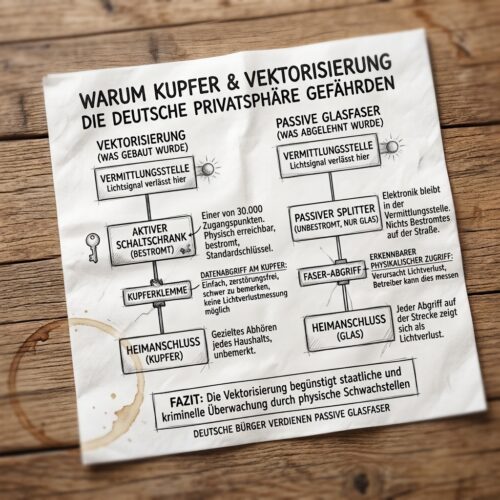
Die Deutschen sehen aus wie technologisch rückständige Narren. Sie hätten aus vielen Gründen ein passives Glasfasernetz bauen müssen, nicht zuletzt, weil Platzhirsche, die Platzhirsche bleiben, das Land gegen grundlegende nationale Sicherheit ausrichten, die technologischen Wandel verlangt. Man geht nicht in einen hybriden „Grauzonen”-Krieg mit Russland, indem man alle entblößt lässt.
Dobrindt fuhr eine harte Linie, um das Medium zu behalten, das sich still abgreifen lässt, mit der schlechtestmöglichen Architektur, die die Angriffsflächen auf die Privatsphäre vervielfacht. Sein Versäumnis, die Glasfaser zu bauen, das die nationale Sicherheit untergräbt, ist jetzt zu einem wachsenden Versagen bei allem geworden, was auf der verspäteten Glasfaser läuft.
Die Amerikaner hatten während der Sklavenhalter-Rebellion ein Wort für diese Art von Politiker.
Copperheads.
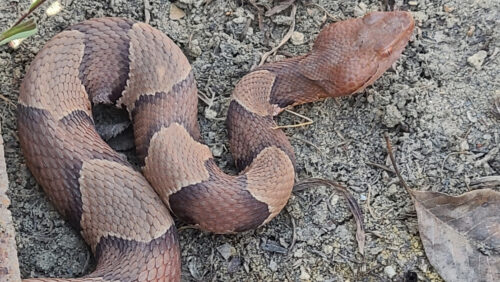
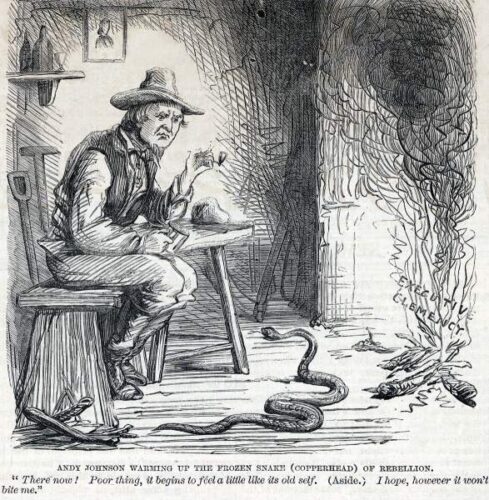
Das waren die Politiker, die die Farben der Union trugen, in den Parlamenten der Union saßen und ihre Zeit damit verbrachten, zu beteuern, der wahre Feind seien die Abolitionisten, die die Sklaverei beendeten, während ein tatsächlicher Feind im Feld auf sie schoss, um die Sklaverei zu erhalten und auszuweiten.
Es ist das englische Wort für eine Schlange, die ohne jedes Rasseln zustößt, und zugleich eine Anspielung auf die Kupfermünze, die manche von ihnen als Abzeichen trugen. So wie Dobrindt immer wieder in den Schlagzeilen auftaucht, waren sie ihrer rechten, rückwärtsgewandten Partei treu und versuchten dennoch zu behaupten, das bedeute Treue zum Land. Die Copperheads waren Verteidiger einer alten Ordnung, die sich weigerten zuzugeben, dass die Bedrohung sich geändert hatte, und sie kamen ihr Land teuer zu stehen.
Ein Minister, der auf Kupfer und Glas blickte und Kupfer wählte? Im Ernst. Der auf 11.200 gewaltorientierte Linksextremisten in einem Jahr und 11.200 im nächsten blickte und das einen deutlichen Anstieg nannte. Soll das ein Witz sein? Der Typ, der auf römische Namenskonventionen, russische Grammatik und einen GRU-Auftragnehmer namens Vulkan blickte und nicht darauf kam, dass die Vulkangruppe ungefähr so deutsch ist wie ein Bär, der Russisch spricht? Der auf zwanzig Raketen in zwei Ländern, einen flüchtigen Verdächtigen und eine offene Ermittlungsrichtung Richtung fremder Staat blickte und einen einzelnen Klimaaktivisten sah? Herrgott. Wie ist dieser Mann noch im Amt? Haben die Deutschen keine Scham? Warten Sie, ich glaube, wir kennen die Antwort.
Reul sagte, ein Name auf dem Brief mache diesen einen Mann nicht verantwortlich. Der Name auf dem Ministerium sollte es tun.